What determines whether a massive star remnant becomes a Neutron Star or a Black Hole?
Answer
The mass remaining in the core after the supernova explosion.
The final fate hinges on the remnant core mass; if it exceeds the Tolman-Oppenheimer-Volkoff (TOV) limit, collapse continues into a black hole; otherwise, a neutron star forms.
#Videos
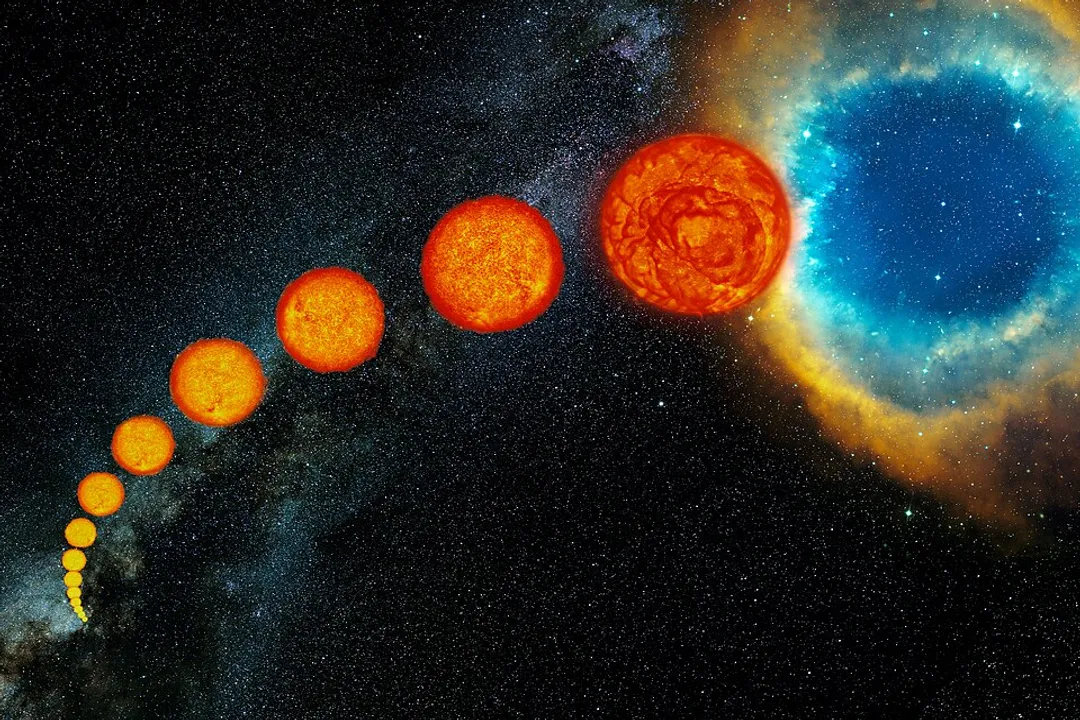
What Happens When A Star Runs Out Of Fuel? - Physics Frontier
Related Questions
How do the luminosities of supergiant stars compare to our Sun?What is the primary fuel source fused immediately following hydrogen depletion in a supergiant core?What element marks the end of the energy-releasing fusion chain in the star's core?What is the immediate effect on energy generation when a core becomes predominantly iron?What process occurs as protons and electrons are squeezed together during the core implosion?What process generates the massive shockwave responsible for ripping the star apart?What type of explosion results from the sudden implosion and rebound of a supergiant core?Which elements are forged in the extreme conditions of the supernova explosion?What physical principle can halt the collapse after explosion if the remnant core mass is below a specific threshold?What determines whether a massive star remnant becomes a Neutron Star or a Black Hole?