Are stars liquid or gas?
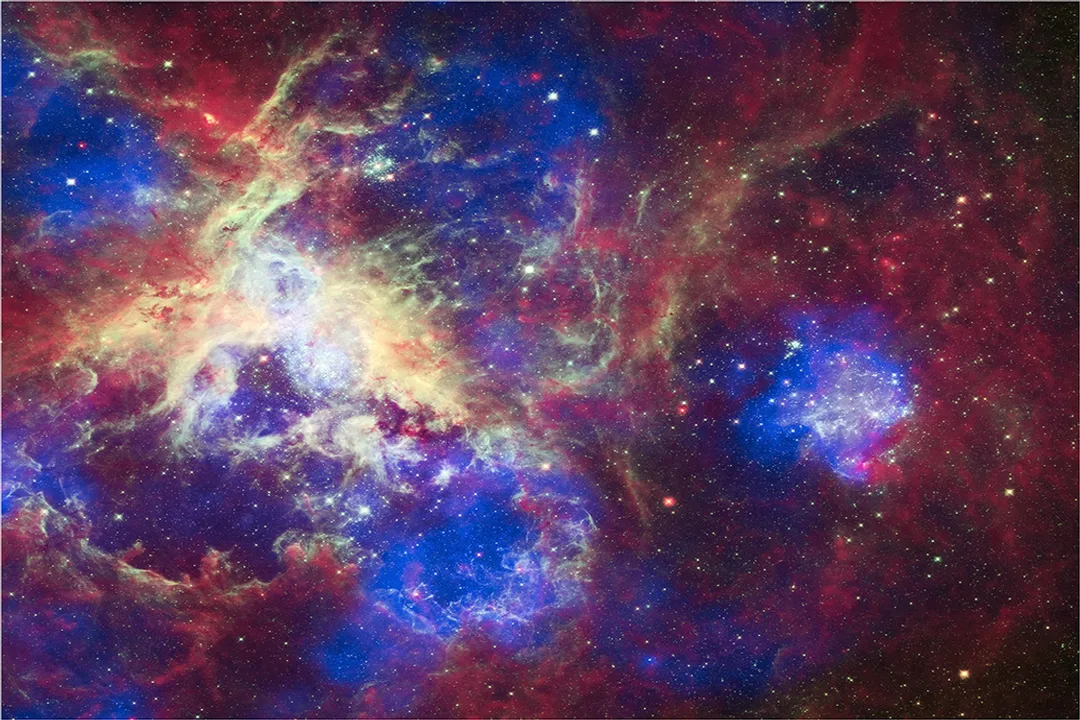
Stars, those brilliant beacons dotting the night sky, are frequently described as giant balls of fire or simply massive clouds of gas. However, pinning down their exact state of matter—are they liquid, gas, or something else entirely?—requires diving beneath the surface glamour into the extreme physics that govern these celestial engines. [3][6] The simple answer isn't a neat fit for the familiar states we encounter daily; stars are neither simple liquids nor conventional gases, though they start their lives from gas-like nebulae. [1]
# Matter States
To understand a star, we must first discard the common terrestrial labels. A star is not liquid. Liquids, like water or molten rock, maintain a constant volume but take the shape of their container, and their particles interact with relatively weak forces, allowing them to flow easily. [1] Stars exist under conditions where this behavior is impossible. [2] They also aren't just "gas" in the sense that the air we breathe is gas. While a star is composed of gas-like elements such as hydrogen and helium, [3][6] the intense heat and pressure inside transform this gas into a far more exotic state. [2]
# Plasma Dominance
The true state of matter that comprises the vast majority of a star is plasma. [1] Plasma is often referred to as the fourth state of matter, distinct from solid, liquid, and gas. [5] Think of it as a superheated, electrically charged gas. [7]
What makes plasma different from a regular gas? In a typical gas, atoms are neutral, meaning the electrons orbit the nucleus without any significant binding energy being overcome. When matter gets hot enough, like the material inside the Sun, the thermal energy becomes so high that the electrons are stripped away from their host atoms. [1] This process is called ionization. [7]
The result is a soup of free-floating, negatively charged electrons and positively charged ions (the atoms that have lost electrons). [7] Because these particles carry an electric charge, the plasma behaves very differently than a neutral gas. It is highly conductive, interacts strongly with magnetic fields, and can conduct electricity, which is a key characteristic that sets it apart from a non-ionized gas. [1][7] The plasma state is fundamentally dictated by the immense electromagnetic forces dominating the environment, unlike liquids or gases where bulk properties are more dependent on particle collisions alone. [2]
# Stellar Environment
The conditions necessary to create this plasma state are found only in extreme astrophysical environments. [2] Stars generate energy through nuclear fusion in their cores, a process that demands staggering levels of temperature and pressure. [6]
For instance, the Sun's core temperature is estimated to be around 15 million Kelvin. [2] At these temperatures, any substance that might have started as a liquid or solid vaporizes instantly into gas, and then the gas is immediately ionized into plasma. [1]
It is helpful to view a star as having layers, where the state of matter shifts slightly, though it remains overwhelmingly plasma throughout:
- The Core: This is where nuclear fusion occurs. The combination of extreme temperature and pressure creates the densest, most highly ionized plasma. [2] The density here can be many times greater than that of lead on Earth, making the material incredibly compressed, yet still behaving as a plasma due to the heat. [2]
- The Interior/Radiative/Convective Zones: Moving outward, the temperature and pressure slowly decrease, but they remain high enough to sustain the plasma state. While the plasma near the surface is less dense than the core, it is still electrically active and governed by electromagnetic forces. [2]
- The Photosphere (Visible Surface): Even at the visible "surface" of a star, the temperature is still thousands of degrees Celsius. While the pressure is lower here, the material is still considered plasma because of the high degree of ionization caused by the heat escaping from the interior. [5]
It's an interesting point of comparison: the matter in the Sun's core is perhaps a billion times less dense than water, yet due to the immense gravitational compression, it is far denser than any solid material we deal with on Earth. [2] If you could somehow scoop up a sample of core material and bring it to a normal Earth environment, it would instantly cool, recombine its electrons, and revert to a very hot, but neutral, gas. [7]
# The Misnomer of Gas
The term "gas" persists in popular descriptions because, relative to a liquid or solid, the constituent particles in a star are very far apart in the outer regions, giving it the appearance of being diffuse, like a gas. [1] Furthermore, when astronomers discuss the elemental composition of a star, they often list the elements as if they were in a gaseous state (e.g., 74% Hydrogen, 24% Helium by mass). [3] This is a convention of describing what the star is made of, not how it is physically structured in its current environment. [6]
For general discussion, saying a star is made of gas is an oversimplification that misses the crucial role of electrical charge in stellar physics. [5] For instance, the Sun's magnetic field, which drives solar flares and sunspots, is directly tied to the fact that its interior is conductive plasma, not neutral gas. A neutral gas would not support the long-lived, powerful magnetic structures we observe. [1]
An insightful way to look at this is through density versus temperature. Terrestrial gases, like the air in a room, are characterized by low density and low temperature. Liquid water is characterized by high density but low temperature (relative to stars). Stars exist in the high-temperature regime where any substance becomes plasma, regardless of the density, which itself is highly variable from the core to the edge. [2] The determining factor is the ionization, not just the spacing of the particles. [7]
# Liquid State Reconsidered
Could a star ever be liquid? In general, no, not under normal stellar conditions. The temperatures are simply too high to allow the relatively weak intermolecular forces that define the liquid state to hold atoms together in a fixed volume. [1]
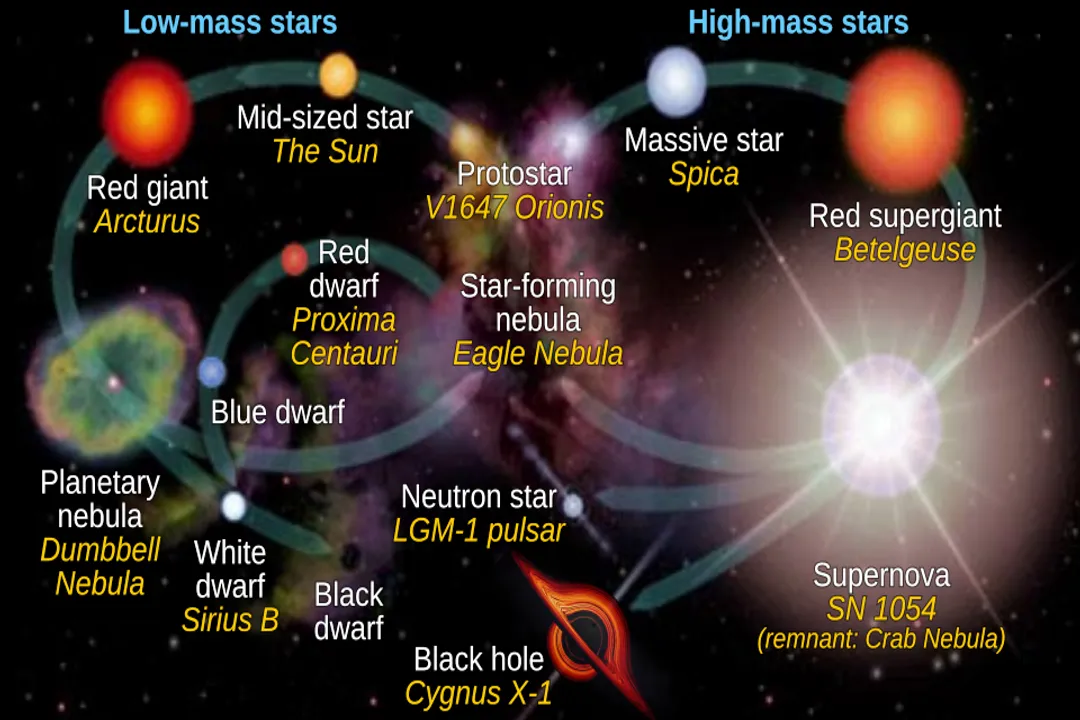
However, it is worth considering the theoretical states of incredibly dense, cool matter, such as a white dwarf. White dwarfs are the dense remnants left after a star like the Sun exhausts its fuel. While the outer layers of a white dwarf are gas, the incredibly dense interior, supported by electron degeneracy pressure, can exhibit behaviors that are somewhat analogous to a liquid or even a superfluid at quantum levels, though the terminology becomes highly specialized and distinct from classical liquid states. [2] But for a main-sequence star actively fusing hydrogen, the state is definitively plasma due to the runaway heat. [6]
If we were to hypothetically take the Sun's mass and somehow cool it down dramatically while keeping the mass constant, the pressure would eventually cause the material to collapse, and the electrons would be forced into the atomic nuclei, leading to a state dominated by neutrons—a neutron star—which is often described as being composed of a superfluid neutron fluid, but this is an endpoint of stellar evolution, not the state of a living star. [2]
# Stellar Components and Origin
The primary components that form the plasma are simple. The raw material for most stars comes from vast clouds of interstellar gas and dust—the stuff of the cosmos. [9] These clouds are primarily hydrogen, the lightest and most abundant element in the universe, followed by helium. [3][6] As these clouds collapse under gravity, the core heats up, initiating the transition from neutral gas to ionized plasma, and eventually, nuclear fusion begins, birthing a star. [3]
We are, quite literally, made of this processed stellar material. The heavier elements created within stars are ejected when they die, meaning that the iron in your blood or the calcium in your bones originated in these superheated plasma furnaces long ago. [9] This connection highlights just how extreme the conditions are that forge the elements we interact with daily on our planet, which exists in a relatively cool, uncharged environment. [9]
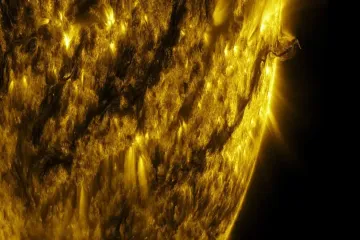
# Differentiating Stellar States
For the general reader trying to categorize these objects, perhaps a small table clarifying the terrestrial analogy versus the stellar reality might help solidify the concept:
| Earthly State | Defining Characteristic | Stellar Analogy | Stellar State |
|---|---|---|---|
| Gas | Neutral atoms, easily compressible | Outer layers of a star | Plasma (Ionized Gas) |
| Liquid | Fixed volume, flows easily | Not applicable | Not applicable |
| Solid | Fixed shape, rigid | Highly compressed core material (hypothetical) | Plasma (Super-dense) |
When a source states a star is "burning gas," what is actually happening is that the plasma is undergoing thermonuclear reactions. It is not combustion in the chemical sense (like wood burning), but rather nuclear conversion. [4] The belief that stars are simple burning balls of gas is a common misconception because the primary fuel, hydrogen, is a gas on Earth. [4]
If you consider a conventional gas flame, it’s hot, but the energy release is chemical. Stellar energy release is nuclear, which explains why stars can shine for billions of years without running out of fuel quickly—their energy generation mechanism is fundamentally more potent than chemical burning. [4] A star’s plasma state allows this immense energy release because the free-moving electrons and nuclei interact efficiently to drive fusion reactions forward. [7]
The distinction between a highly compressed, hot gas and an ionized plasma is subtle but physically significant. A gas cloud in space, far from any star, remains a neutral gas unless heated sufficiently. Stars provide that necessary heat and pressure gradient to achieve the plasma state. [5] This constant, energetic state is what defines a star as a luminous sphere of plasma, perpetually held in balance against its own gravity. [6]
Related Questions
#Citations
Can stars and planets be in any form of matter (liquid, solid, gas ...
What state of matter is in the interior of a star? : r/askscience - Reddit
What are stars made of?
Are stars really "burning balls of gas"? - Astronomy Stack Exchange
What Are Stars Made Of? - Layers of the Sun and More at Little ...
Star - Wikipedia
Why is space considered a vacuum if stars are made of hydrogen and
Space plasma - Science Learning Hub
Are we made of stardust? | Natural History Museum