When a star runs out of hydrogen to fuse, it will start to use helium. This causes the star to expand. What stage is this?

The transformation that occurs when a star exhausts the hydrogen fuel in its core marks one of the most dramatic shifts in its entire existence. For a time spanning billions of years, the star has been a stable powerhouse, maintaining a delicate equilibrium. This period, known as the main sequence, is defined by the continuous fusion of hydrogen into helium deep within the stellar core. [1][7] This process releases tremendous outward pressure—the energy that keeps the star inflated and shining steadily. [6]
# Fuel Depletion
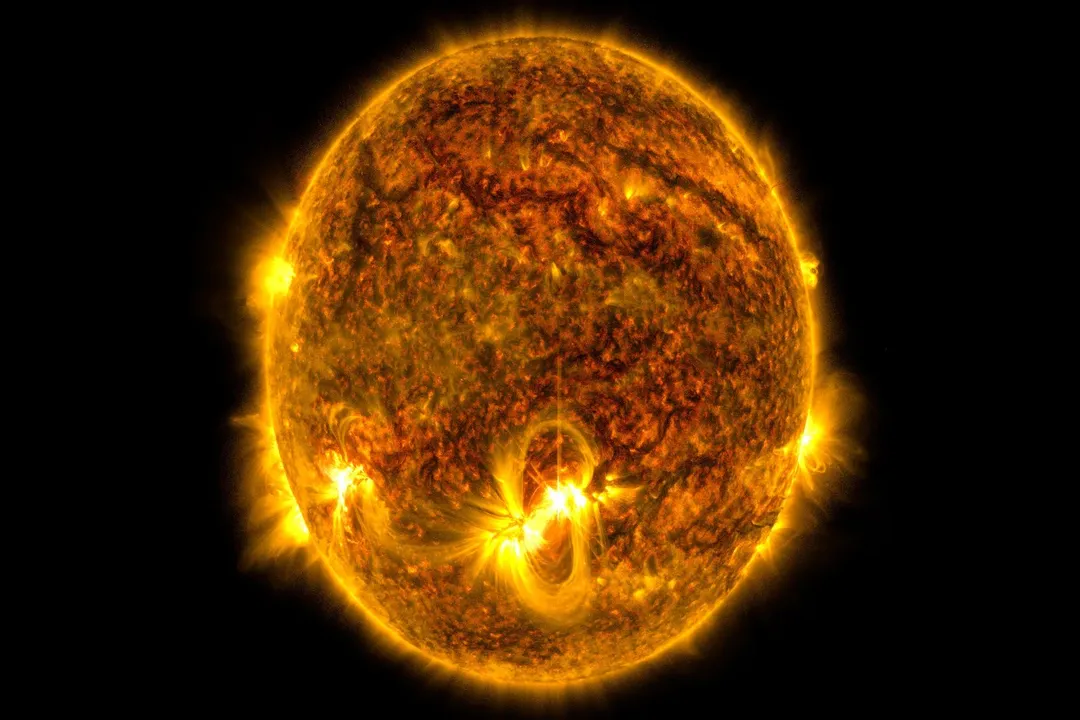
When the core's supply of available hydrogen is finally converted into inert helium ash, the central furnace sputters. Fusion in the core essentially ceases because the temperature and pressure within the helium center are no longer sufficient to initiate the fusion of helium itself. [1] However, the star doesn't simply wink out. The equilibrium that defined its long, stable life is broken, and gravity immediately begins to assert its dominance over the star’s massive outer layers. [2]
Gravity causes the now-inactive helium core to contract rapidly. [2] As this dense core shrinks, the gravitational energy is converted into thermal energy, causing the core temperature to skyrocket. This intense heating has a profound effect on the layers immediately surrounding the core.
# Shell Ignition
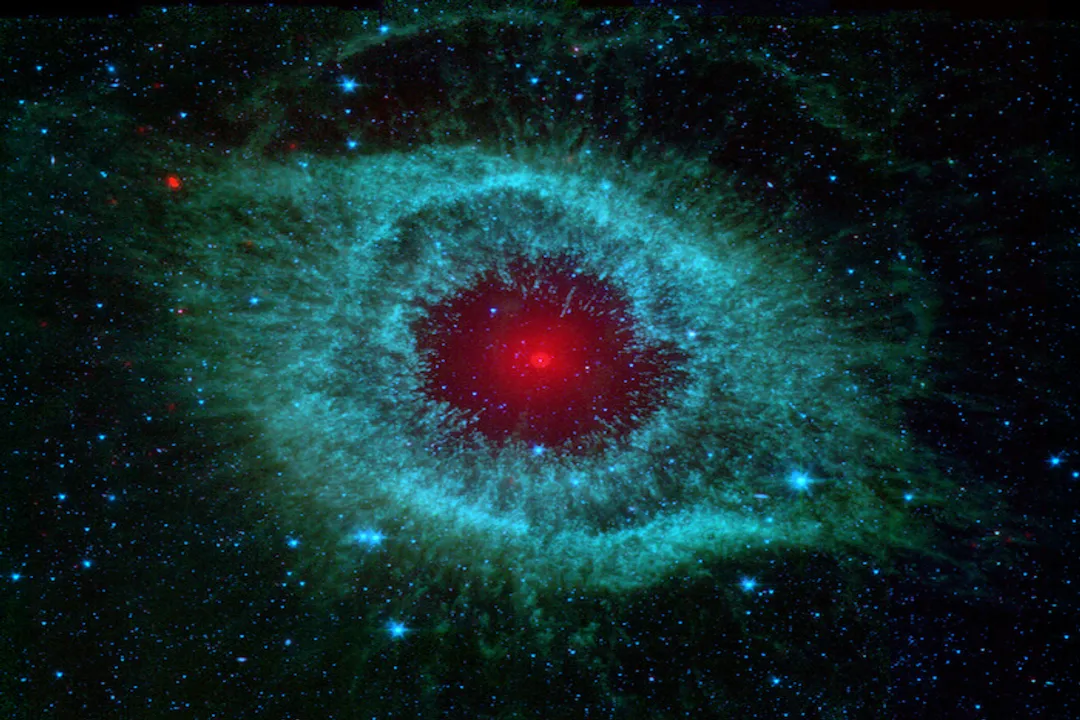
The rising temperature in the shrinking core superheats the thin shell of hydrogen that still surrounds it. [6] This hydrogen, previously too cool to fuse at the required rate, suddenly reaches the necessary temperature and pressure threshold to begin fusing into helium. This process is called hydrogen shell burning. [2][6]
The crucial difference here is where the energy is generated. Instead of uniform energy generation throughout the core, the energy production is now confined to a shell just outside the dead helium center. This shell burning is incredibly vigorous—often more energetic than the core fusion that sustained the star during its main sequence life. [6]
This sudden surge in energy generation creates an immense outward pressure that overwhelms the inward crush of gravity in the star's outer layers. [1][6] The star must find a new equilibrium, and the only way to relieve this massive internal pressure is by physically expanding.
# The Expansion Stage
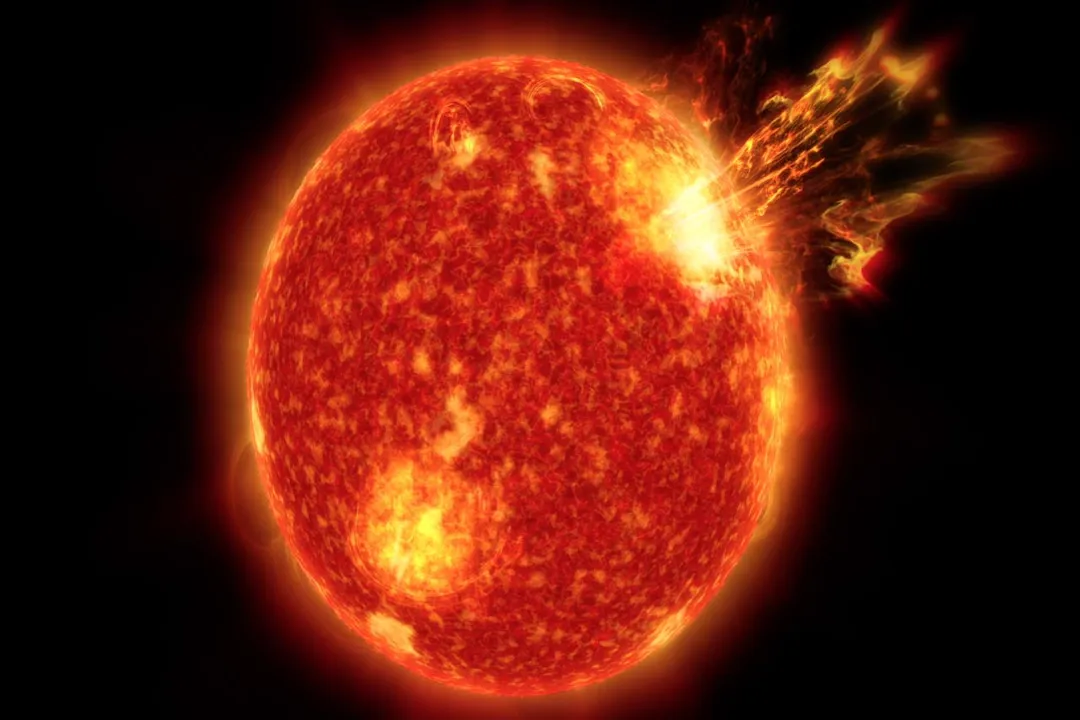
The stage where a star begins to expand significantly after exhausting its core hydrogen is universally recognized as the Red Giant phase for stars similar to our Sun. [7][4] For stars much more massive than the Sun, the resulting bloated star is sometimes termed a Red Supergiant, but the underlying physical mechanism—core contraction followed by shell burning and massive atmospheric expansion—is the same. [8]
The expansion is staggering. A star like the Sun, upon becoming a Red Giant, will swell to many times its original radius. [4] If this were to happen to our Sun in about five billion years, its outer layers would likely engulf Mercury and Venus, and possibly even Earth, depending on the precise final mass loss and expansion calculations. [4] The increase in volume is vast, which drastically changes the star's surface characteristics.
Although the total energy output of the star increases due to the more intense shell burning, that energy is now spread across a surface area that is thousands of times larger. [1] When energy spreads over a much larger area, the surface temperature drops. This cooling causes the star's color to shift from the yellowish-white of a main-sequence star to a distinct, deep red. [4] This is why the resulting star is called a Red Giant.
Consider this in terms of energy distribution. A common analogy involves a campfire versus a furnace. During the main sequence, the star is an efficient furnace burning centrally. When it becomes a Red Giant, it's like that same amount of heat being forced through a much wider, cooler chimney flue; the total heat (luminosity) is higher, but the visible glow (temperature) is redder and less intense per square meter of the visible surface. [6] This explains the paradox: the star is larger and often brighter overall, yet its visible color shifts toward the cooler end of the spectrum.
# Helium Fusion Begins
This dramatic expansion continues until the contracting helium core reaches an even higher density and temperature—around 100 million degrees Celsius. [1] At this extreme thermal state, the helium nuclei finally overcome their mutual electrical repulsion and begin fusing together in a process known as the triple-alpha process. [9] This process fuses three helium nuclei (alpha particles) into one carbon nucleus, releasing a burst of energy. [9]
In stars like the Sun, this ignition is often explosive, called a helium flash, because the core is degenerate—meaning pressure doesn't immediately respond to temperature changes as it would in a normal gas. [1] Once helium fusion begins steadily in the core, the star enters a new, shorter stable phase. The core fusion of helium generates enough outward pressure to halt the gravitational collapse and slow the expansion of the outer layers, which then contract slightly from their maximum Red Giant size, settling into a new, less inflated, but still luminous configuration. [1]
For stars like our Sun, the entire process—from the end of core hydrogen burning to the start of stable core helium burning—is a relatively quick affair on astronomical timescales, perhaps lasting only a few hundred million years, a mere blink compared to the 10 billion years spent on the main sequence. [1]
# Mass Matters
The fate and exact sequence of events following hydrogen exhaustion are highly dependent on the star's initial mass. While the Sun-like star becomes a classic Red Giant, higher-mass stars proceed along a more aggressive evolutionary track. [8]
For stars significantly more massive than the Sun, the core contraction after hydrogen depletion is more violent, and the resulting expansion is far greater, leading to the classification of Red Supergiants. [8] These massive stars bypass the helium flash because their cores never become degenerate in the same way; their gravity is simply too strong.
In these high-mass stars, once core hydrogen is gone, the star quickly moves on to fuse heavier and heavier elements in the core—carbon, neon, oxygen, silicon—creating an "onion-skin" structure with different fusion shells operating simultaneously. [8][9] This leads to a much more complex and layered stellar structure than the simple hydrogen/helium shell structure seen in lower-mass stars transitioning to the Red Giant phase. The Red Giant phase, as specifically defined by the exhaustion of core hydrogen and subsequent expansion, is most classically associated with stars up to about eight times the mass of the Sun. [7]
It’s interesting to reflect on the energy conservation during this shift. Even though the star is expanding to gigantic proportions, the energy released by the shell burning in a low-mass star, while more intense than the original core burning, still has a much lower net gravitational binding energy release rate than the subsequent core fusion stages of a massive star. The sheer inertia and mass of the larger envelope in the Sun-like star is what causes the extreme, slow swelling and cooling associated with the Red Giant description, rather than a rapid, multi-element burning spree. [6]
# Visibility and Observation
From our vantage point on Earth, observing a star enter this phase is a change in brightness and color, not just size. If we could somehow observe a main-sequence star brighten and swell over millennia, its color would transition from white or yellow toward orange and deep red. This change in visible light characteristics is a direct consequence of the surface cooling. [4]
Astronomers often map these changes using Hertzsprung-Russell (H-R) diagrams, which plot stellar luminosity against surface temperature. When a star leaves the main sequence and becomes a Red Giant, its track on the H-R diagram moves sharply upward (indicating higher luminosity) and to the right (indicating lower temperature/redder color). [1]
This evolutionary path is what allows astronomers to categorize stars. When we see a very old, cool, and highly luminous star in a star cluster's data, we immediately know it has exhausted its core hydrogen and is currently in the Red Giant phase, diligently processing fuel in its outer layers while its core waits for the right temperature to ignite helium. [1] The longevity of this Red Giant phase itself is often quite short, representing a fleeting, yet highly visible, late-stage event in a star's life compared to its vast main-sequence youth. [1] Understanding this transition is fundamental to aging stellar populations across the galaxy.
Related Questions
#Citations
Stellar Evolution - | The Schools' Observatory
When a star runs out of hydrogen, it begins using helium as fuel. Is ...
Star Basics - NASA Science
Red Giant - ESA/Hubble
The lifecycle of stars: red giant phase - Facebook
Why do stars become red giants? - Astronomy Stack Exchange
How Stars Form: A Star's Life Cycle in Six Stages - KiwiCo
What happens to a high mass star after it runs out of hydrogen?
Stellar nucleosynthesis - Wikipedia