What is the difference between a giant star and a dwarf star?
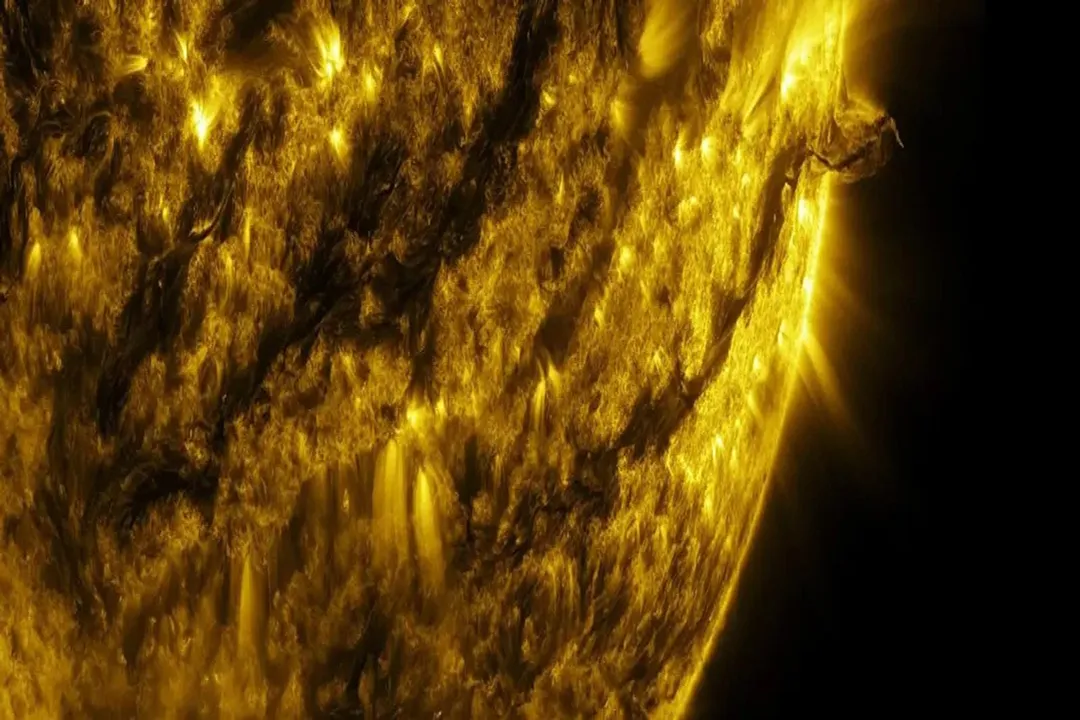
Stars populate the cosmos across a vast scale of size and brightness, making simple categorization essential for understanding their nature. When we discuss the difference between a giant star and a dwarf star, we are really talking about two distinct points on a star's evolutionary timeline, often reflected dramatically in their physical dimensions and energy output. The terms can sometimes cause confusion because "dwarf star" applies to several different stages or classes, whereas "giant" usually refers to a specific phase of stellar aging.
# Size Spectrum
The fundamental distinction between a giant and a dwarf hinges on their physical radius and, consequently, their overall luminosity and mass relative to our Sun. Stars spend the majority of their lives fusing hydrogen into helium in their cores; this stable phase is known as the Main Sequence. On this sequence, our own Sun is classified as a yellow dwarf star.
However, the term dwarf is also applied to the small, extremely dense corpses of dead stars, such as white dwarfs. Conversely, giant stars represent a phase after the Main Sequence for medium-mass stars, where the star swells to many times its original volume. The sheer physical size difference is staggering; a giant star can possess a radius that is perhaps one hundred to one thousand times that of a dwarf star like the Sun.
# Giants Defined
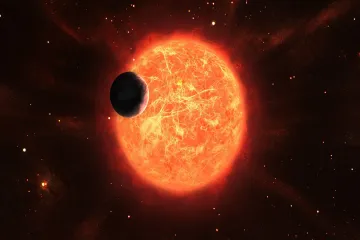
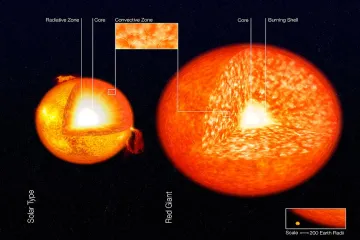
When astronomers speak of a giant star, they are typically referring to a Red Giant. This phase occurs when a star, having exhausted the hydrogen fuel in its core, begins to burn hydrogen in a shell surrounding the core. This new energy source causes the outer layers of the star to expand dramatically.
A star like the Sun will become a Red Giant in about five billion years. During this expansion, its surface area increases so much that even though its surface temperature drops (making it appear reddish), its overall luminosity skyrockets because the total light output is proportional to that massive surface area. This means a Red Giant is significantly more luminous than a dwarf star in its prime. For example, Betelgeuse, a well-known example of a star nearing the end of its life, is a massive supergiant, illustrating the extreme end of this classification. These giants are truly enormous; their vast size places them well above the size range of the common Main Sequence stars.
# Dwarf Types
The category of "dwarf star" is actually quite broad, encompassing the longest-lived stars, the smallest stars, and the stellar remnants. Understanding this grouping helps clarify the contrast with giants.
# Main Sequence Dwarfs
The most common stars in the galaxy, including the Sun, are Main Sequence dwarfs. These stars are in the stable, hydrogen-fusing stage of their lives. The Sun is categorized as a G-type Main Sequence star, or yellow dwarf. While they are called dwarfs, their size and luminosity vary widely depending on their initial mass.
# Red Dwarfs
A specific, very common subtype is the Red Dwarf. These are the smallest and coolest of the Main Sequence stars. They fuse their fuel very slowly, leading to incredibly long lifespans—far longer than the current age of the universe. For general size comparison, a Red Dwarf is significantly smaller and dimmer than the Sun. It is worth noting that because Red Dwarfs burn their fuel so slowly, they represent the vast majority of stars, meaning the term dwarf is most applicable to the most common stellar occupants, not just stellar corpses.
# White Dwarfs
The most distinct type of dwarf star, in terms of structure and origin, is the White Dwarf. This is not a star actively fusing hydrogen; rather, it is the dense, collapsed core left behind after a lower-to-medium mass star (like the Sun) sheds its outer layers as a planetary nebula. White dwarfs are incredibly small—often only about the size of the Earth—but pack the mass of a whole star into that tiny volume. This extreme compression makes them very dense, though their surface temperature is initially very high due to residual heat, even though their overall luminosity is much lower than a giant star.
# Core Contrasts
Comparing these groups reveals stark differences in scale, temperature, and energy production, which are the primary differentiators.
| Characteristic | Red Giant Star | Main Sequence Dwarf (Sun-like) | White Dwarf Star |
|---|---|---|---|
| Evolutionary Stage | Post-Main Sequence, Shell Burning | Stable Hydrogen Fusion | Stellar Remnant (Dead Core) |
| Typical Radius | 10 to 1000 times the Sun's radius | ~1 Solar Radius | ~0.01 Solar Radius (Earth-sized) |
| Surface Temperature | Relatively cool (often reddish, to ) | Moderate to Hot (e.g., Sun ) | Very Hot initially (up to or more) |
| Luminosity | Very high due to massive surface area | Moderate (defined by mass) | Very low (cooling remnant) |
| Density | Low (greatly expanded atmosphere) | Moderate | Extremely High |
| Fuel Source | Hydrogen shell burning | Core hydrogen fusion | None (cooling down) |
| [3][2] |
If we consider the change a star undergoes, the transformation from a dwarf on the Main Sequence to a Red Giant is a massive expansion. For instance, if our Sun became a Red Giant, its outer edge could reach past the orbit of Venus. A star that starts at the size of a dwarf star and swells into a giant star exhibits a change in radius spanning several orders of magnitude. Thinking about this practically, if a small car represented the volume of the Sun (a dwarf), the Red Giant phase would engulf a small city in comparison [Self-analysis based on the scale disparity].
# Evolutionary Paths
The difference between these stellar states is intrinsically linked to their place in the stellar lifecycle. The term "dwarf" often represents either the beginning (Main Sequence, like Red Dwarfs) or the end (White Dwarfs) of a star's active life, while "giant" marks a turbulent middle-to-late transition period.
Red Giants are destined to shed their outer layers, leaving behind the dense White Dwarf core. This highlights a fascinating aspect of stellar evolution: a Red Giant, which is huge and luminous, will eventually shrink down to become a White Dwarf, which is tiny and dim.
Contrast this with the Red Dwarfs. These small, dim stars are on the Main Sequence and are the longest-lived objects in the universe. They fuse hydrogen so slowly that they are predicted to remain on the Main Sequence for trillions of years. Therefore, when comparing a Red Giant to a Red Dwarf, we are comparing a star near its end-of-life crisis to one that has barely started its life and will likely outlive every other star type we can observe today [Self-analysis based on longevity comparisons]. The vast majority of stars observable today, whether we call them Red Dwarfs or our Sun, are stable dwarfs, patiently awaiting the dramatic transformation that leads to the giant phase.
#Videos
How Does A White Dwarf Compare To A Red Giant? - Physics Frontier
Related Questions
#Citations
Star Types - NASA Science
Red Giants and White Dwarfs | CK-12 Foundation
What is the difference between a dwarf star and a giant star? - Quora
The categorization of stars according to the Hertzsprung-Russell ...
[PDF] Star Classification - University of Louisville
Dwarf star - Wikipedia
What is the difference between a red giant and a white dwarf?
How Does A White Dwarf Compare To A Red Giant? - Physics Frontier
Stars