Why does the sky look different in different seasons?
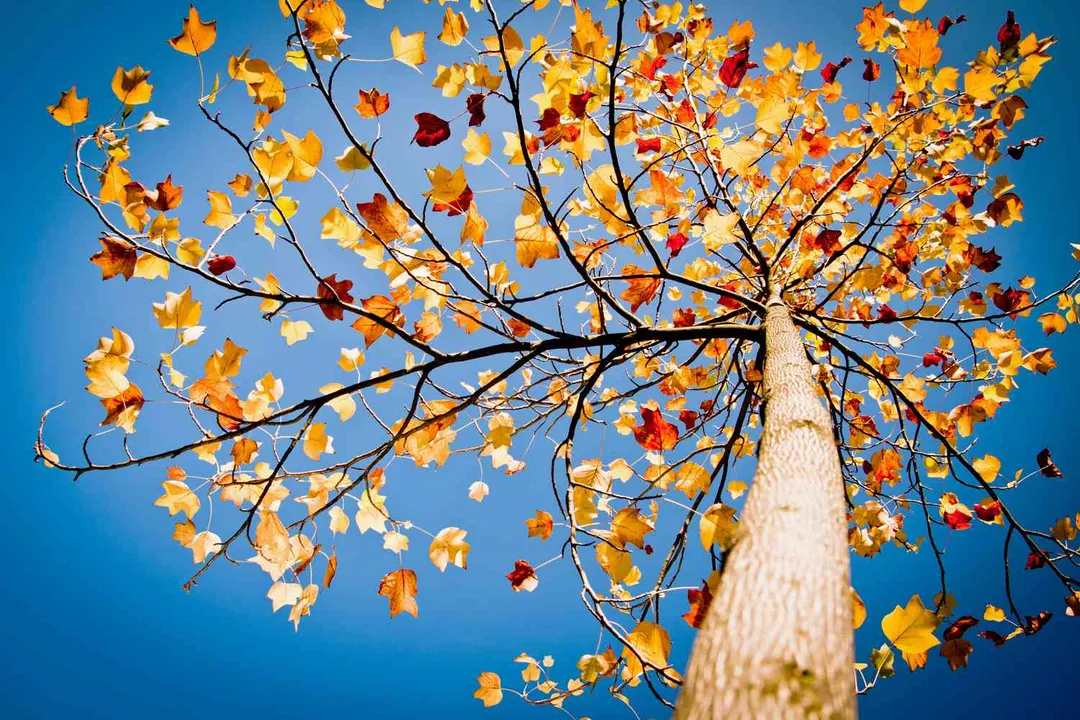
The color and clarity we perceive when looking up at the sky are not static; they shift noticeably throughout the year, making the atmosphere feel completely different in the depth of winter compared to the height of summer. This visual variance isn't a trick of the eye or merely a change in how we perceive things as the Earth revolves around the Sun; it is rooted in the physics of light interacting with what happens to be floating in the air above us at any given moment.
# Light Scattering
To understand seasonal change, one must first grasp the basic mechanism that gives the daytime sky its common blue hue. This phenomenon is governed by Rayleigh scattering. When sunlight enters the Earth’s atmosphere, it collides with the tiny gas molecules—primarily nitrogen and oxygen—that make up the air itself. These small particles are more efficient at scattering shorter, high-frequency wavelengths of light, which correspond to the blue and violet end of the spectrum, across the sky. Because blue light is scattered in all directions, the sky appears blue when we look away from the Sun.
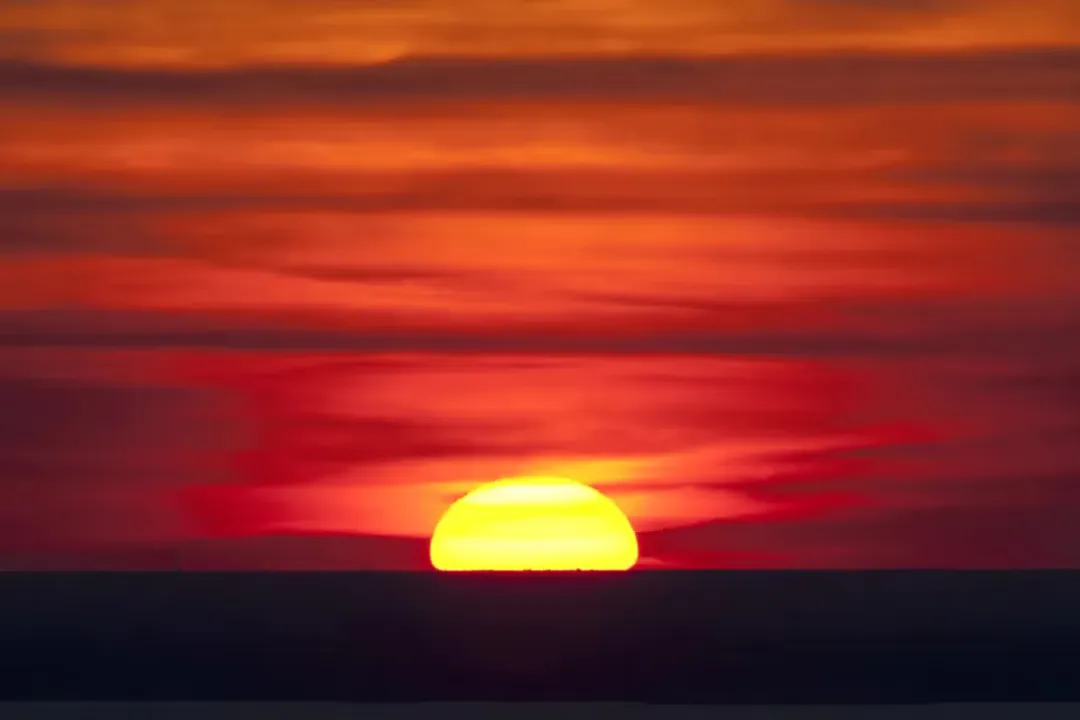
When the Sun is low on the horizon during sunrise or sunset, the light has to travel a much longer path through the atmosphere. This extended journey scatters away nearly all the blue light, leaving the longer wavelengths—the reds, oranges, and yellows—to reach our eyes directly. This accounts for the dramatic colors seen at the edges of the day, but the character of these colors changes seasonally, too.
# Air Density
The density and composition of the air mass are critical determinants of how much light gets scattered. Generally, the air tends to be colder and less humid in the winter months for many regions, particularly those experiencing distinct seasonal shifts. Colder air contracts, meaning there are fewer gas molecules (and consequently fewer dust or pollution particles) per cubic meter compared to warmer air, assuming similar pressure conditions. This reduced particle count leads to less overall scattering of visible light during the day. The result is often a sky that appears a deeper, more intense shade of blue in the winter compared to the summer months.
Conversely, the warmer seasons often bring higher humidity and more particulate matter into the lower atmosphere. In the summer, increased evaporation and higher levels of atmospheric aerosols—dust, pollen, smoke, and pollution—mean there are more targets for the sunlight to strike. These larger particles scatter light across a broader spectrum, not just the blues, which can wash out the deep color of the sky, making it appear lighter, whiter, or sometimes even hazier.
It is interesting to note how this difference in atmospheric clarity impacts our view of deep space. On a clear, frigid winter night, the air often feels incredibly "sharp," and this clarity is reflected in the night sky; stars and planets often appear to twinkle less dramatically and possess a crisper edge because the air column between the observer and space is denser and drier, offering less distortion from water vapor and airborne debris. This translates to a visual experience where the atmosphere itself seems almost invisible, allowing the colors of the celestial sphere to dominate.
# Solar Path Variation

The path the Sun takes across the sky changes dramatically between seasons, which directly affects the apparent color and brightness of the sky throughout the day. During the summer months in the Northern Hemisphere, the Sun climbs much higher in the sky and stays up longer. When the Sun is high, its light path through the atmosphere is shorter, which contributes to the very bright, sometimes intensely white-blue skies of midday.
In the winter, the Sun never achieves the same high arc. Because the Sun remains lower in the sky, the light it emits travels through a greater column of air, even at noon. This longer path increases the amount of scattering that occurs throughout the day, which can deepen the blue during midday or, depending on the local particulate count, create a softer, slightly paler blue.
# Sunset Shades
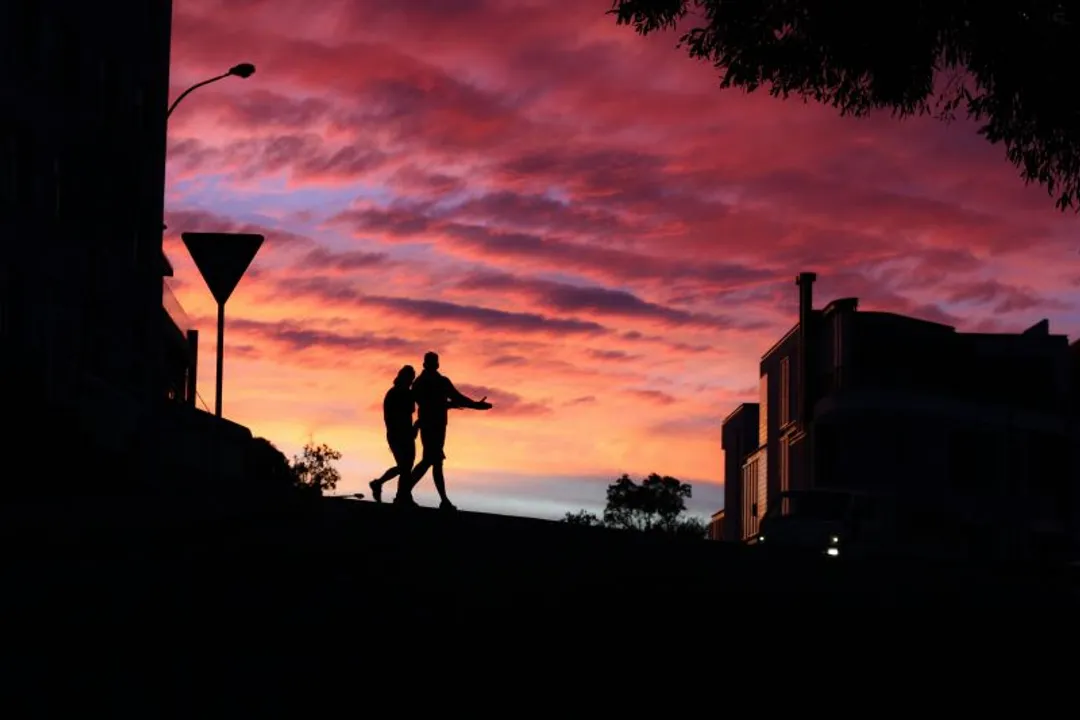
The effect of the Sun’s angle becomes most pronounced at the beginning and end of the day, offering some of the most striking seasonal differences in sky appearance, particularly regarding sunsets. In the winter, when the Sun is always lower, the path length for the light is maximal, leading to incredibly rich, deep red and orange sunsets, provided the air between the observer and the horizon is relatively clean. The low angle forces almost all the shorter wavelengths out of the direct line of sight.
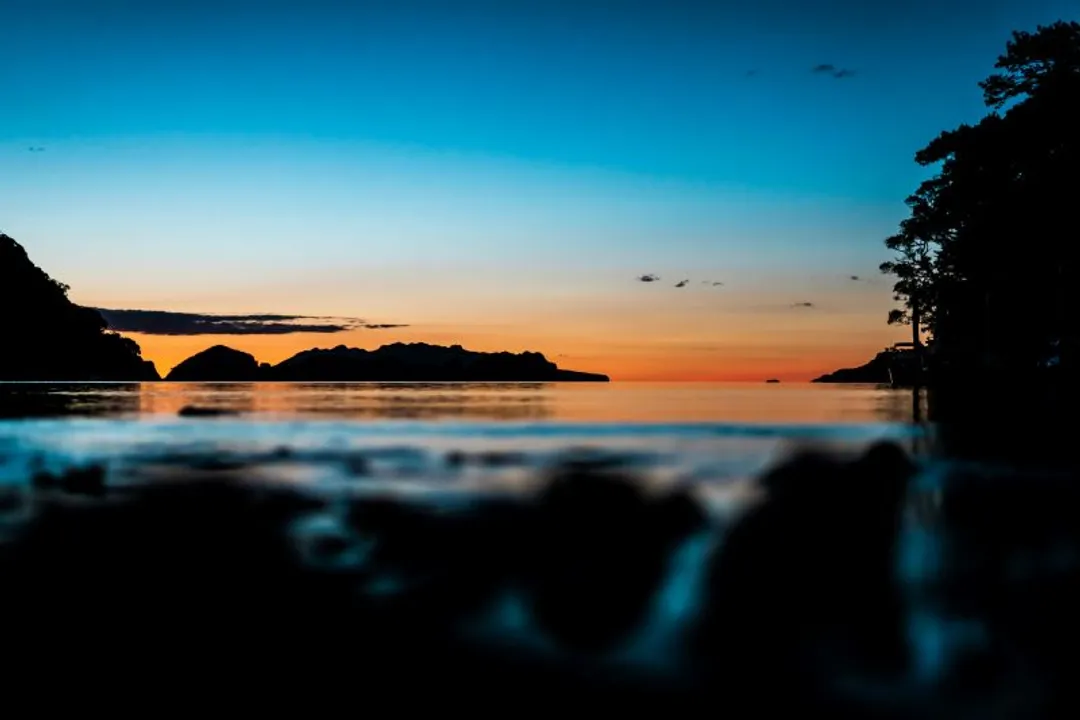
In contrast, summer sunsets can sometimes be less vibrant, although they can also be spectacular if atmospheric dust or pollution is present to enhance the scattering of reds and oranges. For those living near large bodies of water, a practical observation you can make is noting how the humidity affects this. A summer sunset viewed over a large lake might look muted due to high water vapor content causing uniform scattering, whereas a winter sunset, even over the same body of water, might cut through the dry air to produce cleaner, more defined bands of color on the horizon.

# Cloud Composition
Clouds, which dominate the appearance of the sky on many days, also exhibit seasonal differences driven by temperature and moisture availability. Winter clouds are generally composed of smaller ice crystals or supercooled water droplets because the ambient temperatures are much lower. These smaller particles interact with light differently than the larger, warmer water droplets that form summer clouds.
Summer clouds, on the other hand, often develop from warmer, moisture-laden air rising rapidly, leading to vertically developed cumulus clouds. These summer cloud formations can appear thicker and sometimes lower, casting darker shadows and sometimes leading to a sky dominated by white, gray, or dark blue-gray, rather than the crisper, often whiter-edged or more translucent clouds of winter. The overall feeling of the sky shifts from the puffy, towering presence of summer clouds to the flatter, perhaps more widespread stratus or wispy cirrus clouds common in colder, more stable winter air masses.
# Navigating the Sky View
While atmospheric science explains the blue, red, and cloud differences, the arrangement of the stars overhead also changes seasonally, a difference noticed more keenly when the air is clear. The Earth’s tilt means that as our planet orbits the Sun, our night-time view is directed toward different sectors of the galaxy. For instance, certain constellations are visible primarily in the winter sky, while others dominate the summer sky.
This leads to another layer of seasonal variation: the context in which we view the atmosphere. A mid-winter evening often presents the sky with its distinct constellation pattern—perhaps Orion prominent in the southern sky—while the atmosphere above is exceptionally clear due to low humidity. Conversely, a warm summer evening offers a different stellar backdrop, viewed through an atmosphere that is usually thicker with water vapor and aerosols. The "heaviness" of the air subtly alters the refraction and clarity of even those starlight patterns over the course of the year.
# Autumn Transition
Autumn acts as the transitional period where we start to see the shift from summer haze to winter clarity. As temperatures begin to drop and humidity lessens, the atmosphere gradually cleanses itself of the summer’s accumulation of biological particles like pollen, and often, the air masses shift away from hotter, more stagnant zones. This cleaner air allows the scattering of light to become more efficient for the blue wavelengths, often resulting in incredibly vivid blue skies during the day.
This change is frequently noticeable in the quality of autumn light itself, which is often described as being clearer or more golden than the harsh light of summer. Sunsets during this time are often spectacular as the lower solar angle begins to push the yellows and oranges forward, combining with the increasingly clean air to produce bright, crisp displays before the deep cold of winter sets in. The feeling of the sky in the fall is one of increasing clarity after the humidity-laden haze of summer, leading to deeper daytime blues and vibrant, clean horizon colors during twilight hours.
# Summary of Drivers
The visual differences in the sky across the seasons are thus a product of several interconnected atmospheric factors.
| Season | Dominant Atmospheric Factor | Typical Daytime Sky Appearance | Typical Sunset Hue |
|---|---|---|---|
| Summer | High humidity, high aerosol/particle count, high sun angle | Lighter blue, potentially hazy or whitish | Variable; can be muted by haze or enhanced by certain dust events |
| Winter | Low humidity, colder, denser air mass, low sun angle | Deep, intense blue due to fewer scattering particles | Rich red and orange due to long light path through cleaner air |
| Autumn | Transitioning humidity, air clearing | Vivid, clear blue as summer particulates decrease | Clear, often brilliant; light gains intensity as the sun drops lower |
Ultimately, whether you are enjoying a deep sapphire dome in January or watching a fiery orange streak across the horizon in November, you are witnessing the immediate consequences of temperature, moisture content, and the angle at which sunlight has to travel to meet your eye.
#Videos
Why does the sky look bluer in the fall? | NBC4 Washington - YouTube
Related Questions
#Citations
Why does the sky during autumn look distinctively different ... - Reddit
The Appearance of the Sky - UCAR Center for Science Education
Why does the sunlight look different in the summer, fall, and winter?
[PDF] Why the Sky - Changes with the Seasons
Why is the sky bluer in the winter than the summer? - MyStateline
Why are sunsets so pretty in winter? There's a simple explanation
Why Winter clouds are different from Summer clouds - WLTX
Why Is the Sky So Blue in Autumn? - Treehugger
Why does the sky look bluer in the fall? | NBC4 Washington - YouTube