How does sound propagate through different media?
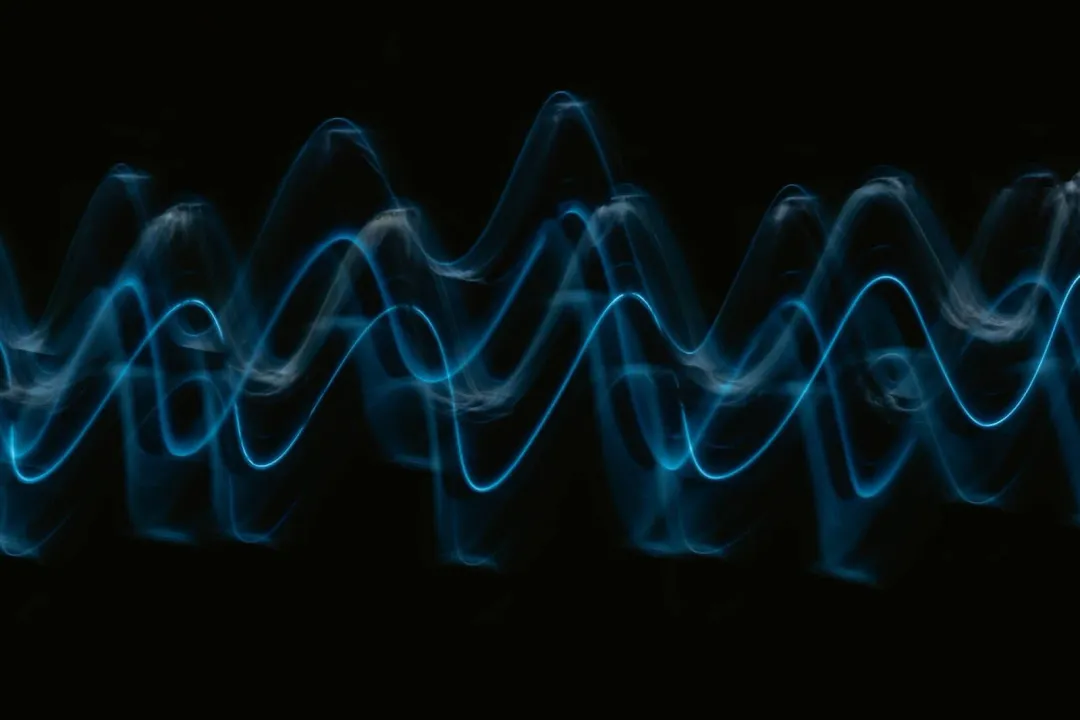
Sound is fundamentally an event of mechanical motion; it is a form of energy that moves through matter by causing particles to vibrate. [6] Unlike light, which can travel through the vacuum of space, sound requires a physical medium—whether it is a gas, a liquid, or a solid—to propagate its energy from one point to another. [2][7] This requirement is what defines sound as a mechanical wave. [2] When an object vibrates, it disturbs the immediate surrounding particles, initiating a chain reaction of pressure variations that travel outward, carrying the acoustic energy with them. [3][7]
# Mechanical Wave
The essential process hinges on the transfer of kinetic energy between adjacent particles within the medium. [7] A vibrating source, like a striking drumhead or a vocal cord, pushes against its neighbors, momentarily packing them closer together. This region of higher pressure is called a compression. [1][6] As the source moves back, it leaves behind a region where the particles are spread farther apart than normal; this is known as a rarefaction. [1][6] These alternating compressions and rarefactions move away from the source as a longitudinal wave. [1][7] Critically, the particles themselves do not travel across the room; they merely oscillate back and forth around a fixed equilibrium position as the wave passes through. [7]
# Particle Vibration
The distinction in how this vibration occurs dictates the character and speed of the sound in different materials. In a gas, such as the air we breathe, the molecules are widely separated and move almost randomly until a pressure disturbance forces them into temporary collisions. [6] Sound transmission in air relies entirely on these collisions transferring momentum from one molecule to the next. [6] Because the molecules are loosely bound and spaced out, the chain reaction is relatively slow, resulting in the familiar, slower speed of sound we experience in everyday life. [6]

# Gaseous Transmission
Air, being a compressible medium, transmits sound waves with noticeable inefficiency compared to denser states of matter. [6] The speed of sound in air at standard sea-level conditions () is approximately $343$ meters per second (). [1][9] While this seems fast, it is drastically slower than the speed of light, which is why we see lightning before we hear thunder. [1] The loose arrangement of gas molecules means that sound energy disperses more quickly, leading to greater attenuation over distance compared to transmission through a liquid or solid. [6]
# Liquid Conduit
When sound enters a liquid, like water, the environment changes significantly. Liquid molecules are much closer together than those in a gas, and the forces of attraction between them provide a degree of incompressibility. [4] This tighter molecular structure allows the vibrational energy to be passed along much more efficiently. [4] The increased density and reduced compressibility compared to a gas result in a considerable jump in propagation speed. For instance, the speed of sound in water is roughly , [1][9] which is over four times faster than in air. [9] This efficiency is why underwater acoustics, or sonar, is so effective across long distances; the medium sustains the wave with less energy loss than air would. [4]

# Solid Conduction
Solids represent the tightest packing of matter, where atoms are linked by strong intermolecular forces, creating a highly elastic structure. [2][4] When one particle in a solid is displaced, the adjacent particles react almost instantaneously due to these strong bonds. [2] Consequently, sound travels fastest through solids. In materials like steel, the speed can approach . [1][9] This rapid transfer of energy means that, for a given frequency, the wavelength of the sound in a solid is much longer than it would be in air or water. [6]
# Wave Types
A crucial distinction in solids is that they can support more than just longitudinal waves (compressions and rarefactions). [2] Because the bonds between particles in a solid can exert restoring forces sideways as well as along the direction of travel, solids can also transmit shear waves, or transverse waves, where the particles oscillate perpendicular to the direction of wave travel. [2] Liquids and gases, lacking strong shear resistance, primarily transmit only longitudinal waves. [2] This difference in available wave modes in solids is important in fields like seismology, where distinguishing between compressional (P) waves and shear (S) waves helps characterize the Earth’s interior structure. [2]
# Speed Factors
The speed at which sound travels is not fixed; it is entirely dependent on the intrinsic physical properties of the medium it is moving through. [9] Two primary properties govern this speed: the elasticity (or stiffness) and the density of the material. [1][4][9]
Elasticity measures how resistant a material is to being deformed and its tendency to spring back to its original shape. [4] Generally, sound travels faster in stiffer materials because the particles return to their equilibrium position more quickly, allowing the next particle to be disturbed sooner. [4]
Density, which is mass per unit volume, has the opposite effect. [9] Sound travels slower in denser materials, assuming all other factors remain equal, because the heavier particles take more energy and time to move in response to the arriving disturbance. [9]
It is the interplay between these two factors that determines the final velocity. A material that is very stiff but also very dense might have a slower speed than a material that is moderately stiff and less dense. [4] The general rule, however, holds true: sound moves fastest where the medium is stiffest and least compressible relative to its density. [3][9]
| Medium State | Typical Speed ( at ) | Key Characteristic | Wave Type Supported |
|---|---|---|---|
| Gas (Air) | Low density, high compressibility | Longitudinal | |
| Liquid (Water) | Medium density, low compressibility | Longitudinal | |
| Solid (Steel) | High density, very low compressibility | Longitudinal and Shear | |
| [1][9] |
When comparing air and water, the increased stiffness of water far outweighs its increase in density over air, leading to a much higher sound speed. [4]
An interesting implication arises when considering the efficiency of transmission versus the speed of transmission. While solids conduct sound the fastest due to their high stiffness, the very tight packing also means that the wave energy interacts with many particles very quickly. [2] This high interaction rate is excellent for speed but can mean that the energy is not carried as far before being converted to heat through friction and internal dampening mechanisms inherent in the material's structure. Liquids, having a moderate separation, often strike a better balance for long-range transmission, as seen in ocean acoustics, where high-speed, low-attenuation channels exist for powerful, long-distance sound propagation. [4]

# Impedance Mismatch
A critical practical aspect of sound propagation across different media is the concept of acoustic impedance. [6] Acoustic impedance is a measure of how much a material resists the flow of acoustic energy; it is essentially the product of the medium’s density () and the speed of sound () in that medium (). [6]
When sound moves from one medium to another—say, from air to concrete, or from water to a submarine hull—if the acoustic impedances are significantly different, a large portion of the sound energy will be reflected rather than transmitted across the boundary. [6] This phenomenon is known as impedance mismatch. [6]
If you clap your hands in the air, the sound travels easily away from you because the air's impedance is low. If you attempt to clap your hands together while submerged deep underwater, the sound does not travel nearly as far outside your hands into the water, because the medium is much denser and stiffer, creating a massive mismatch with the thin air layer trapped between your palms, causing the energy to stay mostly in your hands or reflect back along your arms. Engineers designing concert halls or anechoic chambers pay close attention to this concept when choosing materials to either absorb (dampen) or reflect sound waves efficiently. [6] A well-chosen material for sound absorption often has a density and internal damping structure designed to closely match the impedance of the air it faces, allowing the sound energy to bleed into the absorber rather than bounce off. [6]
#Videos
How Sound Travels Across Different Mediums - YouTube
Related Questions
#Citations
How Sound Travels Across Different Mediums - YouTube
How Does Sound Travel Through Solid Materials? : r/askscience
How Does Sound Travel? | Waves, Speed, Frequency, & Amplitude
Sound Propagation And How It Works | Dekoni Audio
The Science of Sound - Where Does Sound Come From?
[PDF] How Sound Propagates - Princeton University
How can sound waves propagate through air?
Lesson Seven: How does sound travel in different environments?
Speed of Sound Definition - BYJU'S