What is the difference between Capricorn and Capricornus?

The term Capricornus generally points toward a specific configuration of stars in the night sky, while Capricorn is the familiar name used in astrology for a particular slice of the sky, a sign that has its own set of symbolic meanings. While often used interchangeably in casual conversation, particularly when discussing birth dates, these two terms reference fundamentally different concepts rooted in astronomy and astrology, respectively. [2][3][8] Understanding this distinction is key for anyone curious about celestial navigation or the history of zodiacal lore. [7]
# Celestial Object
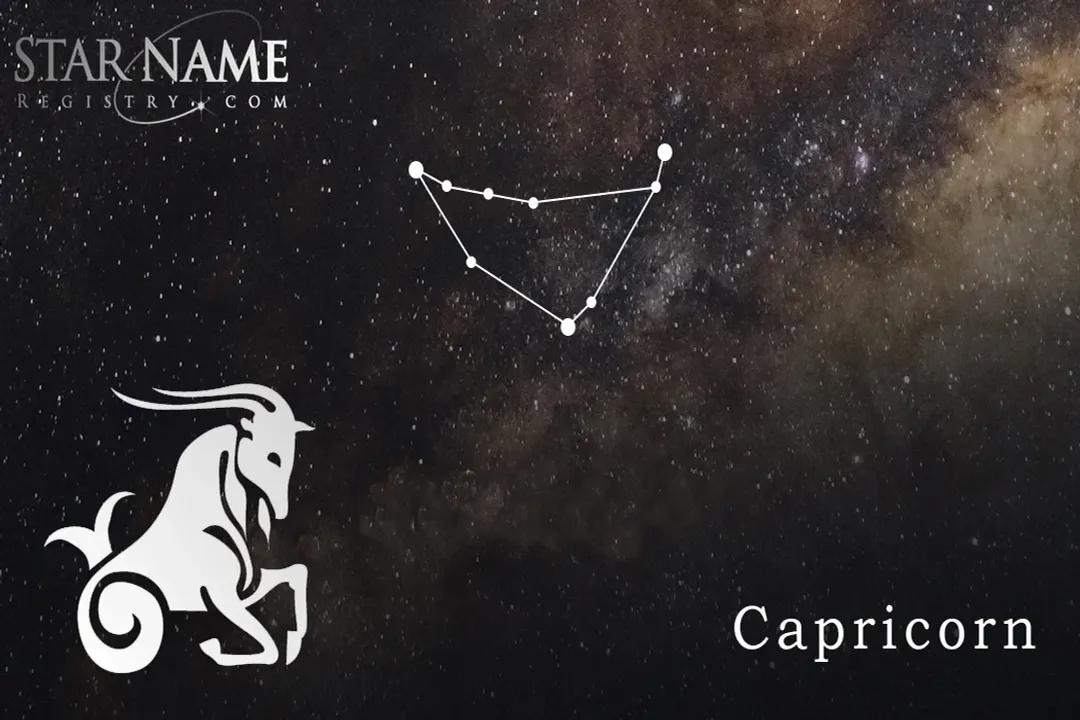
The proper name for the group of stars visible from Earth is Capricornus. [1] This is one of the twelve constellations that make up the zodiacal band, the apparent path the Sun follows across the heavens over the course of a year. [1][7] Astronomically, a constellation is a precisely defined region of the celestial sphere, officially recognized by the International Astronomical Union (IAU). [1] Capricornus is recognized as one of the earliest constellations cataloged by Ptolemy. [7]
# Sea-Goat Form
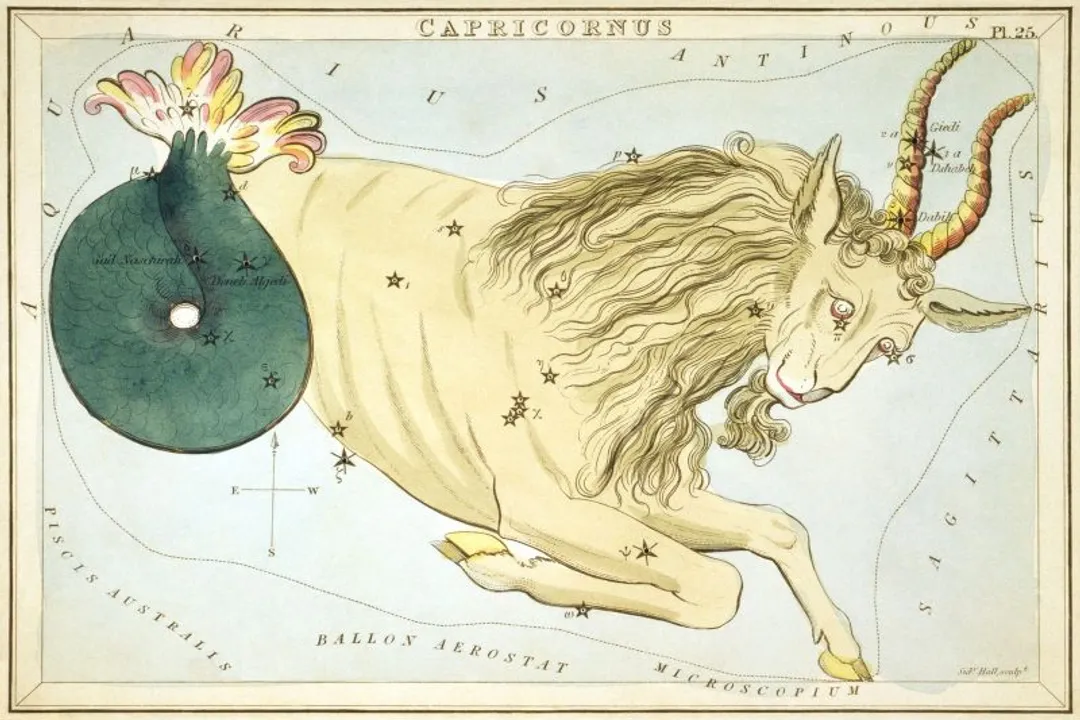
Within the map of the stars, Capricornus represents the Sea-Goat. [1][5] This ancient imagery, suggesting a creature with the upper body of a goat and the tail of a fish or serpent, has persisted through millennia. [7] In the sky, Capricornus is situated in the Southern Celestial Hemisphere. [5] For observers in the Northern Hemisphere, it is typically visible low on the southern horizon during the fall and early winter months. [5] Despite its ancient significance, it is considered one of the fainter constellations, meaning its stars do not shine with great intensity. [5]
# Locating Stars
For the amateur astronomer wishing to spot this grouping, knowing its neighbors helps orient the view. [5] Capricornus borders on several other recognized star patterns, including Aquarius, Sagittarius, Piscis Austrinus, and Microscopium. [5] When looking toward the Southern Celestial Hemisphere, the constellation is generally observable from about September through February. [5] The brightest star within the boundaries of the constellation Capricornus is named Deneb Algedi. [5] Furthermore, the geographical marker known as the Tropic of Capricorn is named after this constellation because the Sun appears to reach its southernmost point in the sky as it passes through the region associated with Capricornus. [1]
# Astrological Sign

When people discuss Capricorn in a personal context, they are almost always referring to the astrological sign. [2][3][8] This sign is directly tied to specific dates related to the solar year. [9] Astrologically, Capricorn is the sign governing individuals born roughly between December 22 and January 19. [9] This framework assigns symbolic characteristics—such as discipline, practicality, and ambition—to those born under its influence. [9]
# Tropical Zodiac
The astrological system in widespread modern use, the tropical zodiac, bases its divisions on the seasons rather than the physical location of the constellations themselves. [1] The tropical sign Capricorn is associated with the region of the sky currently occupied by the constellation Capricornus. [1] The imagery and mythological associations—like the goat-horned figure—are maintained for the sign, drawing a direct line back to the star pattern that originally defined it. [7][9] However, the difference between the sign and the constellation is not just semantic; it is a measurable spatial discrepancy that affects anyone serious about both disciplines.

# Astronomical Drift
The separation between the astrological sign Capricorn and the physical constellation Capricornus is a direct result of a phenomenon called the precession of the equinoxes. [1] This slow, long-term wobble in the Earth's axis causes the apparent position of the constellations relative to the fixed dates of the calendar to shift over thousands of years. [1] Because the tropical zodiac is fixed to the Earth's seasons (starting with the vernal equinox), and the constellations have moved due to precession, the astrological sign Capricorn no longer aligns neatly with the physical constellation Capricornus. [1]
# Boundary Mismatch
Today, the astrological sign Capricorn largely occupies the physical sky space belonging to the constellation Sagittarius, while the constellation Capricornus is now associated with the astrological sign Aquarius. [1] This means that while an astrologer assigns the name Capricorn to someone born in late December, the Sun was physically passing through the boundaries of the constellation Aquarius at that time, not Capricornus. [1] This disparity is fundamental: astronomy relies on fixed celestial coordinates, while the tropical zodiac relies on a seasonal calendar reference point that drifts against those coordinates. [1][3]
It is interesting to consider how the shared Sea-Goat motif has survived this significant spatial separation. [1][3] The enduring nature of the symbolism—the Sea-Goat representing grounded ambition and slow ascent—suggests that for the astrological tradition, the meaning derived from the constellation’s original position remains more important than its current physical location in the sky. [9] The longevity of the myth transcends the shift in celestial cartography.
# Comparison Summary

To clarify the dual identities, it helps to contrast the key attributes side-by-side.
| Feature | Capricornus | Capricorn |
|---|---|---|
| Category | Constellation (Astronomy) [1][5] | Astrological Sign (Astrology) [2][9] |
| Definition | A defined area of the celestial sphere [1] | A 30-degree segment of the ecliptic, fixed to seasons [1] |
| Symbolic Figure | The Sea-Goat [1][5] | The Sea-Goat [9] |
| Sun's Passage | The Sun passes through its boundaries near the winter solstice [1] | Corresponds to birth dates approximately Dec 22 – Jan 19 [9] |
| Current Physical Sky Location (for the Sun) | The Sun is not currently in this region during the relevant dates [1] | The Sun is physically in the region of Aquarius during these dates [1] |
For those who enjoy both hobbies, the distinction requires careful cataloging. An individual interested in locating the actual star group must use sky charts focused on the IAU boundaries of Capricornus. [5] Conversely, if the focus is on personality traits or natal charts, the reference point remains the tropical sign Capricorn. [9]

# Observing the Night Sky
If the goal is to connect with the ancient sight that inspired the zodiac, locating the constellation Capricornus is the objective. [5] As mentioned, it resides in the southern sky for many observers. [5] Since it is a dimmer collection of stars, successful viewing often depends on finding a location far from light pollution, especially during the fall and early winter when it is highest in the sky. [5]
A useful strategy for modern observers, especially those exploring the Southern Hemisphere skies, is to remember that Capricornus is not one of the brightest, most easily recognizable patterns like Orion or the Big Dipper. [5] Therefore, using star-mapping apps that overlay constellation lines onto the live sky can be incredibly helpful for pinpointing its faint boundaries against the darker backdrop. [5]
When comparing the two, remember that the tropical sign Capricorn relates to the time of year when the Sun is at its lowest arc in the sky relative to the equator. [1] The physical constellation Capricornus, however, has drifted forward in the sky relative to that solstice point due to the Earth’s long-term axial wobble. [1] This means that if you look up on January 5th to find the constellation associated with your Capricorn friend's birthday, you will actually be looking toward the area of the sky belonging to Aquarius, not Capricornus. [1] This realization—that the seasonal marker no longer matches the physical object—is perhaps the most significant piece of gained knowledge when contrasting the two terms. [3]
This divergence forces an interesting choice upon the curious reader: Do you trace your interests through the tradition of the sign (astrology), which prioritizes seasonal cycles and symbolic meaning, or do you pursue the physical reality of the constellation (astronomy), which requires tracking precise celestial coordinates that change over vast timescales? [1][7]
Related Questions
#Citations
Capricornus - Wikipedia
FYI: “Capricornus” usually refers to the zodiacal constellation, and ...
Capricorn or Capricornus: The Inspiration Behind our New Collection
How to spot the Capricornus constellation, the sea goat figure in the ...
Capricornus the Sea-goat has an arrowhead shape - EarthSky
The truth about Capricorn that you were never told!
The History of Capricornus Constellation: What You Need to Know
FYI: “Capricornus” usually refers to the zodiacal constellation, and ...
Capricorn | Glossary - Developing Experts