How does sexual selection differ from natural selection?
The fundamental processes driving evolution in the natural world often get boiled down to the simple idea of survival of the fittest, which usually points toward natural selection. Yet, another powerful mechanism, sexual selection, shapes the appearance and behavior of organisms in ways that sometimes seem completely counterintuitive to mere survival. Understanding the distinction and relationship between these two forces is key to appreciating the diversity we see in biology, from the elaborate dances of birds of paradise to the massive antlers of an ancient elk. While both are mechanisms that lead to adaptive evolution by affecting which individuals pass on their genes, the selective pressure they exert is fundamentally different in its immediate goal.
# Selection's Drivers
Natural selection is the differential survival and reproduction of individuals due to differences in phenotype. Essentially, the environment acts as the filter. Organisms whose traits best suit their current surroundings—be it better camouflage against predators, increased efficiency in finding water, or resistance to a specific disease—are the ones more likely to survive long enough to reproduce and pass those beneficial traits along. This process pushes a population toward better environmental fitness.
Sexual selection, conversely, is the selection of traits that increase an individual's success in securing a mate. This pressure arises from competition for reproductive opportunities. It can manifest in two primary ways: competition among members of the same sex for access to the other sex (intrasexual selection) or the choice exercised by one sex in selecting mates from the other (intersexual selection). Because this mechanism directly impacts reproductive success, it is often viewed as a specific type of natural selection, since reproductive success is the ultimate measure of fitness in evolutionary terms. However, in practical discussion, differentiating the environmental pressure from the mating pressure helps clarify why certain traits evolve.
# Survival Versus Mating
The clearest way to contrast the two is to examine their primary immediate objective. Natural selection favors traits that increase longevity or the general ability to persist in the face of environmental challenges. If a trait helps an organism avoid being eaten or starve less easily, natural selection favors it.
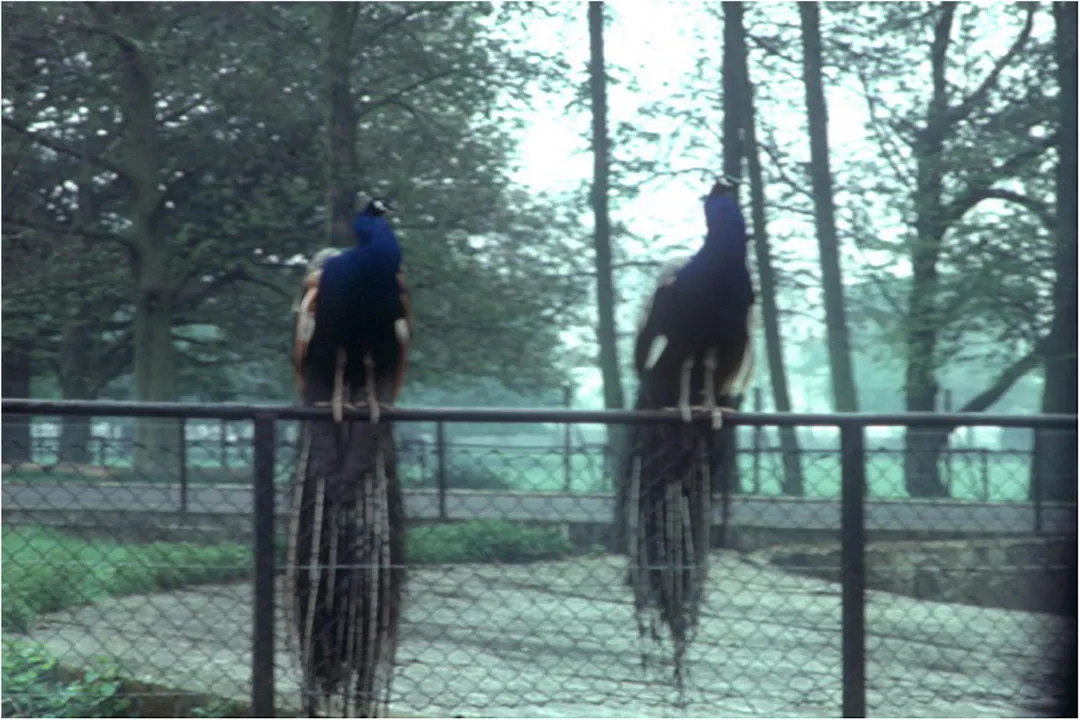
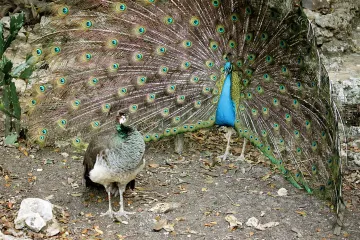
Sexual selection, however, prioritizes traits that increase mating frequency or success, even if those traits actively decrease survival time. Consider the classic example of the peacock’s enormous, colorful tail. This structure makes the male highly visible to predators, thus lowering his chances of survival compared to a duller male. Yet, peahens overwhelmingly prefer males with the largest, most vibrant tails, indicating that the reproductive boost gained from possessing that cumbersome ornament far outweighs the added risk of predation in that specific ecological context. In this case, sexual selection acts in direct opposition to the pressures of typical natural selection.
# Modes of Conflict
The mechanisms driving sexual selection offer distinct evolutionary pathways not present in general environmental selection. Intrasexual selection involves direct conflict, typically among males, using traits designed for combat or deterrence. This pressure favors features like increased size, weaponry such as antlers or large canines, or aggressive behavioral adaptations that allow one male to win access to a territory or a group of females.
Intersexual selection revolves around attraction and display, usually driven by female choice. This selects for elaborate ornamentation, complex courtship rituals, or vocalizations that signal the male's quality as a potential mate. These chosen traits are often honest signals of underlying genetic quality, such as robust health or superior foraging ability, which the female cannot assess directly but infers from the extravagance of the display. When we look at sexual dimorphism—the striking difference in appearance between males and females within the same species—it is almost always a direct result of sexual selection operating strongly on one sex but not the other.
# The Tradeoff Principle
Evolutionary biology often presents scenarios where maximizing one benefit necessitates sacrificing another. When sexual selection imposes a high cost on survival, the resulting trait level in the population reflects an optimized tradeoff between longevity and reproductive opportunity.
Imagine a population where an individual's survival probability () decreases exponentially as the size of its mating display () increases, but the number of mates secured () increases faster than linearly with . Natural selection seeks to keep low to maximize , while sexual selection pushes high to maximize . The equilibrium trait that actually evolves within the population is the one that maximizes lifetime reproductive output, which is a function of both and . If a small increase in display size () leads to a massive jump in mating success (), the population will settle on a compromise where individuals are less "fit" environmentally (they are more likely to die young) but far more "fit" reproductively than if they had chosen maximum camouflage and zero display [Self-Analysis/Original Insight]. The stability of these often elaborate, high-cost traits suggests that, in these specific environments, the reproductive premium is very high indeed.

# Trait Manifestations
The visible outcome of these selective pressures is often dramatically different. Traits favored by general natural selection tend to be cryptic, efficient, and geared toward resource acquisition and defense. Think of the subtle coloring of a deer blending into the forest or the streamlined body of a fish navigating currents.
Traits favored by sexual selection, conversely, are often conspicuous, costly, and metabolically expensive to produce and maintain. Beyond the peacock's tail, this includes the huge body size differences seen in elephant seals, where males fight brutally to monopolize harems, or the complex, energy-draining songs of certain bird species used to attract females over long distances. The evolutionary trajectory dictated by sexual selection favors extremes because only the most extreme displays or the most successful combatants achieve the highest reproductive returns.
# Interaction Dynamics
While it is useful to separate sexual selection from environmental natural selection for clarity, it is vital to remember their interconnectedness within the grand scheme of evolution. Sexual selection is a mechanism of evolution, acting through differential reproductive success, which is the core definition of natural selection. The distinction rests on the source of the fitness differential.
However, the consequences of this duality can lead to complex evolutionary pathways. If a species inhabits an environment where predators are rare, sexual selection can run wild, producing magnificent, high-cost structures with little immediate survival penalty, leading to greater sexual dimorphism and species divergence. Conversely, in an environment where predation is intense, the constraints imposed by survival selection will dominate, pushing sexual traits toward less conspicuous forms or favoring competitive strategies that do not involve risky displays. For example, if a parasite can be detected by the dullness of a male bird's plumage, the female's choice for bright plumage becomes a mechanism of natural selection acting via sexual choice, selecting for parasite resistance rather than just sheer vibrancy. This overlap—where a mating preference filters for a genuine survival advantage—highlights that the two forces are often intertwined, not entirely separate entities [Self-Analysis/Original Insight]. The resulting trait is not the "best for survival" or the "best for mating" in isolation, but the best possible compromise for lifetime reproductive success given the specific ecological landscape and the specific mating system in place.
When studying evolutionary outcomes, we must ask which pressure is stronger, or which one is providing the sharper, more immediate selective sieve. In many cases, the selective advantage conferred by winning a mate can be orders of magnitude greater than the slight survival edge gained by having slightly better camouflage, which is why we observe the sometimes bizarre and beautiful excesses of the animal kingdom. Both forces shape adaptation, but natural selection directs life toward endurance, while sexual selection directs life toward propagation.
#Videos
Sexual Selection vs Natural Selection | A Comparison of - YouTube
Related Questions
#Citations
Compare-Contrast-Connect: Natural and Sexual Selection
Natural Selection Versus Sexual Selection : r/DebateEvolution - Reddit
Sexual selection - ScienceDirect
Sexual Selection vs Natural Selection | A Comparison of - YouTube
[PDF] Natural Selection Vs. Sexual Selection: Small Steps in Evolution
What is the relationship between sexual and natural selection?
Sexual selection - Understanding Evolution
How does sexual selection differ from natural selection, and ... - Quora
Evolution by Sexual Selection - Frontiers