What's the difference between a hunter's moon and a harvest moon?
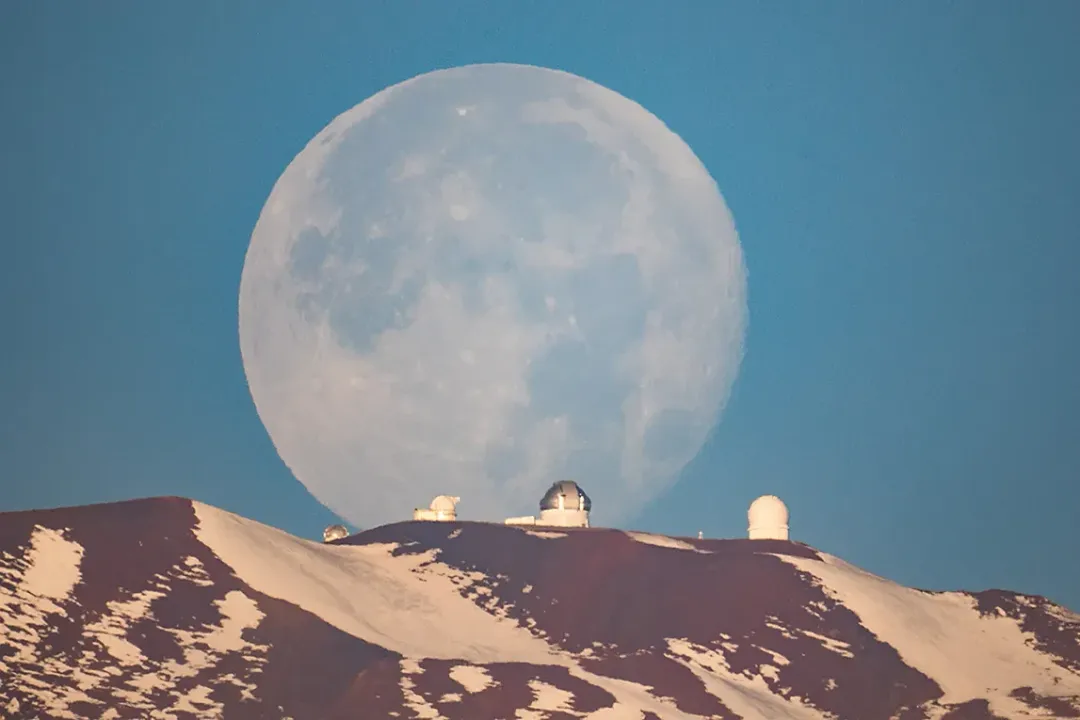
The arrival of autumn often brings with it a special glow in the night sky, marked by full moons that carry evocative, traditional names. Among the most frequently discussed are the Hunter’s Moon and the Harvest Moon. While they often occur close together, sometimes even overlapping in the public consciousness or calendar year, they are defined by distinct astronomical rules, leading to confusion about which is which and when they appear. [1][5] Understanding the difference is less about the moon's appearance—as both can look spectacular—and entirely about their relationship to the turning of the seasons.
# Harvest Defining Feature
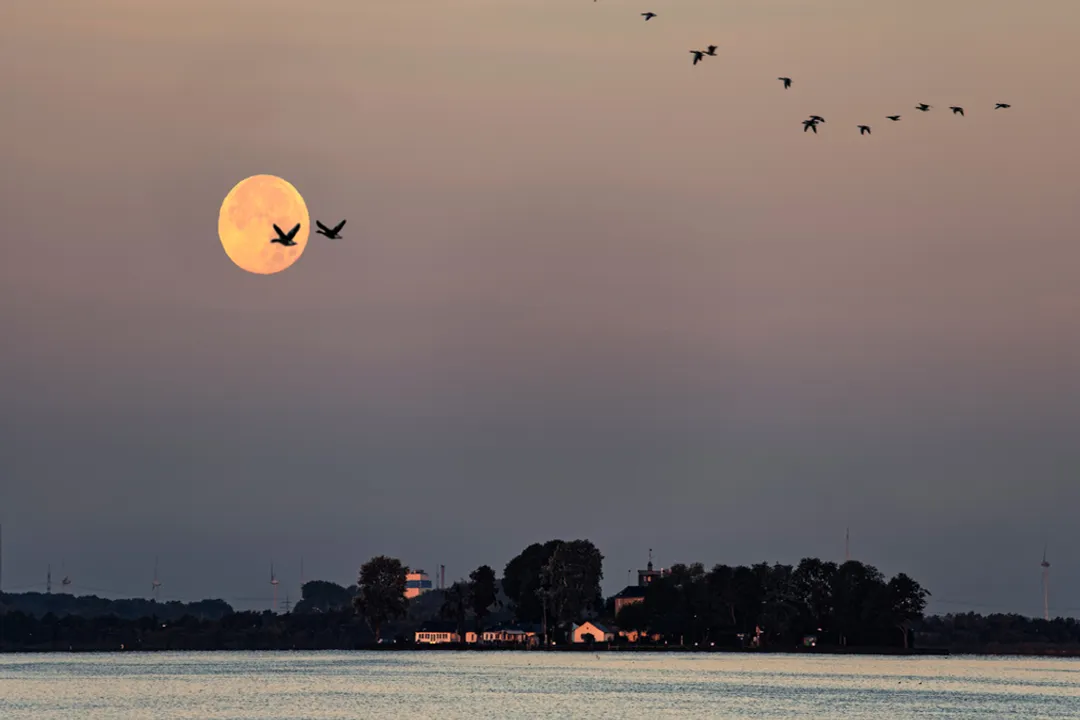
The Harvest Moon holds a very specific astronomical designation: it is the full moon that occurs closest to the autumnal equinox. [8] Because the equinox falls around September 22nd or 23rd, the Harvest Moon can technically be the full moon in either September or October. [5][8] If the full moon falls very early in September, it is the September full moon that earns the title; if it falls late in October, it's the October one. [5] This particular timing is why it is so closely tied to agricultural cycles in the Northern Hemisphere. [1][6]
Historically, the benefit of the Harvest Moon was substantial for farmers. [6] Before widespread electric lighting, the extra daylight provided by this full moon was invaluable for bringing in the bounty of the late-summer and early-autumn crops. [1] For several nights surrounding the full phase, the moon rises much closer to the time of sunset than usual. [1][9] This meant that as the sun dipped below the horizon, the moon would quickly follow, remaining visible for longer into the evening hours when labor was still possible. [9] This provided a crucial window for gathering in the harvest before the arrival of winter weather. [1][6]
# Hunter Sequence
In direct contrast to the Harvest Moon’s relationship with the equinox, the Hunter’s Moon is defined solely by its position in the lunar cycle relative to the Harvest Moon. [5] Simply put, the Hunter’s Moon is the full moon that follows the Harvest Moon. [1][6] Since the Harvest Moon is most often in October, the Hunter’s Moon is typically the October full moon, or occasionally the November full moon if the Harvest Moon occurred in September. [1][5][6][9]
This name also has deep roots in the traditional calendar, specifically relating to the activities of hunters. [6] By the time the Hunter's Moon arrived, the fields had been cleared of crops, making the grazing animals more visible against the bare landscape. [6] The bright light from this moon, much like the Harvest Moon, offered excellent visibility for tracking and hunting game before the harsher, darker nights of late autumn and early winter set in. [6]
# Defining Criteria Comparison
The fundamental difference rests in the ruling definition for each name. [1][5]
| Moon Name | Primary Defining Factor | Typical Month(s) | Origin Context |
|---|---|---|---|
| Harvest Moon | The full moon closest to the Autumnal Equinox [8] | September or October [5] | Providing light for late-season crop gathering [1] |
| Hunter's Moon | The full moon immediately following the Harvest Moon [5] | October or November [6][9] | Illuminating game for hunters before winter [6] |
This subtle distinction explains why the two names sometimes feel interchangeable or why a specific date's full moon might have one name or the other, depending on the year’s equinox timing. [5] For instance, if the autumnal equinox occurs on September 23rd, and the full moon is on September 15th, that September moon is the Harvest Moon. The subsequent full moon in October would then be called the Hunter’s Moon. [1][5] Conversely, if the equinox occurs late, say October 1st, and the full moon is October 12th, that is the Harvest Moon, and the November moon becomes the Hunter's Moon. [1][5]
# Extended Illumination Effect
One of the most scientifically interesting aspects shared by both the Harvest Moon and the Hunter’s Moon, although most pronounced with the former, is the unusually short interval between moonrises on successive nights. [1][9] This phenomenon is related to the fact that the autumnal equinox occurs near the point where the ecliptic (the plane of the Earth's orbit around the Sun) intersects the celestial equator at the shallowest angle. [9]
For several evenings surrounding the Harvest Moon, the moon appears to rise almost at the same time each night, close to sunset. [1] This minimizes the duration of total darkness immediately after sunset. While this effect is most noticeable around the Harvest Moon, the Hunter's Moon, occurring soon after, still benefits from this favorable orbital geometry, showing a slightly shorter-than-average dark period for a few nights. [2] For those who enjoy late-evening outdoor activities or are simply appreciating the sky, this short gap between moonsets and moonrises means the sky remains illuminated later and stays brighter longer than during the mid-winter full moons. [1][9] Thinking about this from a practical observation standpoint, if you are trying to take deep-sky photographs, the few nights surrounding the full phase of the Harvest Moon will present the greatest challenge due to this lingering light, compared to the Hunter's Moon later in the season when the moonrise intervals begin to stretch out toward their normal pattern. [2]
# Annual Calendar Shifts
The traditional naming convention means that these moons are not fixed to a specific date like the Fourth of July; their appearance shifts annually according to the Earth's precise orbital mechanics relative to the Sun. [8] The full moon cycle, known as the synodic month, averages about 29.5 days. [7] This means that the date of any named full moon shifts earlier by about 11 days each year, until a leap year or the equinox's position forces a sudden jump. [8]
Because the Harvest Moon is anchored to the equinox, its date range is relatively predictable once the equinox date is known. The Harvest Moon must fall between September 8th and October 7th, inclusive. [8] This predictable window is a unique feature among the named moons. If you know the date of the autumnal equinox for the coming year, you can easily determine which full moon is the Harvest Moon by calculating which full moon date is nearest to the equinox. [8] For example, if the equinox falls on September 22nd, the full moon on September 17th or 18th would claim the Harvest title. This predictability stands in contrast to moons named purely by sequence, like the Hunter's Moon, whose date can vary more widely based on when the preceding Harvest Moon fell. [5]
If the Harvest Moon happens to be in September, the Hunter's Moon will be the October full moon. If the Harvest Moon is in October, the Hunter's Moon will be the November full moon. [1][9] This shifting date is why older almanacs had to print the names annually rather than assigning them permanently to a specific calendar month. [5]
# Contextual Naming Traditions
It is helpful to place these two named moons within the broader context of the annual cycle of full moon names, which often originate from Native American traditions reflecting seasonal activities or weather patterns. [5] Full moons are essentially markers across the calendar year. [5][7] For instance, the full moon before the Harvest Moon might be the Corn Moon (also sometimes associated with harvest). [5] Following the Hunter's Moon, we transition into the darker part of the year with the Beaver Moon (often November) and the Cold Moon (December). [5]
The practice of naming full moons has become common in modern media, often leading to the conflation of names, but their original distinction—equinox proximity versus sequential position—remains the key differentiator. [2][5] While all full moons are spectacular celestial events, recognized by the fact that the moon is fully illuminated as it rises opposite the setting sun, [7] the specific historical and astronomical context given to the Harvest and Hunter's Moons imbues them with a unique seasonal significance that lasts only for those brief weeks in early autumn. [1]
Related Questions
#Citations
Hunter's Moon or Harvest Moon in October - Time and Date
Blue Moon, Harvest Moon, Hunters Moon – Explaining the different ...
Hunter's moon and harvest moon explained - Facebook
What is the difference between a hunter's moon and a harvest moon?
What are the names of full moons throughout the year?
Why is it called the Hunter's Moon? The story behind full moon names
Full moon - Wikipedia
October 2025 Full Moon: Largest and Brightest Harvest Supermoon ...
Super Hunter's Moon – 2025's brightest full moon – on November 5-6