Why is tonight's full moon called the Buck moon?
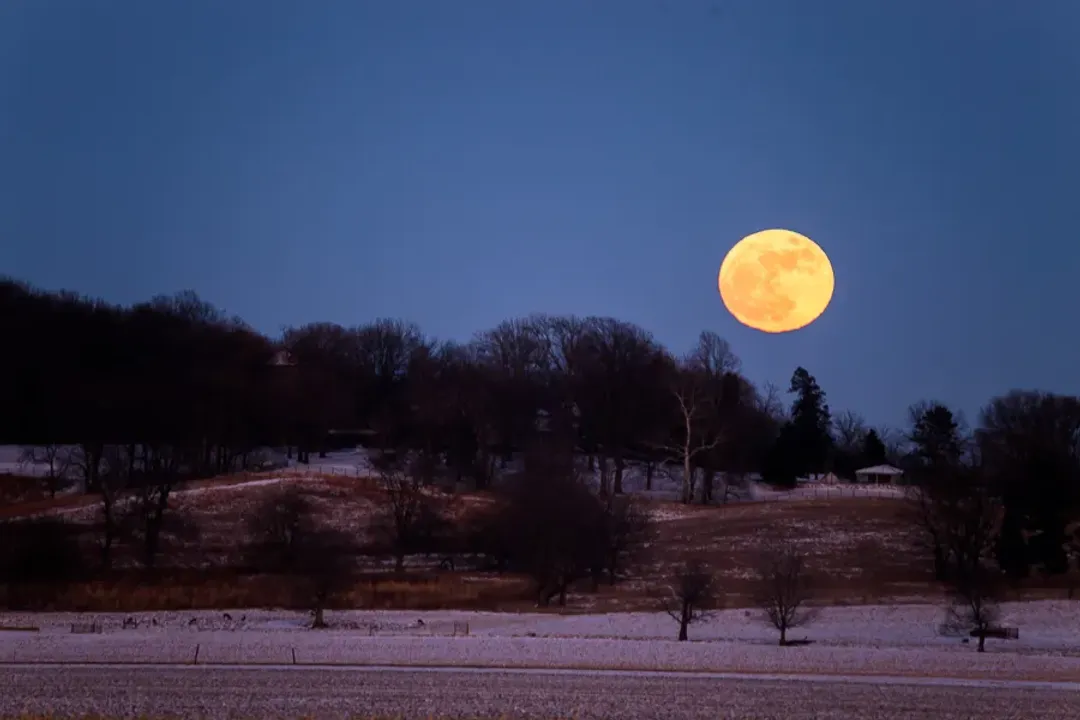
The arrival of July in the night sky brings with it a familiar, bright spectacle—the full Moon for this month—which carries the distinct moniker of the Buck Moon. While the lunar disc itself does not change color or shape simply because of its calendar placement, its name offers a fascinating window into the seasonal rhythms that governed life for those who first named it. Understanding why this particular full Moon earned its name requires looking away from astronomy textbooks and towards the terrestrial world of midsummer wildlife and ancient timekeeping methods.
# Antler Rise
The most direct and widely cited reason for the July full Moon being called the Buck Moon centers entirely on the life cycle of the male deer, or buck. July is precisely when the antlers of these male deer begin their most rapid phase of growth. Bucks naturally shed their antlers annually, and by midsummer, the new growth is emerging from their foreheads, often covered in a soft, velvety fur. This intense growth period marks a significant milestone in the animal’s annual cycle.
This timing is intrinsically linked to the survival strategy of the species. By having their most impressive rack of antlers fully developed by the time autumn rutting season arrives, the bucks are prepared for the challenges ahead, including competition for mates and defense. Therefore, the appearance of this full Moon served as a natural, highly visible marker for observing this key biological transition in the local fauna.
# Cultural Roots
The tradition of naming full Moons is a rich one, drawing from various historical and cultural practices, primarily those of Native American tribes in the northern and eastern regions of what is now the United States. These names were not arbitrary decorations; they functioned as an essential calendar system, helping communities track the passing of seasons, coordinate agricultural activities, and prepare for hunting. It is important to note that these names were generally applied to the entire lunar month in which the full Moon occurred, rather than just the single night of peak illumination.
The name "Buck Moon" is often specifically linked to the Algonquin people, as deer were a prevalent species in the regions where they lived east of the Mississippi River. However, acknowledging the vast cultural diversity that existed—and continues to exist—is crucial. With over 500 tribes in North America, each with unique languages and local environments, it is unlikely that a single set of names was universally applied. The very notion that all Native Americans used this identical nomenclature overlooks this important historical complexity.
This linguistic variety is reflected in the multitude of alternative names associated with the July full Moon across different groups:
- Wildlife & Weather: Many names still relate to nature. The Thunder Moon is a common alternative, reflecting the season's frequent, intense thunderstorms. The Cree people sometimes called it the Feather Moulting Moon.
- Harvest & Food: Plant life also dictated names, such as the Berry Moon (Anishinaabe) or Raspberry Moon (Algonquin/Ojibwe). The Dakota people referred to it as the Moon When the Chokecherries are Ripe, while the Cherokee knew it as the Month of the Ripe Corn Moon. For coastal or riverine groups, resources were key; the Tlingit term Salmon Moon referenced the time when those fish were returning and ready for harvest.
- Seasonal Markers: Other names directly referenced the climate or time of year, such as the Halfway Summer Moon (Anishinaabe). European settlers also contributed their own interpretations, using terms like Mead Moon or Herb Moon (Wyrt Moon).
When we consider the progression of the lunar calendar names—from the Strawberry Moon in June to the Sturgeon Moon in August—the July Buck Moon sits perfectly in the middle of the year, marking the transition from early summer abundance to the heightened preparations for autumn survival. The buck's antler growth aligns with the peak fertility and growth of plant life, providing ample sustenance before the harder, lean times signaled by later moons like the Hunter’s Moon. This cyclical naming convention provided a practical, shared language for managing the year.
# Appearance and Position
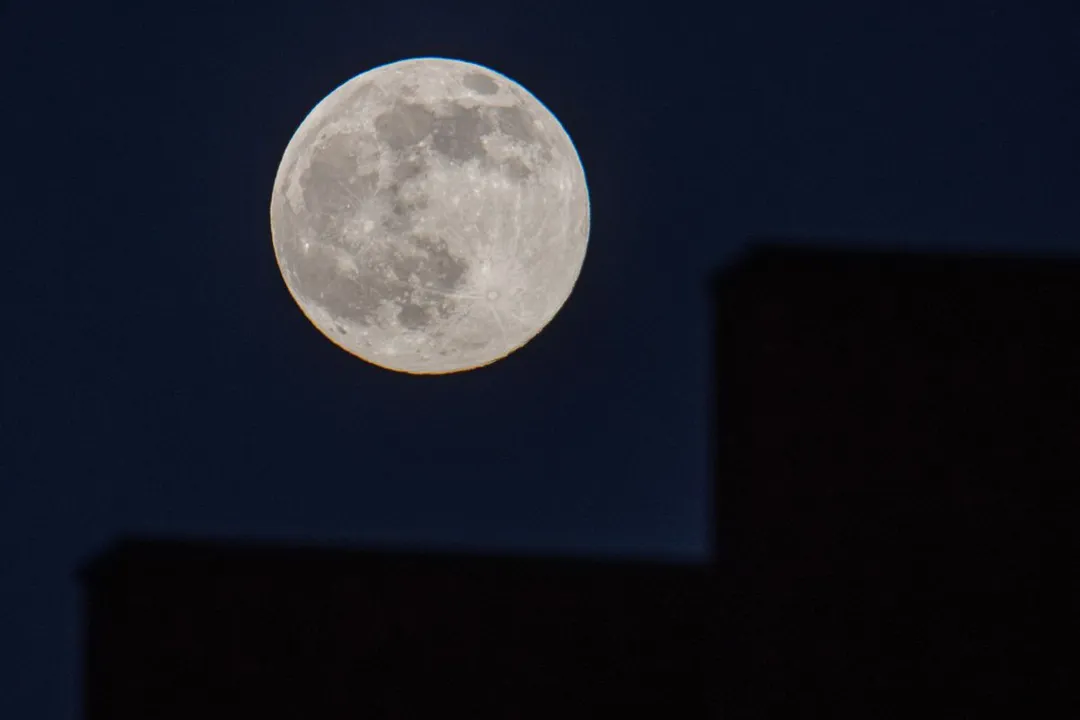
Despite the evocative name, the Moon itself does not adopt a cervine appearance. Its physical characteristics on that night are governed by orbital mechanics and atmospheric conditions, just like any other full Moon. However, two factors can make the Buck Moon particularly striking: its potential as a supermoon and its position in the sky.
# Supermoon Potential
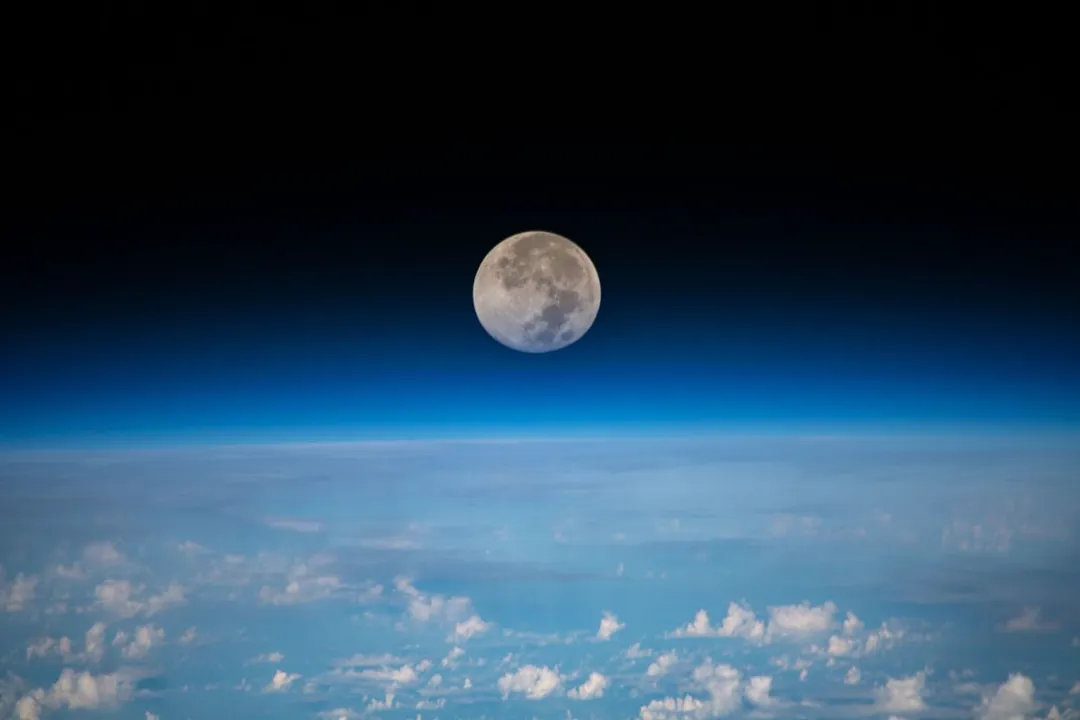
A supermoon occurs when the full phase coincides with perigee—the point where the Moon is closest to Earth in its elliptical orbit. When this happens, the Moon appears visually larger and significantly brighter than an average full Moon, although casual observers often need a direct comparison to confirm the difference. July's full Moon frequently aligns closely with perigee, sometimes resulting in the brightest and largest full Moon of the entire calendar year. For example, in 2022, the Buck Moon was noted as being about 124 miles closer to Earth than the preceding Strawberry Moon.
# Horizon Effects
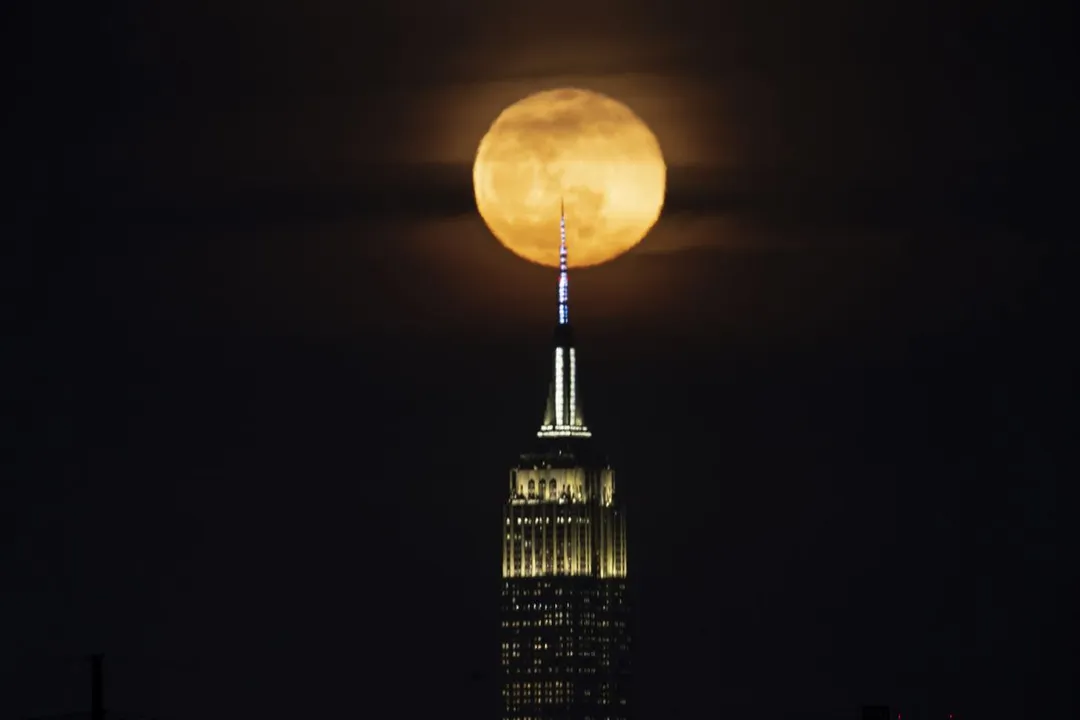
The apparent color and size are largely due to where the Moon hangs relative to the observer. For viewers in the northern parts of the Northern Hemisphere, the constellation of Sagittarius—where the Moon often resides during its July transit—rises low in the southern sky. When the Moon is low on the horizon, its light must travel through a much greater depth of Earth’s atmosphere.
This thick atmospheric layer acts like a filter. Shorter wavelengths of light, such as blue and violet, are scattered away by air molecules, leaving the longer wavelengths—red, orange, and yellow—to reach our eyes. This results in the Moon taking on a distinct orange or even reddish hue as it rises or sets. Furthermore, when the Moon is near the horizon, the Moon illusion takes effect. This optical trick makes the low-hanging Moon appear substantially larger than when it is high overhead, possibly because our brains compare it to foreground objects like trees or buildings, exaggerating its perceived scale.
# Viewing Tips
Observing the Buck Moon can be approached in two distinct ways, depending on whether one is interested in cultural tradition, visual spectacle, or scientific detail.
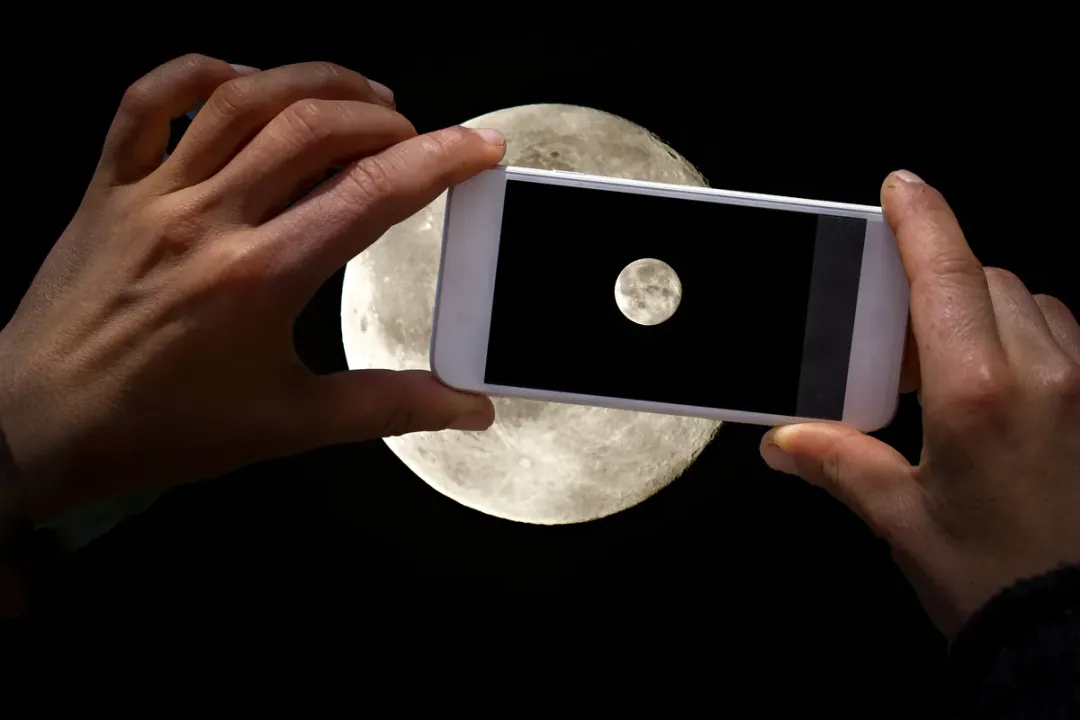
For those keen on capturing the atmospheric drama, the best time to observe is immediately after moonrise or just before moonset. This is when you maximize the orange coloring caused by atmospheric scattering and appreciate the Moon illusion when it appears colossal near the horizon. If you plan to photograph this event with a smartphone, experimentation with the camera’s manual or 'pro' settings—specifically adjusting the ISO, white balance, and exposure time—can yield impressive results, even without professional DSLR equipment.
Conversely, for the dedicated amateur astronomer seeking to study lunar features, the full Moon phase is often avoided. During the full phase, sunlight illuminates the Moon almost directly from our perspective, which washes out the shadows cast by craters and lunar maria (the darker, smoother plains). This lack of contrast makes surface topography difficult to discern. If detail is the goal, wait a few days until the Moon reaches its quarter phases, when shadows lengthen and surface features become dramatically highlighted. A good pair of binoculars can greatly enhance the viewing experience regardless of the phase, bringing craters and mountains into clearer view.
If you are aiming for the deepest possible view of the night sky, remember that the full Moon’s intense glare can completely overpower fainter targets like meteor showers or distant galaxies and nebulae. A practical consideration for amateur astronomers is accepting that observing the spectacular low-hanging, colorful Buck Moon necessitates sacrificing a night of deep-sky observation due to the sheer brightness of our nearest celestial neighbor. Embracing the Moon itself as the primary subject, perhaps by sketching its features or noting how its terminator line shifts over the following weeks, offers a rewarding alternative to tracking distant objects.
Related Questions
#Citations
July 2026 Full Buck Moon: Meaning, Peak Time, and July Moon ...
Why July's Full Moon Is Known as the Buck Moon | HowStuffWorks
Buck Moon 2025 - BBC Sky at Night Magazine
The Buck Moon and its Significance to Native American Peoples
Full moon names 2025 (and how they came to be) - Space