Why is there a white line in the sky tonight?
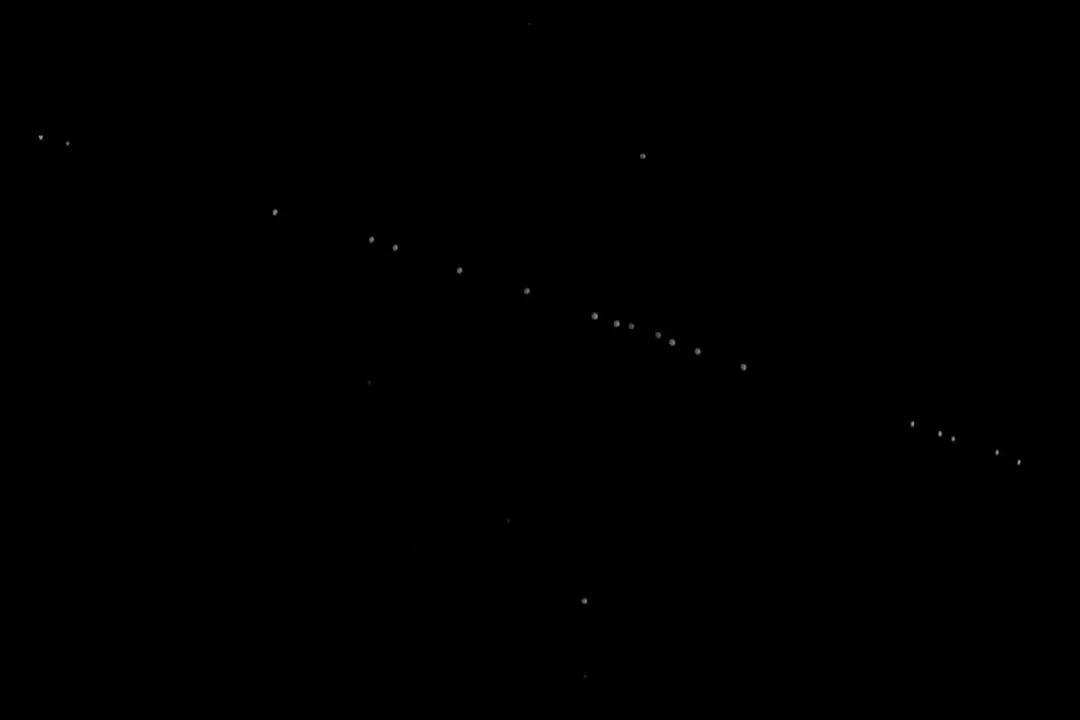
Seeing a distinct, bright white line moving silently across the night sky can certainly stop you in your tracks, making you question everything you thought you knew about the familiar expanse above. For many people spotting this unusual phenomenon recently, the immediate reaction often swings between awe and concern, with thoughts quickly turning to anything from military exercises to unidentified aerial phenomena. However, for the vast majority of these reports, the culprit is not some mysterious craft or natural event, but rather a highly visible procession of modern technology: a Starlink satellite train.
# A New Formation
When observers report a crisp, white line, they are almost always witnessing satellites belonging to SpaceX’s Starlink network shortly after they have been deployed from a launch vehicle. These constellations are designed to create a global network for high-speed internet coverage, necessitating thousands of small satellites orbiting the Earth.
When a batch of these satellites is first deployed, they are not yet in their final, operational orbits. Instead, they are placed into a tight, low-Earth formation, often appearing strung out like a close-knit group of lights, or a "train," crossing the sky in a remarkably straight line. This "string of pearls" effect is what captures attention and causes confusion because it doesn't resemble the singular, steady light of a conventional satellite or the blinking pattern of an airliner. [1]
It is crucial to understand why these objects are visible. Starlink satellites do not generate their own light; they are seen only because they are high enough in the atmosphere to still be illuminated by the sun, even when the ground below you has plunged into darkness. This dictates the precise window of visibility: sightings are overwhelmingly reported shortly after sunset or just before sunrise. If the sky is completely dark, or if the sun is high in the sky where you are, the satellites will not be visible to the naked eye, regardless of their position overhead.
# Movement and Appearance
The appearance of these satellite trains is quite distinct, which helps amateur astronomers differentiate them from other sky objects. [1] A defining characteristic of the Starlink train is its slow, steady movement. [1] Unlike a meteor or a piece of space debris burning up, which appears as a very fast flash or streak that vanishes quickly, the satellites can be followed with the naked eye over long distances as they traverse the celestial sphere. [1]
Furthermore, the lights within the train are typically evenly spaced, maintaining a consistent distance between neighboring satellites as they travel along their orbital path. They move with a deliberate, uniform speed, often described as fast compared to a slow-moving aircraft but much slower than a meteor. [1]
Contrast this with a traditional aircraft. An airplane will usually display navigation lights that blink or flash, and its contrail, if visible, is formed by exhaust gas condensing in the atmosphere, which often looks puffier or dissipates differently than a string of discrete, pinpoint lights. [1] A key differentiator is that the satellite train does not hover or make turns that deviate from a smooth arc across the sky, as they are all traveling in near-perfect parallel orbits established during deployment.
If you happen to see an incredibly bright, wide glow across a large section of the sky, as one observer noted, it might not be the satellites themselves but rather camera glare or photographic artifact if the sighting was captured on film or a phone camera. [1] However, if this wide glow was clearly visible to your unaided eye, it might indicate a very powerful, low-angle light source from the ground reflecting off atmospheric particles, though this is less common for a well-delineated line. [1]
# Distinguishing Sightings
For those who have just witnessed a line of lights, being able to categorize the sighting immediately can turn confusion into enlightenment. Since the skywatching community is now grappling with multiple large constellations, having a quick reference helps confirm the identification of the object you saw tonight. The key variables are speed, light pattern, and duration.
| Feature | Starlink Train (Initial Deployment) | Conventional Aircraft (High Altitude) | Bright Meteor/Fireball |
|---|---|---|---|
| Appearance | A perfect string of evenly spaced, non-flashing white dots. | One or two steady lights, often blinking navigation signals. | A singular, intensely bright streak of light, sometimes colored. |
| Speed | Slow enough to track steadily across the sky. | Fast, but typically less sustained than a satellite transit. | Very fast; burns out completely in seconds. |
| Persistence | Visible for several minutes as it crosses the visible window. | Visible as long as the plane is in view. | Brief flash; duration rarely exceeds 10 seconds. |
| Altitude/Time | Only visible during twilight (just after sunset or before sunrise). | Visible almost any time it is flying overhead. | Visible anytime, but often appears brighter in true dark. |
One insight gleaned from tracking these phenomena is the unique dependency on the twilight terminator. Unlike traditional satellites that are visible for much longer periods throughout the night, the Starlink deployment train is entirely time-sensitive to when the launch path intersects the specific geometry between the sun and the observer on the ground. This means that if you see a train tonight, it is highly probable that satellites launched within the last few days, and the next viewing opportunity for that specific batch might only come again a day or two later, or perhaps not until they have spaced out significantly. This highly specific, transient nature is precisely why they cause such widespread surprise when they appear.
# The Evolving Night Sky
The presence of Starlink is part of a much larger trend involving megaconstellations—networks comprising thousands of satellites from companies like SpaceX and others. As of late 2025, the number of operational Starlink satellites is in the thousands, with plans for the constellation to potentially grow much larger. This massive increase in orbiting objects has raised significant concerns within the astronomical community about light pollution and interference with ground-based observations.
Because of this expert feedback, SpaceX has undertaken efforts to make their satellites less conspicuous. The introduction of features like the Starlink VisorSat program aims to darken the spacecraft while they are in their lower orbits, which should reduce their brightness compared to earlier deployments. If the line you saw seemed dimmer than expected based on viral videos from 2019 or 2020, it might be due to these mitigation efforts taking effect.
However, even with mitigation, the sheer number of objects means that if you look up at the right time following a launch, you still have a good chance of seeing them. For seasoned skywatchers, the experience has certainly shifted; where one might have once sought out the few visible satellites, now the challenge often becomes identifying which satellite train belongs to which launch, or distinguishing them from natural phenomena. [1] This shift represents a real change in how the near-Earth space environment appears to ground-based observers.
# How to Confirm Your Observation
If you suspect what you saw was indeed a Starlink train, you are in luck because there are now several tools designed specifically to help observers track these objects. The ability to confirm your sighting provides the satisfaction of understanding a complex piece of current technology playing out above you.
To confirm an observation, you generally need two pieces of information: the time and direction of your sighting, and the location of recent launches. Several resources, often referred to as Starlink locator websites or satellite trackers, are available online which map the current positions and planned visibility windows for the entire constellation. By inputting your location and the time you observed the line, these tools can cross-reference the orbital paths to confirm if a newly deployed train was passing over your viewing area.
If a satellite fails to reach its proper operational altitude, it can sometimes deorbit and burn up upon reentry, creating a very dramatic display—a phenomenon that has been captured on video as debris falls back to Earth. While this event would look like a very bright, slow-moving streak of fire rather than a distinct line of dots, it is another possible, though rarer, explanation for an unusually bright, moving object in the sky.
# Beyond the Wires
While Starlink trains account for the most common report of a "white line," it is good practice to keep other possibilities in mind, especially if the timing was outside of twilight hours or the object behaved strangely. [1]
- Conventional Aircraft: As noted, aircraft are the most common non-natural objects seen. They move slower than meteors, have flashing lights, and their visible trails are usually thicker and less organized than a fresh satellite deployment. [1]
- Meteors: Shooting stars are cosmic dust burning up upon entry. They are characterized by their extreme velocity—appearing and disappearing in a blink—and often leave behind a brief, luminous tail that fades rapidly. [1] They are singular events, not groups, and are not constrained to move in a perfect line across the sky. [1]
- Planetary Conjunctions or Bright Stars: While not a line, very bright objects like Venus or Jupiter, or perhaps a cluster of satellites moving closely together, can sometimes be mistaken for something more unusual, particularly if the observer is inexperienced in looking up.
The appearance of these organized light shows is a direct result of expanding commercial activity in Low Earth Orbit. What was once the purview of government space agencies now includes a significant private component. Being aware of these new, regularly scheduled sky events allows the casual observer to appreciate the ongoing technological advancements overhead, even while acknowledging the ongoing discussion among scientists about preserving the truly dark nature of the night sky for research and enjoyment. The next time you see that startling white line, take a moment to appreciate that you are witnessing a piece of the emerging global internet infrastructure, positioned perfectly between the darkness below and the sunlight above.
Related Questions
#Citations
What is this white line on the sky? : r/askastronomy - Reddit
Starlink satellite train: how to see and track it in the night sky - Space