Why does a white dwarf become a black dwarf?
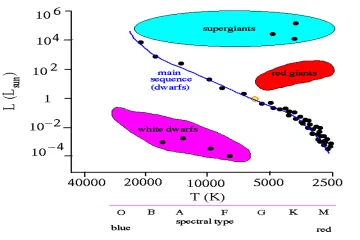
The remnant of a star like our Sun is not the end of its story, but a dramatic, luminous pause. Once a main-sequence star exhausts the hydrogen in its core, it swells into a red giant, fuses helium into heavier elements like carbon and oxygen, and then sheds its outer layers to reveal a hot, dense stellar cinder: a white dwarf. These stellar corpses are roughly the size of Earth, yet retain about 60% of the Sun's original mass. Though they no longer generate energy through nuclear fusion, they glow fiercely, possessing initial temperatures that can exceed . The true journey, however, begins when this internal furnace goes out. The question for the distant future of the cosmos is what happens when this leftover heat finally dissipates: why does a white dwarf become a black dwarf?
# Stellar Ash
A white dwarf is fundamentally an inert object. Unlike an active star, it has no internal energy source left to counteract the relentless inward pressure of gravity. Its continued shine is merely residual heat, similar to how a burner on an electric stove remains hot long after it has been switched off. The composition of this stellar ash dictates its eventual fate. Most commonly, it is composed of carbon and oxygen. However, if the progenitor star was more massive (around 8 to 10 times the Sun’s mass), the remnant will be an O/Ne/Mg white dwarf, composed of oxygen, neon, and magnesium.
The tremendous mass packed into such a small volume results in extraordinary density. To put this into perspective, a mere teaspoonful of white dwarf material would weigh around $5.5$ tons on Earth. This density is so high that the matter is supported against further gravitational collapse not by heat, but by a quantum mechanical effect known as electron degeneracy pressure. This pressure is independent of temperature, meaning that even as the star cools, the electron pressure keeps it from shrinking further, at least until other factors come into play.
# The Long Fade
The cooling process of a white dwarf is exceptionally slow, governed by how effectively it can radiate away its stored thermal energy into the cold vacuum of space. Initially, the cooling is dominated by thermal radiation. As billions of years pass, the star's luminosity plummets and its surface temperature drops. For instance, after just 2 billion years, a white dwarf that started at over might only have a surface temperature around and a luminosity that of the Sun.
As the internal temperature drops significantly, quantum mechanical effects begin to dominate the heat loss mechanism. A crucial physical change occurs within the core when the temperature falls low enough: the carbon and oxygen atoms begin to settle into a rigid structure, a process called crystallization. This turns the core into what is sometimes poetically described as a giant diamond. Five billion years after forming, the entire core of the white dwarf could be crystalline. From this point onward, the cooling rate quickens somewhat via Debye cooling, a process related to how the crystal lattice loses heat.
# Theoretical Darkness
The ultimate theoretical endpoint of this long, cold existence is the black dwarf. This designation is applied once the white dwarf has cooled so much that it no longer emits any detectable light or heat. It is essentially a cold, dark lump of degenerate matter. If a black dwarf were to exist today, it would be nearly impossible to observe directly because it emits no radiation. However, it would not vanish; its massive presence would still be felt through the effects of its gravitational field.
It is important to distinguish this quiet, fading stellar remnant from more violent stellar endpoints. A black dwarf is not a black hole or a neutron star; it maintains the same chemical composition as its progenitor white dwarf but is simply cold.
# Universe Age Barrier
While the physics governing the transition from white dwarf to black dwarf is understood in principle—it is a steady cooling and crystallization over unimaginable timescales—the practical reality is that no black dwarfs currently exist in the universe.
The universe is estimated to be less than 14 billion years old. Scientists have calculated that the time required for a white dwarf to cool sufficiently to become a black dwarf is enormous, potentially spanning at least a hundred million billion years ( years). Even if a white dwarf could have formed the instant the Big Bang occurred (which is impossible, as stellar evolution takes billions of years), it would still be a bright white dwarf today.
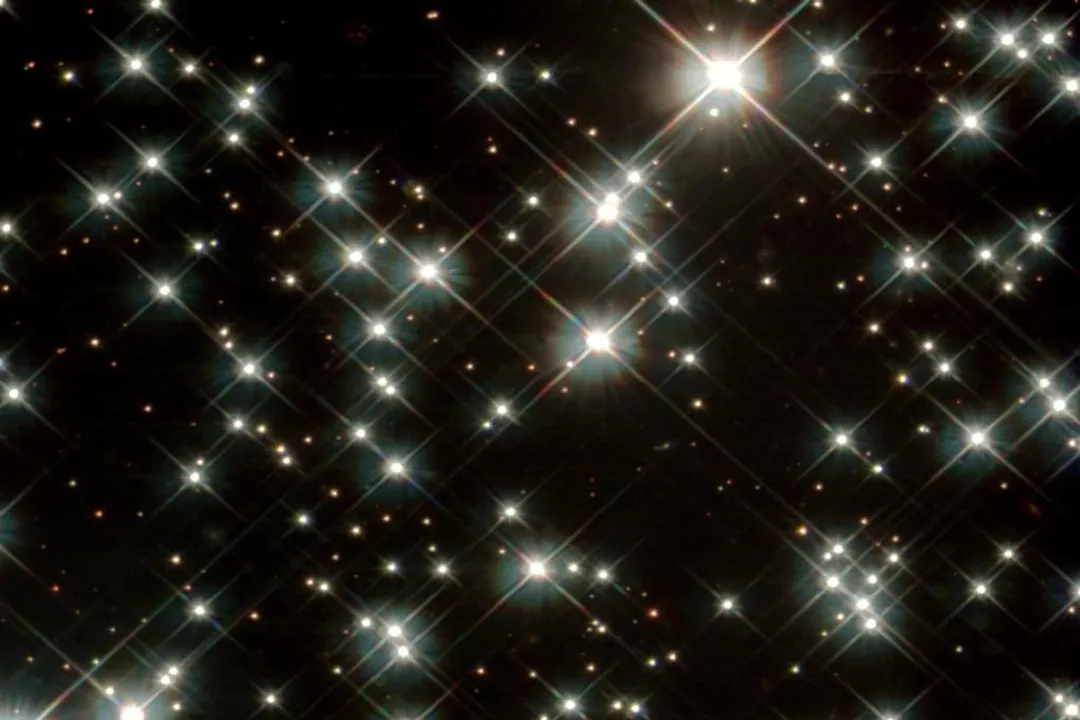
This fact provides astronomers with an essential, albeit grim, method for dating the universe's structures. By observing a star cluster and noting the temperature of the hottest white dwarf present, one can calculate how long the cluster has existed, as all the cooler ones have had time to fade further. For example, observing a cluster where the coolest white dwarfs are only slightly above suggests an age based on the time it takes for a white dwarf to cool to that specific temperature—about 4 billion years, in one study's measurement. This geological application of stellar fossils is a powerful tool in cosmology, allowing us to estimate the ages of star clusters and even parts of the Milky Way, which is calculated to be less than 11 billion years old based on its white dwarf population. The fact that we can only see these fading embers, and not the final, dark state, is a direct consequence of the relatively young age of our cosmos.
# Off-Ramps and Explosions
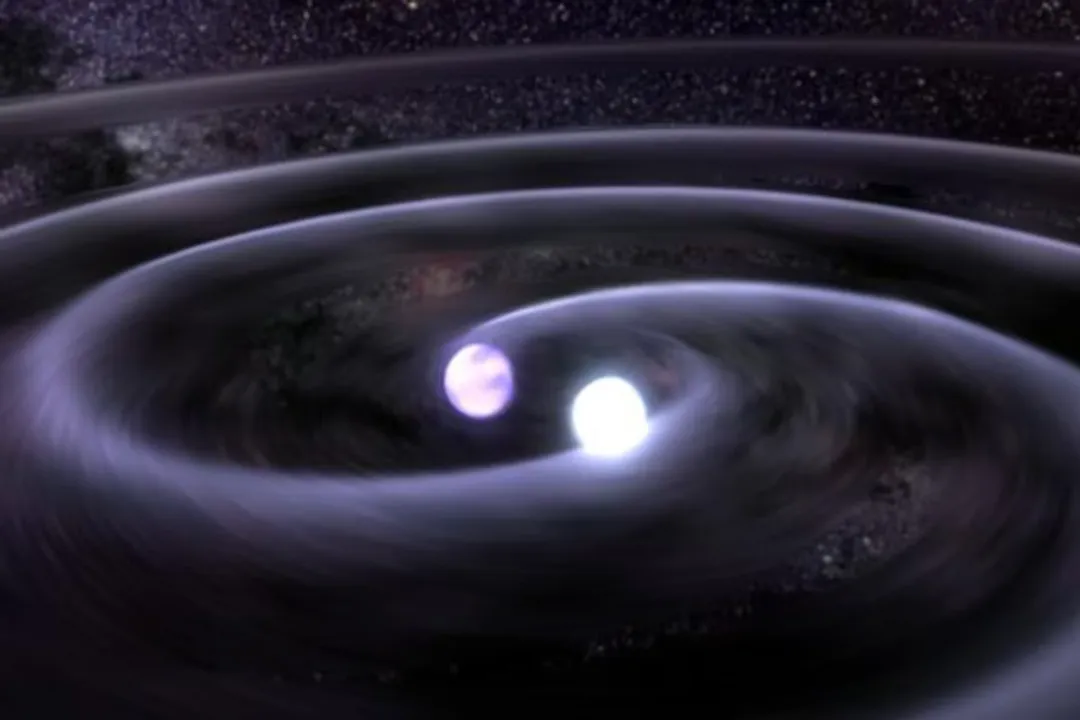
The path to a black dwarf is the most serene but also the longest. However, not all white dwarfs are left alone to contemplate their cooling fate. A white dwarf existing in a binary star system faces a potential dramatic intervention: accretion. If it pulls enough mass from a neighboring companion star, its total mass can approach or exceed the Chandrasekhar Limit, which is about $1.4$ solar masses ().
When this threshold is crossed, the increased pressure triggers runaway thermonuclear fusion in the core—carbon and oxygen ignite uncontrollably. The energy released from this process overwhelms the star's gravitational binding energy, leading to a catastrophic explosion known as a Type Ia supernova. This event completely obliterates the star, leaving no remnant behind. The colloquial term "black blob" sometimes used to describe the final state should arguably be reserved for a different context; while the resulting black dwarf is dark, the process of becoming one is a slow fade, not a sudden collapse into a dense, non-luminous sphere like a black hole. Furthermore, the explosive aftermath of a Type Ia supernova typically yields nickel-56, not a stable dense remnant like a neutron star.
There is a more complex, less common alternative fate for white dwarfs that reach near-critical mass, particularly those made of O/Ne/Mg. In these scenarios, the crushing density might trigger electron capture (neutronization) in the core before runaway fusion ignites. If neutronization occurs first, the star destabilizes and collapses rapidly, similar to a core-collapse supernova, but halted by neutron degeneracy pressure to form a neutron star. This process, known as Accretion Induced Collapse (AIC), is still debated, but the existence of certain binary neutron stars suggests it might be possible. Crucially, the resulting object would be about or more, which is generally below the minimum for a neutron star to collapse into a black hole, meaning a white dwarf explosion or AIC will not result in a black hole.
The quiet slide into the theoretical black dwarf state requires the universe to continue expanding and cooling for incomprehensibly long stretches of time—far beyond its current age. For now, the white dwarfs we observe serve as luminous timekeepers, their present glow charting the deep history of stellar evolution across the galaxy.
Related Questions
#Citations
Is it true white dwarfs become black blobs? : r/askastronomy - Reddit
Black Dwarf Stars: The (Theoretical) End of Stellar Evolution - Space
How long does it take for a white dwarf to turn into a black dwarf?
Is there a possibility that a white dwarf can turn into a neutron star or ...
White Dwarf - ESA/Hubble
White Dwarfs Facts, Information and Photos | National Geographic