Why are white dwarfs so hot but dim?
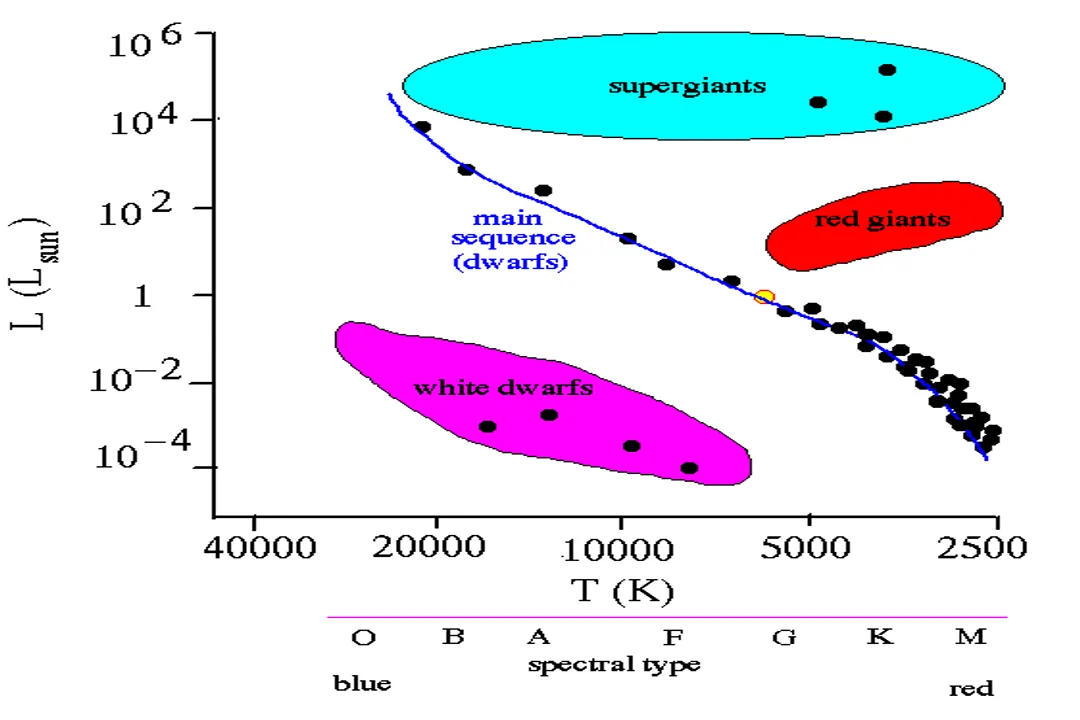
The question of how a celestial object can maintain scorching temperatures for eons while offering almost no light to the cosmos is one of astronomy's most fascinating puzzles, and it perfectly describes the nature of a white dwarf star. [4] These objects are not active stars in the traditional sense; they are the dense, glowing cinders left behind when a star, one much like our own Sun, has finally run out of fuel and shed its outer layers. [1][5] They are the stellar remnants, the embers of a once-vibrant giant that has collapsed in on itself, and their extreme temperature coupled with their meager visual output is purely a matter of physics scaling, not ongoing energy production. [5][9]
# Stellar Afterlife

To understand why a white dwarf behaves this way, one must first appreciate its origin story. When a star of low to intermediate mass exhausts the hydrogen fuel in its core, it begins to swell into a red giant. [1] During this phase, the outer layers drift away into space, creating a beautiful planetary nebula. [1] What remains at the center is the core—a tightly packed ball of material mostly made of carbon and oxygen nuclei, supported by a bizarre state of matter. [1] This remnant is the white dwarf. [5]
Unlike a main-sequence star like the Sun, which generates light and heat through sustained nuclear fusion in its core, the white dwarf is essentially a thermal powerhouse in hibernation. [5][9] It does not ignite new fusion reactions. [5] Its intense heat is merely the residual, leftover warmth from the catastrophic collapse and the nuclear burning that preceded it. [4][9] It is trapped energy, slowly leaking out into the void. [5]
# Residual Heat
When a white dwarf first forms, it is incredibly hot. Surface temperatures can easily exceed $100,000$ Kelvin. [5] For comparison, the surface of our familiar Sun hovers around . [4] This initial, mind-boggling heat is the key to the "hot" part of the paradox. [4] This thermal energy was packed into a tiny volume during the stellar death throes. [4]
The initial temperature of the newly formed white dwarf is directly tied to the mass of the progenitor star. [8] More massive stars, when they die, leave behind remnants that are both hotter and retain their heat for a slightly shorter period compared to remnants from less massive stars. [8] While they are intensely hot on the surface, it is crucial to realize this temperature is a measure of the surface condition, not the star’s internal power source. [9] The object is radiating energy purely because it is hot, much like a glowing piece of metal pulled from a forge. [5]

# Size Matters
If white dwarfs are hundreds of thousands of degrees on the surface, why aren't they visible across vast interstellar distances? The answer lies in the second, and arguably more important, half of the equation: their size. [4]
White dwarfs are extremely compact objects. [1] The typical white dwarf packs the mass of the Sun into a volume roughly the size of the Earth. [1][5] This extreme compression is what makes them so dense—a teaspoon of white dwarf material would weigh several tons. [1]
The total light output, or luminosity (), is governed by the Stefan-Boltzmann Law, which mathematically relates luminosity to the surface area (which depends on the radius, ) and the temperature (): . [4] While the temperature () term is enormous for a white dwarf, the radius () term is tiny because the object is only Earth-sized. [4]
Consider this comparison: If the Sun were replaced by a white dwarf of equal mass, its surface temperature would still be several times higher than the Sun's current surface temperature, yet its total brightness would be dramatically reduced. [4] Imagine two furnaces: one is a massive industrial boiler glowing bright orange, and the other is a tiny, focused laser pointer glowing pure white. The laser pointer's light is hotter in color (shorter wavelength, higher temperature), but the boiler produces vastly more total heat and light because its surface area is immense. [4] The white dwarf is the ultra-hot, tiny laser pointer compared to the Sun's cooler, gigantic furnace. [4] Its surface area is so small that the total energy radiating away, even at extreme temperatures, is minimal, making it appear dim. [4]
# Density Support
The physical state that allows this compression is utterly unique in the universe. Normal stars are held up against gravity by the outward push of thermal pressure generated by fusion. [1] A white dwarf has no fusion, yet it doesn't collapse further into a neutron star or a black hole. [1] Instead, it is supported by electron degeneracy pressure. [1][5]
This pressure is a quantum mechanical phenomenon derived from the Pauli Exclusion Principle, which states that no two electrons can occupy the exact same quantum state. [1][5] When matter is compressed to this extreme degree—where the electrons are packed tightly together—they resist further squeezing, creating a stiff, incompressible state that perfectly counteracts the tremendous force of gravity. [1] This fundamental physics allows the white dwarf to remain stable while it slowly radiates its stored heat away. [5][9] It is a stellar object held up by the resistance of its own electrons, not by the heat of its core. [1]

# The Cooling Clock
Because white dwarfs are no longer generating new energy, their existence is a one-way trip toward oblivion. They cool down gradually, much like a piece of cooling lava, over immense stretches of cosmic time. [5] Their luminosity steadily decreases as their surface temperature drops. [4]
The cooling process is relatively slow at first, as the trapped thermal energy is substantial. [5] However, as the white dwarf gets cooler, the rate of cooling slows down because there is less energy available to radiate away. [5] The current understanding suggests that the oldest, coolest white dwarfs in our galaxy may have cooling times that approach or even exceed the current age of the universe, which is about $13.8$ billion years. [5] This means that while we observe many hot, dim white dwarfs, the oldest ones that formed early in the galaxy's history might have cooled so much that they are no longer visible even in the deepest infrared searches—they have effectively become black dwarfs. [1][5] A black dwarf is the theoretical final stage: a cold, dark stellar remnant supported by electron degeneracy pressure but emitting virtually no light or heat. [1]
To place this cooling scale into perspective, if the Sun were to become a white dwarf and started cooling today, it would take many billions of years just to cool down to the temperature of a main-sequence star like Proxima Centauri, and trillions of years to truly reach black dwarf status. [5] Our own galaxy is likely not old enough for any white dwarfs to have cooled completely into black dwarfs yet, meaning every white dwarf we see today is still radiating some residual heat. [5]
# Temperature Determinants
While size dictates dimness, the temperature of a white dwarf—its residual heat level—is dictated primarily by the physics of its progenitor star's collapse. [8] Specifically, the initial mass of the star that formed the white dwarf sets the initial thermal budget.
A table illustrating the relationship between progenitor mass and the initial state of the resulting white dwarf offers some insight:
| Progenitor Star Mass (Solar Masses, ) | Resulting White Dwarf Mass () | Initial Surface Temperature (Approximate) | Cooling Rate |
|---|---|---|---|
| $0.8$ to | to $1.2$ | Moderate to High | Slower |
| to | to $1.4$ | Very High | Faster |
The most massive white dwarfs, those approaching the Chandrasekhar limit of about $1.4$ solar masses, start their lives significantly hotter because the gravitational collapse that formed them was more energetic. [8] Because they have less distance to fall before hitting the degeneracy pressure floor, they are slightly less massive relative to their surface area compared to lower-mass cousins, which, combined with the higher initial energy injection, means they can appear brighter for a time, even if they cool off faster in the long run. [8] This means a heavier white dwarf is not necessarily dimmer than a lighter one immediately after formation, contrary to what one might intuitively expect from the luminosity equation alone. It is the age since formation that makes the size disparity overwhelmingly dominant in determining observed dimness over cosmic timescales.
# Observing the Faint Glow
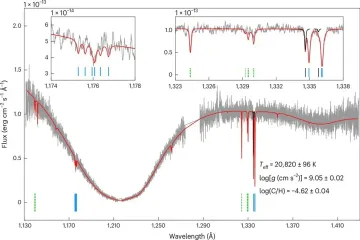
Because white dwarfs are intrinsically dim, they are often only detected in relatively nearby star systems or as faint, blue-tinged points of light in dense star fields. [4] Astronomers hunt for them using powerful telescopes that can detect their specific signature: a very high surface temperature (manifesting as a blue or white color) coupled with very low total light output compared to an active star of similar temperature. [4] They are vital for understanding stellar evolution because they represent the final, stable state for the vast majority of stars in the universe. [1][5] Every star born from the same mass range as the Sun will eventually end its life as one of these quiet, cooling cinders, illuminating the deep history of the galaxy with their faint, residual glow. [5]
#Videos
Why Do White Dwarfs Still Radiate Heat? - Physics Frontier - YouTube
Related Questions
#Citations
White dwarf - Wikipedia
ELI5: How does a white dwarf star glow for billions of years if all of its ...
Why do white dwarfs have high temperatures? - Quora
How can white dwarf stars be both hot and dim at the same time?
[PDF] White Dwarfs Astronomy Field Guide - Chandra X-ray Observatory
Why Do White Dwarfs Still Radiate Heat? - Physics Frontier - YouTube
Explain how white dwarf stars can be both hot and dim. - Brainly
What determines the temperature of a white dwarf?
White Dwarfs/Neutron Stars/Pulsars - Physics
What is a white dwarf star and how does it form? - Facebook