How do stars become unstable?
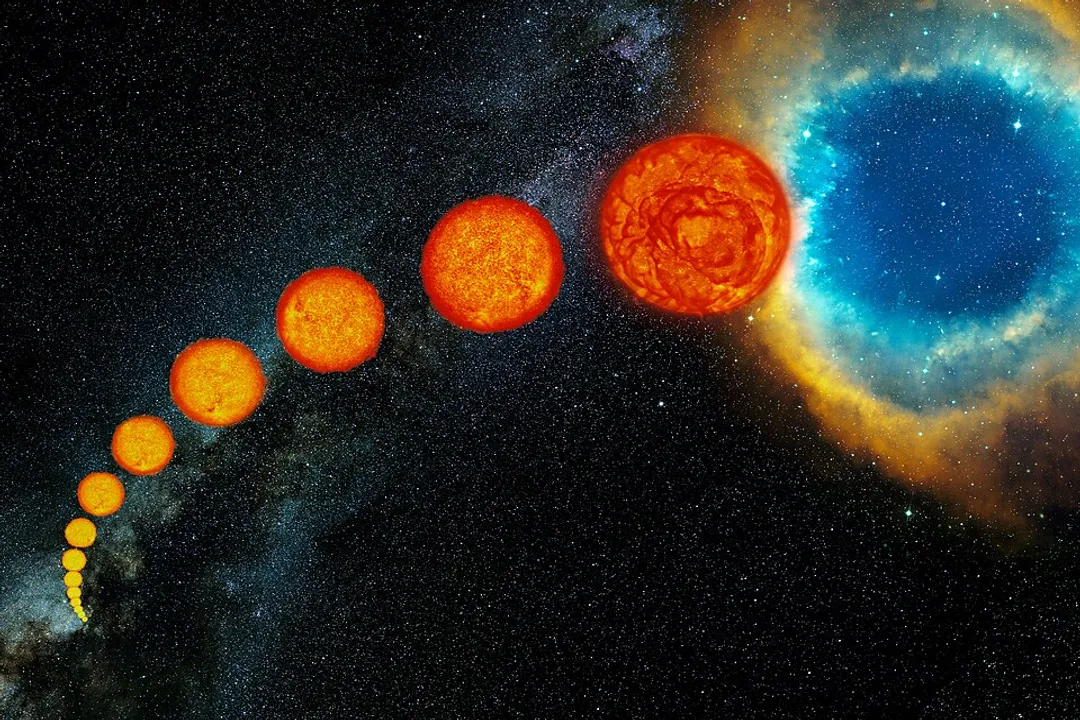
The stable life of a star is a quiet, majestic balancing act played out over billions of years. This equilibrium, known in astrophysics as hydrostatic equilibrium, requires an exact match between two opposing forces: the relentless inward crush of the star's own gravity and the outward thermal pressure generated by nuclear fusion occurring deep within its core. [1][2][3] When this precise balance falters—when one force gains a temporary or permanent advantage—the star becomes unstable, initiating the dramatic processes that define its stellar evolution and eventual demise. [1][3]
# Fuel Loss
For the vast majority of a star’s existence, its stability is anchored to the steady fusion of hydrogen atoms into helium atoms within its core. [3][5] This fusion acts as the engine, providing the constant outward energy required to defy gravitational collapse. [2][5] However, this fuel supply is finite. [1] Once a star exhausts the hydrogen in its core, the fusion furnace sputters out, and the primary source of outward pressure vanishes. [1][3] This moment marks the definitive end of the star's main-sequence life and the beginning of its transition toward instability. [1][5]
# Core Pressure
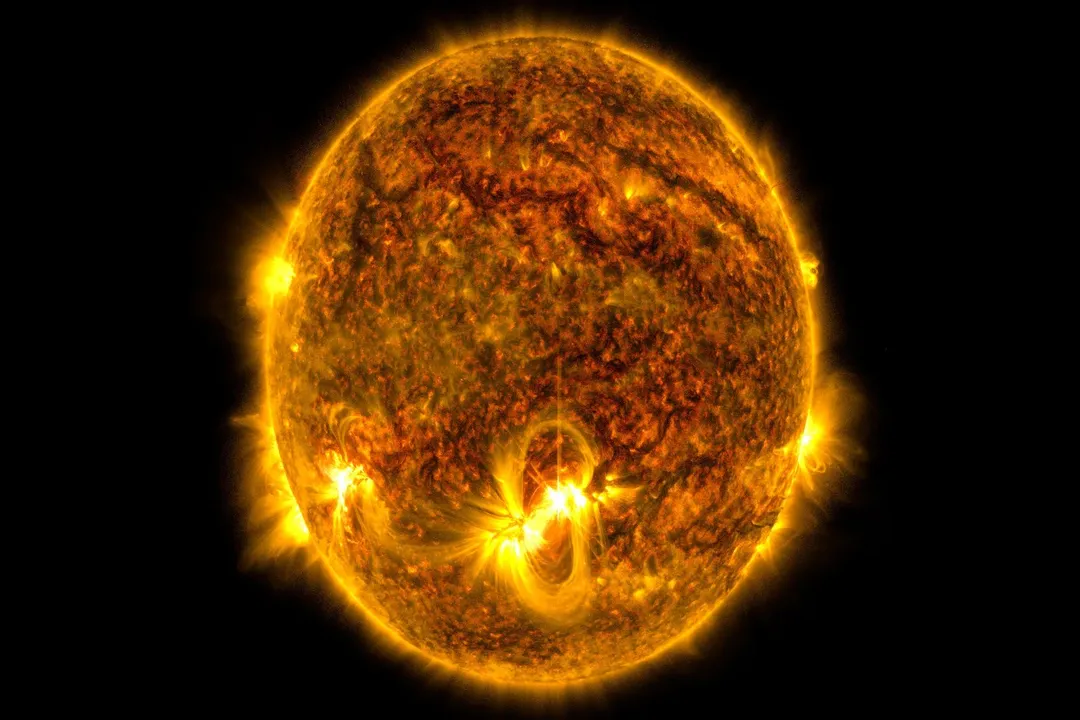
When the main hydrogen fuel is spent, gravity immediately seizes the upper hand. The inert helium core begins to contract under its own immense weight. [1] This compression is crucial because it does not lead to immediate collapse; instead, the core heats up dramatically due to the conversion of gravitational potential energy into thermal energy. [1][8] This intense heating eventually ignites a new energy source: hydrogen fusion begins in a shell surrounding the now-contracting, non-fusing helium core. [1]
# Shell Burning
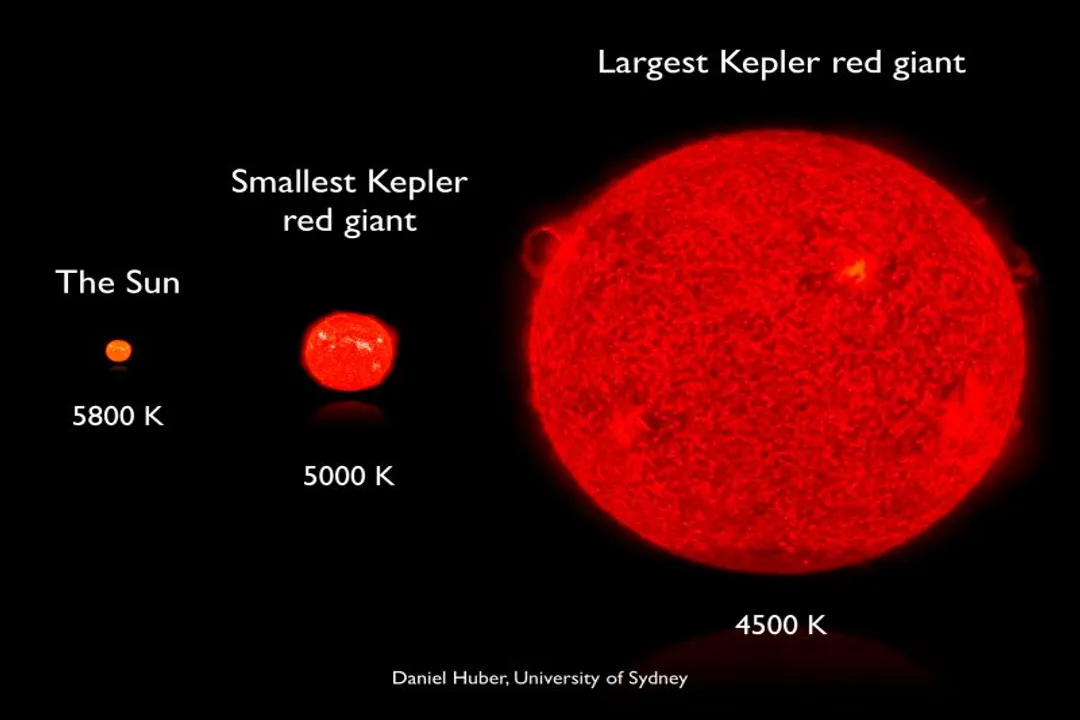
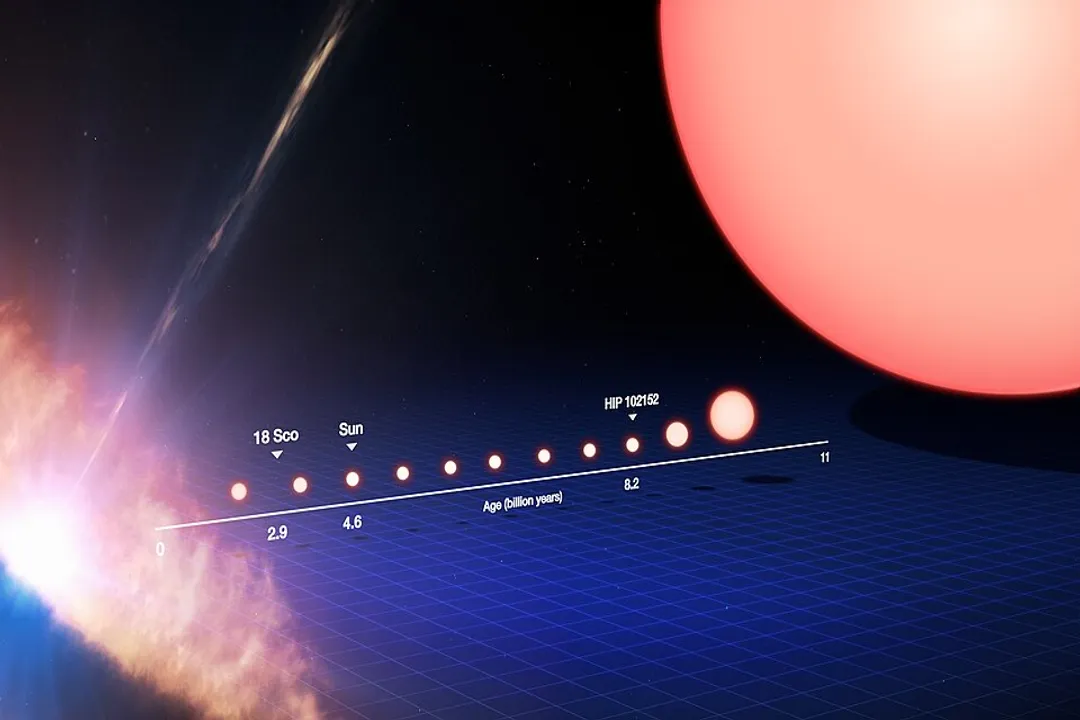
The onset of hydrogen shell burning is a critical instability mechanism because it often releases more energy than the core fusion it replaced. [1] This increased energy generation forces the star's external layers to expand dramatically. [3] The star’s radius can swell hundreds of times its original size, and its surface temperature drops, leading to the characteristic reddish hue of a Red Giant. [1][6] This transformation represents a fundamental, large-scale structural instability driven by a change in the energy generation location, not just the energy output itself. [3] The energy output during this shell-burning phase can spike dramatically—sometimes orders of magnitude higher than the main sequence—which means the star isn't just getting bigger; it's undergoing an explosive thermodynamic phase change that pushes structural models to their limits. It's less like a slow leak and more like turning a furnace dial way past the safety setting.
For lower-mass stars, such as those with masses similar to our Sun, this instability eventually settles when the helium core becomes hot and dense enough—reaching about $100$ million Kelvin—to ignite helium fusion, creating carbon and oxygen. [1] This allows the star to settle into a temporary, quieter phase, fusing helium in its core. [6]
# Terminal States
Instability following the exhaustion of core fuel follows two very different paths depending almost entirely on the star's initial mass. [3][5]
# Dwarf Fate
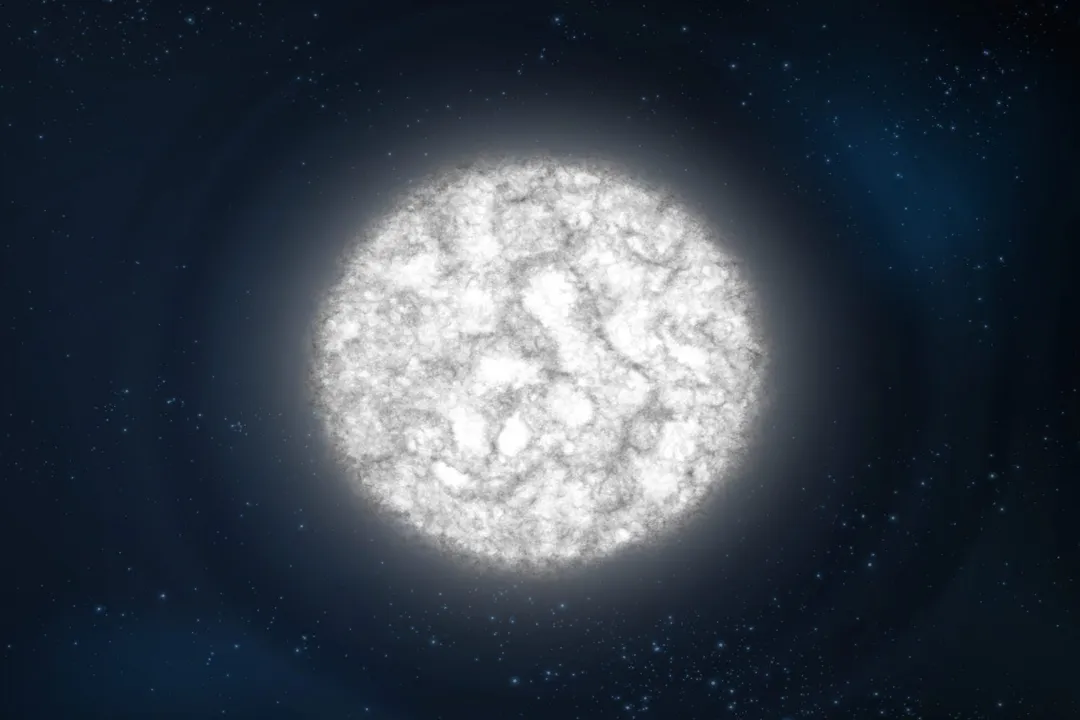
In Sun-like stars, once the helium fuel is consumed, the star lacks the necessary gravitational force to compress the core sufficiently to fuse the resulting carbon and oxygen. [1] The star cannot maintain fusion and sheds its outer layers into space, forming a beautiful planetary nebula. [6] The remaining stellar remnant is a small, dense, incredibly hot core called a white dwarf. [3] This white dwarf is no longer supported by thermal pressure from fusion, but by electron degeneracy pressure, a quantum mechanical effect where electrons resist being squeezed into the same quantum state. [1][3] It remains stable unless it accretes too much mass from a companion star, which could push it past the Chandrasekhar limit ( solar masses) and trigger a sudden, catastrophic collapse into a neutron star or black hole, often resulting in a Type Ia supernova. [8]
# Massive Collapse
Stars beginning with masses greater than about eight times that of the Sun face a far more violent fate because they possess the immense gravity required to compress the core enough to ignite heavier elements after helium is exhausted. [3][5] These massive stars evolve rapidly, burning through successive fuel stages in their cores: carbon fuses to neon, neon to oxygen, oxygen to silicon, and finally, silicon fuses to iron. [1][5]
# Iron Crisis
Iron marks the ultimate point of instability for any star, regardless of its size. [8] This is because iron is the most stable nucleus; fusing iron does not release energy—it consumes it. [1] When the iron core forms, the star loses its energy source instantaneously, creating a scenario where gravity faces no counter-pressure whatsoever. [1][8]
The resulting collapse is swift and catastrophic, often taking less than a second. [8][9] As the core implodes, matter is crushed to extraordinary densities, forcing protons and electrons to combine into neutrons. [9]
# Explosion Mechanism
If the remnant core mass after the initial collapse exceeds the neutron star limit (the Tolman–Oppenheimer–Volkoff limit), the instability results in the formation of a black hole. [9] More commonly, the infalling outer layers of the star slam into the now rigid, ultra-dense core, creating a powerful rebound shockwave. [1][3] This shockwave rips outward through the stellar envelope, resulting in a spectacular Type II supernova explosion. [1][5] This explosive instability disperses all the heavy elements synthesized throughout the star’s life and during the collapse itself across the galaxy. [5]
# Pulsating Stars
Instability is not always a precursor to death. Some stars maintain a stable lifespan while exhibiting regular, cyclic changes in brightness and size; these are known as variable stars. [1] The most famous examples are Cepheid variables. [1]
In these stars, the instability is related to specific layers of gas trapped within the stellar structure. When the layer contracts, it heats up, becoming temporarily opaque to the radiation trying to escape. [1] This trapped heat causes the gas to expand violently. As it expands, it cools, becomes transparent again, and the pressure drops, allowing gravity to pull the layer back inward, starting the cycle anew. [1] This pulsation mechanism keeps the star dynamically unstable on a regular timescale, allowing astronomers to correlate the period of pulsation with the star’s true luminosity. [1] A key relationship observed is that the longer a Cepheid takes to pulsate, the intrinsically brighter it is—a relationship that relies entirely on the internal instability mechanism remaining constant over many cycles, acting as a reliable cosmic yardstick.
The differences between the quiet fade of a white dwarf and the violent ejection of a supernova hinge on that single factor: mass. A low-mass star succumbs to gradual exhaustion, ending as a slowly cooling ember, whereas a massive star reaches a critical tipping point where its iron core can no longer fight gravity, leading to a sudden, violent structural failure that reshapes the interstellar medium. [1][8]
Related Questions
#Citations
Stellar evolution - Wikipedia
Stellar Evolution - | The Schools' Observatory
Star Basics - NASA Science
Star Life Cycle - ASPIRE
The life cycle of stars - IOPSpark - Institute of Physics
How Stars Form: A Star's Life Cycle in Six Stages - KiwiCo
ELI5- if stars are big burning balls of gas what keeps them ... - Reddit
[PDF] Death of a star - University of Western Australia
The Gravitational Collapse of Stars - The Astrophysics Spectator