Why are red giants more luminous than main sequence stars?
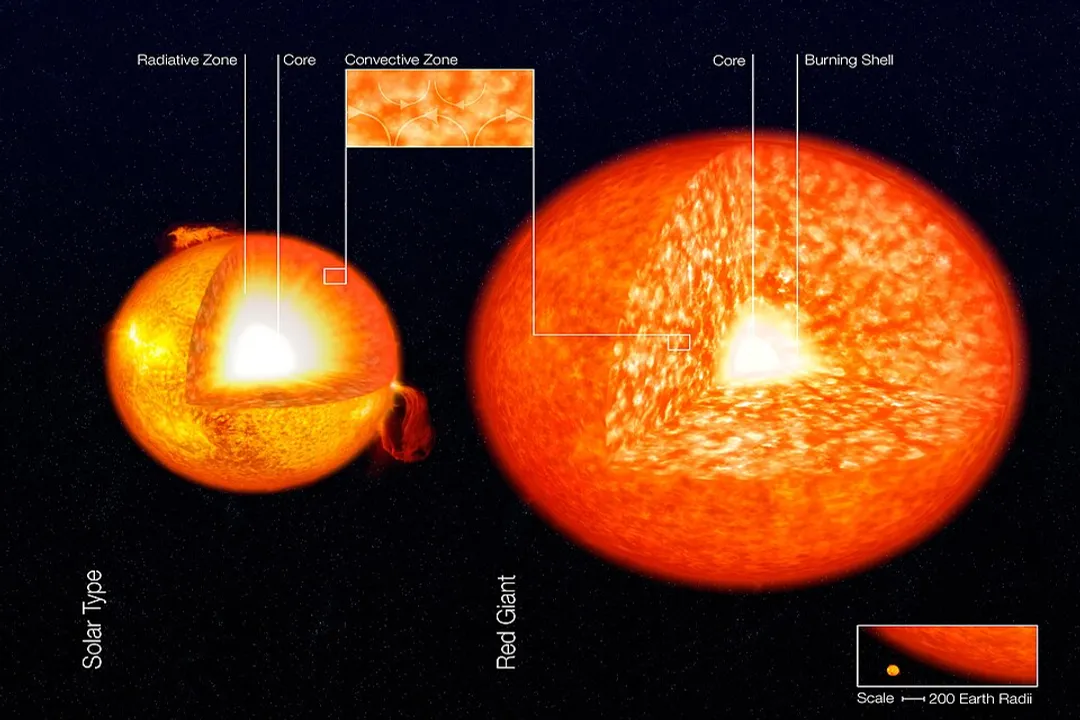
The sheer difference in brightness between a star like our Sun when it is healthy and active, and when it ages into a red giant, is staggering. It’s counterintuitive; we see the word "red" and often think "cool," yet these evolved stars blaze with incredible luminosity, sometimes outshining their former selves by thousands of times. To understand why these stellar behemoths dominate the night sky, we have to look past the surface color and delve into the physics of stellar death and rebirth, specifically how the star’s physical size radically changes the equation of light emission.
# Stellar Evolution Context
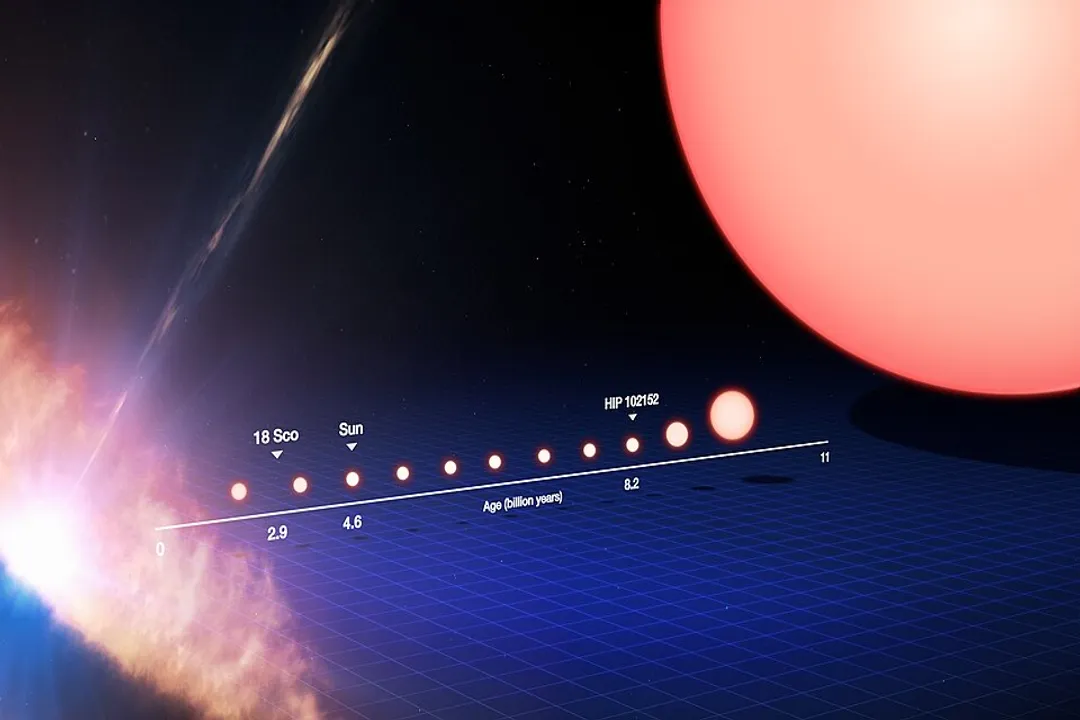
Stars spend the vast majority of their active lives fusing hydrogen into helium in their cores, residing on the Main Sequence. During this long phase, which our Sun is currently in, there is a stable equilibrium: the outward pressure generated by nuclear fusion perfectly counteracts the inward crushing force of gravity. The star’s size and surface temperature remain relatively constant for billions of years.
When a star exhausts the hydrogen fuel in its core—a process that takes about 10 billion years for a Sun-like star—that balance is broken. The core, now composed mostly of inert helium ash, begins to contract under gravity. This contraction generates tremendous heat. Instead of the core fusion stopping, this new heat ignites a shell of fresh hydrogen surrounding the helium core, causing it to burn intensely. This shell burning is far more energetic than the core burning was previously.
# Expansion Mechanism
The sudden surge of energy from this new shell source pushes dramatically outward on the star’s outer layers. Because the star’s total mass has not significantly changed, this massive energy output doesn't increase the core's temperature enough to immediately reignite fusion of the helium—that comes later—but it does cause the outer envelope of gas to inflate to colossal dimensions.
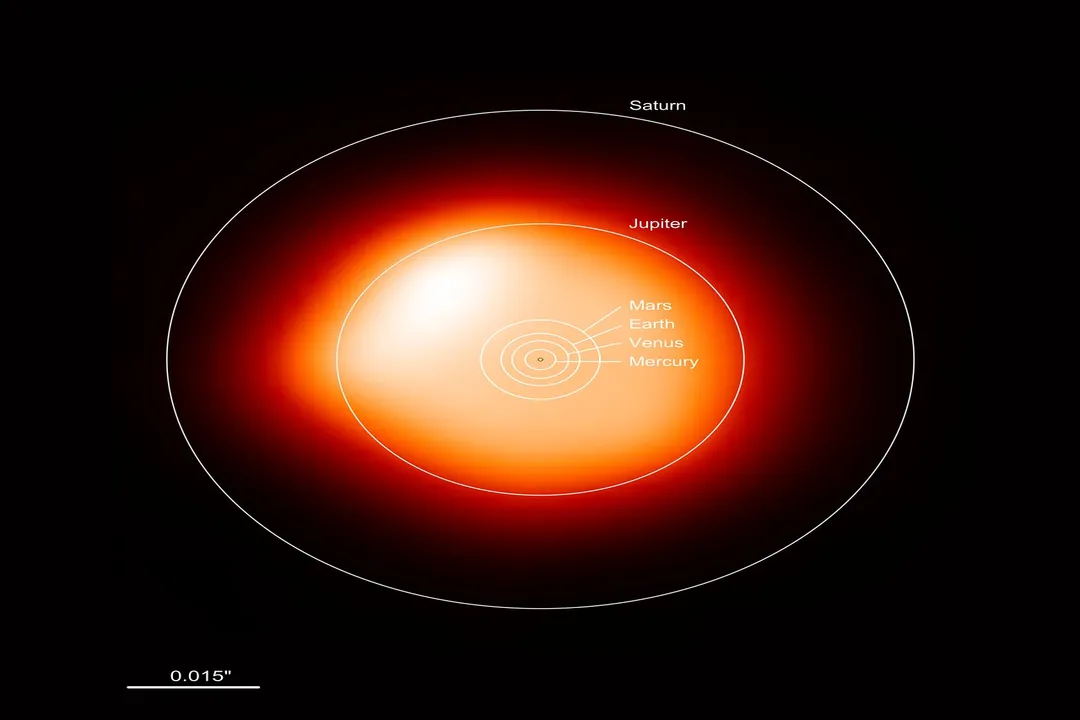
As the outer atmosphere expands rapidly, it cools down significantly. This cooling is what shifts the star's color toward the red end of the spectrum, hence the name Red Giant. For a star like the Sun, its radius can swell perhaps a hundred times its Main Sequence size, sometimes swallowing the orbits of Mercury and Venus. Stars that begin their lives much more massive than the Sun go through a similar process but become even grander objects known as Red Supergiants.
# Temperature Versus Area
The apparent contradiction—a cooler surface leading to higher overall brightness—is resolved by examining the physics of radiation, specifically the Stefan-Boltzmann Law. This law states that the total energy radiated per unit time (luminosity) is proportional to the surface area of the object multiplied by the fourth power of its absolute temperature ().
In the red giant phase, the surface temperature () drops, perhaps from 6,000 Kelvin on the Main Sequence down to 3,000 or 4,000 Kelvin. This decrease in temperature should drastically reduce the energy output per square meter. However, the increase in the surface area () due to the massive expansion is so enormous that it overwhelms the temperature drop.
Consider a simple scaling example. If a star’s radius doubles, its surface area quadruples (). If the temperature only drops by a small fraction, the net result is a massive increase in total light output. For a star like our Sun, the transition to a red giant can increase its luminosity by a factor of $1,000$ to $10,000$. The sheer volume of glowing gas radiating energy is the dominant factor.
A useful way to visualize this is to think of the energy output not as a single fire source, but as an immense array of light panels. The Main Sequence star is a small, intensely hot panel. The Red Giant is a gigantic, dimly lit sheet metal wall, but because the wall covers acres while the panel only covers a few square feet, the total light flooding the environment is far greater from the wall.
This explains why a star that appears visually red (cooler) can be intrinsically brighter (more luminous) than a star that appears white or yellow (hotter) but is much smaller. The key differentiator is the radius, which is a direct consequence of the post-Main Sequence expansion phase.
# Surface Appearance Versus Core Activity
It is easy to assume that because the outer shell is cool, the star is inefficient, but this misses the sheer internal power being generated. A common misconception is to equate the exterior temperature with the star's energy budget. In reality, the energy source deep within is generating far more power than before.
One important analytical distinction to make is between flux (energy per unit area, dictated by surface temperature) and luminosity (total energy output). A Sun-like star on the Main Sequence has a surface flux roughly $10^8$ times that of the cool outer layer of a Red Giant, but the Red Giant’s radius might be $100$ times that of the Sun, leading to a total luminosity increase of approximately times the original output. The energy has to go somewhere, and when the core is too cool to fuse the next element, it pushes the envelope out until the vast surface area can effectively radiate the excess energy generated by the shell fusion.

# Star Classes and Mass
The path to becoming a bright giant is slightly different depending on the initial mass of the star, which dictates how long it survives on the Main Sequence.
| Initial Mass (Solar Masses) | Main Sequence Star Type | Post-MS Phase Name | Approximate Luminosity Increase |
|---|---|---|---|
| to | F, G, K type (like Sun) | Red Giant | to $10^4$ |
| O, B type (Hot, Blue) | Red Supergiant | to $10^6$ |
For stars similar in mass to the Sun ($0.5$ to about $8$ solar masses), the phase is generally termed Red Giant. Once the core reaches about $100$ million Kelvin, helium ignition will occur, stabilizing the star temporarily before it moves on to further evolutionary stages.
For significantly more massive stars, the subsequent expansion leads to the Red Supergiant phase. These stars have immensely larger initial radii and core fusion rates, so their final luminosity is often orders of magnitude greater than that of a typical Red Giant. They become the brightest stars in the galaxy during this phase.
# Impacts on Nearby Systems
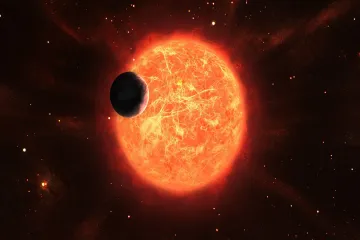
The transition to a luminous red giant is a cataclysmic event for any orbiting bodies. While Main Sequence stars are relatively benign neighbors, a fully inflated red giant possesses a truly enormous physical presence.
If we fast-forward approximately five billion years, when our Sun enters this phase, the gravitational dynamics will shift as the star swells. Since the star loses a significant portion of its outer mass through intense stellar winds during the giant phase, the inner planets might actually spiral outward slightly due to the reduced gravitational pull, even as the star's surface expands inward toward them. However, for stars similar to the Sun, the expansion is expected to consume Mercury and Venus, and likely Earth as well, as the star’s radius expands dramatically. Even if Earth avoided direct contact, the intense, evolved luminosity would boil away its oceans long before physical contact, rendering the surface uninhabitable. The temporary but vast output of energy fundamentally changes the habitable zone around the star for millions or billions of years.
# Contrast with Main Sequence Output
The fundamental difference in output stems from the physics driving the energy. Main Sequence stars are stable, core-driven fusion machines. Their luminosity is a direct product of the stable fusion rate of hydrogen into helium in the dense center. The star's size is minimal relative to its mass, leading to high surface temperatures and efficient energy radiation across a relatively small area.
Red Giants, conversely, are shell-driven expansion engines. The core has ceased hydrogen fusion and is contracting, while the energy released comes from hydrogen burning in a shell surrounding the inert core, or later, helium burning in the core itself. This process is inherently unstable and leads to massive structural changes that favor surface area over surface temperature for light output. If one were to compare the power output per gram of fuel consumed in the shell versus the core, the shell burning is inefficient and voluminous, whereas the Main Sequence core burning is dense and highly efficient in terms of energy extraction per unit of mass processed over time. The red giant is bright because it is huge, not because its surface is particularly energetic relative to its volume.
The vast difference in luminosity is what makes red giants such prominent objects in the night sky for astronomers observing distant galaxies. Even if a galaxy is millions of light-years away, the thousands of solar luminosities produced by its older, evolved stars allow those ancient stellar populations to be observed across cosmological distances. The Main Sequence stars of those same galaxies, even if far more numerous, are too dim to be individually resolved at such great separations.
# Surface Color Physics
The visual color gives us a hint about the physics, even if it is misleading regarding total power. The color of a star is determined by Wien's Displacement Law, which links peak wavelength (color) directly to surface temperature. A lower surface temperature means the peak emission shifts toward longer wavelengths, which we perceive as red or orange.
For a Main Sequence star like the Sun (), the surface temperature is around $5,778$ K, peaking in the visible, yellowish-green spectrum. A classic red giant like Arcturus, or a more evolved red supergiant like Betelgeuse, can have effective temperatures below $4,000$ K. The physics demands that cooler objects radiate less energy per area, but the scale of the expansion dictates the final outcome. This means that studying the precise color (spectral type) of a red giant allows astronomers to estimate its surface temperature, which, when combined with its known evolutionary stage (giving an estimate of its radius), allows for an accurate calculation of its true luminosity.
The physics of stellar structure ensures that once hydrogen is depleted in the core, the star must inflate dramatically if it is not massive enough to immediately jump to the next fusion stage. This inflation is the primary driver of the huge luminosity spike observed in the red giant phase across all lower-mass stars. The star temporarily maximizes its surface area to shed the excess thermal energy generated by the shell burning, resulting in the extremely bright, cool giants we observe.
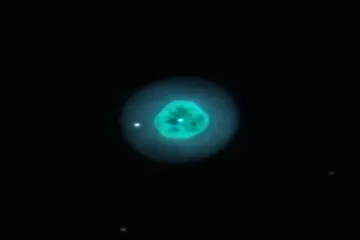
This brief, luminous phase stands in stark contrast to the long, stable Main Sequence existence. It is a temporary state, often lasting only a few hundred million years for Sun-like stars, before the star sheds its outer layers completely, leaving behind a planetary nebula and a white dwarf remnant. The brilliance of the red giant is a short-lived, energetic farewell to its hydrogen-burning life.
#Videos
How Do Main Sequence Stars Differ From Red Giants? - YouTube
Related Questions
#Citations
Red giant - Wikipedia
Question about main sequence stars vs red giant stars - Reddit
Why is red giant brighter (or is it?) than same mass main sequence ...
Why do stars become red giants? - Astronomy Stack Exchange
G. C. Sloan: Main Sequence Stars, Giants, and Supergiants
How Do Main Sequence Stars Differ From Red Giants? - YouTube
Red Giants Definition - Intro to Astronomy Key Term - Fiveable
Stage 5: Subgiant, Red Giant, Supergiant - Lives and Deaths of Stars
Red Giant Stars - The Astrophysics Spectator