What do red giants evolve from?
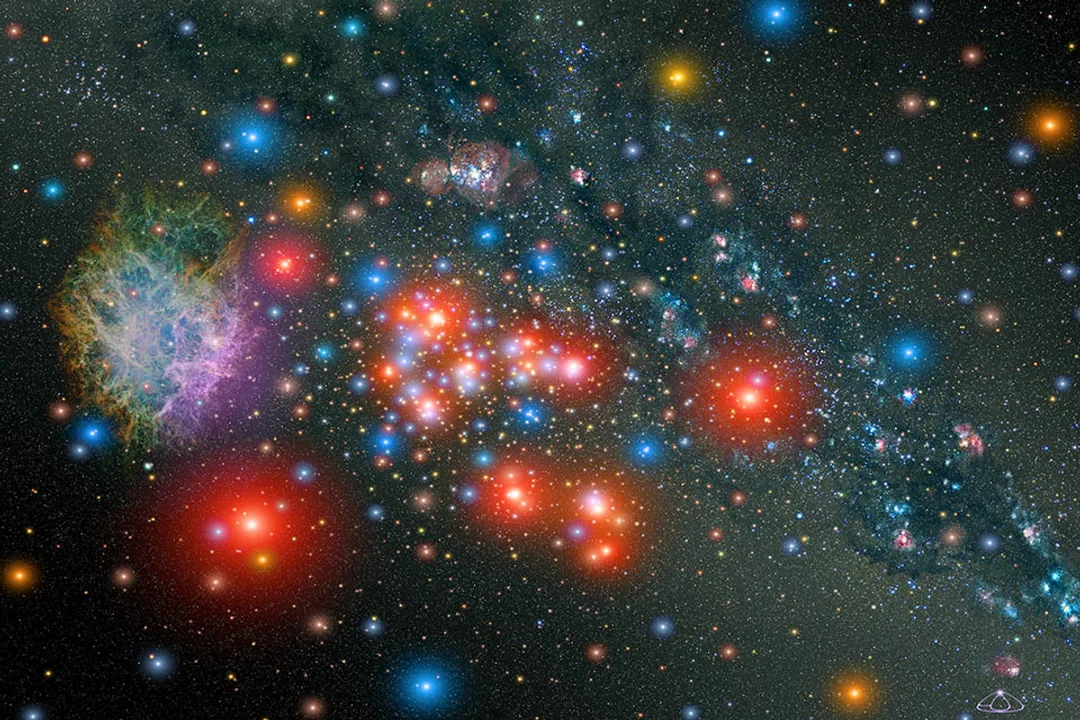
Stars do not remain the same throughout their existence; they undergo profound transformations as they age, and one of the most visually dramatic phases for Sun-like stars is the transition into a red giant. This phase marks the beginning of the end for stars that have exhausted the primary fuel source in their cores, forcing them into a period of intense physical change before their final demise. Understanding what precedes this fiery, swollen state requires looking back at the star’s long, stable adolescence.
# Main Sequence Life
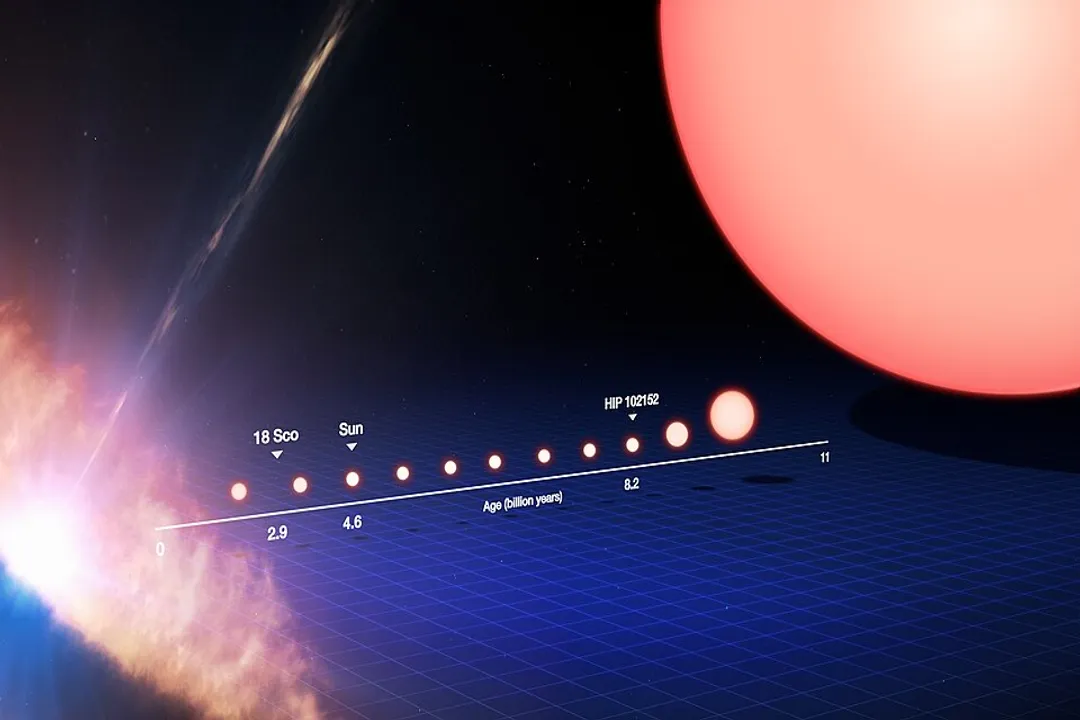
Before a star balloons into a red giant, it spends the majority of its active life on what astronomers call the Main Sequence. During this long phase, the star maintains hydrostatic equilibrium—a perfect balance between the inward crush of gravity and the outward push of pressure generated by nuclear fusion. For stars like our Sun, this equilibrium is maintained by the relentless fusion of hydrogen into helium deep within the core. The energy released from this process dictates the star’s color, size, and luminosity, keeping it stable for billions of years.
Our own Sun is currently a middle-aged main-sequence star, roughly halfway through this stable period. The duration of this main sequence life is directly tied to the star's initial mass; more massive stars burn through their fuel much faster, resulting in shorter lifespans, while less massive stars can remain on the main sequence for trillions of years.
# Core Exhaustion
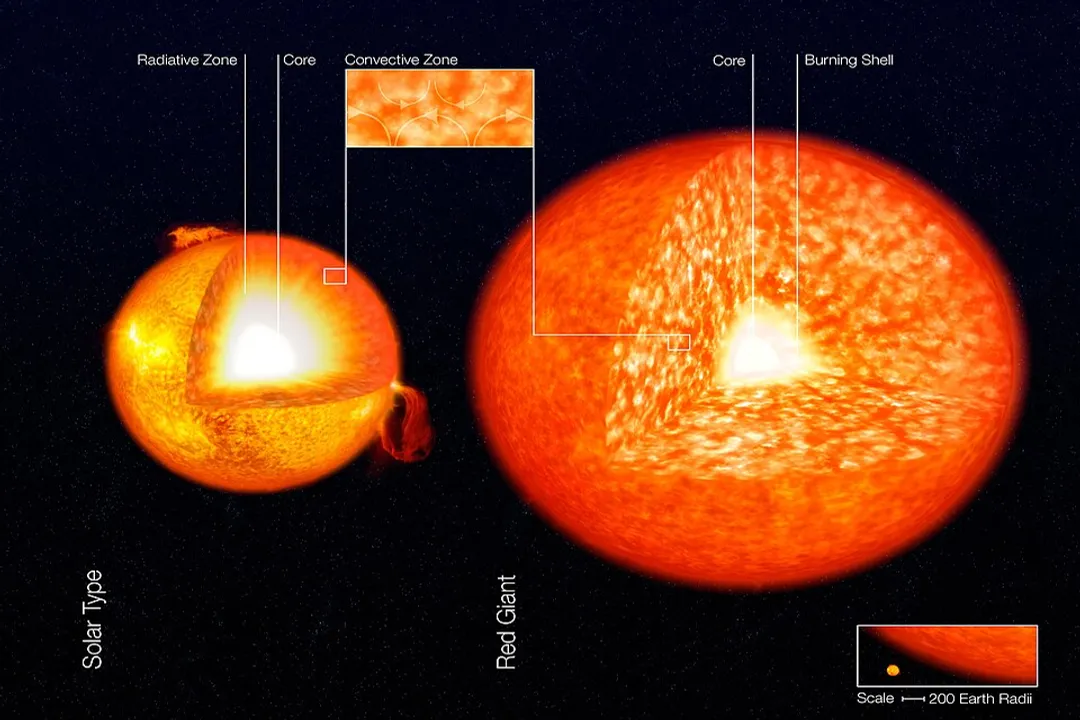
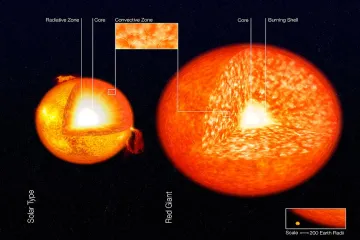
The fundamental trigger for the red giant transformation is the depletion of hydrogen fuel in the star’s very center. Once all the usable hydrogen in the core has been converted into helium ash, fusion stops in that central region. Because the core is no longer producing energy to counteract gravity, the core begins to contract under its own immense weight. This gravitational collapse is a key turning point, as it dramatically increases the temperature and density of the surrounding layers.
Here is an interesting comparison of timelines: While the Sun will spend about 10 billion years on the main sequence fusing hydrogen, the subsequent transition phase—the subgiant stage, where the core begins contracting and the outer layers start responding—can be relatively quick, spanning only a few hundred million years. This means the star spends the vast majority of its existence in stable hydrogen burning, making the shift to giant status a relatively rapid, climactic event in astronomical terms.
# Shell Ignition
As the helium core contracts and heats up, it reaches a critical temperature threshold that ignites a layer of hydrogen just outside the core. This process is known as hydrogen shell burning. The fusion in this shell is often more intense than the fusion that occurred in the core when the star was on the main sequence.
This sudden, powerful new energy source pushes the star's outer layers outward with tremendous force. The star expands massively, often increasing its radius by a factor of one hundred or more. While the star's total energy output (luminosity) significantly increases because of the vastly larger surface area, the surface temperature actually drops because that energy is spread out over a much larger volume. This cooler, expanded surface is what gives the star its characteristic reddish hue, hence the name red giant.
# Size and Color
The resulting red giant can become immense. A star like the Sun, upon reaching its red giant phase, is predicted to swell to a radius perhaps 150 times its current size. To give a tangible sense of this scale, if we imagine our Sun becoming a red giant, its outer atmosphere could easily expand past the orbit of Mercury and possibly engulf Venus, bringing the star’s fiery edge uncomfortably close to Earth’s current orbit.
The surface temperature of these giants typically falls into the range of 2,000 to 5,000 Kelvin. By contrast, our present-day Sun, a yellow dwarf, has a surface temperature near 5,800 Kelvin. This drop in temperature shifts the peak emission wavelength toward the red end of the visible spectrum. Famous examples of mature red giants include Arcturus in the constellation Boötes and Aldebaran in Taurus.
# Mass Differentiation
It is important to distinguish between standard red giants and their more massive cousins, red supergiants. The evolutionary path described above—starting from the Main Sequence, core hydrogen exhaustion, and expansion—applies primarily to stars with masses ranging from about 0.5 to 8 times the mass of the Sun.
Stars that begin their lives with significantly greater mass, usually exceeding about 8 to 10 solar masses, evolve into red supergiants. While both types are large and red, supergiants are far more luminous and much, much larger than typical red giants. Stars like Betelgeuse are examples of this supergiant class, representing the later, more violent stages of evolution for the heaviest stars.
# Internal Activity
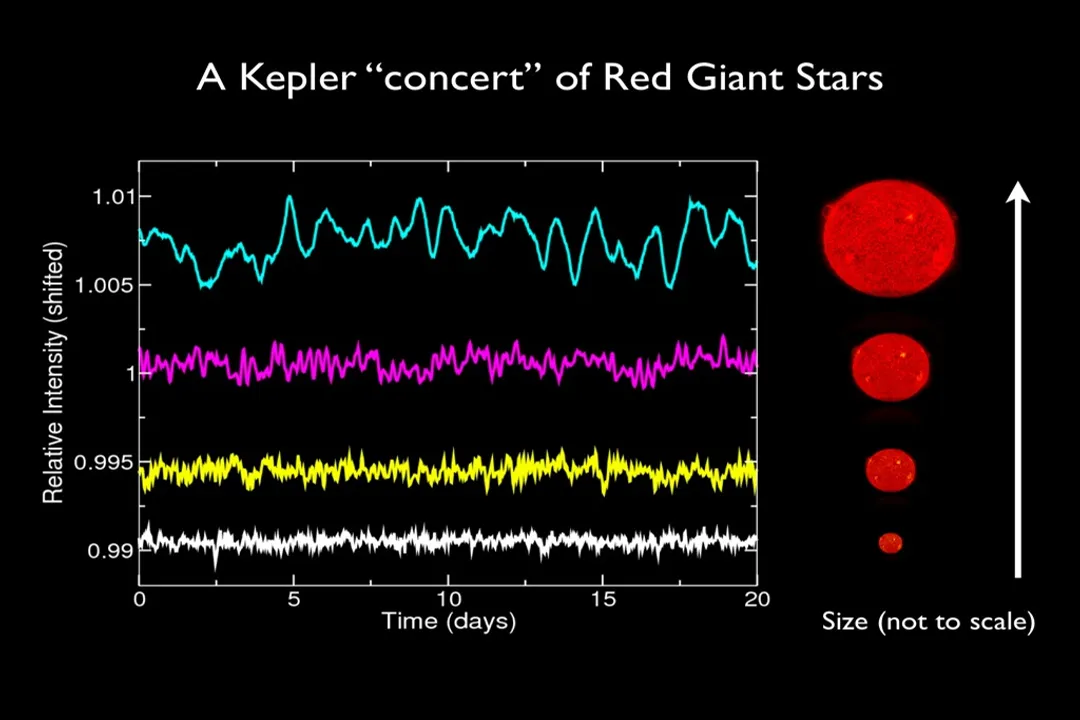
The dramatic structural changes in a red giant are mirrored by dynamic processes happening inside the star. As the outer layers expand and cool, the star often becomes unstable, leading to pulsations or oscillations in its brightness and size. These internal vibrations, which depend on the star's internal structure, can be studied by astronomers to probe conditions deep beneath the visible surface. In this stage, the star is not just expanding; it is internally churning due to the changing balance between gravity and thermal pressure.
For stars that started with a mass similar to the Sun, once the hydrogen in the shell around the core is spent, the inert helium core continues to contract until it becomes hot and dense enough to ignite helium fusion. This ignition, which produces carbon and oxygen, halts the rapid contraction and marks the beginning of the Asymptotic Giant Branch (AGB) phase, which is a later, even more luminous phase in the star’s life.
# Stellar Demise
The red giant phase, however long it seems in retrospect to the star, is ultimately a temporary stop on the way to oblivion. The final fate is dictated by the star's initial mass.
For stars like the Sun (low-to-intermediate mass stars), the expanded outer layers are gently expelled into space after the helium-burning phase concludes. This ejection forms a beautiful, expanding shell of gas known as a planetary nebula. At the center of this nebula, the hot, inert core of carbon and oxygen is left behind, which cools over eons to become a white dwarf. The white dwarf is incredibly dense—a teaspoon of its material would weigh many tons—but it no longer generates energy through fusion, slowly fading away.
For the higher-mass stars that become red supergiants, the end is far more catastrophic. After burning through successively heavier elements in their cores until iron is formed (a process that yields no further energy), these stars collapse violently, resulting in a supernova explosion, leaving behind either a neutron star or a black hole.
| Star Type | Pre-Giant Fuel Source | Post-Giant Remnant (Sun-like) | Key Characteristic |
|---|---|---|---|
| Main Sequence | Core Hydrogen Fusion | N/A | Stable Hydrostatic Equilibrium |
| Red Giant | Hydrogen Shell Fusion | White Dwarf + Planetary Nebula | Vastly increased radius, cooler surface |
| Red Supergiant | Shell Burning (Heavier Elements) | Neutron Star or Black Hole | Significantly higher luminosity than Red Giants |
The evolution into a red giant is thus less a singular event and more the visible symptom of a core running out of its primary fuel, forcing the star to adopt a desperate, massive, and temporary new structure to keep the lights on for a little longer. It is a universal process in stellar astrophysics, dictating the future of nearly every star we see in the night sky that isn't massive enough to end its life in a supernova.
#Videos
Why Do Red Giant Stars Get Bigger? - YouTube
Related Questions
#Citations
Red giant - Wikipedia
Red Giant - ESA/Hubble
Red giant stars: Facts, definition & the future of the sun - Space
Why do stars become red giants? - Astronomy Stack Exchange
Evolution from the Main Sequence to Red Giants – MCC AST
Starquakes in Red Giants | astrobites
Astrophysics of Red Supergiants - AAS Nova
Formation of a Red Giant | Physics Van - University of Illinois
Why Do Red Giant Stars Get Bigger? - YouTube