How does a giant star die?
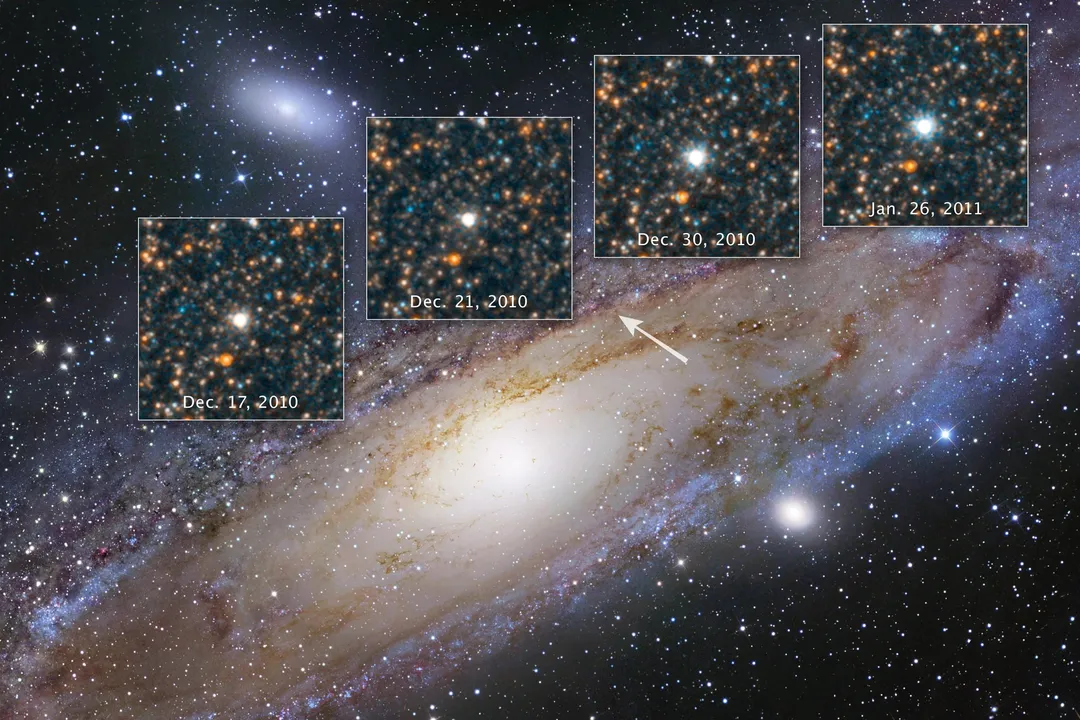
The end of a star’s life is anything but gentle, but the manner of its demise is entirely dictated by the single property it possesses in abundance: mass. For billions of years, a star maintains its existence through a delicate, titanic struggle. Its sheer weight, the inward crush of gravity, is perfectly counterbalanced by the furious outward push of energy generated by nuclear fusion in its core. [4][7][9] This equilibrium keeps it stable on the main sequence, where it converts hydrogen into helium, releasing the light and heat we observe. [1][5] However, every star is, in a profound sense, always dying; it simply has a finite supply of fuel for this ongoing battle. [5]
# Fuel Depletion
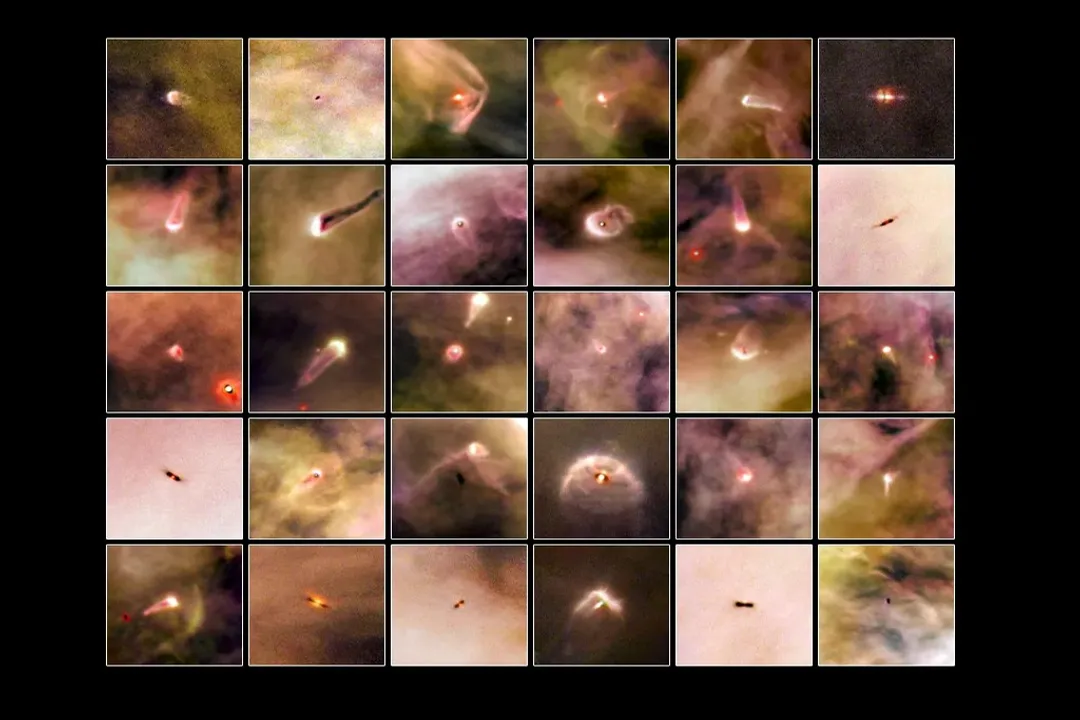
The turning point arrives when the core runs out of hydrogen fuel. Without the constant energy production to resist it, gravity wins the immediate struggle, and the core begins to contract. [1][2][7] As the core shrinks under its own weight, the immense pressure and rising temperature force the star into the next phase of existence. [1][6]
For stars around the mass of our Sun, or those slightly larger, this increased heat is sufficient to ignite a new process: the fusion of the accumulated helium into carbon. [1][2][9] This new reaction releases significantly more energy than the previous hydrogen-burning stage. [1] This surge in outward pressure is what causes the star to puff up dramatically. The star’s surface cools down as it expands, shifting its color toward the red end of the spectrum, officially marking its transition into a Red Giant. [2][6][9] For our own Sun, expected to enter this phase in about five billion years, the expansion will likely engulf Mercury and Venus, possibly even scraping the orbit of Earth. [6][9]
# Density Shift
It is fascinating to consider the physical state of such an expanded star. While our Sun will lose some mass as its outer layers are ejected during this process, its radius will increase by a factor of perhaps two hundred times its current size. [1][6] Even if the star maintained its original mass, the resulting drop in central density would be enormous due to the vastly larger volume. When you account for the mass loss during the subsequent shedding of the outer atmosphere, the future Red Giant Sun becomes a much less compact object than the star shining today. [1] This expansion is the initial, visible sign that the star is shifting away from its long, stable main-sequence tenure.
# Quiet Fading

The subsequent stages of stellar death are determined by mass, creating two very different endings for the majority of stars.
# Medium Stars
Stars up to about eight times the mass of the Sun follow a path that is relatively less explosive but still involves a dramatic transformation. [1][8] Once the helium in the core is exhausted, the star moves to fuse heavier elements like carbon and oxygen. [1][8] However, for these medium-sized stars, the gravitational squeeze in the core simply isn't intense enough to force fusion past a certain point. The production of elements stops, typically after an inert core of carbon and oxygen forms, because creating anything heavier requires inputting energy rather than releasing it. [8][9]
The star’s core collapses for a final time, but the outer layers are blown away in a process that ejects the star's guts into space. [1][8] These expelled layers form a beautiful, expanding shell of glowing gas known as a Planetary Nebula—a term that confusingly has nothing to do with planets. [1][2] Observations from instruments like the Hubble Space Telescope have shown these nebulae are not simple spheres, but display astonishing complexity and varied shapes, hinting at the turbulent dynamics that precede their formation. [3]
At the center of this fading spectacle lies the abandoned core: a White Dwarf. [1][2] This remnant is intensely hot but rapidly dims, radiating away its leftover thermal energy like a dying ember. [1][6] These objects are stable because the collapse is finally halted by electron degeneracy pressure—the physical resistance of electrons being forced too close together. [5][9] A white dwarf’s life as a visible object is measured in trillions of years; given that the universe is currently only 13.8 billion years old, all white dwarfs are, for now, still radiating. [5][9] Over a vast stretch of time, they are theorized to cool completely into cold, dark lumps called Black Dwarfs. [2][9]
# Explosive Grand Finale
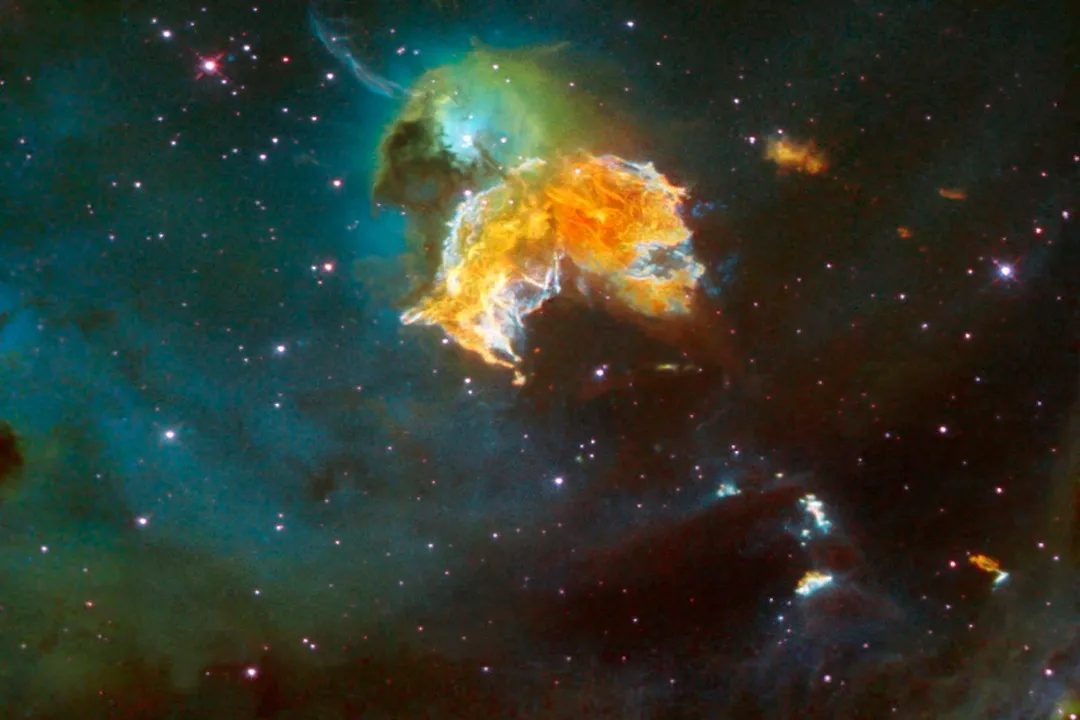
The death of truly giant stars—those with initial masses of roughly eight times the Sun or more—is marked by unparalleled violence and energy release. [1][3][8] Because of their immense bulk, the gravity is so extreme that fusion does not stop at carbon or oxygen. These massive cores build up elements layer by layer, creating what astronomers call an "onion-skin" structure, with successively heavier elements fusing closer to the center. [1][8][9] This layering continues until the core is composed of Iron (Fe). [1][3][8]
Iron is the definitive end of the road for stellar fusion. Fusing iron nuclei consumes energy rather than releasing it, meaning the outward pressure necessary to fight gravity instantly vanishes. [1][5][8] The core collapses with terrifying speed, perhaps in as little as fifteen minutes or less. [1][8] The density reached is so extreme that electrons are forced into protons, creating a core composed almost entirely of neutrons—a Neutron Core. [2][8]
This core, suddenly rigid, provides a surface for the rest of the star’s mass to crash into. When the super-dense material slams into this neutron ball, it rebounds, sending a catastrophic shockwave outward through the star's layers. [2][8] This shockwave triggers the Supernova explosion. [3][6] A single supernova unleashes an almost unimaginable amount of energy, often outshining hundreds of billions of normal stars combined, sometimes becoming visible during the daytime on Earth. [1][6][8] In 1054 CE, such an event was recorded by Chinese astronomers, and its remnant, the Crab Nebula, is still visible today. [1][3][6]
# The Final Remnants
The fate of the collapsed core dictates the nature of the stellar corpse left behind. This distinction is based on the final mass of the compressed core, which must exceed the Chandrasekhar limit of $1.4$ solar masses to explode as a supernova in the first place. [1]
Neutron Star: If the remnant core mass is below approximately three times the Sun's mass, the immense neutron degeneracy pressure successfully halts further collapse. [1][8][10] What remains is a Neutron Star—an object so dense that a sugar cube’s worth of its material would weigh billions of tons. [2] A neutron star is essentially a giant atomic nucleus held together by gravity. [2]
Black Hole: Should the remnant core mass exceed this threshold, not even the resistance of neutrons can counteract the crushing gravity. [1][8] The collapse continues indefinitely, squeezing the mass into an infinitely dense point, creating a Black Hole. [1][8][10] The region associated with a black hole is not a solid surface but an event horizon, a boundary where gravity is so strong that nothing, not even light, can escape. [1]
It is worth noting that this classic path is not the only possibility. Modern astrophysics suggests that the very most massive stars might bypass the visible supernova stage entirely, collapsing directly into a black hole under their own overwhelming gravity. [9]
# Cosmic Alchemy

The incredible energy released during the fusion stages of massive stars, and especially during the supernova, serves a vital purpose for the rest of the cosmos: element creation. [1] Through fusion, these stars are cosmic foundries, synthesizing elements like carbon, oxygen, magnesium, silicon, and iron. [1][2][6]
The death of a giant star is therefore the universe's mechanism for recycling and enriching interstellar space. The material violently ejected during the supernova explosion—the star's processed guts—spreads these heavier elements throughout nebulae and gas clouds. [1][6] These clouds eventually contract to form new generations of stars, planets, and the building blocks of life itself. [1][6] The iron in our blood and the oxygen we breathe were forged in the core of a massive star that lived and died long before our solar system ever formed. [1][9] The extreme environments of these stellar deaths are the necessary predecessor to rocky planets and biological chemistry. [1]
In contrast, the death of a Sun-like star, while resulting in the beautiful planetary nebula, produces only lighter elements like carbon and oxygen in its core. [1][8] While essential, the full palette of elements required for complex geology and biology requires the cataclysmic engine of a core-collapse supernova. [1] A fascinating, yet unproven, idea for further study is whether the sheer energy of a supernova could temporarily reignite the fusion process in a white dwarf remnant if the surrounding nebula were dense enough to compress it further, though standard theory suggests the white dwarf is already in a stable, non-fusing state. [1] The ultimate fate of stellar remnants like neutron stars is also a subject of deep inquiry; while they shine faintly due to residual heat, their theoretical lifespan vastly exceeds the current age of the cosmos. [5]
#Videos
How Stars Die - YouTube
Related Questions
#Citations
The Death Throes of Stars - NASA Science
The Death of a Star - How Stars Work - Science | HowStuffWorks
How Stars Die - YouTube
How do stars die? - Space
ELI5: What is a dying star? : r/explainlikeimfive - Reddit
[PDF] Death of a star - University of Western Australia
[PDF] Death of Stars
How do stars die? - BBC Science Focus Magazine
How Stars Die: The Big Ones - Discovery Channel
Death of a Star: What Happens When Things Go Dark