What force causes a star to become a planetary nebula?
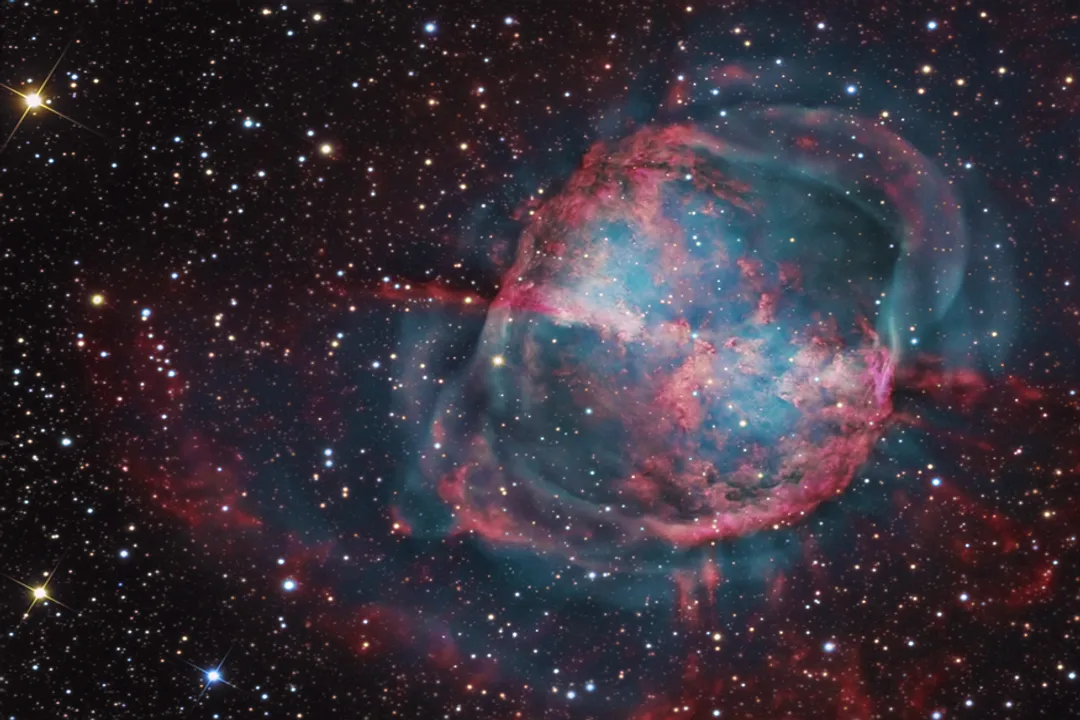
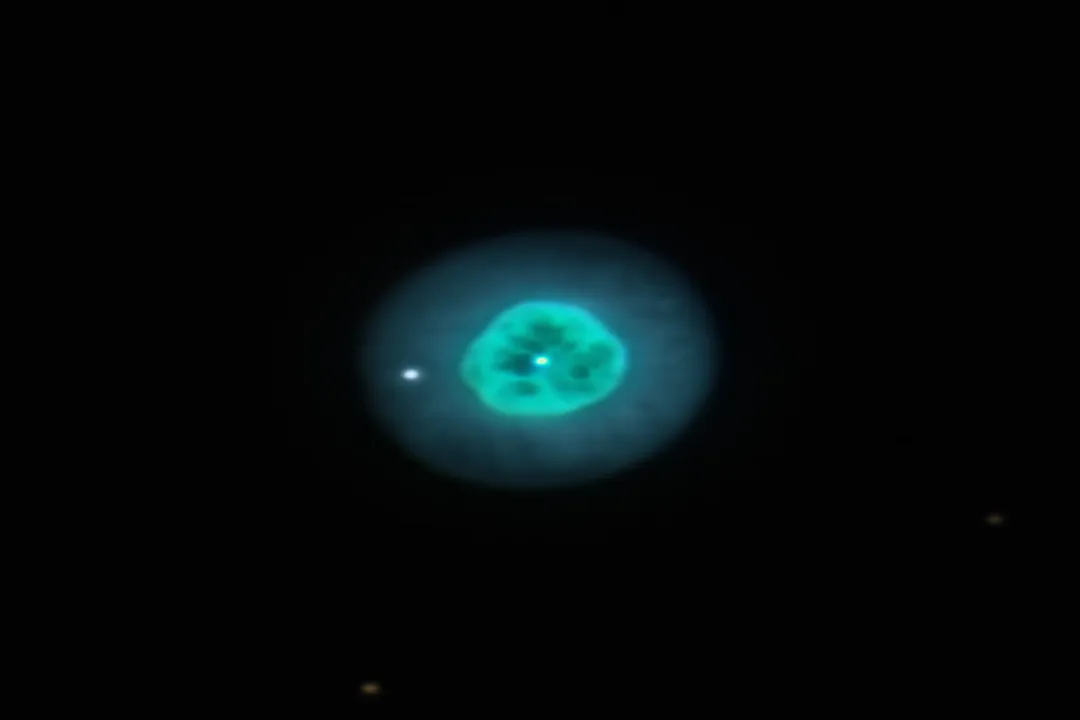
The stunning structures we call planetary nebulae are not formed by a singular, overwhelming cosmic punch, but rather by a complex, drawn-out process of stellar eviction driven by internal instability in a dying star. [1][8] These ethereal shells of gas represent the final, dramatic exhalation of a star similar in mass to our own Sun before it settles into its final form as a white dwarf. [1][9] The common name is misleading; these objects have nothing to do with planets, a misidentification dating back to early telescopic observations when the faint, roundish objects resembled Uranus or Neptune. [1][9]
# Stellar Life Cycle
To understand the force that shapes a nebula, we must look at the evolutionary path of a low-to-intermediate mass star, typically between $0.8$ and $8$ times the mass of the Sun. [1] For billions of years, such a star exists in equilibrium, fusing hydrogen into helium in its core—this is the main sequence phase. [8] Once the core hydrogen is exhausted, the star expands dramatically, becoming a red giant. [8]
The subsequent stages involve the star burning helium in its core, and later, fusing material in concentric shells around the core, which is now largely composed of carbon and oxygen. [8] This complex internal structure leads to a phase known as the Asymptotic Giant Branch (AGB). [1]
# The Instability Driver
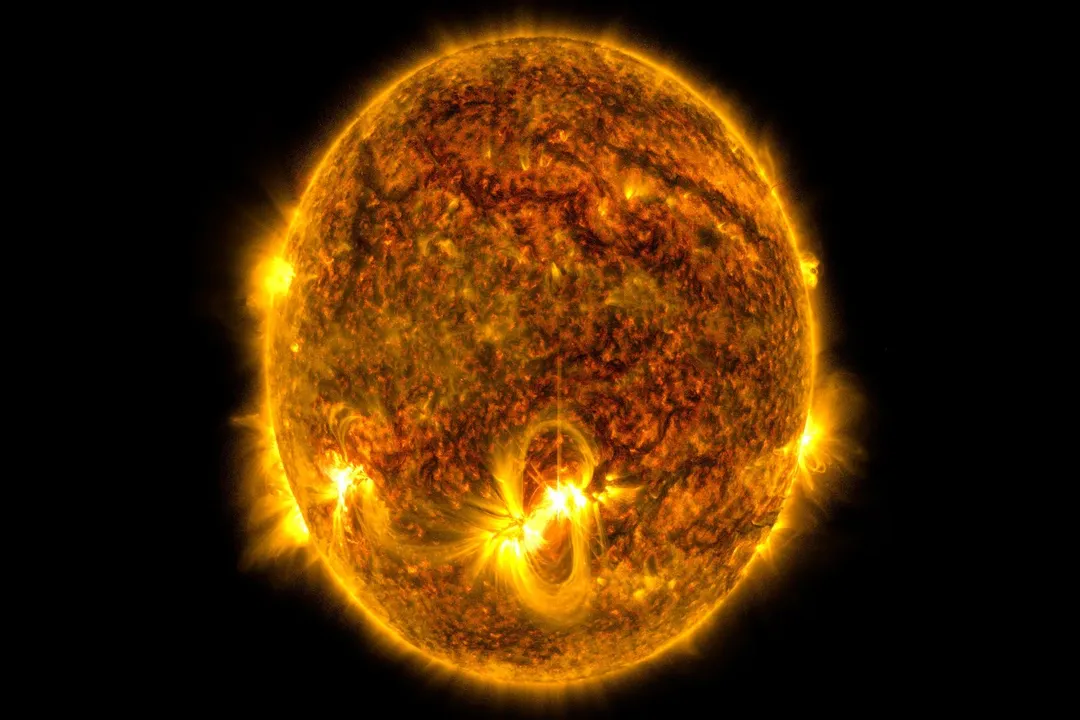
The AGB phase is characterized by intense instability, and this instability is the source of the outward force that causes the mass loss. [1][5] As the star burns fuel in shells around the inert core, it experiences thermal pulses. [1] These pulses are temporary, dramatic increases in energy output that cause the star's outer layers to expand and contract violently. [1]
The physical "force" responsible for the nebula's creation is the sustained, vigorous outflow of material driven by these thermal pulses and the resulting powerful stellar winds. [1][8] This is not the rapid shockwave of a supernova; instead, it is a prolonged period of high mass loss occurring over tens of thousands of years. [1][5] During the AGB phase, the star can shed an amount of mass equivalent to the entire Earth every week, amounting to about to solar masses per year. [1] This material forms an expanding, cool envelope around the star. [1]
# Shaping Winds
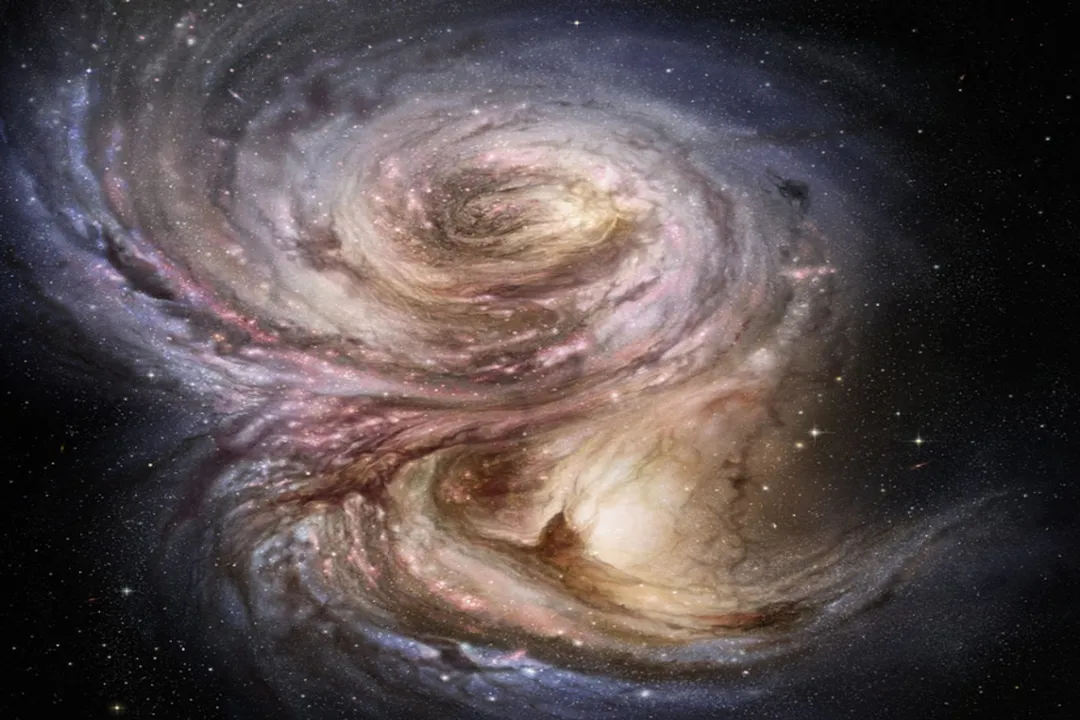
The formation of the nebula involves at least two distinct phases of mass ejection, which help sculpt the final appearance. Initially, a relatively slow wind, moving at speeds around $10$ to $20$ kilometers per second, pushes the bulk of the star's outer atmosphere away. [1]
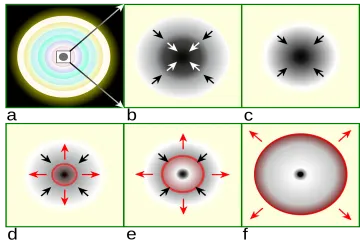
After the main envelope has been ejected, the star's core shrinks dramatically and heats up intensely. This exposed, extremely hot core then emits a much faster wind, traveling at speeds exceeding $1,000$ kilometers per second. [1] When this fast wind catches up to the previously ejected, slower-moving material, the interaction between the two streams creates shocks and compression waves. [1] These interactions are what sculpt the beautiful, often intricate shapes—bipolar outflows, rings, or complex knots—seen in planetary nebulae today. [5][6] It is this collision and the subsequent heating and shaping by the faster wind that molds the initial spherical ejection into the diverse morphologies cataloged by observatories. [5]
One intriguing consequence of this dual-wind system is the relatively clean separation of the glowing gas from the central remnant. Consider the case of a star that might start with $3$ solar masses. After shedding perhaps $0.6$ solar masses as the nebula, the remaining core, the white dwarf, will stabilize at around $0.6$ to $0.7$ solar masses. [1] The material we see glowing is only the outer shell of the star that was gently pushed off before the final, intense heating phase began.
# The Central Illuminator
The ejected material itself does not glow brightly on its own; it requires an energy source to become visible as a nebula. [5] Once the outer layers are gone, the stellar core collapses into a compact, incredibly hot white dwarf. [1][9] This remnant can reach temperatures of over $100,000$ Kelvin. [5]
The "force" of the ejection creates the shell, but the light comes from this core. The white dwarf radiates intense ultraviolet (UV) radiation. [1][5] When these high-energy photons strike the expanding shell of gas—primarily hydrogen and helium—they ionize the atoms (stripping them of their electrons). [1] As these electrons recombine with the ions, they release energy in the form of visible light, making the nebula shine. [5] The color and structure of the nebula depend directly on the chemical composition of the ejected material and the temperature of the central star. [1]
# Timescale Rarity
The observable phase of a planetary nebula is extremely brief on cosmic timescales. [1] After the central star achieves the high temperatures necessary to ionize the shell, the process of expansion and subsequent fading is rapid. Astronomers estimate that a star spends perhaps only to $50,000$ years in this fully illuminated state before the gas disperses too thinly to be easily detected. [1] This fleeting nature means that capturing an image or study of a planetary nebula is akin to catching a star during its very last brief bow before settling into its long, dark retirement as a cold white dwarf. The relative scarcity of visible nebulae compared to the sheer number of stars in the galaxy is a direct reflection of this short lifespan.
# Formation Variations
While the mechanism centers on AGB instability and dual winds, the resulting shapes are far from uniform. The initial, relatively uniform ejection might be modified by several factors. [5]
- Bipolar Structures: Many nebulae appear hourglass or dumbbell-shaped. This strongly suggests that something is constricting the outflow near the star. A common theory involves the presence of a binary companion star or a dense torus of material remaining close to the white dwarf, channeling the fast wind into two opposite directions. [5]
- Spherical Nebulae: Older models often assumed perfect spheres, which are indeed seen in some cases, suggesting a more symmetric ejection process. [5]
- Interaction with Space: In some instances, the nebula can interact with the interstellar medium or material ejected earlier, leading to complex shocks that further alter the appearance. [5]
| Feature | Slow Wind Phase (Initial Ejection) | Fast Wind Phase (Shaping) |
|---|---|---|
| Speed | Slow ( km/s) [1] | Fast ( km/s) [1] |
| Material | Cool, dense outer layers [1] | Hot plasma from the exposed core [1] |
| Primary Effect | Creating the bulk mass of the nebula shell [1] | Sculpting features via shock interaction [5] |
In summary, the force that causes a star to become a planetary nebula is not a single, external impact, but the immense internal pressure and associated thermal pulses occurring during the late Asymptotic Giant Branch phase, resulting in a sustained, massive expulsion of outer stellar layers driven by powerful stellar winds. [1][8]
Related Questions
#Citations
Planetary nebula - Wikipedia
Star Basics - NASA Science
Formation of Planetary Nebulae - Cosmotography
Planetary Nebulas - Center for Astrophysics | Harvard & Smithsonian
Planetary Nebulae
Planetary Nebula - ESA/Hubble
How big are nebulae, what causes them, and what do they form later ...
Stellar Evolution - | The Schools' Observatory
Planetary Nebula Definition, Features & Facts - Lesson - Study.com