What energy source makes the ejected gas shell of a planetary nebula visible?
Answer
Intense ultraviolet (UV) radiation from the hot central white dwarf core
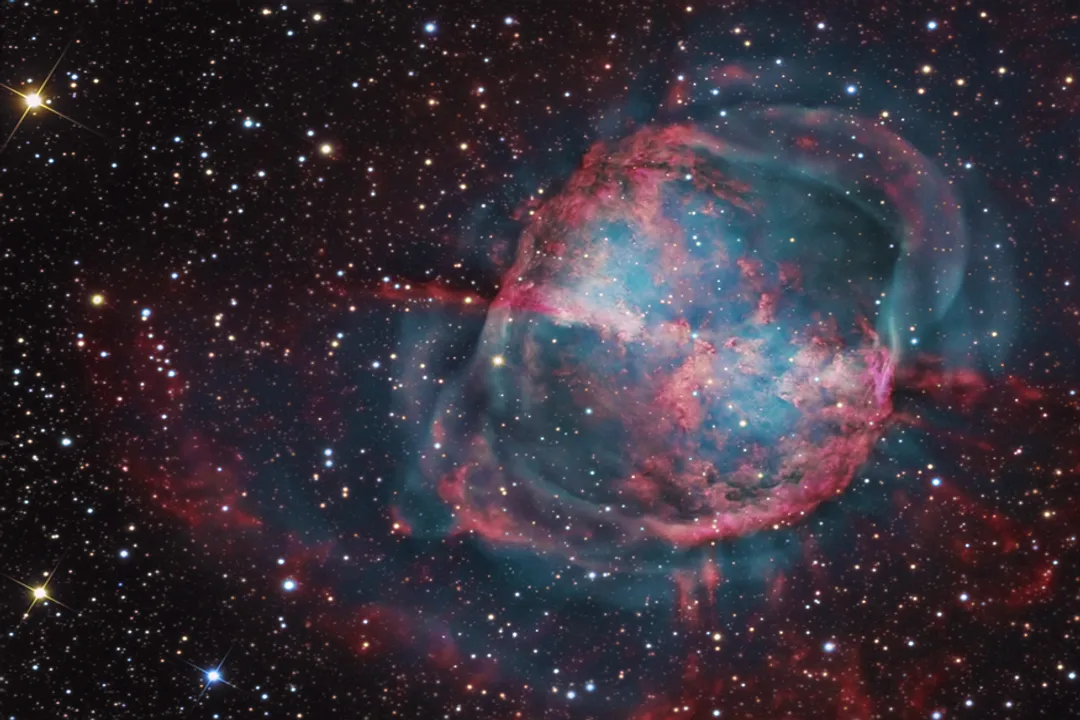
The central white dwarf radiates intense UV radiation after the outer layers are gone. This high-energy radiation ionizes the expanding shell of gas, causing it to release visible light upon recombination.
Related Questions
What drives the complex process forming a planetary nebula?Why are these objects misleadingly named 'planetary nebulae'?What final form does a star similar in mass to our Sun assume after expelling its outer layers?Which late evolutionary phase is characterized by intense instability leading to mass loss?What energy source makes the ejected gas shell of a planetary nebula visible?Approximately what speed characterizes the initial, slow stellar wind phase of mass ejection?What interaction primarily sculpts the intricate shapes seen in planetary nebulae?On cosmic timescales, how long is a planetary nebula typically in its fully illuminated state?What common feature is theorized to cause the hourglass or dumbbell shape in bipolar planetary nebulae?What is the typical mass range (in solar masses) for stars that evolve into planetary nebulae?