What does a star become when the outer layers expand?
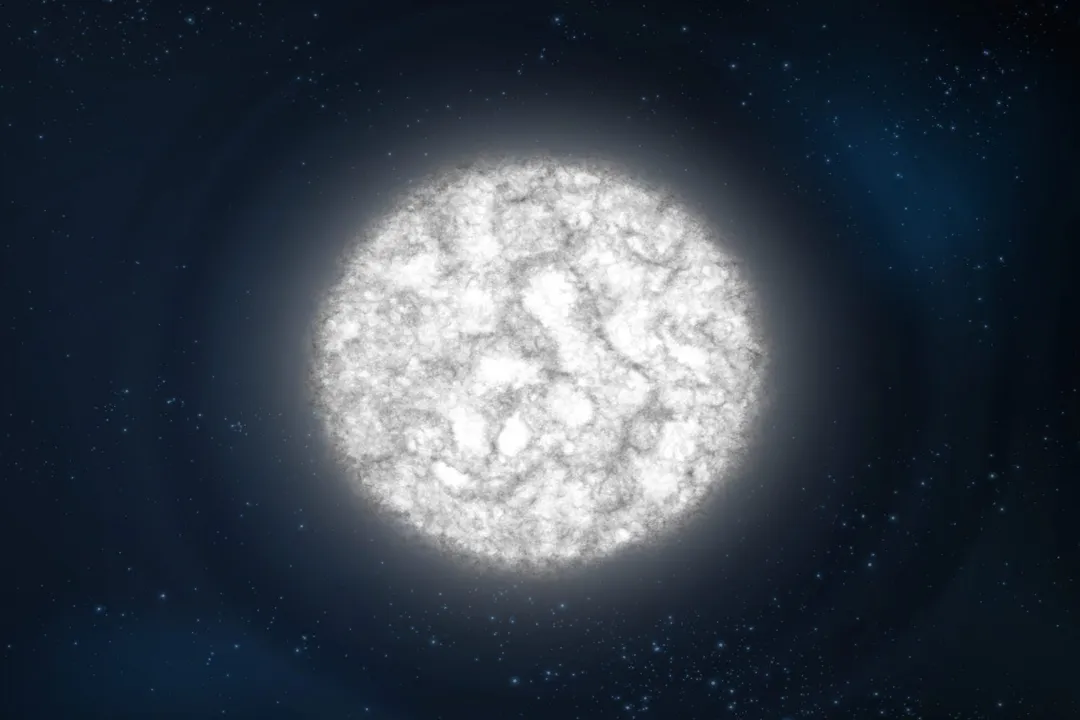
The transformation a star undergoes when its outer layers expand marks a dramatic turning point in its existence, signaling the exhaustion of its primary fuel source. Stars spend the vast majority of their lives in a stable state, often called the main sequence, diligently fusing hydrogen into helium in their cores. [2][7] This process generates the outward pressure that perfectly balances the inward crush of gravity, keeping the star in equilibrium. [4] However, even stars as massive as our Sun have a finite fuel supply. [1][7] When the hydrogen fuel in the core runs out, the balance is broken, and the star begins its final, most visible changes, initiating the expansion you're asking about. [2]
# Star Birth
Before this dramatic swelling occurs, a star begins as a vast cloud of gas and dust, known as a stellar nebula. Gravity pulls this material together until the core becomes hot and dense enough to ignite nuclear fusion. [4][7] Once this fusion starts, the object officially becomes a star and settles onto the main sequence, where it will reside for the longest portion of its life. [7] The initial mass of the star during this formation stage is the single most critical factor that determines everything that follows, including how large those outer layers will eventually become and what the star's final remnant will be. [4]
# Great Expansion

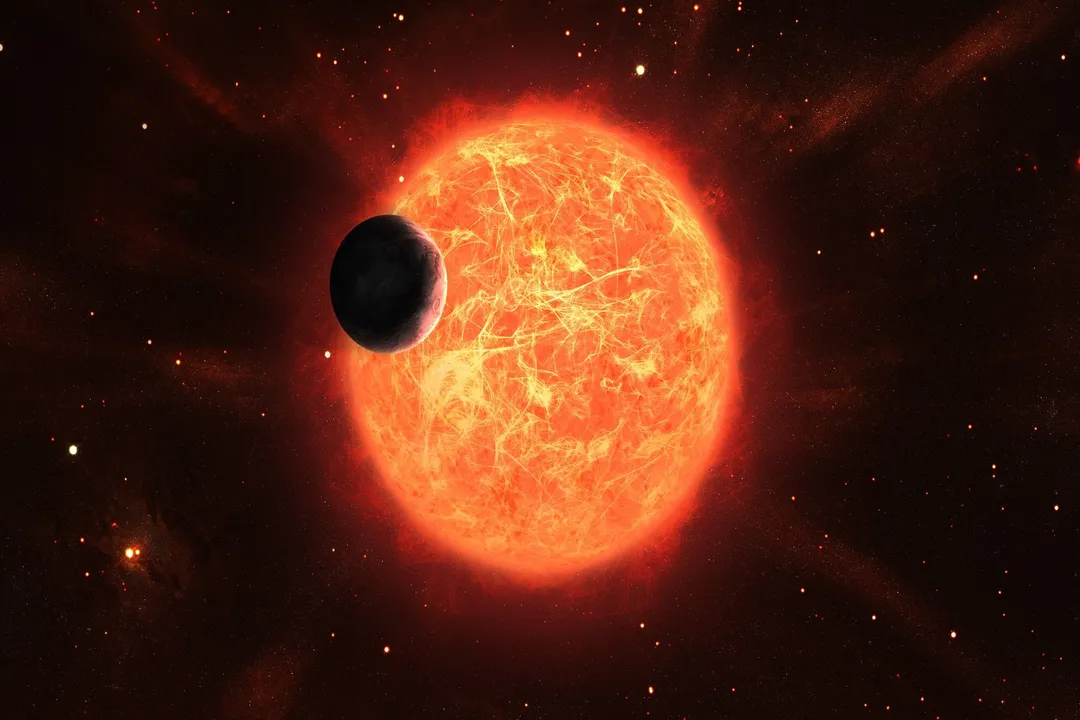
The expansion occurs because the star runs out of hydrogen fuel in its core, which stops the primary fusion process. [2][7] Without the outward energy from core hydrogen fusion, gravity takes a temporary upper hand and begins to contract the core, making it hotter and denser. [2][7] This intense heat from the contracting core ignites a shell of hydrogen surrounding the core, causing rapid fusion in that shell. [2] This new, intense energy generation pushes the star’s outer layers outward with enormous force. [2]
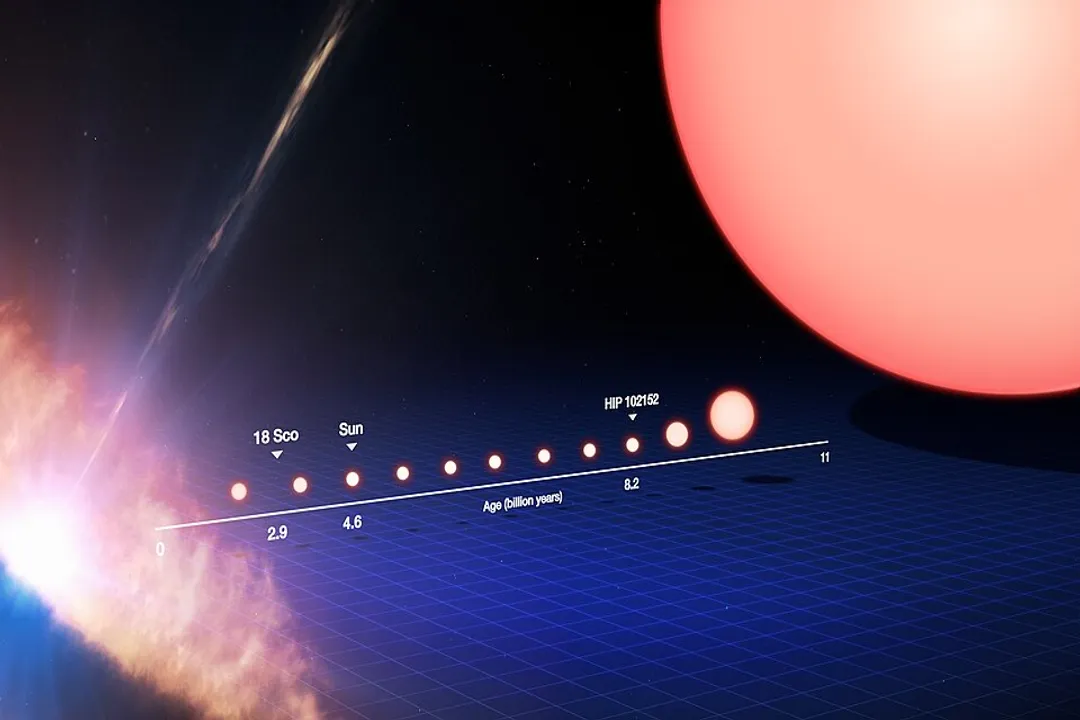
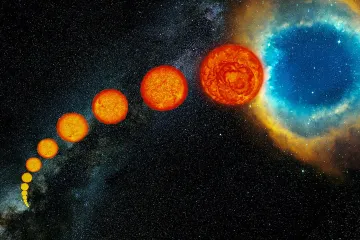
As these layers expand, they also cool down, causing the star's color to shift from its familiar yellow or white to a deeper red. [3] This expanded, cooler, and much larger star is what astronomers classify as a red giant. [3][5] The shift in size is staggering; a star like our Sun will swell up to perhaps a hundred times its present diameter. [5] To truly grasp the scale, imagine setting the Earth's current orbit as the starting line. The Sun's expanded radius will likely swallow Mercury and Venus, perhaps even reaching past Earth’s current path—a change not just of size, but of orbital territory for the inner worlds. [5] Although the star's outer atmosphere puffs out significantly, the core continues to contract and heat up, eventually becoming hot enough to start fusing helium into carbon, which briefly stabilizes the star again. [2][6]
# Mass Matters

The ultimate fate of the expanded star is entirely dictated by how massive it was when it first formed. [4][7] Stars are generally categorized based on their mass relative to the Sun (). [2]
For stars similar in mass to our Sun, or up to about eight times the Sun's mass, the red giant phase is followed by a relatively gentle shedding of material. [2][6] These stars are not massive enough to ignite further fusion past carbon or oxygen in their cores. [2]
For truly massive stars—those beginning their lives at more than about eight times the Sun’s mass—the situation is far more violent. [2][7] When they expand into what are called red supergiants, their cores become hot enough to fuse progressively heavier elements, moving up the periodic table until they reach iron. [2] Since fusing iron consumes energy rather than releasing it, this final step causes the core to collapse catastrophically, leading to a supernova explosion. [2]
Here is a brief comparison of the evolutionary paths following the red giant stage for different mass ranges:
| Initial Mass Range (Approx.) | Post-Expansion Stage | Final Remnant |
|---|---|---|
| Up to | Minimal/No Red Giant | White Dwarf |
| to | Red Giant | Planetary Nebula White Dwarf |
| Greater than | Red Supergiant | Supernova Neutron Star or Black Hole |
# Outer Shells Drift
For lower-to-intermediate mass stars, the period after core helium fusion ends is characterized by instability. The star begins pulsating, ejecting its outer layers of gas and dust into space. [2][6] This expanding shell of expelled material forms what is known as a planetary nebula. [2][6] Despite the name, this phenomenon has nothing to do with planets; the term arose because early telescopes made these glowing shells look somewhat like faint planets. [6] The dying star at the center of this nebula illuminates the gas, creating beautiful, often intricate shapes that we can observe today. [1][3]
The main sequence phase, where a star like the Sun happily burns hydrogen for billions of years, is the longest act. The subsequent Red Giant phase, where the outer layers expand dramatically, is comparatively brief. For the Sun, the total time spent as a full-fledged Red Giant might only be a few hundred million years, a mere blink compared to its billion year main sequence life. This compression of stellar time highlights the instability of that later stage. [7]
# Fading Core
Once the outer layers have drifted away to form the planetary nebula, all that remains is the extremely hot, dense core of the former star. [6] This remnant, composed mostly of carbon and oxygen, is called a white dwarf. [2][6] A white dwarf is roughly the size of the Earth but contains nearly the entire mass of the original star. [4] Lacking any ongoing fusion reactions, this stellar corpse slowly cools down over trillions of years, eventually becoming a cold, dark black dwarf. [2][4] For the massive stars, the outcome of the supernova is either a neutron star—an incredibly dense object where gravity has crushed protons and electrons into neutrons—or, if the remnant core is massive enough, a black hole, an object with gravity so strong that nothing, not even light, can escape it. [2]
In essence, when a star’s outer layers expand, it is experiencing the physical manifestation of running out of primary fuel, pushing it toward one of several spectacular, yet inevitable, final states determined entirely by its initial cosmic weight. [2][4]
#Videos
Why Do Red Giant Stars Expand Their Outer Layers? - YouTube
Related Questions
#Citations
Star Basics - NASA Science
Stellar evolution - Wikipedia
Red Giant - ESA/Hubble
How Stars Form: A Star's Life Cycle in Six Stages - KiwiCo
Red giant stars: Facts, definition & the future of the sun - Space
The Death of a Star - How Stars Work - Science | HowStuffWorks
The Life Cycles of Stars - Imagine the Universe! - NASA
Why Do Red Giant Stars Expand Their Outer Layers? - YouTube
Life Cycle of a Star 1. Stellar Nebula All stars begin their lives in ...