What causes the bright colors in an emission nebula?
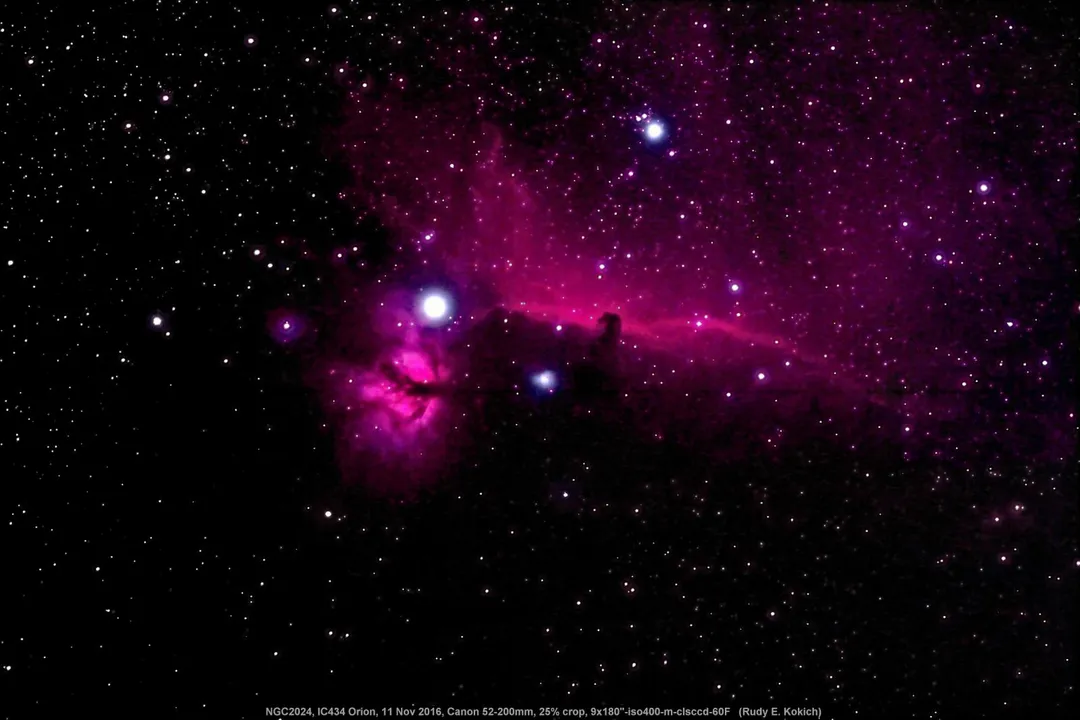
The vibrant, cloud-like structures of an emission nebula present some of the most breathtaking sights in the night sky, glowing in brilliant reds, blues, and greens. These cosmic clouds, which are vast interstellar clouds composed primarily of gas and dust, owe their striking luminosity to a fundamental interaction between starlight and atomic structure. They are not merely reflecting light from elsewhere, like a dust cloud might; instead, they are actively generating their own light through a process that requires immense energy from nearby stellar residents.
# Stellar Power Source
The essential prerequisite for an emission nebula’s glow is the presence of very hot, very young stars residing within or near the gas cloud. These massive, recently formed stars emit prodigious amounts of high-energy ultraviolet (UV) radiation. Think of this UV radiation as an invisible, intense energy beam streaming out from the stars. This energy is the engine that powers the entire spectacle we observe. Without this powerful ionizing radiation, the gas cloud would simply remain dark and cold, a faint molecular structure rather than a luminous beacon.
# Atomic Excitation Mechanism
The bright colors arise because the energetic photons from these young stars strike the atoms within the nebula, primarily hydrogen, and knock electrons completely out of their orbits. This process is called ionization. When an electron is stripped away, the atom becomes a positively charged ion. This ionized gas, or plasma, is unstable in this state.
What follows is the crucial step for light production: recombination. The freed electron, attracted by the positive nucleus, eventually gets captured back into an orbit around the ion. However, it doesn't usually return directly to its original, lowest energy level in one jump. Instead, it falls through a series of higher energy levels, shedding energy at each transition. This released energy takes the form of a photon—a tiny packet of light. The specific color of that light photon is determined by the size of the energy gap the electron jumped across. Since every element has a unique set of electron energy levels, the light emitted acts as a spectral fingerprint for the gas present in the nebula.
# Color Signatures
While nebulae are composed of many elements, a few dominate the visual display, each contributing a specific, characteristic color to the overall scene.
The most prominent color in most emission nebulae is red, which almost always signals the presence of energized hydrogen gas. Hydrogen is the most abundant element in the universe, making up the bulk of the nebula’s mass. When a hydrogen atom recombines, the transition that emits the most visible light occurs at a wavelength of about 656.3 nanometers (), which falls squarely in the deep red portion of the visible spectrum. Because hydrogen is so plentiful, this red emission often provides the foundational illumination for the entire structure.
Another key contributor is doubly ionized oxygen (), which typically emits light in the blue-green part of the spectrum, around 501 nanometers. Oxygen atoms require more energy to be excited than hydrogen atoms do, meaning these areas are often bathed in more intense radiation, perhaps closer to the central, hottest stars.
A third common spectral line associated with nebulae comes from ionized sulfur (), which emits light in the far-red, often near 672 nanometers.
To help visualize how these distinct emissions blend or contrast, we can organize the primary color sources:
| Element/Ion | Emission Name | Typical Color Observed | Energy Required (Relative) |
|---|---|---|---|
| Hydrogen () | Deep Red | Moderate | |
| Doubly Ionized Oxygen () | Forbidden Line | Blue-Green | High |
| Ionized Sulfur () | Forbidden Line | Deep Red/Near-Infrared | Moderate to High |
| [6] |
It is interesting to consider that the ratio of these colors across a nebula can map out temperature and density variations in the gas. A region showing strong blue-green (oxygen) relative to the red (hydrogen) is likely hotter or closer to the ionizing stars than a region dominated solely by the hydrogen red glow. This simple color mapping allows astronomers to deduce physical conditions within these distant clouds.
# True Color Versus Perception
When the public views famous images of nebulae captured by instruments like the Hubble Space Telescope, they are often seeing astonishingly vivid colors. It is important to understand that what we see is often not the true color perceived by the naked human eye, which is quite limited in its ability to distinguish faint color in the dark.
The faint light from a nebula might not generate enough photons in a short exposure for our eyes to register anything other than a dim gray smudge. To reveal the structure and composition, astronomers use long exposures and often employ specific narrow-band filters to isolate the light from a single element, like hydrogen or oxygen.
When these filtered images are combined, the resulting color photograph is often a false-color or representative-color image. For instance, astronomers might assign the hydrogen light (red) to the red channel of the image, oxygen light (blue-green) to the blue channel, and sulfur light to the green channel. This technique, sometimes referred to as the Hubble Palette, allows researchers to map subtle differences in elemental abundance or excitation state into visually distinct colors that are easier to study. A nebula that appears predominantly red in a "true-color" composite might be represented with brilliant gold or cyan in a highly processed, compositionally mapped image. This distinction is vital: the resulting image is an interpretation designed to highlight scientific data, not necessarily a literal snapshot of how the human eye would perceive it looking through a small telescope. Even videos designed to showcase the structure rely on translating these spectral signals into visible light we can process.
# Compositional Context
Emission nebulae are intrinsically linked to star formation, as the high-energy stars causing the glow are often the result of the nebula's own gravitational collapse. They represent stellar nurseries where new stars are being born from the dense pockets of gas and dust. The gas composing the nebula is often a mixture of atomic hydrogen, helium, and trace amounts of heavier elements, sometimes referred to as "metals" in astronomical parlance.
The specific shades of color can sometimes betray the nebula’s environment. A nebula that is highly blue-green might indicate it is very young and its massive, blue, hot stars have only recently ignited, bombarding the remaining gas with fresh, powerful UV radiation. Conversely, in regions where the ionizing stars have already aged or moved away, the fainter emission will be dominated by the lower-energy transitions, which are often the hydrogen red lines.
One helpful way to conceptualize the light output is to think about it in terms of how "hard" the radiation is. The hardest (most energetic) UV light breaks hydrogen and excites oxygen to higher states, producing blue-green light. The slightly less energetic radiation excites hydrogen to produce its characteristic red glow. If one were to observe a nebula only with their eyes, they would primarily notice the reddest, brightest parts because the human eye is most sensitive to yellow-green light, and the blue-green oxygen lines are often faint relative to the omnipresent hydrogen emission, while the faint red light, though red, is generally the strongest signal overall.
# Variations in Appearance
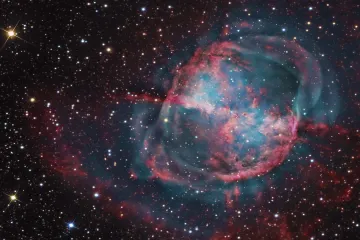
While the emission mechanism is consistent—excitation and de-excitation—the appearance varies widely because the density, temperature, and age of the gas cloud differ dramatically from one object to the next. For example, one nebula might be a relatively smooth shell of glowing gas, while another might appear filamentary, with bright knots threaded through dark lanes.
The structure itself provides clues. Areas of the nebula that appear brightest are those where the gas density is highest, providing the most atoms available to be energized, or where the gas is most directly exposed to the ionizing star's output. If you look closely at high-resolution images, you can often spot dark filaments or "shadows" within the bright gas. These shadows are caused by thicker, cooler clumps of dust that are opaque and block the light emitted from the gas behind them, effectively creating silhouettes against the glowing background. This contrast between the glowing, energized gas and the cold, obscuring dust is what gives many nebulae their three-dimensional look.
Considering the sheer scale involved, it's quite remarkable that these processes—a star emitting UV light, the light traveling across light-years, and then exciting an individual atom to spit out a single photon—can build up into the recognizable, massive structures we photograph. The light we capture has been traveling for centuries, perhaps millennia, to reach our telescopes, meaning we are viewing the nebula as it existed long ago.
# Viewing Context
For amateur observers, the distinction between the appearance through a small aperture and the appearance in a long-exposure photograph is a major point of discussion. Through a standard eyepiece on a modest telescope, emission nebulae often appear as faint, greenish-gray smudges. This is because the light reaching the eye is the integrated signal of all the excited atoms, and the human eye's low-light vision (scotopic vision) is relatively insensitive to the deep red light from hydrogen, making the fainter blue-green oxygen lines seem more prominent to our dark-adapted vision than they are in a digitally enhanced photograph. The nebula’s faintness means that even when the red emission is the strongest signal, our eyes blend it into what we perceive as a muted green or gray. Only through long-exposure digital imaging, where photons are allowed to accumulate over minutes or hours, can the true dominance of the hydrogen red become evident, whether that red is then translated to a visible red color or reassigned to another color in a processed image.
The sheer volume of material in these stellar nurseries means that the energy transfer process is incredibly efficient on a large scale, leading to the bright, colorful displays that continue to inspire astronomical study and public fascination.
#Videos
Why Are Emission Nebulae Different Colors? - Physics Frontier
What Makes Emission Nebulae Glow In Distinct Colors? - YouTube
Related Questions
#Citations
Why Are Emission Nebulae Different Colors? - Physics Frontier
ELI5: Why are nebulae colorful? : r/explainlikeimfive - Reddit
What causes the color we perceive in nebulae and other extended ...
Emission Nebula | COSMOS
Emission nebula Facts for Kids
Nebula and its colors - Astronomy Stack Exchange
Hubble's Nebulae - NASA Science
True Color of Emission Nebulae - Beginning Deep Sky Imaging