What are three reasons why living things Cannot survive on the Moon?
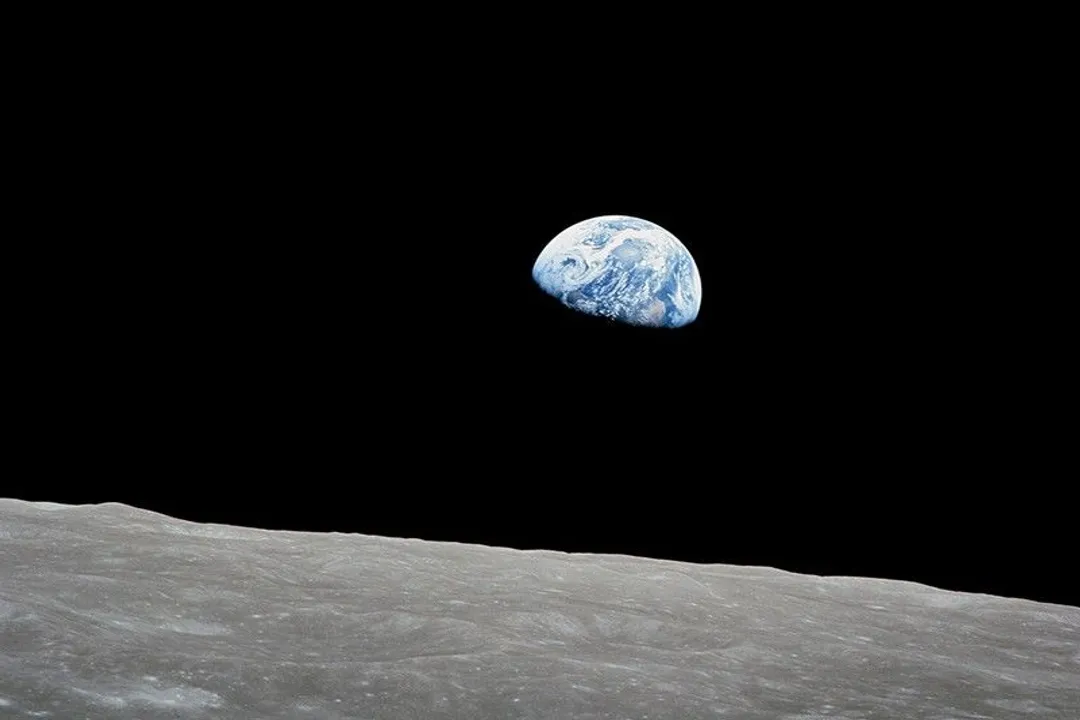
The stark, gray expanse of the Moon, Earth’s silent companion in the night sky, offers a breathtaking view but represents an environment fundamentally hostile to life as we understand it. While the dream of establishing lunar outposts continues to motivate scientific endeavor, the reality is that a terrestrial organism—whether a simple microbe, a plant, or a human being—cannot simply step onto the surface and survive. This inability stems not from a single catastrophic flaw, but from a combination of physical extremes that render the lunar environment instantly lethal. Three primary obstacles stand above all others in creating this absolute barrier to biology: the near-total absence of an atmosphere, the savage swing of surface temperatures, and the constant barrage of unfiltered cosmic energy.
# Absence Air
For any life requiring respiration, the Moon is the definition of a vacuum. It possesses, at best, an exosphere, a layer of gases so incredibly sparse that it is functionally nonexistent when compared to the pressurized blanket of air that sustains life on Earth. This thin veil is simply not sufficient to retain any breathable mixture of gases; taking a deep breath there would be equivalent to breathing the void of space, resulting in immediate system failure for any unprotected biological entity.
The lack of a substantial atmosphere creates cascading survival problems. First and foremost is the pressure differential. Living systems rely on ambient pressure to keep internal fluids, like blood, in a liquid state. On the Moon, where the effective pressure is near zero, any exposed liquid would rapidly boil away in a process called ebullism—a terrifying fate for any creature. This vacuum means that without a completely sealed, pressurized habitat, survival is measured in mere moments.
Furthermore, the atmosphere acts as the Earth’s primary defense against external impacts. On our home world, small space debris—meteoroids—burn up harmlessly as they encounter resistance, creating the familiar streak we call a shooting star. On the Moon, there is no such friction. This lack of atmospheric drag means that rocks and particles hurled through space strike the lunar surface unimpeded, at what are described as breakneck speeds. For any fragile ecosystem or human structure, this means constant threat from physical penetration. The lunar surface is, therefore, a record of billions of years of uninterrupted bombardment, creating a landscape defined by impact craters.
Beyond impactors, the thinness of the exosphere fails in its secondary atmospheric duty: preventing the accumulation of problematic surface material. Lunar dust, or regolith, is not like terrestrial beach sand, which has been rounded and smoothed by wind and water erosion over eons. Because there is no wind to polish it, the regolith particles are fractured, angular, and exceedingly sharp, having been hammered by high-velocity impacts. For biology, this dust is an insidious threat; it is abrasive and clingy, capable of damaging equipment and posing a severe hazard to the soft tissues of eyes and lungs if it breaches a habitat seal. Imagine trying to maintain complex machinery or cellular health when the local "sand" is composed of microscopic shards of glass. This abrasive quality alone would shred the delicate mechanisms required for any complex life to function outside of extreme containment.
# Thermal Swings
The second critical factor preventing survival is the Moon's savage, unmoderated temperature regime, driven by the 27-Earth-day length of its day-night cycle. Because the Moon lacks an insulating atmosphere to trap heat or distribute solar energy evenly, the surface temperatures are dictated entirely by direct exposure to the Sun.
When the Sun shines, the surface temperature can soar to approximately (). This is far above the boiling point of water and high enough to denature most proteins, effectively cooking unprotected organic material. Conversely, once the Sun sets, that heat radiates rapidly into space. The result is a plunge into frigid darkness where temperatures can drop to about (or ). This extreme cold causes materials to contract violently, leading to thermal stress fracturing. For any permanent structure, this means continuous, agonizing stress cycles lasting for weeks at a time. Living things are built around stable internal temperatures; the need to survive weeks of superheated daytime followed by weeks of deep-freeze nighttime, without any atmospheric moderation, is simply incompatible with known biochemical processes.
Consider the implications for any attempt at a solar-powered lunar greenhouse. During the two weeks of daylight, the plants must survive intense heat while simultaneously managing water evaporation in a low-pressure environment, all while their roots are exposed to soil temperatures that can turn water to steam. Then, for the next two weeks of night, the entire system must remain operational, or at least dormant without succumbing to deep freeze, while critical energy stores are depleted. Earth-based biology thrives in a narrow band of thermal tolerance; the Moon exists almost entirely outside that band, even during the brief "daylight" hours which are bookended by weeks of darkness. The margin for error in thermal management is nonexistent without heavy, energy-intensive infrastructure.

# Shielding Failure
The third, and perhaps most insidious, threat to lunar life comes from unfiltered radiation and the absence of a global magnetic field. Earth is protected by a powerful magnetic field—the magnetosphere—that deflects most charged particles streaming from the Sun. The Moon lacks this internal dynamo, resulting in a magnetic field that is "very weak" compared to Earth's.
This lack of magnetic protection means the lunar surface is constantly bathed in high-energy particles from solar flares and cosmic rays. For human inhabitants, this radiation exposure significantly elevates cancer risk and can cause acute cellular damage during unpredictable solar storms. For any plant life attempting to photosynthesize, this bombardment damages DNA and photosynthetic machinery, making sustained growth nearly impossible without specialized, heavily shielded habitats.
While the thin exosphere offers some barrier against the smallest particles, it cannot adequately stop the most dangerous forms of radiation. Life on Earth evolved for billions of years shielded by the combined effects of a strong magnetosphere and a thick atmosphere; the Moon offers neither. Furthermore, the scarcity of readily available liquid water compounds this problem. Water is an excellent, dense material for blocking radiation. While water ice exists in permanently shadowed craters at the poles, accessing and processing it requires significant energy and infrastructure—energy that is difficult to generate and store in the extreme thermal environment. If one cannot easily access bulk shielding material like water, the structures protecting inhabitants from radiation must rely on alternative, often bulky, materials like polyethylene or thick layers of regolith, adding enormous mass and cost to any settlement plan.
The challenge of water itself relates directly to this environment. Life as we know it requires liquid water. While discoveries confirm the presence of hydrogen and oxygen bonded within the regolith and as ice deposits, simply finding these elements does not equate to accessing them in a biologically useful state. Extracting water from lunar soil requires high-energy fusion or heating processes, which must then contend with the massive temperature swings. If a water extraction system fails due to a two-week-long deep freeze, the entire colony's life support—drinking water, oxygen recycling, and crop irrigation—is immediately compromised. On Earth, a small leak or an inefficient filter is an operational annoyance; on the Moon, without the easy replenishment of liquid resources, that inefficiency becomes a fatal countdown.
For instance, one can appreciate the counterintuitive difficulty of the dust problem when contrasted with Earth. On a terrestrial beach, the constant action of waves smooths the sand. On the Moon, the sharp regolith particles are not only dangerous on contact but may also carry a static charge, causing them to adhere to surfaces with exceptional tenacity. This means that even if a habitat is sealed, every time an astronaut opens a hatch, they risk dragging in millions of microscopic, electrostatically clinging, abrasive particles. While astronauts on Earth might worry about sand in their luggage, lunar residents must worry about dust that can abrade seals and clog life support filters with extreme efficiency, directly undermining the systems designed to combat the other two major threats. The interplay between the vacuum, the dust, and the need for airtight seals creates a feedback loop where failure in one system accelerates failure in another.
This necessity for absolute, multi-layered containment suggests that the first successful lunar residents will not be adapting to the Moon; they will be creating a miniature, self-contained Earth inside a sealed shell, essentially importing our environment wholesale. The Moon’s conditions are so alien that the engineering effort required is not just about overcoming a few challenges, but about building a complete, failsafe biosphere from scratch—a task far more complex than simply setting up a terrestrial garden or battery storage system, which even on Earth struggle with heat and longevity issues. The true nature of survival there is less about living on the Moon and more about living against the Moon, every second of every day. This highlights why, despite the technological capability, the economic and political will to fund the necessary decades of infrastructure development remains the largest hurdle recognized by experts. The sheer capital required to neutralize these three fundamental dangers—vacuum, temperature, and radiation—is staggering.
# Summary of Fatalities
To summarize the three inescapable realities, a living thing placed unprotected on the Moon faces immediate, unsurvivable consequences: first, instant decompression and asphyxiation due to the vacuum; second, rapid cellular destruction from exposure to temperatures ranging from hundreds of degrees above freezing to hundreds of degrees below; and third, fatal doses of ionizing radiation due to the lack of a global magnetic shield. Water, essential for all known life, is either frozen solid in perpetually dark regions or difficult to process from soil, making replenishment of critical life support systems a monumental energy expenditure. The Moon is a world that permits no interaction with its environment without layers of complex, engineered protection, making it a graveyard for any organism evolved under the gentler conditions of the terrestrial biosphere.
#Videos
Why Can't We Live On The Moon? - YouTube
How Long Can a Human Survive on the Moon? | The Dr. Binocs Show
Related Questions
#Citations
3 problems we need to solve before we can live on the moon - HeroX
Moon Facts - NASA Science
Why Can't We Live On The Moon? - YouTube
Why doesn't anyone live on the moon yet? - Popular Science
Why is there no life on the Moon? - Filo