Why is October full moon special?
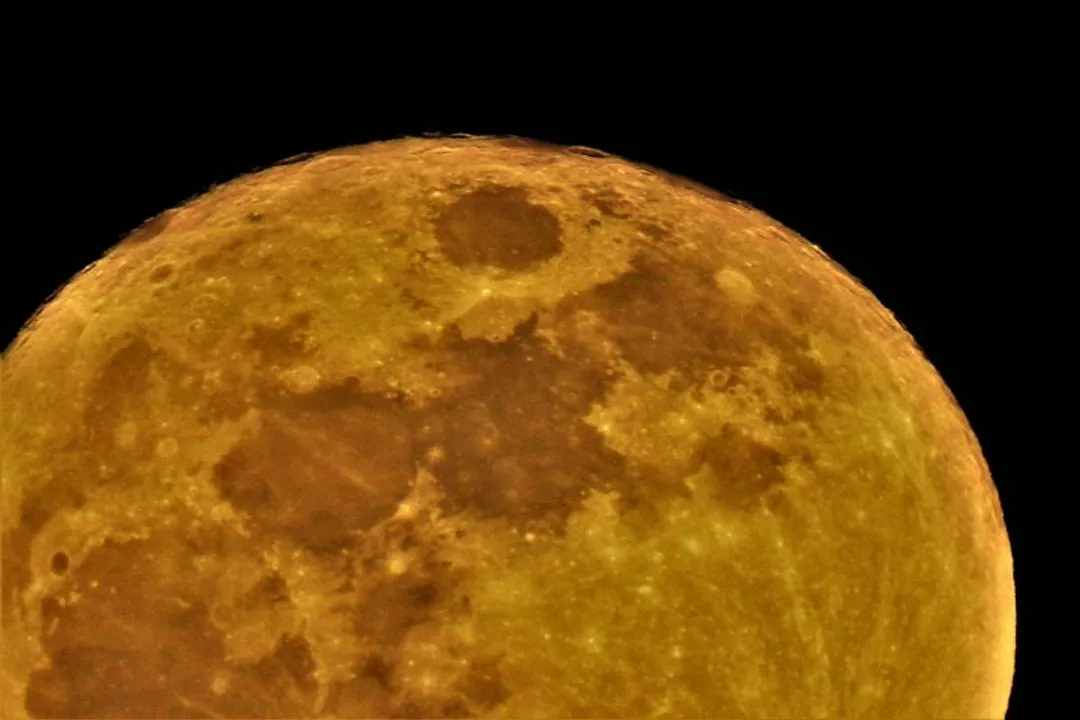
The full moon gracing the October sky holds a special place in the calendar, often commanding more attention than its counterparts in other months. Its significance usually stems from its traditional name—the Harvest Moon—and in certain years, like the example of 2025, it achieves a triple crown of celestial interest by also being a Supermoon. [1] This convergence of factors results in a spectacle that draws in everyone from dedicated astronomers to casual observers eager to witness the largest and brightest full moon of the year. [1]
# Harvest Moon
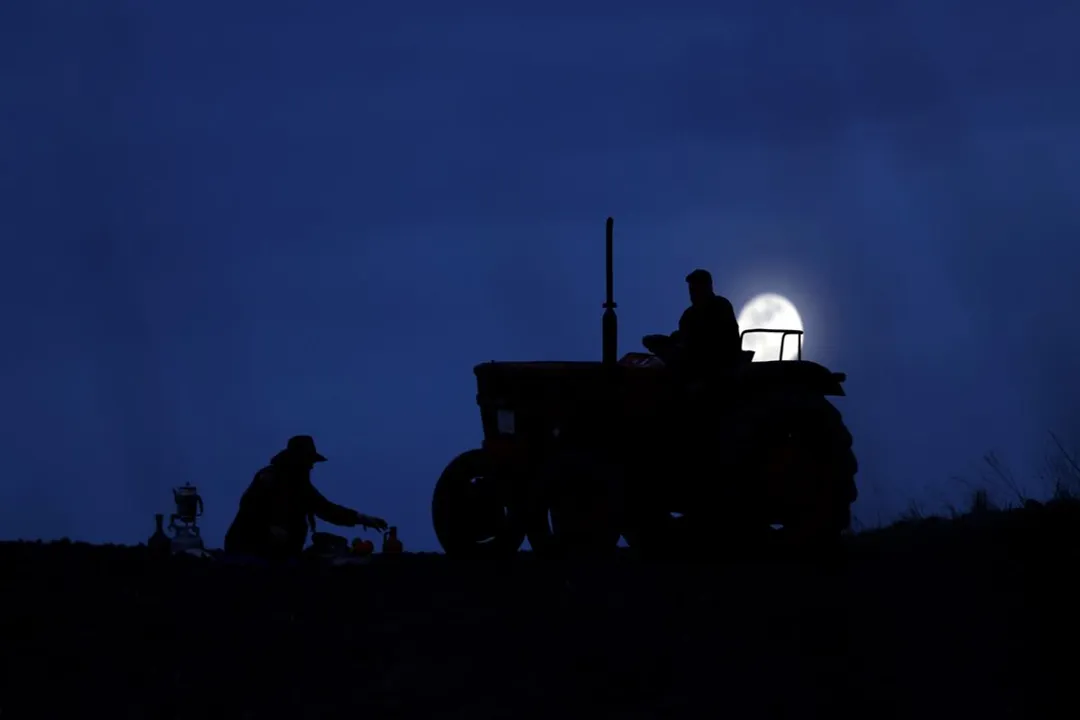
The name given to any full moon is generally tied to seasonal markers, agricultural needs, or natural events observed by early Native American tribes in what is now the northern and eastern United States. Historically, the full moon that occurs closest to the autumnal equinox (usually around September 22 or 23 in the Northern Hemisphere) earns the title of the Harvest Moon. [1] This timing is critical because the bright, early rising light provided an extension of daylight hours, which was vital for farmers to bring in their crops, such as corn, squash, and pumpkins, before the first fall frosts arrived. [1]
The assignment of the Harvest Moon name is fluid; it can fall in September or October. For instance, in years where the September full moon is closer to the equinox, September claims the title, sometimes being called the Corn Moon. [1] However, when the October moon is the one nearest the equinox—as happens in 2025—it inherits the famous Harvest Moon moniker, while September’s moon takes on the Corn Moon name instead. [1] The Hunter’s Moon traditionally follows the Harvest Moon by one cycle, meaning in a year like 2025, October’s full moon is the Harvest Moon, and the next full moon in November becomes the Hunter’s Moon. This annual shifting means that a Harvest Moon occurring in October is an interesting, though not unprecedented, event; records show it happens about 18 times between 1970 and 2050, averaging an interval of roughly three years, though this can vary significantly.
# Supermoon Brightness
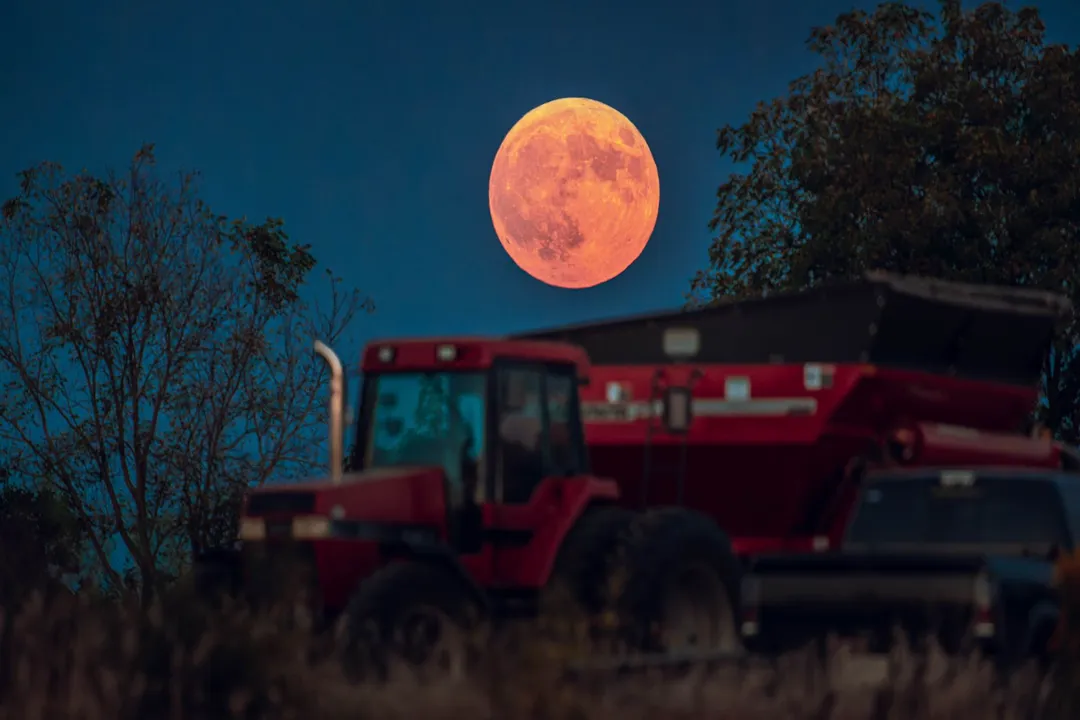
What elevates an October full moon from special to spectacular is when it coincides with the Supermoon designation. [1] A Supermoon occurs when the Moon reaches perigee—the closest point in its elliptical orbit to Earth—around the same time it is fully illuminated. [1] When this celestial alignment happens, the Moon appears noticeably larger and brighter than an average full moon. [1] Specifically, this October Super Harvest Moon in 2025 is noted as the first in a sequence of three Supermoons for that year. [1] An experienced observer might note a difference in size, but the difference in luminosity is more readily apparent, with a supermoon potentially exceeding an average full moon’s brightness by about 16%. If the moon happens to be farther away later in the year, it is called a micromoon, and the October supermoon would appear much larger and brighter in comparison.
# Near Same Rise
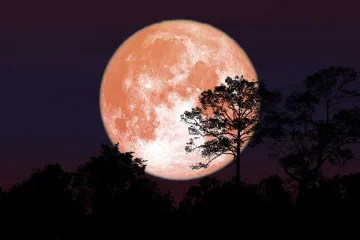
The primary reason the Harvest Moon, regardless of whether it falls in September or October, is so legendary relates to its rising behavior over several consecutive nights. Normally, the Moon rises about 50 minutes later each day as it progresses in its orbit. However, around the time of the Harvest Moon, the Moon’s path (the ecliptic) makes a shallow angle with the eastern horizon in the Northern Hemisphere. This geometric orientation causes the moonrise time to be much closer to the previous night's rise, shortening the period of darkness immediately following sunset. For those in mid-temperate zones, the delay is reduced to only 20 to 25 minutes for several nights running, meaning the moon illuminates the landscape much sooner after dusk than usual. This steady, dependable light provided days of illumination for nighttime work, not just the single peak night. [1]
If you are observing this effect from a more northerly latitude, like Anchorage, Alaska, the difference becomes even more dramatic, with moonrises being nearly identical for an entire week. Conversely, observers in the Southern Hemisphere experience the opposite effect near their March Harvest Moon, with moonrises occurring later than the average.
# Perception Illusion
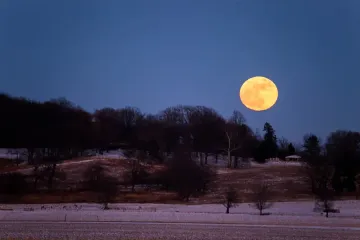
When viewing any full moon low on the horizon, whether it is a Harvest Moon or not, it almost always appears larger and distinctly more orange or golden than when it is high overhead. [1] This is important to distinguish from the Supermoon effect. The exaggerated size perceived when the Moon is near the horizon is an optical trick known as the moon illusion—a psychological effect where the eye compares the Moon to familiar foreground objects like trees or buildings, making it seem enormous. In contrast, the orange hue is a genuine physical effect; when the Moon is setting or rising, observers are looking through a much greater thickness of Earth’s atmosphere, which scatters the shorter, blue wavelengths of light, leaving the longer, red/orange wavelengths to reach our eyes. While the 2025 October Super Harvest Moon is physically larger due to perigee, its dramatic orange appearance at moonrise is largely due to the atmosphere and our own visual processing. [1]
A simple way to check this illusion for yourself is to mark the moon’s position on the horizon as it rises on the peak night, then check its actual visual size a few hours later when it is high in the sky, noting the change in perceived scale even though its physical distance from Earth has barely changed in that short time. [1] The combination of the physical enhancement from the Supermoon and the perceptual enhancement from the horizon illusion creates a memorable visual experience. [1]
# Traditional Names
Beyond the high-profile Harvest and Hunter’s Moons, the October full moon carries several other evocative traditional names that speak to the season’s changes. [1] For example, traditions from the Dakota people referred to it as the Drying Rice Moon, relating to post-harvest preparation. [1] Other cultures noted the changing environment: the Anishinaabe called it the Falling Leaves Moon, while the Ojibwe and Haida observed the onset of colder weather with names like the Freezing Moon or Ice Moon. [1] The Cree name, Migrating Moon, marked the southward departure of birds. [1] These historical labels offer a rich layer of context, grounding the astronomical event in the lived experience of past seasons. [1]
# Folklore Practice
The energy of the full moon has long inspired practices across various traditions. Those who follow lunar cycles in their craft might note that a full moon is generally a time for manifestation—setting intentions for things one wants more of. Conversely, rituals focused on banishing or removing things are often best saved for the dark or new moon phases, though urgent matters might warrant full moon attention. Furthermore, traditional agricultural wisdom suggests that planting seeds under a waning moon can lead to slower growth but potentially larger root crops or denser yields for below-ground produce. [1] Conversely, planting above-ground crops is often favored during the light phase of the moon, from new to full. [1] Whether this age-old farming wisdom translates perfectly to modern home gardening is debatable, but it illustrates how deeply the moon phases have been woven into seasonal planning for centuries. [1] Observing the October full moon, especially when it is a Supermoon, offers a sustained period of bright evenings, which provides a fantastic opportunity for activities like long evening walks or astrophotography practice across multiple nights leading up to and following the peak. [1]
Related Questions
#Citations
October 2025 Full Moon: Largest and Brightest Harvest Supermoon ...
Why 2025's Harvest Moon is a rare October full moon | Space
October 2025 Full Moon: Harvest Moon is the Largest and Brightest ...
The Super Harvest Moon overnight on October 6-7 - EarthSky