Did Galileo discover mountains on the Moon?
Galileo Galilei certainly earned his place in astronomical history, and one of his most immediate and shocking confirmations involved turning his improved spyglass toward the Moon. He didn't just think the Moon was imperfect; he was the first person whose observations, backed by visual evidence, confirmed that its surface was rugged, dotted with mountains and valleys, much like Earth itself. [1][5][7] This finding shattered centuries of established cosmological thought based on ancient Greek philosophy. [7][8]
# Ancient Cosmos
For generations spanning antiquity through the Renaissance, the prevailing model of the universe, largely inherited from Aristotle, held a strict dichotomy between the celestial and terrestrial realms. [2] Earth, the lowest sphere, was known for its imperfection—its rough ground, its changeable weather, its decay. The heavens, however, were composed of perfect, immutable aetherial material, forming flawless crystalline spheres for the Sun, Moon, planets, and stars. [4][8] The Moon, being a heavenly body, was therefore expected to be perfectly smooth, a polished, unblemished orb. [7] This philosophical assumption dictated what observers should see, often causing them to dismiss any contrary visual evidence as an illusion or a flaw in the eye or instrument. [8]
# Telescope Advances
Galileo, born in Pisa in 1564, was not the inventor of the telescope, but his expertise lay in understanding optics and improving existing designs. [2][9] Around 1609, upon hearing of a Dutch invention, he rapidly refined the instrument, creating versions with far greater magnification than the originals. [2][9] While the initial effect of the telescope on the stars was impressive, its true revolutionary power was unleashed when Galileo turned it skyward for astronomical study. [5][9] His life, which concluded in 1642, was defined by this application of new technology to old questions. [2]
# Lunar Study
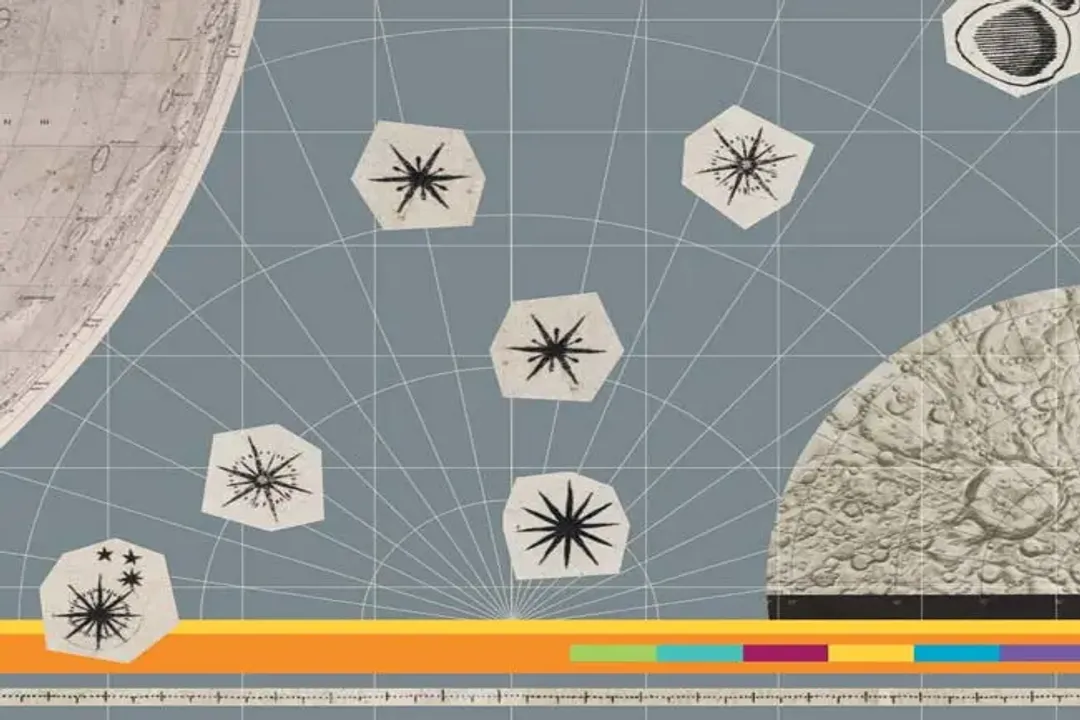
The pivotal moment for confirming the Moon's rugged nature occurred in late 1609. Specifically, documentation suggests that Galileo began his detailed observations of the Moon around November 30, 1609. [3] Peering through his enhanced optics, he did not see the smooth, featureless surface expected by tradition. [6] Instead, he observed stark contrasts between light and shadow across the lunar terminator—the line dividing the illuminated day side from the dark night side. [6]
These shadows, cast by protrusions on the surface, were the definitive proof. By watching how the shadows retreated as the Moon moved into fuller sunlight, Galileo could clearly discern features that could only be explained by topography: mountains and valleys. [1][3][5] He recognized that the peaks of these mountains caught the first rays of sunlight, just as earthly mountains do at sunrise. [1]
What followed his initial observations was a period of meticulous data collection and drawing. He sketched the features he saw, meticulously recording the patterns of light and darkness. [6] These sketches, produced as he wrestled with the alien landscape, stand as an early example of using technology to document scientific findings visually. [6] It is worth noting that while he was the first to confirm this definitively with optical instruments, ancient thinkers had occasionally speculated about lunar imperfections before the advent of the telescope. [7] Galileo’s contribution was moving the discussion from speculation to verifiable fact. [1][7]
A key element of his discovery, which is often overlooked when we simply state he saw mountains, was the implicit understanding of measurement. Although he may not have calculated the exact heights with modern precision, the very act of analyzing the length of the shadows cast by lunar peaks allowed him to infer the relative scale of these features. This transition from qualitative observation—"it looks rough"—to a semi-quantitative assessment—"these shadows suggest heights comparable to terrestrial mountains"—marked an early, exciting step toward making the cosmos mathematically tractable. [6]
# Publishing Shockwave
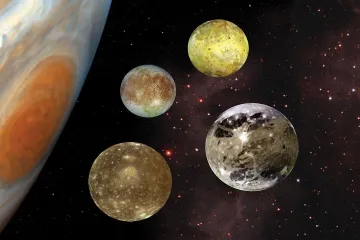
Galileo did not keep these incredible findings to himself. He consolidated his early telescopic discoveries, including those of Jupiter's moons and the Moon's mountains, into a groundbreaking pamphlet published the following year. [1] This essential text was the Sidereus Nuncius, often translated as the Starry Messenger, which appeared in 1610. [1][2]
The impact of the Sidereus Nuncius was immediate and profound across Europe. [2] It was not just a collection of drawings; it was a direct challenge to the established, authoritative cosmology. [8] By demonstrating that the Moon was not a perfect celestial orb but a physical world scarred by elevation changes, Galileo provided empirical evidence that the heavens were made of the same stuff as Earth. [1][4] This single observation had massive philosophical ramifications. If the Moon was imperfect and Earth-like, the fundamental barrier separating the corruptible terrestrial realm from the eternal celestial realm dissolved. [8]
# Cosmological Reordering
The confirmation of lunar mountains was instrumental in undermining the traditional, geocentric worldview upheld for centuries. [8] When the Moon was revealed to be imperfect, it demoted the Earth from its unique, central position in a perfect system to merely one planet among many imperfect worlds orbiting a star. [2] This finding paved the way for the acceptance of the Copernican view, where Earth was simply another member of the solar system, sharing physical characteristics with its neighbors. [2]
The acceptance that celestial bodies possessed mountains and valleys introduced a new element to human understanding: the Earth was not unique in its roughness or its physical nature. [1] This conceptual shift—the realization that the heavens were subject to the same physical laws and imperfections as our own ground—was perhaps the most significant, long-lasting consequence of Galileo’s initial observations of the lunar terminator. [4] It established a precedent that future telescopic observations, whether confirming sunspots or the phases of Venus, would continue to dismantle the ancient separation between the 'lower' world and the 'higher' heavens. The implications were clear: if we could see mountains on the Moon with a tube of glass and lenses, what else might be revealed about the nature of the stars and planets through systematic observation?
Related Questions
#Citations
How Galileo Discovered Mountains On The Moon - Forbes
Galileo Galilei - Wikipedia
Galileo begins observing the moon | November 30, 1609 - History.com
Galileo's Moon Observations and Cosmic Exploration - Facebook
The Moon - Galileo's World - The University of Oklahoma
The Starry Messenge: Galileo Galilei & the Telescope
TIL Galileo was the first to confirm the Moon's rough and ... - Reddit
01. Early Telescopic Observations - Linda Hall Library
History | The Galileo Project