What did Galileo's observation of the Galilean moons prove?
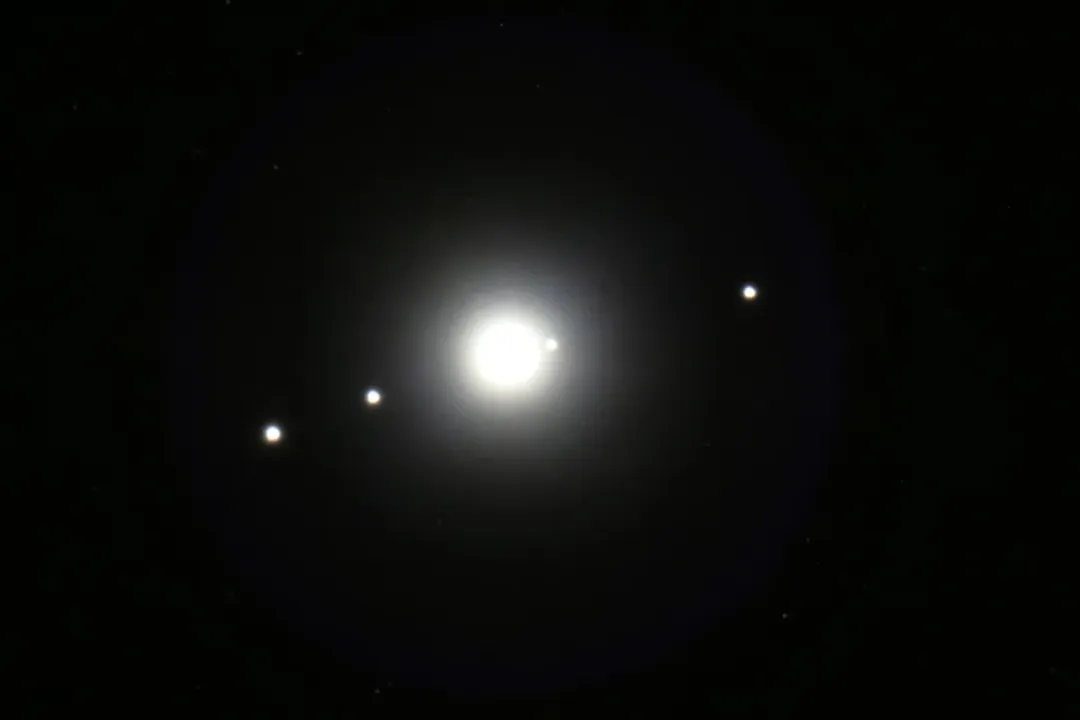
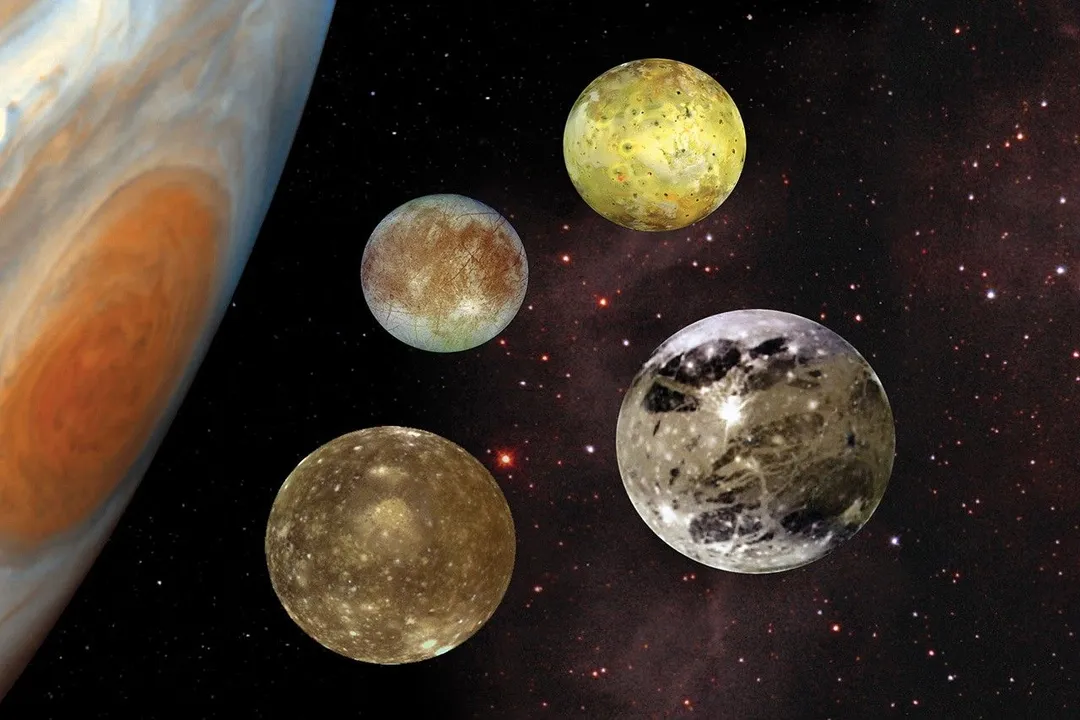
The night of January 7, 1610, marked a profound turning point in humanity’s perception of its place in the cosmos, all thanks to the focused gaze of Galileo Galilei through his improved telescope. [2][5] What he witnessed near the planet Jupiter was not a fixed arrangement of stars, as he first suspected, but a quartet of moving lights. [3][4] These lights, which we now call the Galilean moons—Io, Europa, Ganymede, and Callisto—were moving in concert with the giant planet. [1][6] The observation proved something incredibly disruptive to the established scientific and philosophical understanding of the universe: celestial bodies did not all revolve around the Earth. [2][3][4][6]
# Early Sightings
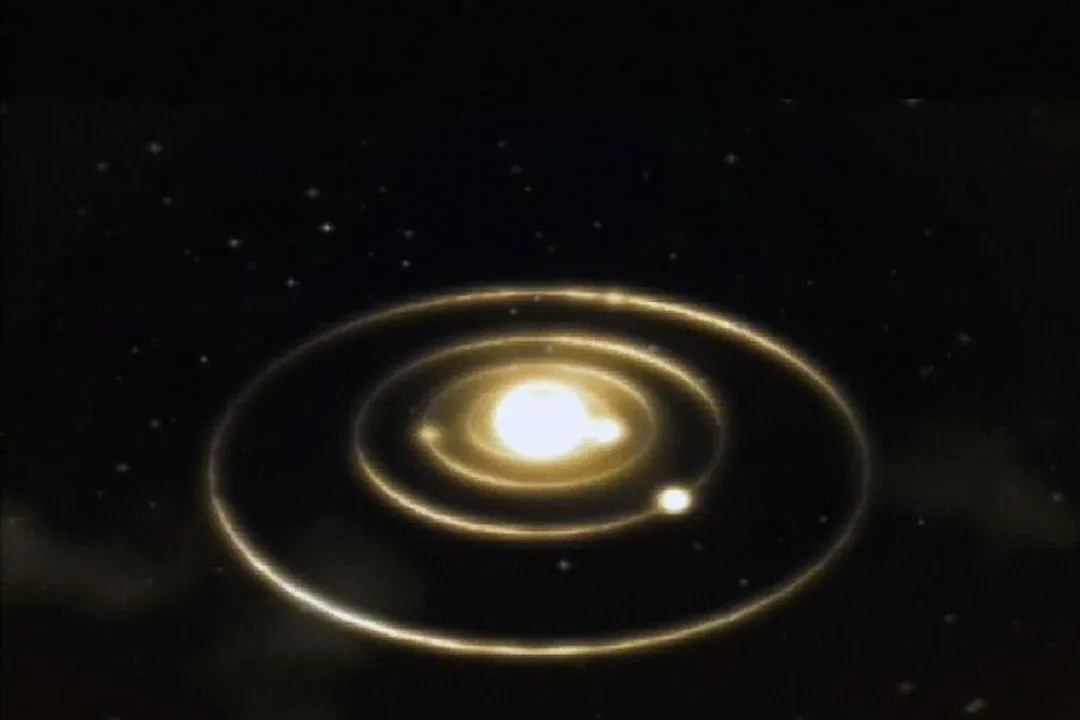
Galileo was not the first person to see Jupiter’s moons, but he was the first to systematically observe them over a period of time, allowing him to plot their courses. [2][4] He had significantly improved upon existing designs for the spyglass, turning it into a genuine astronomical instrument. [3] For several nights in January 1610, he charted their changing positions relative to Jupiter. [5] It quickly became evident that these four "stars" were not stationary background objects but were tethered to Jupiter, traveling with it across the night sky. [3]
He continued tracking them, noting how they passed in front of, behind, or occasionally seemed to be hidden by Jupiter as they completed their orbits. [2][6] This meticulous tracking allowed him to confirm that they were, in fact, orbiting Jupiter. [4] This small system—Jupiter acting as a center for four companions—was the tangible, physical proof that the ancient, Earth-centered view of the heavens was incomplete, if not entirely wrong. [2][6]
# Challenging Cosmos
For centuries, the prevailing model of the universe was the Ptolemaic system, rooted in Aristotelian thought, which asserted that the Earth sat immovably at the center of everything, and all celestial objects, including the Sun, Moon, planets, and the fixed stars, orbited it in perfect, crystalline spheres. [3][6] While Copernicus had proposed a Sun-centered (heliocentric) arrangement earlier, it remained a mathematical hypothesis, lacking direct observational proof that could sway the scientific consensus. [4]
Galileo’s moons provided that missing link. If everything in the heavens had to orbit the Earth, how could Jupiter possess its own retinue of orbiting bodies? The moons demonstrated incontrovertibly that there were centers of motion other than the Earth. [2][3][4] The mere existence of a miniature solar system revolving around Jupiter shattered the notion of a singular, Earth-centric arrangement governing all celestial mechanics. [6] It wasn't just a philosophical argument anymore; it was a direct, observable physical fact that contradicted the established orthodoxy. [2]
The power of this finding can be understood by contrasting the expected perfection of the old model against the observed reality. The Aristotelian view required mathematically perfect circles for celestial paths. [3] What Galileo found was a system where the inner moon, Io, completed its orbit far faster than the outermost, Callisto, suggesting varying orbital periods dependent on distance, a concept that maps much more neatly onto the mathematical relationships later codified by Kepler for the Sun-centered system. [1] This messy, varied motion around a different center lent credence to the idea that the cosmos was governed by physical laws rather than purely theological or philosophical dictates of centrality. [4]
# Companion Evidence
While the orbiting moons were a staggering discovery on their own, Galileo’s work in 1610 did not stop at Jupiter. [6] His improved optics allowed him to make other crucial observations that, when combined with the Jovian moons, built an overwhelming case for the Copernican view. [4]
One of the most significant corroborating pieces of evidence came from observing Venus. [4][6] In the Ptolemaic model, Venus orbits the Earth between the Earth and the Sun, meaning observers on Earth should only ever see Venus as a crescent or a gibbous shape, never fully illuminated. [4] However, Galileo observed that Venus went through a full cycle of phases, much like our own Moon—from thin crescent to nearly full. [4][6] This sequence of phases is only geometrically possible if Venus orbits the Sun, positioning itself sometimes between the Earth and the Sun, and sometimes on the far side of the Sun relative to Earth. [4]
It is interesting to compare the nature of these two proofs. The Jovian moons offered a physical demonstration that other centers of motion existed. In contrast, the phases of Venus offered a geometric constraint that required the Earth to orbit the Sun for the observed pattern to exist. [4] These two independent lines of evidence—one showing what is happening elsewhere, the other showing what must be happening here—provided mutually reinforcing support for a Sun-centered universe. [6]
# Publication and Aftermath
Galileo wasted little time in disseminating his revolutionary findings. He published his work in a short Latin treatise titled Sidereus Nuncius, or Starry Messenger, in the spring of 1610. [4][5] This publication detailed his observations of the Moon’s imperfect surface, the vast number of new stars he saw in the Milky Way, and, most famously, the moons orbiting Jupiter. [4] The impact was immediate and electrifying across Europe. [2]
The discovery made Galileo famous, but it also set him on a collision course with the established authorities of the time. [4] The ability of these four moons to orbit Jupiter, along with the phases of Venus, provided concrete support for the mathematical theories of Copernicus, which began to move from the realm of abstract theory into verifiable reality. [4][6] The very objects he saw—Io, Europa, Ganymede, and Callisto—became symbols of a new era of observational astronomy, where what could be seen through a lens held more weight than what had been dictated by ancient texts. [1][5]

# The Moons Today
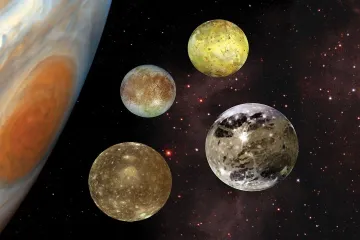
The four primary satellites Galileo identified remain objects of intense scientific interest centuries later. [1]
| Moon | Relative Size | Key Feature |
|---|---|---|
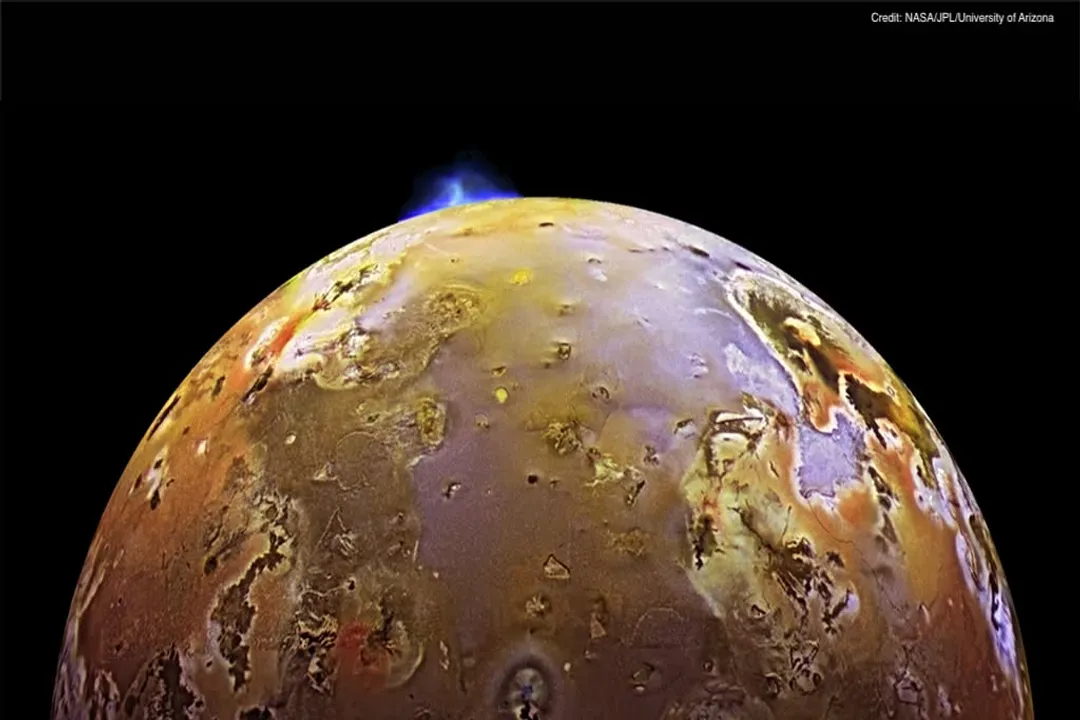
| Io | Slightly smaller than the Moon | Most volcanically active body in the Solar System [1] |
| Europa | Slightly smaller than Earth's Moon | Possesses a vast subsurface saltwater ocean [1] |
| Ganymede | Largest moon in the Solar System (larger than Mercury) | Has its own magnetic field [1] |
| Callisto | Second largest Jovian moon | Ancient, heavily cratered surface [1] |
When we look at these worlds today, we see that they are not merely points of light, but complex, dynamic worlds in their own right. [1] The scale of the system Galileo glimpsed is vast; for instance, Ganymede is actually larger than the planet Mercury. [1] This realization—that the solar system contained more complex structures than just the familiar planets orbiting the Sun—fundamentally altered the perceived scale and richness of the universe immediately following the discovery. [4] The observation served as a clear demonstration that the heavens were far more varied and populated than the simple, perfect clockwork mechanism previously assumed by the geocentric worldview. [3]
Related Questions
#Citations
Galilean moons - Wikipedia
415 Years Ago: Astronomer Galileo Discovers Jupiter's Moons - NASA
Galileo Discovers Jupiter's Moons - National Geographic Education
Galileo's Observations of the Moon, Jupiter, Venus and the Sun
On this day in history way back in 1610, Galileo Galilei first observed ...
Galileo: Discovering Jupiter's Moons | PBS LearningMedia
The Galilean Moons - A Closer Look - Stellarium Labs
History | The Galileo Project
Galileo's observations of Jupiter changed our view of the Universe