What is significant about Galileo's discovery and observations of the moons of Jupiter?
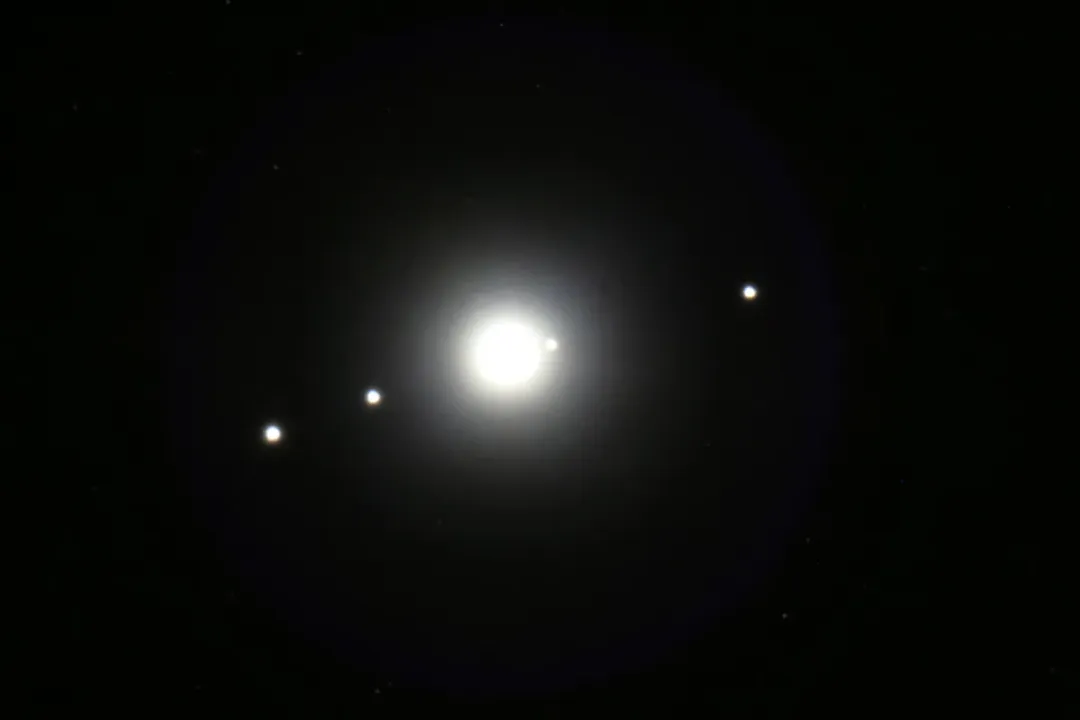
Galileo Galilei’s observations of Jupiter in early 1610 were not merely the addition of a few new dots to the night sky; they were an immediate and forceful blow against centuries of accepted cosmological understanding. When he first pointed his vastly improved telescope toward the planet, he observed what looked like three small, bright stars arrayed in a straight line near Jupiter. This seemingly modest sighting, which occurred approximately 410 years before the present day, or 415 years ago, depending on the specific anniversary noted, would fundamentally reshape humanity's view of its place in the cosmos. The significance lies in the fact that these "stars" were demonstrably moving around Jupiter, revealing a miniature solar system in action.
# Telescope Power

The discovery hinged entirely on the capabilities of Galileo's recently refined instrument. While others had built telescopes, Galileo significantly improved their magnification and light-gathering abilities, achieving powers that allowed him to see celestial bodies with unprecedented clarity. Without this technology, the moons would have remained invisible, as they are too faint to be resolved by the unaided eye. This reality underscores a crucial initial point: a technological advancement directly led to a scientific revolution. Prior to this, the prevailing view, often associated with Ptolemy, held that everything in the heavens revolved around the Earth. The ability to see moons orbiting another planet demonstrated that centers of motion other than Earth existed in the celestial sphere.
# Little Stars Observed
Initially, Galileo observed only three companion bodies flanking Jupiter on January 7, 1610. Within a few nights, he realized these were not fixed stars; their positions relative to Jupiter were changing night by night. He soon discovered a fourth object, bringing the total count he observed to four primary satellites. Galileo initially named these objects the Medicean Stars, dedicating them to his patron, Cosimo II de' Medici, Grand Duke of Tuscany. Today, we refer to them as the Galilean moons. The PBS LearningMedia resource highlights that tracking these movements was the key, as they appeared to shuttle back and forth across Jupiter’s disk, clearly establishing an orbital path independent of Earth. The speed at which they moved was astonishing to contemporary observers accustomed to the slow, fixed celestial sphere.
# Celestial Orbits
The primary, paradigm-shifting significance of the discovery rests on proving orbital mechanics outside the Earth-centric model. If the established doctrine—that the Earth was the unique center of all celestial motion—were absolutely correct, then these four lights should not have been visibly circling Jupiter night after night. They should have either remained fixed or moved in a way that aligned with the Earth’s motion, but instead, they performed clear, independent orbits around Jupiter. This observation provided concrete, visible evidence supporting the Copernican or Sun-centered model, which had been theorized but lacked physical proof observable through the heavens. The moons demonstrated that celestial bodies could orbit something other than Earth, thereby dismantling the core tenet of the geocentric universe.
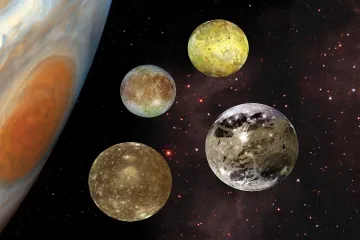
To better appreciate the diversity within this small system, it is useful to contrast the four primary discoveries. They are immensely varied in size and nature, leading to modern scientific interest far beyond their initial role as astronomical proof points:
| Moon | Comparative Size | Key Feature (Modern Understanding) |
|---|---|---|
| Io | Smaller than Earth's Moon | Most volcanically active world in the Solar System |
| Europa | Slightly smaller than Io | Likely possesses a subsurface ocean beneath an icy crust |
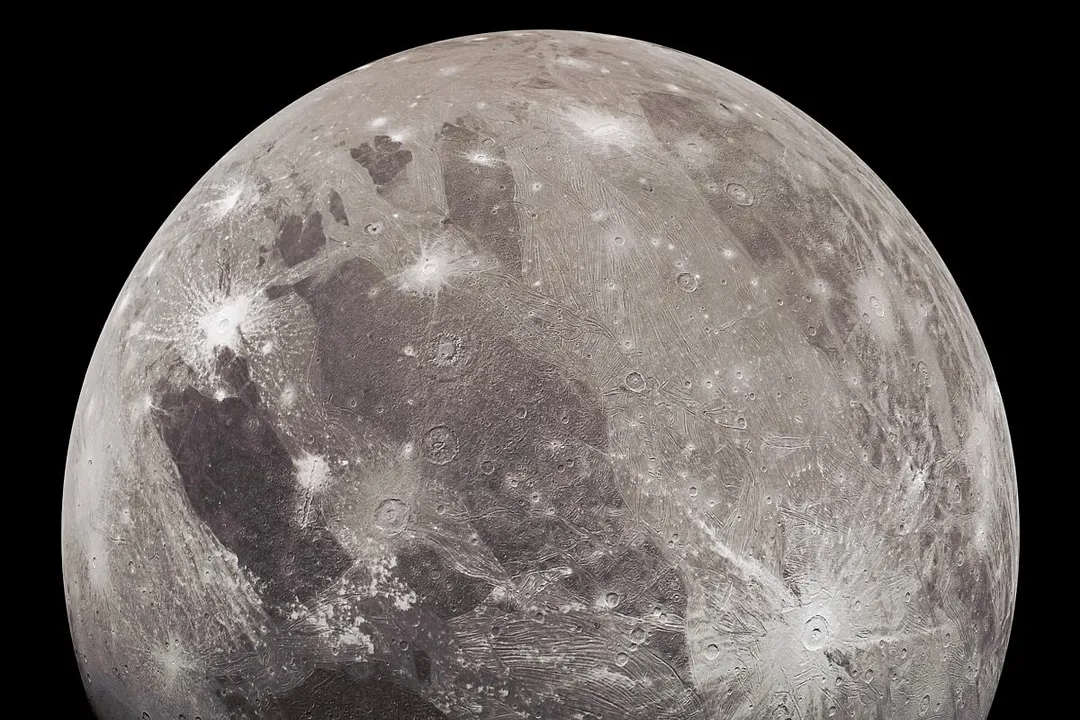
| Ganymede | Largest moon in the Solar System | Larger than the planet Mercury and possesses its own magnetic field |
| Callisto | Similar in size to Mercury | Heavily cratered, ancient, and relatively inactive surface |
This internal variety, which Galileo could only guess at through subtle changes in brightness or appearance over time, shows that the system he found was not just a placeholder for a flawed theory, but a rich, complex celestial neighborhood in its own right.
# Publication Authority
Galileo rapidly documented his findings and conclusions in a short treatise titled Sidereus Nuncius, or the Starry Messenger, published in Venice in 1610. This was an act of rapid dissemination, essential for establishing priority and building scientific consensus. The book presented his telescopic observations, including not just the Jovian moons but also features of the Moon and the multitude of stars in the Milky Way. This publication provided tangible, repeatable observations that other astronomers, once they acquired telescopes, could verify themselves. The immediate spread of this information solidified Galileo’s reputation as an expert authority in observational astronomy, far surpassing previous, more theoretical astronomers.
One aspect often overlooked in the rush to credit the overthrow of the Ptolemaic system is the consistency of the data Galileo gathered over time. It wasn't just that he saw four dots one night; it was that he tracked their ingress, egress, and reappearance behind Jupiter over several weeks, meticulously plotting their orbital periods. A key analytical point here is that the relative periods of the four moons are actually quite different. Io orbits in under two days, while Callisto takes nearly 17 days. Seeing this predictable, yet complex, clockwork mechanism functioning far from Earth offered a level of predictive power that the older models could not match. If one were to re-enact Galileo’s work today, the critical step is not just aiming the telescope, but meticulously recording the positions at the same time every night to build a small, irrefutable ephemeris showing the moons moving against the background stars.

# Scientific Revolution
The implications extended far beyond planetary orbits. The entire philosophical underpinning of the universe was shaken. If Jupiter could possess its own satellites, the established Aristotelian view—which required all heavenly bodies to revolve around Earth—crumbled. The discovery was a major milestone in the Scientific Revolution, marking a shift toward empiricism—knowledge based on observation and experiment rather than ancient authority. The University of Michigan library notes that Galileo's observations, including those of Jupiter's moons, taught valuable lessons about the need to test old ideas against new evidence.
Furthermore, the discovery provided an analogy for the Copernican system. If Jupiter had moons, it suggested that other planets could also be orbited by satellites, reinforcing the idea that Earth was not unique in having companions circling it. The fact that the moons orbited Jupiter provided a working, visible model of a subordinate system, making the heliocentric arrangement—where Earth orbits the Sun while the Moon orbits Earth—far more plausible. It provided a crucial empirical bridge between the older, Earth-centered cosmos and the newer, Sun-centered view.
# New Views Established
The very act of seeing something previously hidden carried immense weight. As a practical exercise for modern amateur astronomers, understanding Galileo’s observational challenge helps frame the experience of discovery. Imagine attempting to map the heavens using only the tools available in the early 17th century, knowing that the accepted truth might be wrong, yet having no technology to prove it. Galileo’s great contribution was forcing humanity to confront a physical reality seen through his lens. He provided the visual data that astronomers like Nicolaus Copernicus had previously only provided mathematically.
A subtle but important realization stems from comparing Galileo’s situation to modern astronomy. Galileo was confirming an existing model (Copernicanism) that was largely theoretical, whereas the geocentric model was entrenched by both philosophy and religious doctrine. His discovery was significant not just because it contradicted the old system, but because it validated the alternative with observable, measurable data points. The moons’ regular, unchanging patterns of motion—their orbital speeds—were mathematically describable in a way the complex, multi-layered epicycles of the Ptolemaic system were not. This established a precedent: observation and mathematics must align, or the mathematical model must yield to better observations. The four Jovian moons became the first widely accepted, empirically verified proof that celestial mechanics could be understood through observation rather than solely through philosophical deduction.
The enduring legacy, therefore, is twofold: the establishment of a new astronomical fact—the moons themselves—and the establishment of a new method of investigation—the primacy of observation backed by instrumental evidence. This shift in methodology, triggered by four faint points of light circling a distant gas giant, is arguably the most significant outcome of Galileo's work in 1610.
Related Questions
#Citations
410 Years Ago: Galileo Discovers Jupiter's Moons - NASA
Galileo Discovers Jupiter's Moons - National Geographic Education
Galileo: Discovering Jupiter's Moons | PBS LearningMedia
Galilean moons - Wikipedia
[PDF] In the Footsteps of Galileo: Observing the Moons of Jupiter
Why Did Galileo Need a Telescope to Discover the Moons of Jupiter?
What are Jupiter's Galilean moons? | The Planetary Society
Galileo's observations of Jupiter changed our view of the Universe
Lessons from Galileo | University of Michigan Library