What was the significance of Galileo Galilei's observations with the telescope?
The moment Galileo Galilei turned his improved spyglass toward the heavens in 1609, he didn't just invent a new piece of equipment; he inaugurated a new way of understanding reality itself. While he did not invent the telescope—that credit often goes to Dutch spectacle-makers—Galileo was the first to systematically point it skyward and record what he saw with scientific rigor. [3][5] His subsequent observations shattered centuries of philosophical and theological consensus regarding the cosmos, laying foundational bricks for modern physics and astronomy. [1][7] The significance wasn't just in seeing things differently, but in proving that the authority of ancient texts could be overturned by careful, repeatable empirical evidence. [1][4]
# Improved Optics
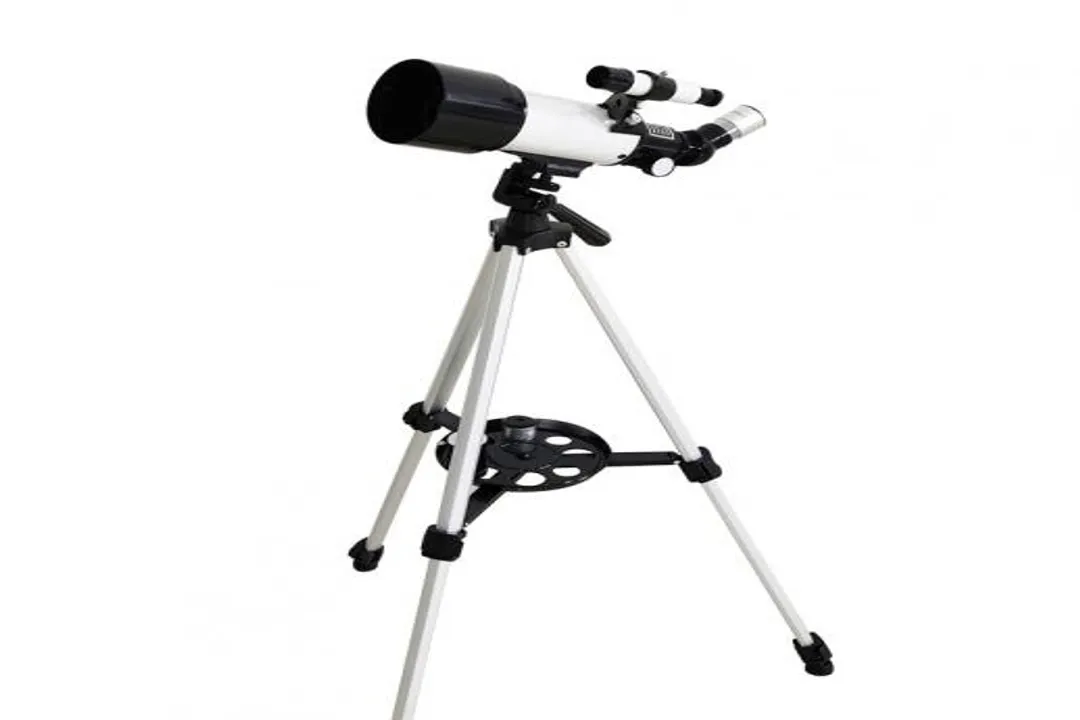
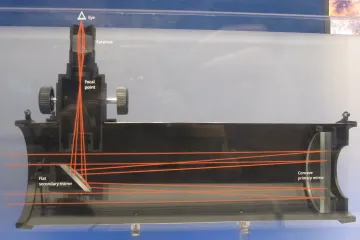
Before Galileo arrived on the scene, the rudimentary refracting telescope, or spyglass, existed primarily as a terrestrial novelty, used for military reconnaissance or maritime spotting. [9] When Galileo first heard about the device, he quickly set about replicating and perfecting it. [9][3] He refined the grinding and arrangement of the lenses, achieving magnifications that reached twenty or even thirty times the naked eye’s power. [9]
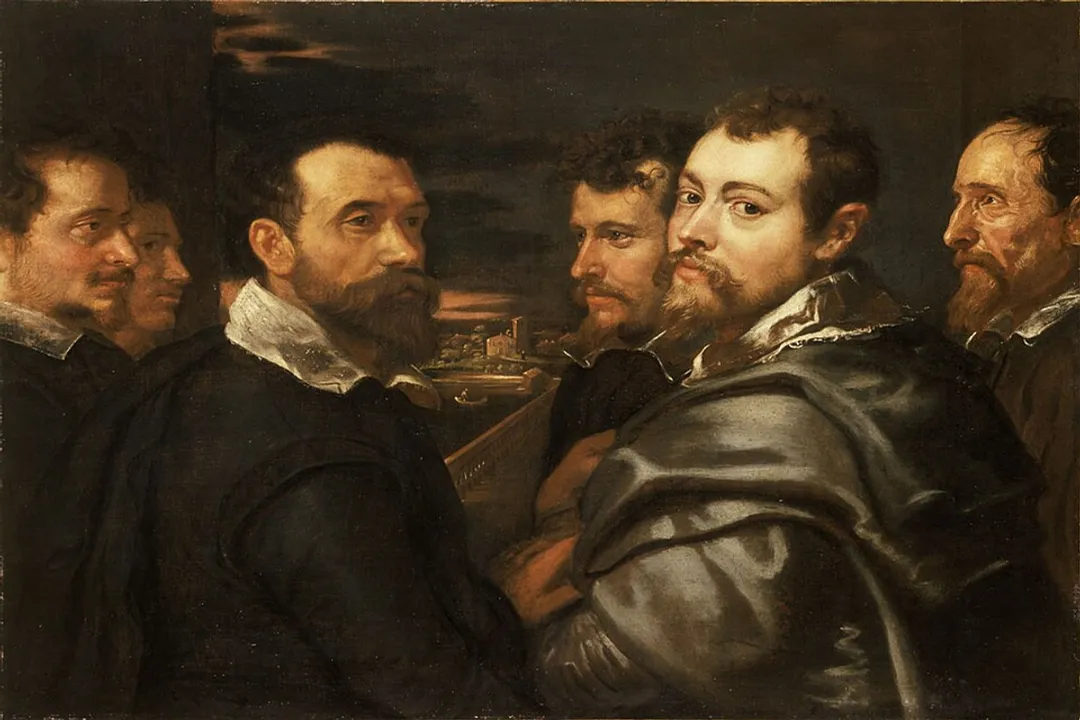
This methodical refinement distinguished his work from mere tinkering. He recognized the instrument’s potential to magnify distant objects, but his true genius lay in applying this magnification to celestial bodies where no magnification had been seriously attempted before. [3]
This dedication to improving the tool enabled an entirely new scale of astronomical investigation. Consider that the visual acuity of the naked eye is limited by atmospheric distortion and the physical constraints of the human eye. Galileo's improved optics effectively stripped away some of that terrestrial interference, allowing the light gathered from distant objects to be focused and presented in a way that revealed structure previously invisible. [5] The novelty wasn't just having a telescope; it was the commitment to using it as a primary tool for discovery, rather than just a curious novelty, marking a decisive shift from theoretical natural philosophy to observational science. [1]
# Lunar Imperfection
Perhaps the most immediate and visceral challenge Galileo posed to the established Aristotelian-Ptolemaic worldview came from his study of the Moon. [1] For millennia, celestial objects—the heavens—were believed to be perfect, eternal, and unchanging spheres made of a flawless quintessence, distinct from the corruptible, messy realm of Earth. [1][7]
When Galileo looked at the Moon, this dogma crumbled instantly.
Instead of a perfectly smooth, luminous orb, his telescope revealed a body scarred by valleys, mountains, and deep craters. [2][4] He recognized that the shadows cast by the Moon's mountains varied in length and angle depending on the Sun's position, indicating topographical relief comparable to Earth's own surface. [1] This observation was profoundly destabilizing. If the Moon was imperfect, cratered, and mountainous—just like Earth—then the fundamental distinction between the terrestrial and the celestial realms vanished. [1] It suggested that the heavens were not made of a superior, untouchable substance, but rather that they were physical places subject to the same kinds of processes as our own world. [4]
# Jovian Satellites
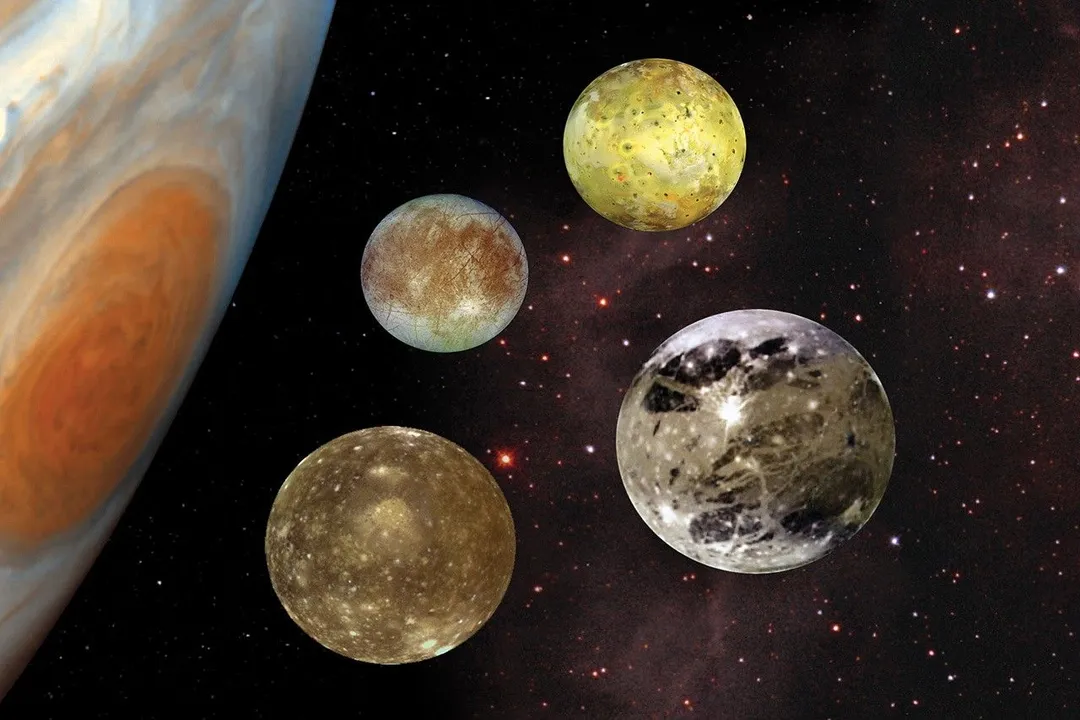
While the Moon challenged philosophical perfection, the observation of Jupiter’s moons delivered the most direct observational blow to the geocentric model of the universe. [6] In early 1610, Galileo began noticing faint, tiny stars aligned near Jupiter. [2][4] Night after night, he meticulously tracked their positions. [6] He soon realized these "stars" were not background stars at all; they were orbiting Jupiter. [2][4] He named them the Medicean Stars (now known as Io, Europa, Ganymede, and Callisto). [5]
The significance here is mathematically and physically undeniable:
- Not Everything Orbits Earth: If Jupiter had bodies clearly orbiting it, then the principle that all heavenly motion must center on the Earth was empirically false. [1][6] This directly contradicted the cornerstone of the Ptolemaic system. [6]
- A Miniature System: Galileo had discovered a miniature, observable model of the Copernican system right next to Jupiter. [5]
The sheer difficulty of making these observations in the pre-digital age cannot be overstated. Unlike modern telescopes paired with CCD cameras that capture data instantaneously, Galileo relied entirely on his eyesight, steady hands, and meticulous record-keeping. He had to sketch the positions of the four tiny dots relative to Jupiter on successive clear nights, sometimes having to wait days for the weather to cooperate, all while battling the planet's movement across the sky. This required an extraordinary commitment to empirical documentation over theoretical belief. [6]
# Venus Phases
If the Jovian moons demonstrated that the Earth was not the center of all motion, the phases of Venus provided the definitive observational proof supporting Nicolaus Copernicus’s heliocentric arrangement. [1][7]
Galileo observed that Venus, like our own Moon, exhibited a complete cycle of phases—crescent, gibbous, and nearly full. [2][5] In the geocentric model, Venus orbits between the Earth and the Sun. Therefore, as seen from Earth, Venus should only ever show crescent or new phases, never appearing fully illuminated or gibbous because the Sun would always be positioned between Earth and the fully sunlit side of Venus. [7]
However, if Venus orbits the Sun, as Copernicus proposed, then as Venus moves around the Sun, we on Earth would see varying amounts of its sunlit face, leading to the observed full cycle of phases. [1][7] This observation was presented in his famous publication, Sidereus Nuncius (Starry Messenger), published in 1610. [1][5] The phases of Venus were concrete, undeniable evidence that the Earth could not be the stationary center of the universe; the Sun had to be the center of the planetary orbits. [7]
# Solar Features
Galileo also turned his telescope toward the nearest star to Earth, the Sun, documenting observations that further confirmed the mutability and imperfection of the heavens. [4] He observed sunspots—dark blemishes appearing on the Sun's surface. [2][5]
The accepted doctrine held the Sun to be an absolutely pristine body, incapable of change. Galileo’s observations showed that the Sun was not only imperfect, but dynamic. He tracked the movement of these spots across the solar disk, leading him to the correct conclusion that the Sun was rotating on its axis. [2][4] This added another layer of complexity and earthly behavior to a supposed celestial perfect body. If the Sun rotated, it was behaving more like a massive, fiery world than an ethereal lamp placed in the heavens. [4]
# Starlight Density
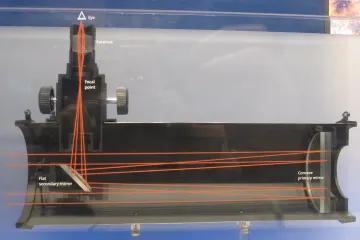
Beyond mapping the planets and moons, Galileo used the telescope to fundamentally change humanity’s perception of the sheer scale of the universe. When one looks at the night sky with the naked eye, the Milky Way appears as a faint, milky band of light stretching across the darkness. [1]
Through his telescope, that milky haze resolved into an uncountable multitude of individual stars, far too numerous to catalogue. [2][1] This discovery implied that the universe was vastly larger and more densely populated with luminous bodies than anyone had previously imagined. [1] It dissolved the boundary between the visible stars and the faint, cloudy appearance of the distant galaxy, suggesting that what looked like a continuous glow was merely the accumulated light of billions of discrete points existing far beyond the established celestial spheres. [2]
# Scientific Legacy
The sum total of Galileo’s telescopic findings—the mountains on the Moon, the moons of Jupiter, the phases of Venus, and the spots on the Sun—constituted an observational revolution summarized in his 1610 publication. [1][5] This was more than just accumulating astronomical data; it was a direct refutation of centuries of accepted cosmology based on deductive reasoning from ancient texts. [1][4]
The impact was twofold: scientific and institutional.
Scientifically, Galileo established the necessity of direct observation and measurement in understanding the natural world, placing him firmly as a forerunner of the scientific method. [4] His work showed that hypothesis generation must be tested against physical evidence, not just philosophical consistency. [4]
Institutionally, these findings led to significant conflict, particularly with the Catholic Church, which found these observations incompatible with its interpretation of scripture supporting a geocentric Earth. [3]
Galileo’s telescope was not just an instrument for seeing further; it was a catalyst that forced humanity to confront the possibility that its place in the cosmos was not central, but rather one world among many, orbiting a star, in a universe far grander than previously conceived. [1][3]
| Celestial Object | Observation | Significance |
|---|---|---|
| Moon | Craters and mountains observed [2] | Destroyed the dogma of celestial perfection; showed heavens were like Earth. [1] |
| Jupiter | Four orbiting satellites discovered [2] | Proved that not everything orbits the Earth, undermining the geocentric center. [6] |
| Venus | Full cycle of phases observed [2] | Provided direct observational proof for the Sun-centered Copernican model. [1][7] |
| Sun | Dark spots tracked across the surface [2] | Showed the Sun was imperfect and rotating. [4] |
In an age where knowledge was inherited, Galileo’s insistence on looking through the lens first cemented his reputation as the "Father of Observational Astronomy". [5] His findings taught the world that one needs the proper tools—both physical and intellectual—to discard old certainties and make genuine scientific progress. [4]
#Videos
Galileo's Revolutionary Observation - YouTube
Related Questions
#Citations
Galileo and the Telescope | Modeling the Cosmos | Digital Collections
Galileo's Observations of the Moon, Jupiter, Venus and the Sun
History | The Galileo Project
Galileo's Revolutionary Observation - YouTube
Galileo Galilei - New Mexico Museum of Space History
Why Did Galileo Need a Telescope to Discover the Moons of Jupiter?
Galileo Galilei - Wikipedia
Galileo: The Telescope & The Laws of Dynamics
How Did Galileo Improve The Telescope? - K&F Concept