What is the name of Galileo Galilei's telescope?
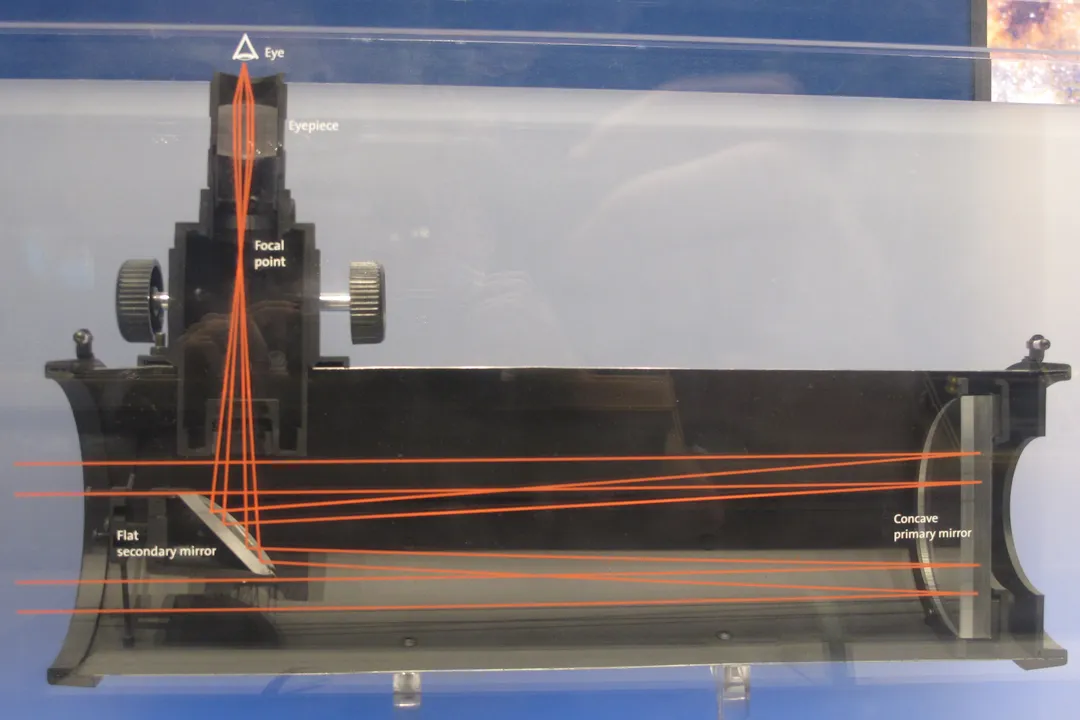
The instrument that allowed Galileo Galilei to revolutionize our understanding of the heavens was not given a unique, personalized name in the way later scientific tools—like the Hubble or the James Webb—have been branded. Instead, it was known by its function: the telescope, or, in the Italian vernacular of the time, the occhiale or the perspicillum. This lack of a formal proper name speaks volumes about the era; the focus was squarely on the device's capability to extend sight, rather than marketing or individual identification.
# Early Knowledge
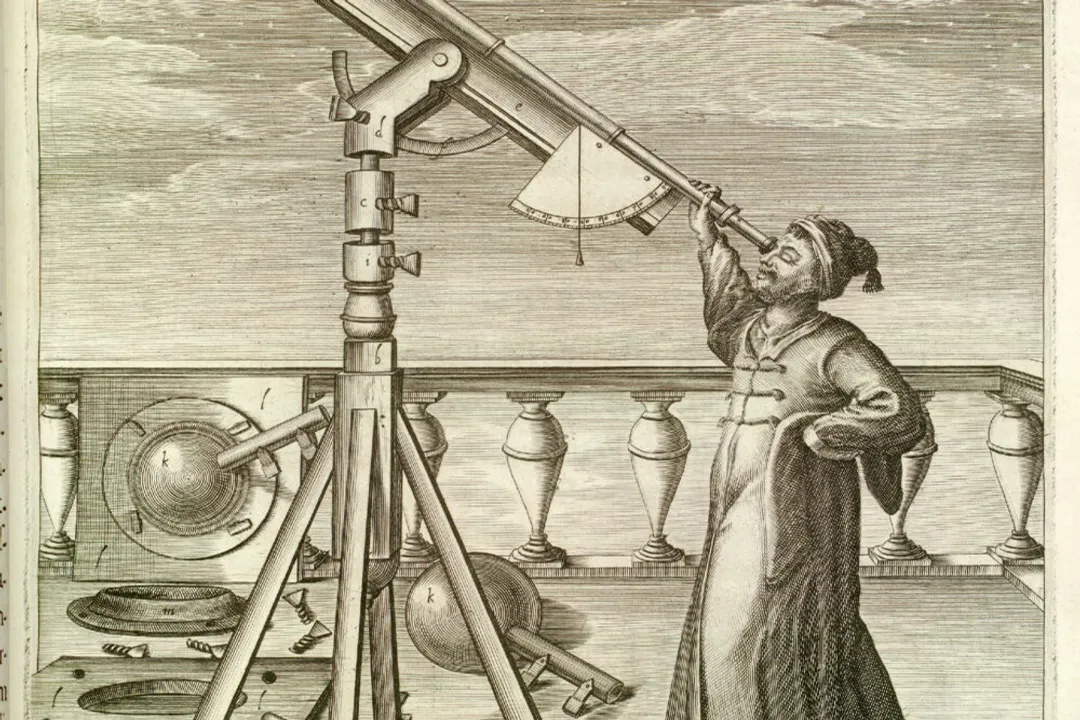
Galileo did not invent the basic concept of the optical telescope. The underlying principle—combining convex and concave lenses to magnify distant objects—was already known in the Netherlands around 1608. Hans Lippershey, an eyeglass maker from Middelburg, is often credited with the first patent application for such a device. News of this "Dutch perspective glass," or spyglass, quickly reached Italy.
Galileo, already a respected mathematician and physicist at the University of Padua, heard reports of this novelty in the summer of 1609. While he was not the originator of the instrument itself, his genius lay in recognizing its profound potential for observation beyond terrestrial uses. He set about immediately reverse-engineering the device based on the description he had heard.
# Refining Design
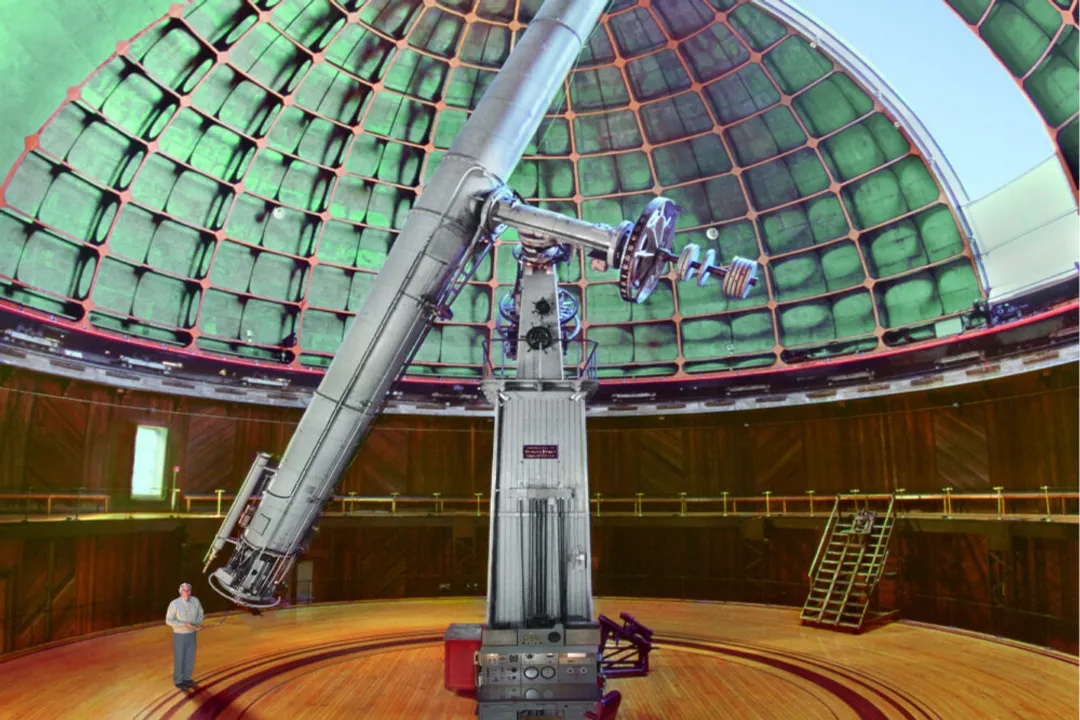
What sets Galileo’s work apart is not the invention of the idea of the telescope, but his rapid and persistent refinement of the existing technology. He quickly moved past the crude magnification offered by the initial Dutch models. Within weeks of hearing the initial reports, Galileo had produced his own version, which he presented to the Venetian Senate.
The earliest iteration Galileo constructed could magnify objects by about three times, an improvement over the standard spyglasses then available. However, Galileo was determined to push this limit further. He experimented relentlessly with different lens combinations, grinding his own lenses or commissioning them from specialists.
A critical aspect of the early telescope design was the specific arrangement of the lenses. Galileo's design utilized a convex objective lens (the lens facing the object) and a concave eyepiece (the lens the observer looked through). This configuration is known as a Galilean telescope today.
It is interesting to compare Galileo’s technological leap with the complexity of naming conventions today. Modern instruments are often named after sponsoring agencies, key figures, or even poetic concepts, establishing a recognizable brand. Galileo’s perspicillum, however, remained functionally defined. Imagine tracking progress solely by magnification power: Galileo took his instrument from perhaps 3x magnification to an eventual, highly effective 30x. This steady climb in performance, documented meticulously in his notes, was the true mark of his achievement, rather than any fanciful title. This rapid, measurable improvement in capability—a near ten-fold increase in power in a short period—was arguably more revolutionary than inventing the basic instrument in the first place.
# Astronomical Turn
After achieving significant magnification, Galileo turned his instrument toward the sky in late 1609. This transition from a military or maritime tool (a spyglass) to a scientific instrument is where the historical significance of Galileo’s telescope truly lies.
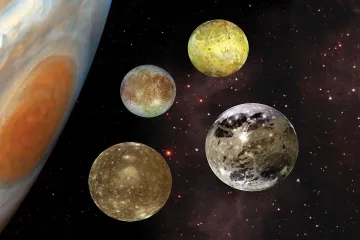
When he pointed the device skyward, the results were immediate and world-altering. He observed that the Moon was not a perfect, smooth sphere as Aristotelian philosophy dictated, but was mountainous, cratered, and imperfect, much like the Earth. He then turned his attention to Jupiter, where he discovered four points of light orbiting the planet—the Medicean Stars, now known as the Galilean moons. This observation provided concrete, visible evidence that not everything orbited the Earth, striking a fundamental blow to the established geocentric model.
The optical quality of his best instruments, those used for his crucial celestial work, was defined by their magnification power, which reportedly reached around 30 diameters. While this sounds meager compared to modern reflecting telescopes, this level of optical clarity, when applied to the heavens, revealed features previously invisible to the naked eye.
# Surviving Instruments
The physical instruments themselves have become legendary artifacts. The Museo Galileo in Florence houses one of Galileo’s original telescopes, which is considered a prime example of his later work in optical instruments. This specific surviving instrument has an objective lens and an eyepiece, producing an image that is both magnified and upright, characteristic of the Galilean design.
The reconstruction of these devices shows they were relatively small by modern standards, often measuring around a meter in length, built from wood and covered in leather. The precision required to correctly align the objective and the eyepiece—especially at 30x magnification—was extremely high for the period. A slight misalignment in the lens mounting would render the image blurry or unusable. This technical expertise, which Galileo possessed or directed others to execute, ensured the observations were trustworthy.
When considering the physical legacy, one might note that preserving these early wooden and leather-clad instruments presents inherent challenges. Unlike modern metal-and-glass structures, environmental factors like humidity and temperature fluctuations would have stressed the materials over centuries, making the survival of even one authentic example a testament to careful stewardship. While some of his writings and drawings survive, having an actual physical tool that he held while making these revolutionary discoveries adds an irreplaceable layer of connection to history.
# Scientific Authority
Galileo’s work was not just about seeing farther; it was about trust in what he saw. In an age where scientific authority was deeply tied to ancient texts, Galileo used his improved perspicillum as the ultimate arbiter of truth. He was inducted into the National Space Council Hall of Fame precisely because of the way he applied this technology to challenge existing cosmological beliefs.
His findings, published in Sidereus Nuncius (Starry Messenger) in 1610, laid the groundwork for modern astronomy. The instrument itself became synonymous with his name because he was the first to systematically publish and defend the results derived from it. It wasn't just a telescope; it was Galileo's telescope because he was the one who demonstrated its power to shift paradigms.
The lasting impact is that while we call the device a "telescope" today, a term that eventually supplanted the specific Italian names, the instrument itself is rarely named anything other than referencing its primary user in historical context. There is no singular "Galileo Mark II" or "Galileo Star-Finder." There is only the original, improved spyglass that opened the universe to humankind.
Related Questions
#Citations
Galileo Galilei - Wikipedia
Galileo's telescope
Galileo's Refracting Telescope | Multiwavelength Astronomy - eCUIP
The Astronomical Influence of Galileo's Telescope
Extending the Eye - Southern California's gateway to the cosmos!
Galileo and the Telescope | Modeling the Cosmos | Digital Collections
Invention of Telescope by Galileo Galilei (1564-1642) - CHEST
Galileo Galilei - New Mexico Museum of Space History
Galileo Galilei's Telescope. 1609. - Facebook