What did Galileo Galilei confirm about the Sun?
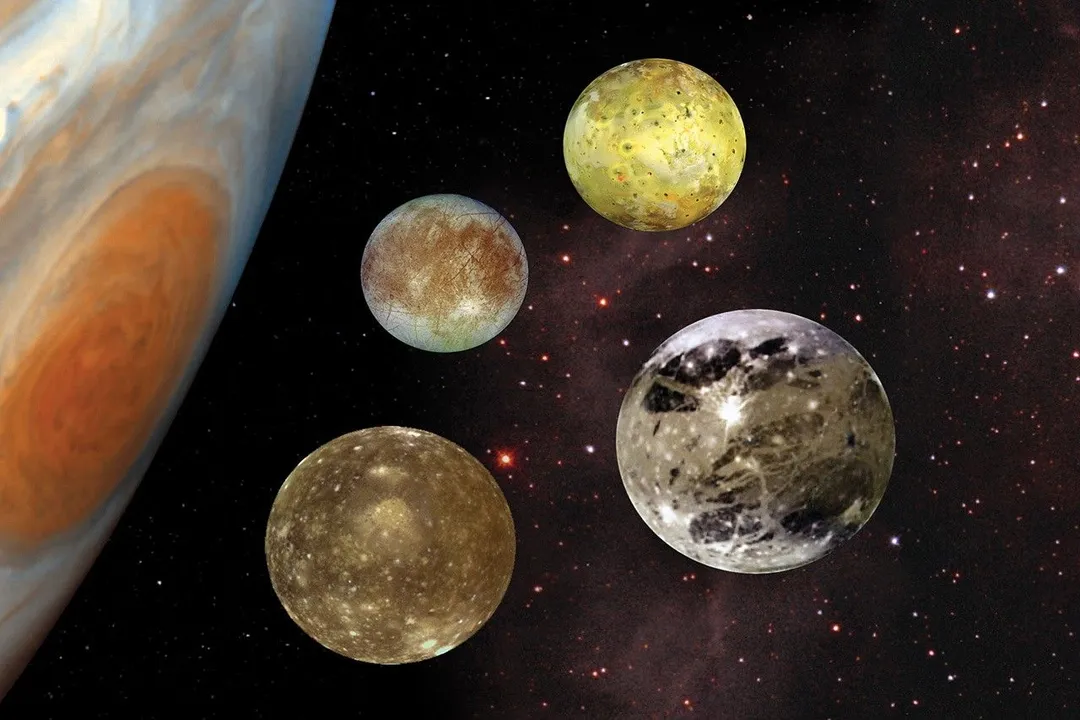
The moment Galileo Galilei turned his refined telescope towards the heavens, the ancient understanding of the cosmos began to crumble. While his observations of Jupiter's moons provided striking evidence against the Earth-centered model, his sustained scrutiny of the Sun confirmed even more fundamental, disruptive truths about the nature of celestial bodies themselves. His work on the Sun was not just about planetary orbits; it involved directly challenging the Aristotelian dogma that the heavens were perfect, unchanging, and incorruptible.
# Solar Flaws
Perhaps the most shocking confirmation Galileo made regarding the Sun concerned its apparent perfection. For centuries, philosophical and scientific traditions held that celestial objects, being made of the purest ether, were smooth, unblemished spheres. Galileo, however, using telescopes equipped with specialized filters to protect his eyesight, documented dark patches appearing and moving across the Sun’s face. These were the sunspots.
Galileo’s initial observations confirmed that these spots were features on the Sun, rather than small, dark planets passing in front of it, which was a competing theory at the time. He was not the first person to see sunspots, but his persistent, systematic study, detailed in his work Istoria e dimostrazioni intorno alle macchie solari e loro accidenti (History and Demonstrations Concerning Sunspots and Their Accidents), provided the crucial physical proof of their nature. He meticulously recorded their appearance, changes in shape, and eventual disappearance.
It takes a certain kind of scientific dedication—and perhaps a willingness to risk permanent eye damage—to stare at the brightest object in the sky for extended periods, even with rudimentary filtering. This commitment to observation, even when the subject was inherently dangerous to study, sets Galileo apart. While observing the Moon’s craters demonstrated imperfections on a near neighbor, seeing imperfections on the Sun itself meant the very source of light and life was subject to change and decay, shattering a core tenet of cosmology.
# Tracking Rotation
The mere existence of spots was revolutionary, but Galileo’s analysis of their behavior provided a second major confirmation: the Sun itself moves. By charting the path of these spots as they traversed the solar disk over several days, Galileo was able to definitively prove that the Sun was rotating on its axis.
He noted that the spots appeared on one edge, moved across the face of the Sun, and then vanished, only to reappear later on the opposite side as the Sun completed its turn. Through careful measurement of the time it took for a spot to cross from one limb (edge) to the other, Galileo calculated the Sun’s rotational period. His established estimate placed this rotation time at approximately one month. This finding was significant because it demonstrated that motion was inherent to all major celestial bodies, not just the Earth (as Copernicus suggested) or the outer planets.
# Comparing Solar and Terrestrial Motion
The confirmation of the Sun’s rotation offered a fascinating parallel to Earth’s own motion, subtly reinforcing the heliocentric idea. If the Earth rotates daily, and the Sun rotates monthly, both celestial giants are dynamic entities governed by internal forces, rather than one being a fixed, perfect center and the other a moving periphery. Considering the Sun's massive size, its rotation period of about 27 days (as modern science confirms, very close to Galileo's estimate) implies a rotational velocity at its equator that is significantly faster, proportionally, than Earth’s—a massive, churning sphere of fire demonstrating organized, predictable mechanics. This consistency in observable motion across the main solar bodies adds a layer of structural integrity to the Sun-centered view.
# Supporting a New System
While sunspots and rotation were direct confirmations about the Sun, Galileo’s celestial work as a whole positioned the Sun centrally, much to the chagrin of established authorities. His confirmation that the Sun was not an immutable, perfect body—that it had surface blemishes and exhibited rotation—made it less likely to be the center of a perfect, crystalline, unmoving universe.
When Galileo observed the phases of Venus, for instance, the data only made sense if Venus orbited the Sun, not the Earth. The implications of these separate observations converged: the Earth was not the center of everything, and the Sun was a dynamic star, not a divine, unchanging lamp. Galileo’s observations of the Sun, therefore, contributed to a cohesive picture where both the Earth and the Sun were subject to the same physical laws, a concept that elevated the Sun to a true central body in a mechanical system.
# The Publication Controversy
It is important to note the context of Galileo’s confirmation regarding sunspots. He published his findings in 1613 in Istoria e dimostrazioni. This work was a direct response to claims by Christoph Clavius and others who wished to downplay or deny the existence of the spots. Galileo presented his data not as a hypothesis, but as documented demonstrations arising from his careful observation over time. By meticulously recording the spots' motion, he transitioned the concept of solar activity from speculative argument to established observational fact, moving the scientific conversation forward decisively.
Galileo’s confirmed findings about the Sun—that it was blemished and that it rotated—were essential components in the eventual acceptance of the heliocentric model. He provided tangible, observable evidence that the celestial sphere, far from being an assembly of perfect, ethereal orbs, behaved like a complex physical object governed by motion and change, similar in principle to observations made on Earth.
Related Questions
#Citations
Galileo's Observations of the Moon, Jupiter, Venus and ...
Galileo Galilei
Galileo Challenge
How Galileo Put the Sun at the Centre of the Solar System
In depth - Sunspots
Galileo and Heliocentrism | Research Starters
What was Galileo's scientific explanation for saying that ...
Science | Sunspots
Galileo