What is the theory that the Sun was at the center of the universe the Earth and other planets orbited around the Sun?
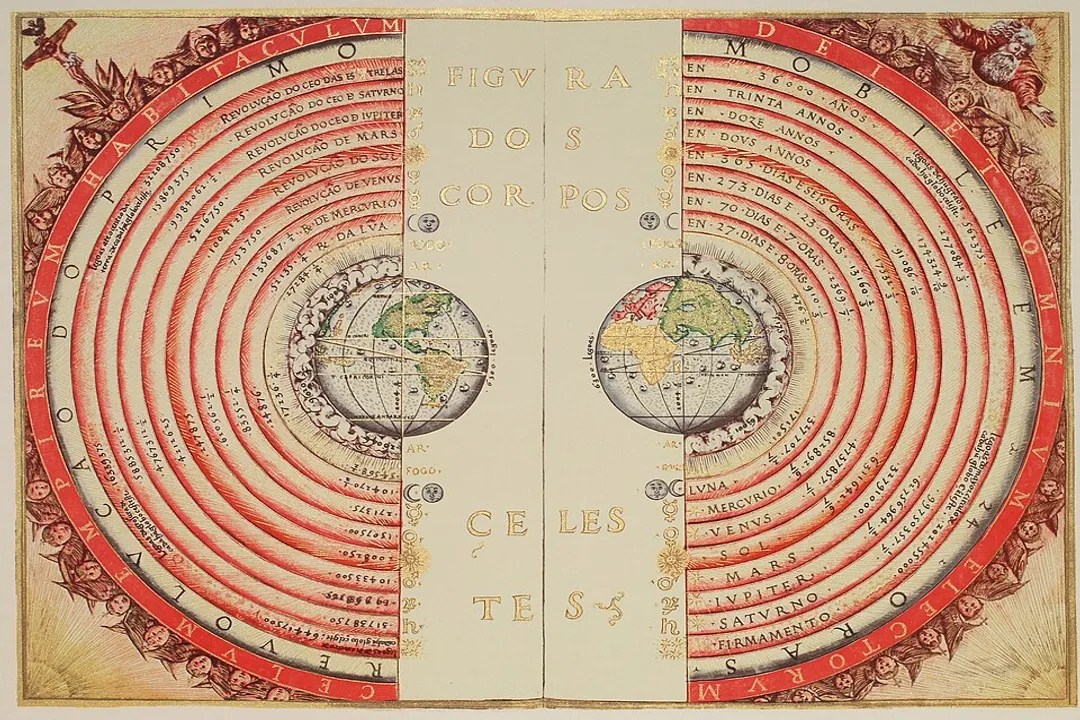
The understanding of where Earth sits in the grand architecture of the cosmos has undergone one of history's most profound revisions. For centuries, the prevailing view placed our world firmly at the center of everything, a stationary stage around which the Sun, Moon, planets, and distant stars revolved in perfect, predictable paths. This intuitive arrangement, which aligns perfectly with our everyday sensory experience—we see the Sun rise and set, the ground beneath us feels unmoving—formed the foundation of early astronomy, philosophy, and theology for millennia. [5][6]
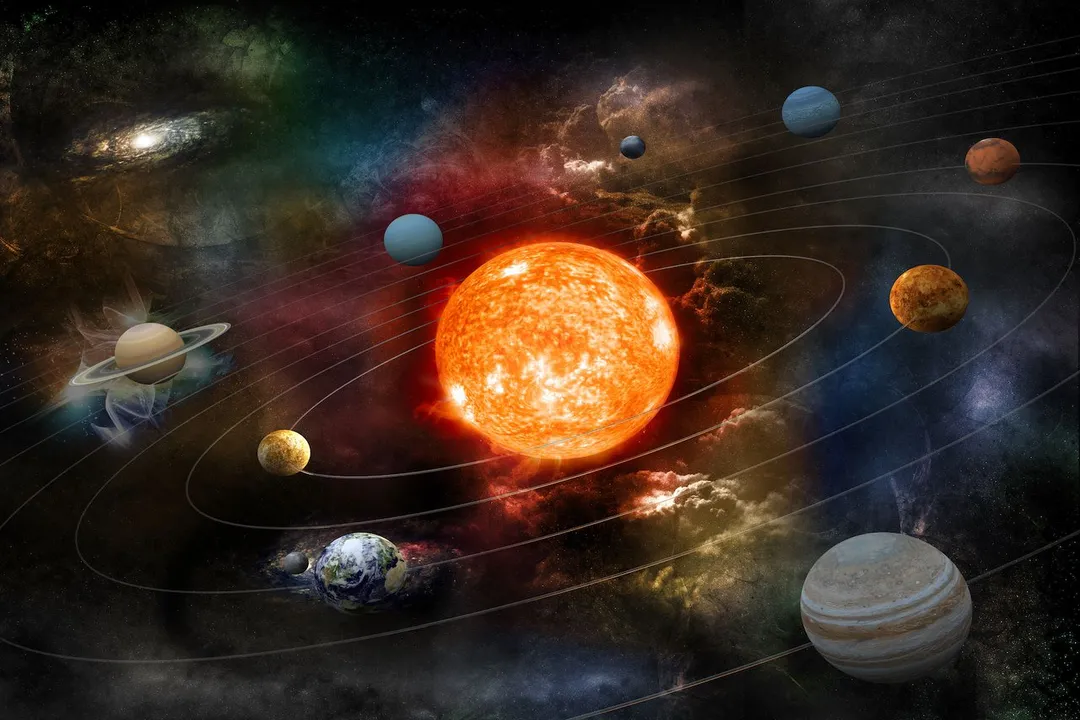
However, careful astronomical observation, coupled with a growing need for mathematical elegance, eventually forced a radical reconsideration of this cosmic setup. The theory that posits the Sun, not the Earth, as the stationary center around which the Earth and all other known planets orbit is known as heliocentrism. [1][4] It represents a complete inversion of the ancient worldview, suggesting that the daily motions we observe are merely the result of Earth spinning on its axis and circling the Sun. [3][9]
# Ancient View
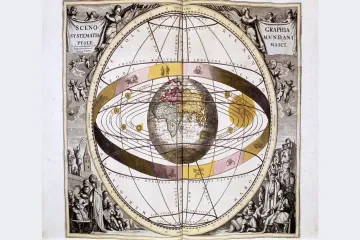
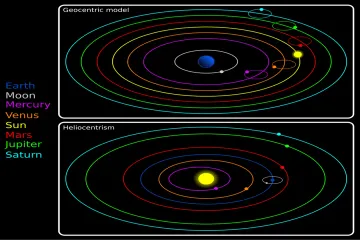
The established model for a very long time was the geocentric system, championed and codified by thinkers like Ptolemy and rooted in the earlier philosophy of Aristotle. [5] In this ancient framework, the Earth remained motionless at the center of the universe. [5][6] The celestial bodies—the Sun, Moon, Mercury, Venus, Mars, Jupiter, and Saturn—were thought to move in perfect circles, often complex patterns involving circles upon circles (epicycles), necessary to explain the observed retrograde motions of the outer planets. [1][6] While the mathematics required to predict planetary positions using this system became incredibly detailed and highly accurate for its time, the model was inherently cumbersome. [1] It required adding more and more complex mathematical constructs to account for observed reality, suggesting to some that a simpler explanation might exist. [1]
# Copernican Theory
The shift began in earnest with Nicolaus Copernicus, a Polish astronomer whose intellectual contributions were foundational to modern astronomy. [2] Copernicus formalized the heliocentric model, proposing that the Sun resided near the center of the universe, and the Earth was simply another planet revolving around it. [1][4][9] He moved the Moon to orbit the Earth, as in the old model, but set the other five known planets in orbit around the Sun, arranged in order of their orbital periods. [1]
Copernicus was driven, in part, by a desire to produce a more aesthetically pleasing and mathematically less burdened description of the cosmos than the existing Ptolemaic epicycles. [1] The sheer complexity of the geocentric calculations was a major impetus for his work. [4] When you assume the Sun is central, the observed retrograde motion of Mars, for instance, is no longer a bizarre wobble requiring complicated loops; it becomes a natural consequence of Earth overtaking Mars (or being overtaken by it) on its respective orbit, much like a faster car passing a slower one on a circular track. [4] However, it is crucial to note that Copernicus’s initial model was not entirely free of the older conventions; he still largely insisted on perfect circular orbits for the planets, which introduced its own set of mathematical difficulties that later astronomers, such as Kepler, would have to resolve using ellipses. [1]
# Orbital Mechanics
The heart of the heliocentric concept involves two main motions for Earth: rotation and revolution. [3] First, the Earth spins on its axis, which accounts for the apparent rising and setting of the Sun and stars throughout a 24-hour cycle. [3] Second, the Earth orbits the Sun, completing one circuit in approximately days. [3] This second motion is what dictates our year and explains the changing constellations visible throughout the seasons. [3]
The modern understanding, built upon the foundations laid by Copernicus and refined by subsequent generations of scientists, confirms this arrangement is fundamentally correct for our solar system. [3][7] The gravitational influence of the Sun dictates the paths of the planets, defining the solar system structure we chart today. [3] Interestingly, while Copernicus placed the Sun at the center of the universe, modern astronomy teaches us that the Sun is actually just one star in a galaxy, the Milky Way, and our entire solar system is moving around the galaxy's center. [7] The primary shift, however, remained the Earth’s dethronement from the cosmic hub to one of several orbiting bodies. [4]
# Perception Versus Calculation
It is easy, looking back with the benefit of centuries of confirmed science, to dismiss the geocentric model as simple ignorance. Yet, this perspective overlooks a critical element of scientific acceptance: immediacy of experience. [6] When an observer stands on Earth, every single piece of sensory evidence screams that the ground is stable and the heavens are moving. The geocentric model, for all its later complexity, perfectly modeled this felt reality. Adopting the heliocentric view required an almost philosophical leap—accepting that our primary senses were being tricked on a cosmic scale. This required more than just a new diagram; it necessitated developing entirely new physical laws to explain why objects stayed on a spinning Earth, or why we didn't feel the tremendous speeds involved in Earth’s hypothesized daily spin. [9]
# Key Data Comparison
To illustrate the different emphases of the two models, one can look at the conceptual differences in explaining retrograde motion, the apparent backward loop some planets make across the night sky:
| Feature | Geocentric Explanation (Ptolemaic) | Heliocentric Explanation (Copernican) |
|---|---|---|
| Earth's Motion | Stationary | Rotates daily; revolves annually around the Sun |
| Retrograde Motion Cause | Epicycles (circles moving on other circles) | Earth overtaking the slower-moving outer planet in its orbit |
| Mathematical Burden | High; required constant adjustment of circles | Lower; natural outcome of orbital speeds |
| Observed Day/Night | Sun moves around the Earth | Earth rotates on its axis |
# Scientific Authority
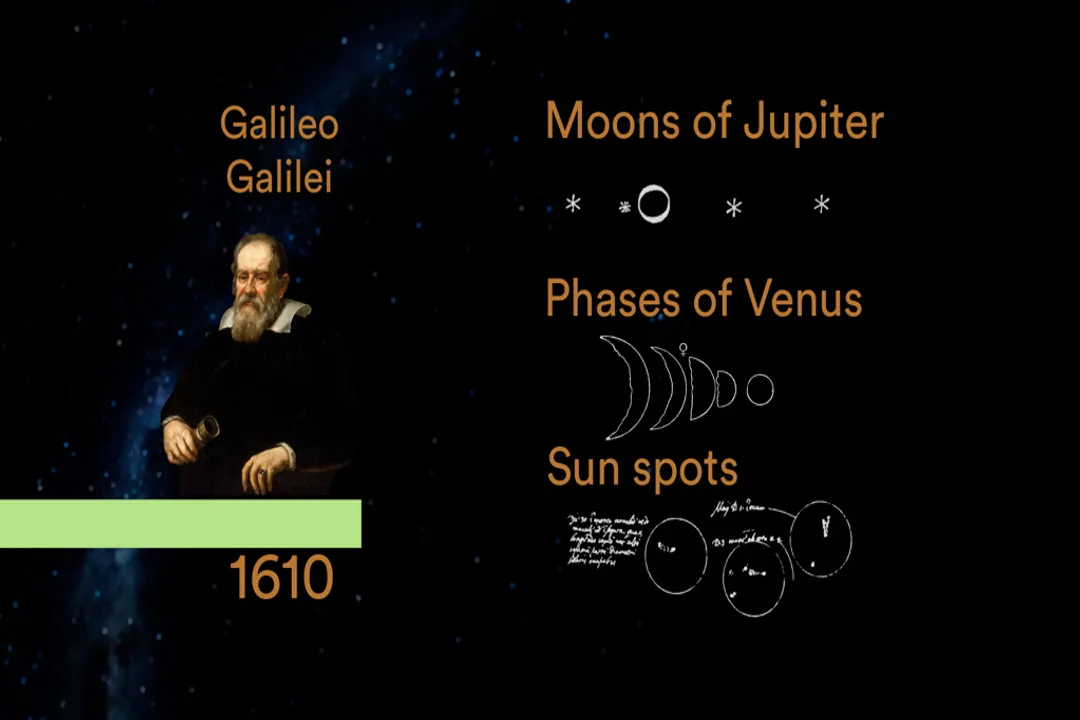
The establishment of heliocentrism was not immediate following Copernicus’s publication; it took time and the accumulation of further, irrefutable evidence to overcome the deeply entrenched Aristotelian-Ptolemaic authority. [8] The later work of astronomers who followed, building on Copernicus's mathematics, provided the definitive proof. When figures like Galileo made telescopic observations that were impossible to reconcile with the ancient model—such as observing the phases of Venus, which behaved exactly as if it orbited the Sun—the scientific tide began to turn decisively. [8] The ability of the new model to explain and predict astronomical phenomena with greater accuracy and simplicity became its greatest validation, gradually overriding tradition and doctrine. [1] The entire conceptual structure had to shift from placing humanity at the immovable core to recognizing that our planet is just one traveler in a vast system governed by physical laws rather than divine placement. [9]
Related Questions
#Citations
Heliocentrism - Wikipedia
Nicolaus Copernicus - New Mexico Museum of Space History
The History of an Idea That Launched the Scientific Revolution
Heliocentrism: Definition, origin and model - Space
Nicholas Copernicus and the Heliocentric Theory of the Solar System
Picturing the solar system: a tale of astronomical change
Who first claimed planets go round the Sun?
How did Copernicus arrive at the conclusion that not the Earth but ...