Who proved the Sun was the center of the universe?
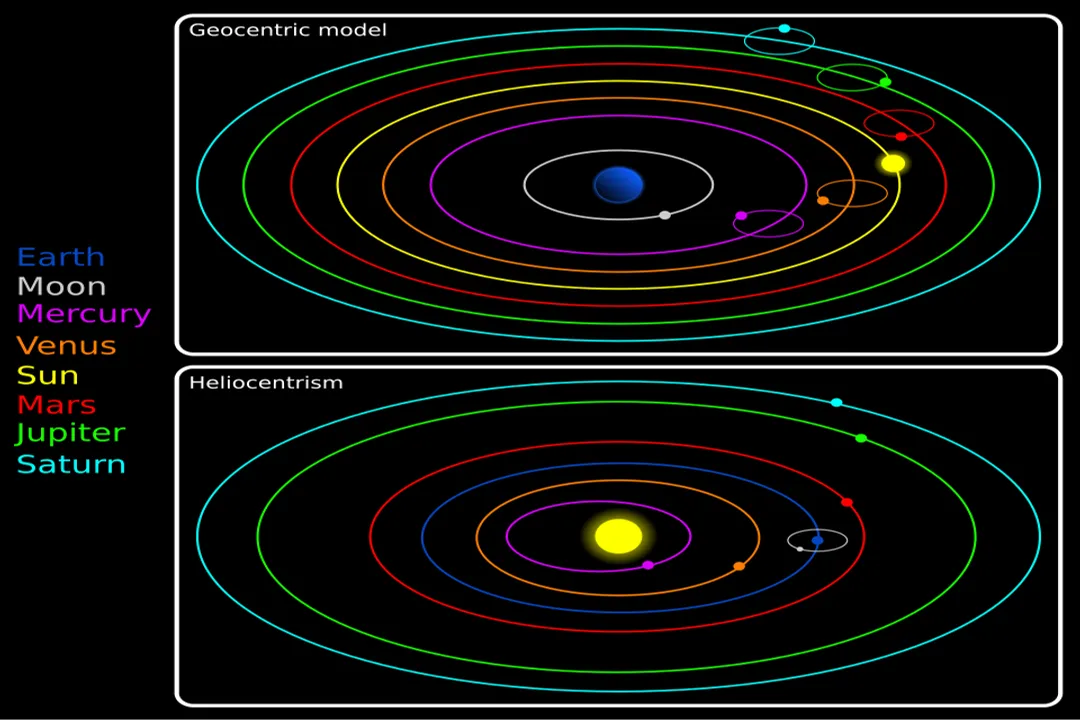
The transition from viewing Earth as the stationary center of creation to realizing our planet is just one of several orbiting a star required a profound shift in human understanding, spearheaded by thinkers who dared to redraw the map of the cosmos. While many names contribute to the story of how we arrived at the heliocentric view, the credit for formulating the comprehensive mathematical model that placed the Sun at the center of the known universe primarily belongs to Nicolaus Copernicus. He wasn't the first person ever to suggest the Sun occupied this central position—ancient Greek thinkers had entertained the idea—but Copernicus was the individual whose detailed work provided the first mathematically viable alternative to the long-standing Earth-centered system.
# Ancient Cosmos
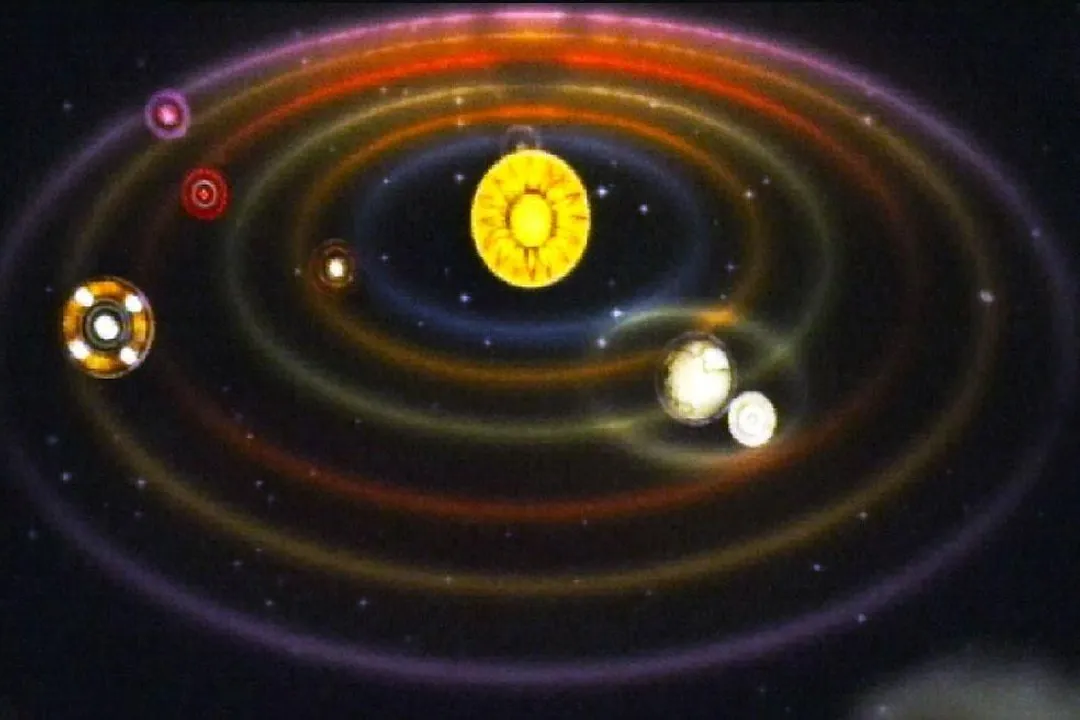
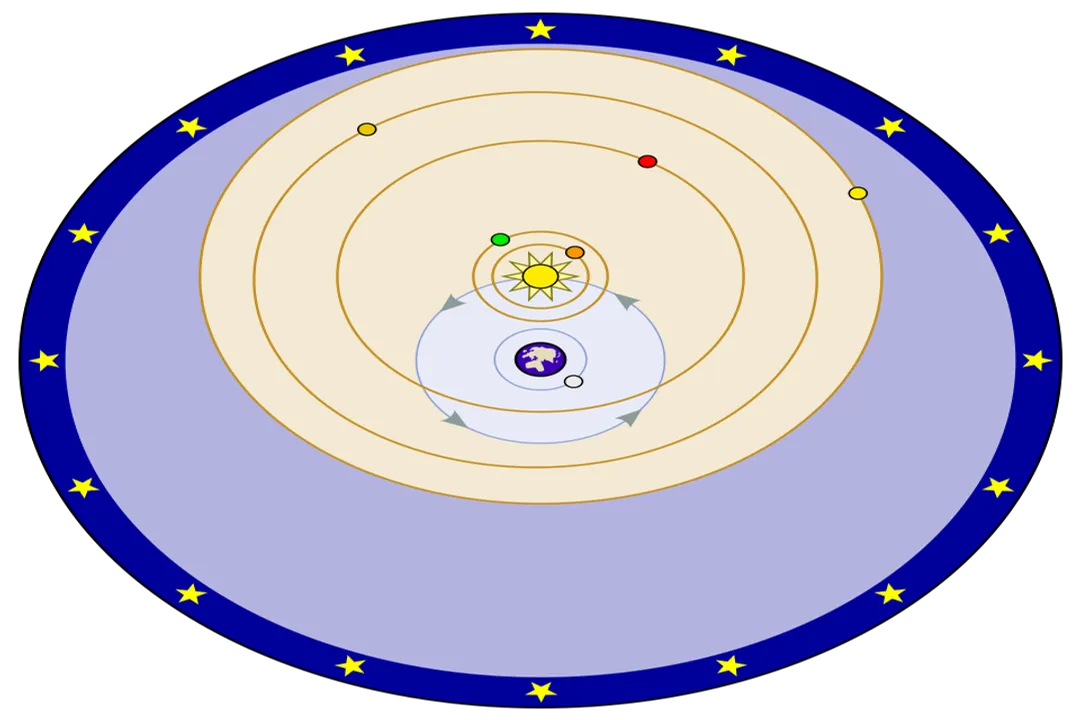
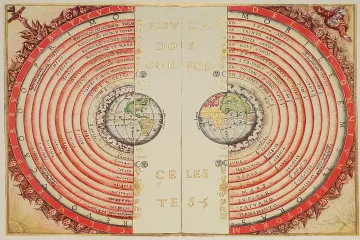
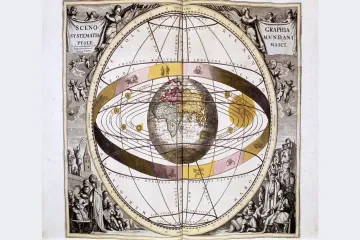
For well over a millennium, the accepted understanding of the heavens was built upon the geocentric model, most fully elaborated by the Greek astronomer Ptolemy. In this framework, the Earth was fixed and unmoving at the center, and the Sun, Moon, planets, and stars revolved around it in complex circles. This view aligned with everyday human experience—we certainly do not feel the Earth moving—and it was philosophically and theologically satisfying for centuries. The challenges began when astronomers observed that the planets sometimes appeared to move backward across the night sky, a phenomenon called retrograde motion. To account for this while keeping Earth central, the Ptolemaic system required intricate additions like epicycles (small circles upon larger orbital circles), making the calculations increasingly cumbersome and inelegant.
# Copernicus Proposes
Nicolaus Copernicus, a Polish astronomer, was born on February 19, 1473. Trained as a cleric and scholar, he spent considerable time studying mathematics and astronomy. By observing the heavens and wrestling with the complexities of the Ptolemaic predictions, Copernicus recognized a simpler, more harmonious arrangement was possible. In his revolutionary system, Heliocentrism, the Earth and the other planets revolved around the Sun, which occupied the center of the universe. This single alteration immediately explained retrograde motion far more elegantly: it wasn't the planet reversing course, but rather the faster-moving Earth overtaking an outer planet, giving the visual illusion of backward movement from our perspective.
Copernicus’s magnum opus, De revolutionibus orbium coelestium (On the Revolutions of the Heavenly Spheres), was not published until just before his death. He was hesitant to release it publicly for years, perhaps sensing the controversy his ideas would provoke. The book laid out the mathematical arguments for the Sun-centered system, suggesting that the Earth had three motions: rotation on its axis daily, revolution around the Sun annually, and a slight wobble of its axis. While Copernicus’s system was mathematically cleaner, it is crucial to note that his initial model still utilized perfect circles for orbits, which meant he also needed to employ some epicycles, though far fewer than Ptolemy's system. The model was, at first, more of a superior mathematical hypothesis than an empirically proven physical reality.
# Mathematical Simplicity Versus Physical Proof
The initial power of Copernicus's work lay in its mathematical economy. It was a triumph of theoretical structure over observational necessity. For a mathematician or astronomer concerned with predicting planetary positions accurately, the Copernican model offered a more satisfying path. However, for the general public and the established scientific community of the time, the theory lacked tangible, undeniable proof observable by the naked eye.
To truly "prove" heliocentrism, astronomers needed to observe phenomena that could not be explained if the Earth were stationary at the center. For instance, if the Earth moved around the Sun, observers should be able to detect a slight shift in the apparent position of the stars over the course of a year, known as stellar parallax. Because the stars visible to the naked eye seemed fixed relative to each other, this lack of observable parallax was often cited against the Copernican view. The stars had to be immensely farther away than anyone at the time imagined for the parallax shift to be too small to measure with the existing technology.
It stands as an interesting historical paradox that the initial champion of the Sun-centered view, Copernicus, did not live to see, nor did he present, the definitive observational evidence that would force the world to accept his premise. He provided the framework; others provided the hammer blows that shattered the old structure.
When considering what constitutes the first true evidence, one must look past Copernicus to the next generation of astronomers who had better tools and bolder methodologies. While Copernicus offered the theory, it was the subsequent telescopic observations that started turning the hypothesis into accepted fact.
# New Observations Validate
The true validation of the Sun-centered model came decades after Copernicus’s death, largely through the work of Galileo Galilei. Using the newly invented telescope, Galileo made several key discoveries that directly contradicted the core tenets of the unmoving, central Earth model.
- Phases of Venus: Galileo observed that Venus goes through a full set of phases, much like the Moon. If Venus orbited the Earth, we should only ever see crescent phases. Seeing Venus as a full disk proved that it must be orbiting the Sun, positioned between the Earth and the Sun at times.
- Moons of Jupiter: Galileo discovered four moons orbiting Jupiter. This provided a miniature model of a system where not everything orbited the Earth, demonstrating that other centers of motion existed in the heavens.
These observations provided powerful, direct observational data where Copernicus had only provided elegant mathematics. Although Copernicus established the architecture, it was Galileo’s telescopic findings, alongside the later, mathematically perfect elliptical orbits described by Johannes Kepler, that provided the undeniable proof required to shift scientific consensus away from the ancient geocentric tradition.
# The Weight of Expectation
It is easy for modern readers, accustomed to the vastness of space and the certainty of our place within the Solar System, to overlook the sheer intellectual courage required to propose this inversion of reality. We often simplify history by crediting Copernicus alone with the proof, but his contribution was one of reconstruction. An insight that often gets lost is the difference between a model that is more beautiful (mathematically simpler) and one that is physically correct (supported by repeatable observation). Copernicus’s initial work leaned heavily on beauty, which is why it was initially treated as a mere mathematical tool by some, rather than a description of reality. The centuries-long dominance of the Ptolemaic system wasn't just due to intellectual inertia; it was because, for a very long time, it was the only system that appeared to match the naked-eye observations adequately.
This distinction between hypothesis and proof highlights a crucial aspect of scientific progress: the need for instrumentation. Imagine trying to map the path of a car on a highway while you are a passenger inside that car, without any external reference points—you know you are moving, but you can only deduce it from complex internal measurements. Copernicus was making internal measurements against a flawed, fixed background. Galileo, however, built an external reference point—the telescope—that allowed him to see other, smaller systems in motion, thereby proving that the Earth did not hold a unique, stationary position.
# Contextualizing the Revolution
To appreciate the full scope of this shift, consider the timeline of the astronomical revolution that Copernicus initiated. His work, published in 1543, marks the beginning of the Scientific Revolution for many historians. However, the resistance to the heliocentric view was substantial, rooted in a worldview that placed humanity and Earth at the center of God's creation. Even the idea of a moving Earth was physically difficult to accept without contradicting Aristotelian physics, which dominated thought at the time.
If we were to create a simplified timeline showing the progression from proposal to acceptance based on the evidence:
| Stage | Contributor | Key Contribution | Basis |
|---|---|---|---|
| Proposal | Copernicus | Mathematical model placing Sun at center | Elegance, simplification of retrograde motion |
| Observation | Galileo | Phases of Venus, Moons of Jupiter | Direct telescopic evidence against Geocentrism |
| Refinement | Kepler | Elliptical orbits | Perfect mathematical fit for planetary motion |
| Proof | Later Astronomers | Measurement of Stellar Parallax | Physical confirmation of Earth's motion |
This progression illustrates that "proving" the center of the universe was not a single event delivered by one person, but rather a generational scientific achievement. Copernicus provided the foundational blueprint for the new architecture, but it took the empirical sledgehammer of the telescope, wielded by others, to tear down the edifice of the old system.
The revolution wasn't just about astronomy; it was about epistemology—how we know what we know. It established a precedent where observational data, even if counterintuitive, must ultimately trump long-held philosophical or traditional beliefs. Therefore, while Nicolaus Copernicus developed the necessary theory, the definitive proof that the Sun was the center arrived through the physical evidence gathered by his successors, solidifying the shift away from the Earth-centered cosmos.
Related Questions
#Citations
Nicolaus Copernicus - Wikipedia
Nicolaus Copernicus - New Mexico Museum of Space History
What was the first evidence of the heliocentric model? : r/Astronomy
Whose Revolution? Copernicus, Brahe & Kepler - Library of Congress
It's the birthday of Nicolaus Copernicus, the man who spun the Solar ...
Heliocentrism | Research Starters - EBSCO
Is it true that Copernicus' heliocentric theory delivered a severe blow ...
Nicolaus Copernicus | Biography, Facts, Nationality ... - Britannica
Galileo: Sun-Centered System | PBS LearningMedia