What shift is the universe in?
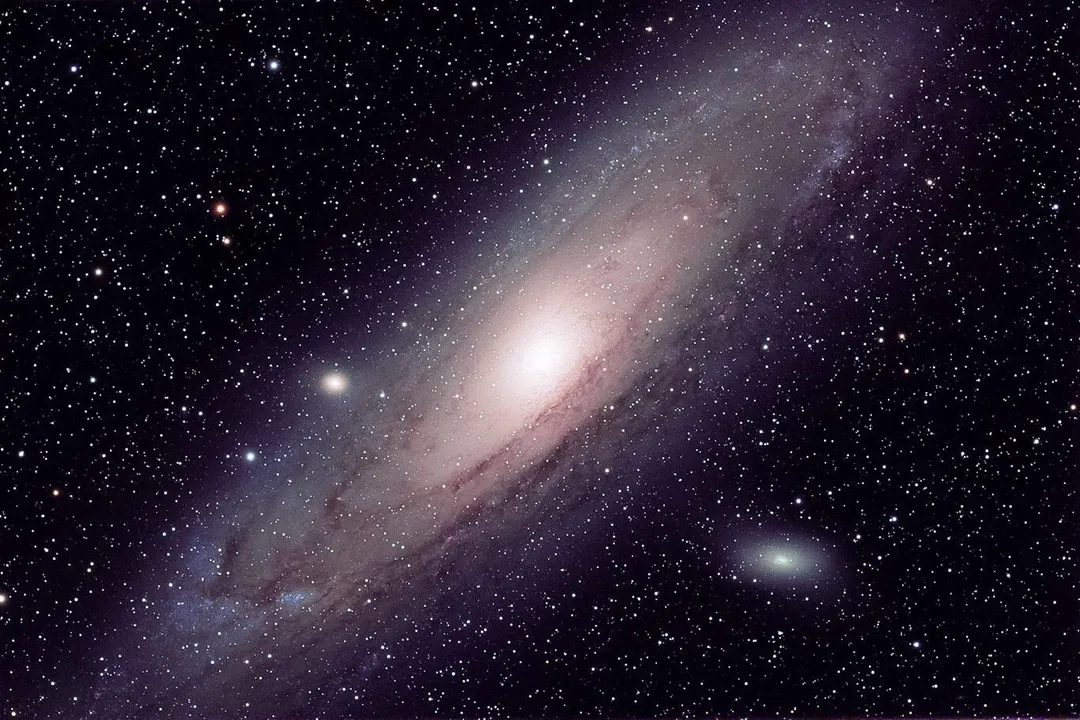
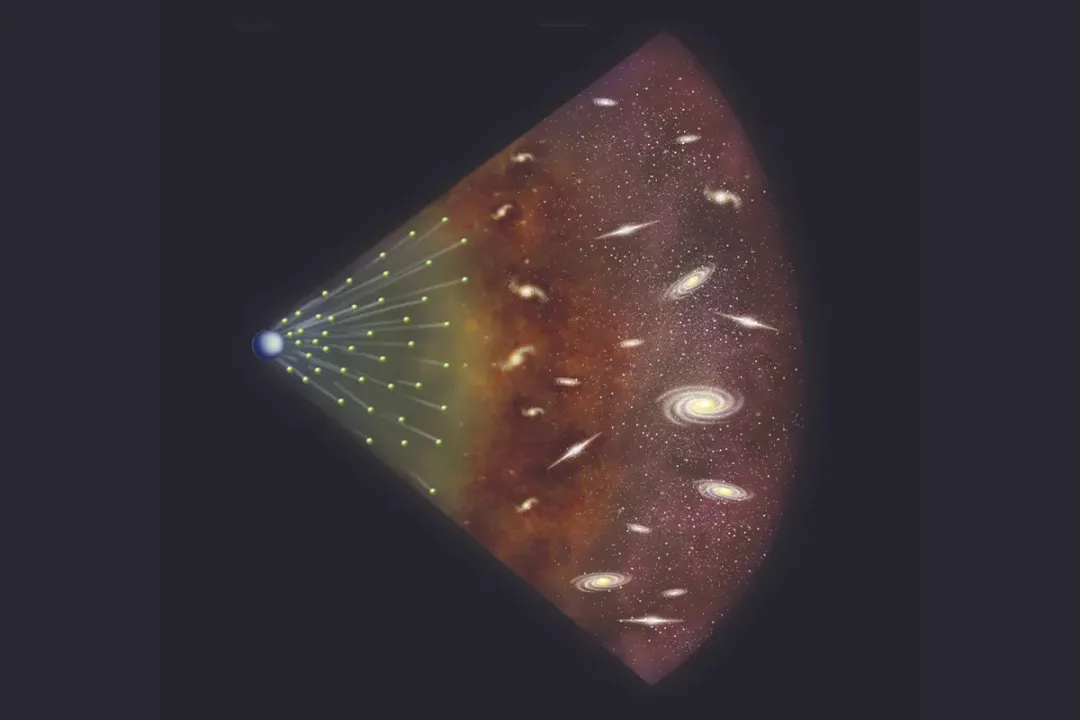
The observation of the cosmos reveals a profound motion, an overarching characteristic defining the state of the universe right now. This characteristic is not a single object moving across a static backdrop, but rather a fundamental alteration in how we perceive light traveling across the vastness of space. [1][6] Astronomers categorize this change in light as a "shift," most notably a shift toward the red end of the electromagnetic spectrum, known to us as redshift. [1][7] This phenomenon serves as the primary indicator that the very fabric of space itself is expanding, carrying galaxies further apart as the light travels from them to our telescopes. [6][9]
# Light Wavelengths
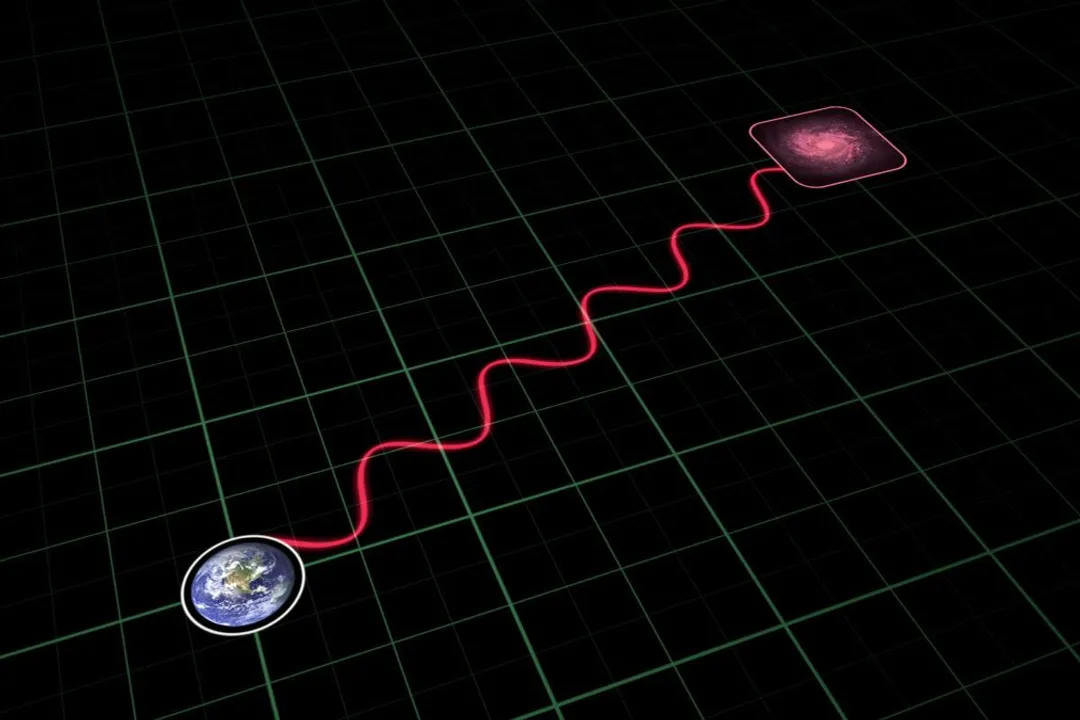
Light travels in waves, and the color we perceive is dictated by the specific wavelength of that light. [5] For visible light, shorter wavelengths correspond to the blue end of the spectrum, while longer wavelengths are associated with the red end. [5][9] When a source of light is moving away from an observer, the waves of light arriving at the observer are stretched out, increasing the wavelength. [3][5] This stretching causes the light to shift toward the longer, redder end of the spectrum, hence the term redshift. [1][5][7]
Conversely, if an object were moving towards an observer, the light waves would be compressed, resulting in a shorter wavelength and a shift toward the blue end—this is known as blueshift. [5] While redshift is commonly associated with expansion, blueshift is observable in certain localized scenarios, such as the Andromeda galaxy moving toward our own Milky Way. [5]
# Spectral Lines
Determining the precise shift of distant astronomical objects relies on analyzing the light they emit, specifically looking at their spectra. [1][7] Stars and galaxies emit light across a continuous range of colors, but embedded within that light are dark lines, known as absorption lines. [7] These dark lines occur because specific chemical elements—like hydrogen or calcium—absorb photons at very precise, known wavelengths as the light passes through the gas in the star's outer atmosphere. [7]
The key to measuring the universe's shift lies in comparing the observed position of these absorption lines in a distant galaxy's spectrum against the known, rest-frame position of those same lines measured here on Earth. [1][3][7] If the lines from a distant object appear at longer wavelengths than they should, the light has been redshifted, indicating the object is moving away from us. [1][3] The difference between the expected wavelength () and the measured wavelength () allows scientists to calculate the exact shift value, often represented by the letter . [1][6]
# Movement Speed
Historically, the interpretation of spectral shifts relied heavily on the Doppler effect. [6][9] This is the same effect that causes the pitch of an ambulance siren to drop as it passes by—the sound waves are compressed as the source approaches and stretched as it recedes. [9] When applied to light, the Doppler effect relates the shift directly to the radial velocity, or speed, of the source relative to the observer. [2][6] For objects moving at speeds much less than the speed of light, the redshift () is approximately equal to the velocity () divided by the speed of light (): . [1]
When Edwin Hubble first established a relationship between the distance of galaxies and their recessional velocity based on redshift, it provided powerful evidence for an expanding universe. [6][9] However, the interpretation of galactic redshift has evolved, moving beyond a purely Doppler explanation for the most distant objects. [6]
# Space Stretching
While the Doppler effect describes objects moving through space, the redshift observed from very distant galaxies suggests something more fundamental is occurring: the expansion of space itself. [6][9] This is known as cosmological redshift. [6] As photons travel across the immense gulfs of space between galaxies, the space they are traveling through is expanding. [3][6] This expansion physically stretches the wavelength of the photon during its transit time. [3][6]
Imagine a wave drawn on a rubber band. If you stretch the rubber band, the wave itself gets longer, even though the part of the wave you are looking at hasn't changed its internal properties—the space it occupies has simply increased. [6] The farther away a galaxy is, the longer its light has traveled, and consequently, the more the space has expanded during that travel time, resulting in a greater redshift. [1][6] This distinction is vital: for nearby galaxies, the Doppler motion within the local gravitational cluster might dominate, but for distant galaxies, the cosmological stretching of space is the overwhelmingly significant factor in the observed shift. [6]
# Distance Measurement
The consistent observation that nearly all distant galaxies exhibit redshift, and that the degree of redshift correlates directly with distance, forms the bedrock of modern cosmology. [6][9] The relationship described by Hubble’s Law, often expressed as , where is recessional velocity, is distance, and is the Hubble Constant, ties the measured redshift back to a specific distance scale for the universe. [6][9]
To put this into perspective for an astronomer studying the night sky, imagine having a catalog of known elements. If you observe a spectrum showing the hydrogen-alpha line (which should appear at 656.3 nanometers) shifted all the way out to, say, 787.6 nanometers, you can calculate the redshift parameter as:
A redshift () of $0.20$ places that object significantly far away, implying a substantial expansion of space between us and it during the light's travel time. [1] If you were to observe an object with a of $2.0$, it means the light has traveled for a time where the intervening space has stretched by a factor of three since the light began its voyage. [1]
# Observational Methods
Scientists use various techniques, often involving large professional observatories, to capture the faint light from these distant beacons. [7] One way scientists verify the consistency of the expansion model is by looking at very distant quasars or the Cosmic Microwave Background (CMB), which represents the universe when it was only about 380,000 years old. [6] The redshift observed in the CMB light is massive, shifting microwave radiation that was once visible light down to a temperature of about 2.7 Kelvin today. [6] This universal background redshift confirms the model of continuous expansion starting from a hotter, denser early state. [6]
It is fascinating to consider how this data is collected and analyzed. When professional surveys scan the sky, they are not just looking for brighter or dimmer objects; they are looking for spectral fingerprints that are displaced. For a dedicated amateur with access to a spectrograph attached to a decent telescope, the challenge is twofold: capturing enough photons from faint, distant galaxies and then precisely calibrating the instrument to distinguish a genuine cosmological shift from terrestrial atmospheric interference. [7] The consensus among researchers regarding the expansion rate, despite varying measurements of , relies on the consistency of the redshift-distance relationship across vast cosmological scales. [6]
# Future Shifts
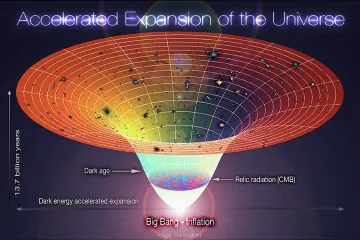
The universe's current shift—its expansion—is not just an interesting historical artifact; it informs our understanding of its fate. [6] The rate of expansion is governed by the total energy and matter content of the universe, including the mysterious component known as dark energy. [6] Dark energy is hypothesized to be the driving force behind the accelerating expansion that many observations currently suggest. [6]
If the universe continues to expand at an accelerating rate due to dark energy, the shift experienced by future observers will become increasingly severe. [6] Light from all but the nearest galaxies will be stretched further and further, eventually shifting completely out of the observable spectrum, moving into the deep infrared or beyond, making those distant objects effectively invisible to future civilizations, regardless of their technological capability to gather faint light. In essence, the continued, accelerating redshift suggests a future of increasing isolation for gravitationally unbound structures. [6]
To better appreciate the sheer scale of this stretching, consider a hypothetical reference point. If a galaxy emitted light that was perfectly green (around 550 nm) when it left the source, and we measure it today as redshifted by , that means the wavelength has doubled. [1] The intervening space stretched the light from 550 nm to 1100 nm—pushing it from the visible green part of the spectrum well into the near-infrared region. [1] This doubling of the wavelength due to the expansion over billions of years is what we quantify when we state the universe is currently in a state of rapid, large-scale recession indicated by redshift. The very act of observing light from the most distant regions of space provides a direct measurement of how much the universe has expanded while that light was in transit. [6] This makes redshift a remarkable cosmic clock and ruler, tied intrinsically to the dynamic geometry of spacetime itself. [3][6]
#Videos
Why Is The Universe Expanding? Red-Shift & Doppler Effect ...
Related Questions
#Citations
Redshift - Wikipedia
How do scientists know that the red shift means the universe is ...
ESA - What is 'red shift'? - European Space Agency
Why Is The Universe Expanding? Red-Shift & Doppler Effect ...
Redshift and blueshift: What do they mean? - Space
The Expanding Universe: Doppler Shift To Dark Energy
Redshift - Las Cumbres Observatory
Light from distant galaxies is stretched by the expansion of the ...
Doppler Effect & Redshift - Origins: Hubble: Tools - Exploratorium