What star existed before the universe?
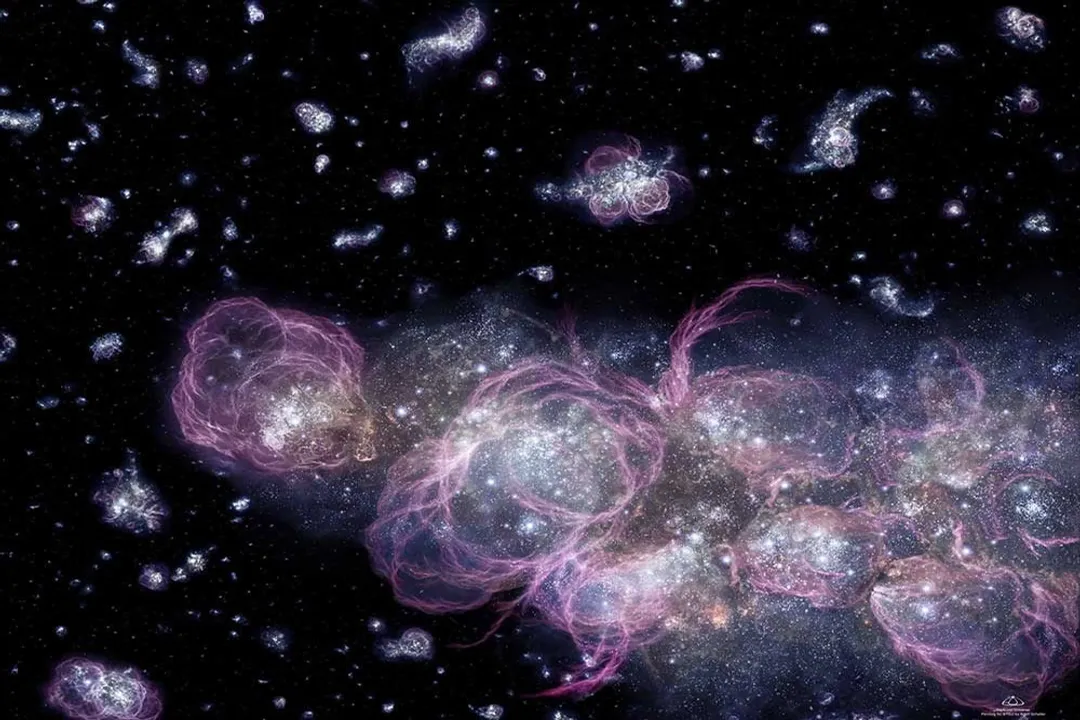
The notion that a star could predate the entire observable cosmos challenges the very foundation of our understanding of time and creation. When scientists calculate the age of certain ancient celestial bodies, the results sometimes suggest an age greater than the generally accepted age of the universe itself, prompting fascinating—and potentially alarming—questions about cosmic history. This apparent chronological impossibility centers around a specific star, often nicknamed the Methuselah Star, whose estimated lifespan seems to stretch back further than the Big Bang.
# Star Identity
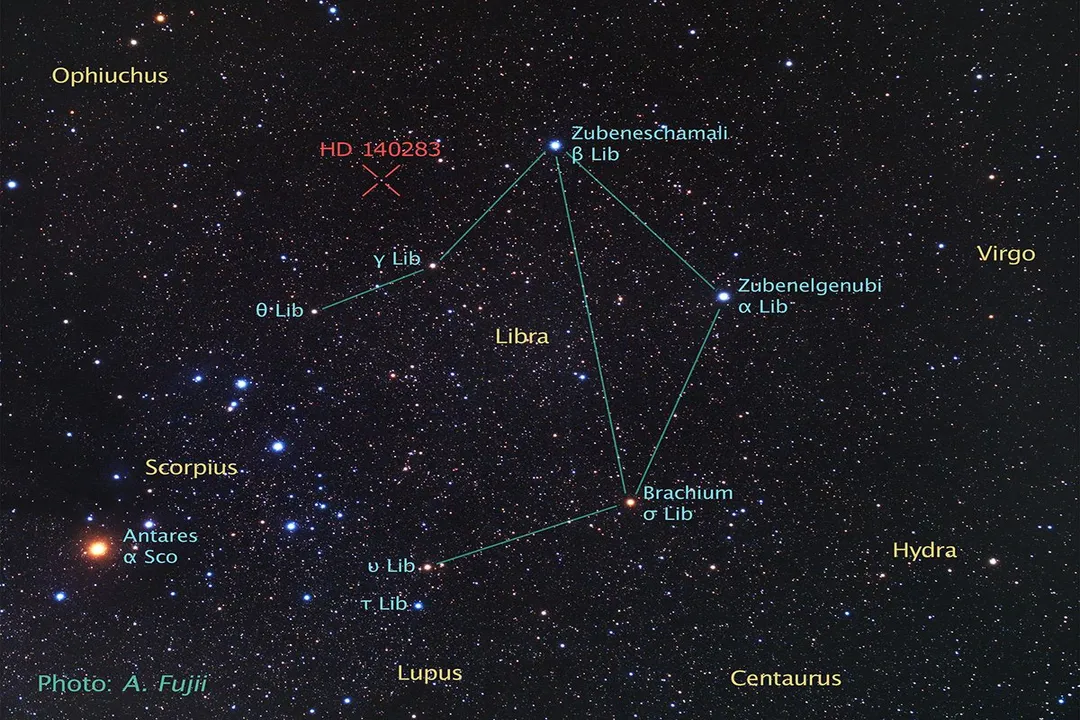
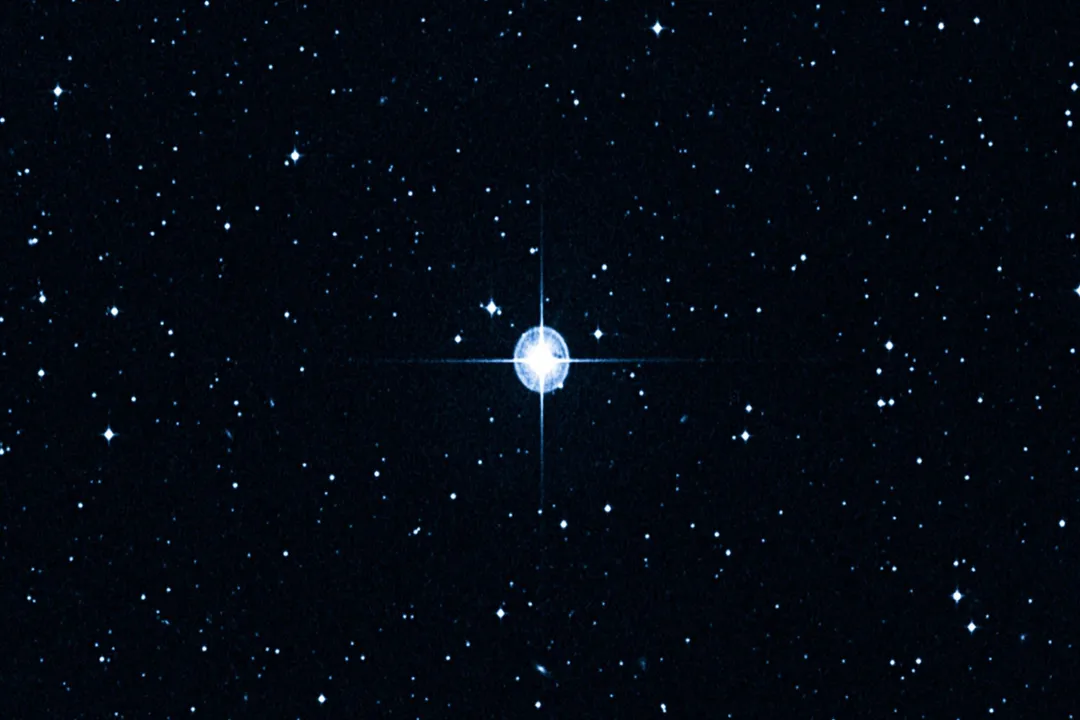
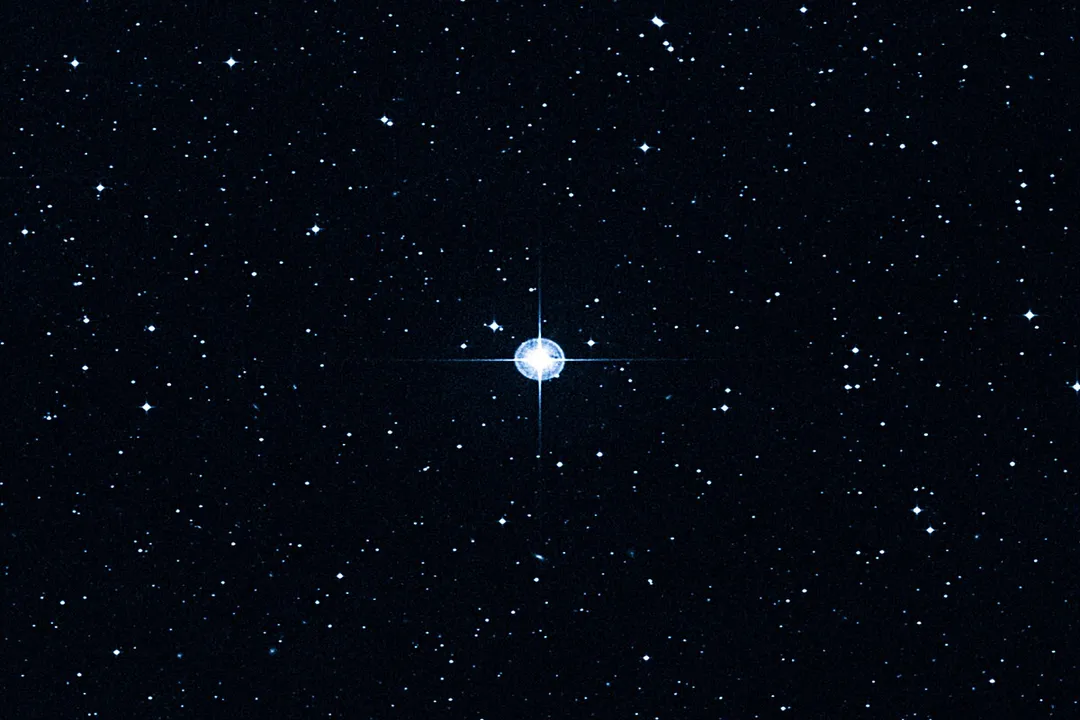
The object in question is formally cataloged as HD 140283. It is a celestial relic, a low-mass, metal-poor star located about 190 light-years away in the constellation Libra. Stars like this are generally categorized as Population II stars, meaning they formed long ago from gas clouds that already contained trace amounts of heavier elements—the remnants from the first generation of stars that lived and died. They are incredibly valuable because their low metallicity acts as a timestamp, indicating they were forged when the universe was still very young.
HD 140283 is currently in the subgiant phase of its evolution, moving off the main sequence toward becoming a red giant. Its extremely old age estimate is what created the headline controversy. Initial observations and modeling suggested the star was around $14.5$ billion years old, with an uncertainty of about $0.8$ billion years. Given that the universe itself, according to the standard cosmological model, began approximately $13.8$ billion years ago, a star that is $14.5$ billion years old simply cannot exist within it.
# Age Factors
The discrepancy isn't typically taken as evidence for a universe preceding our current one, which would require a radical revision of cosmology. Instead, it serves as a powerful illustration of the difficulty inherent in measuring cosmic distances and stellar properties with perfect accuracy. The age calculation for a star like HD 140283 is not a direct measurement; it is derived from several dependent variables, each carrying its own degree of uncertainty.
Key factors influencing the calculated age include:
- Distance: The star's luminosity—and thus its intrinsic age—is heavily dependent on how far away it is. If the star is slightly closer than currently estimated, it must be slightly younger to account for the observed light.
- Oxygen Abundance: Early models struggled with the precise metallicity, particularly the amount of oxygen present. Oxygen affects the star's opacity, which dictates how quickly it burns fuel and, therefore, how old it appears.
- Internal Structure: Models for stellar evolution are complex, relying on assumptions about the star's initial mass and its rate of core convection.
When astronomers refined these measurements, the age estimate for the Methuselah Star began to shrink closer to the universe's actual age. Newer, more precise measurements, potentially informed by data from advanced telescopes, suggest an age that is highly compatible with the $13.8$ billion-year timeline, even if the margin of error still places the upper bound slightly above it. For instance, an age of billion years means the youngest plausible age for the star is about $13.66$ billion years, which places it firmly after the Big Bang. The remaining slight overweighting in the maximum estimate usually points toward subtle remaining issues in the input parameters, like the precise distance measurement.
It is fascinating to consider the precision required for this measurement. If we state the universe is $13.8$ billion years old, and a star's age has a statistical uncertainty range of billion years, the true age could be anywhere between $13.0$ billion and $14.6$ billion years. This means that the entire controversy hinges on which end of the error bar you focus on—a statistical quirk rather than a physical impossibility.
# First Lights
While HD 140283 appears to be one of the oldest stars, it is not the first star. The very first stars, known as Population III stars, formed only a few hundred million years after the Big Bang. These pioneers were fundamentally different from the Methuselah Star.
Population III stars were born from the nearly pristine gas left over from the Big Bang—primarily hydrogen and helium. Without the "metals" (elements heavier than helium, created by prior stellar nucleosynthesis), their internal physics changed dramatically. They are theorized to have been significantly more massive than modern stars, perhaps reaching hundreds of solar masses. Because they were so large, they burned through their fuel incredibly fast, living short, spectacular lives lasting only a few million years before exploding as hypernovae.
These initial massive explosions were necessary because they were the forging mechanism for the first heavy elements. It was only after these first giants died that subsequent generations of stars, like the metal-poor Population II stars such as HD 140283, could form, enriched by the debris of their predecessors. Therefore, the existence of HD 140283 confirms the established cosmic timeline: the universe had to exist long enough for the first generation of stars to form, live, and seed the cosmos with the elements required for the Methuselah Star to be born.
# Timeline Resolution
The primary lesson from the Methuselah Star saga is not that a star existed before time began, but rather a confirmation of the iterative nature of astrophysical modeling. Every measurement—distance, temperature, chemical composition—is a best guess based on current physical laws and instrumentation. When the calculated age of a star exceeds the age of the cosmos, it signals that our model or measurement needs tuning, not that the universe itself is fundamentally older than calculated.
Considering the incredible distances involved, slight errors in parallax measurements (used to determine distance) cascade into large errors in age estimation. If the calculated distance to HD 140283 were adjusted by a fraction of a percent, the derived age would easily align with the Hubble constant measurement of the universe's age. Astronomers routinely look for stars like this because they act as natural stress tests for stellar evolution theory and cosmological constants. If we were to find a star whose age, even accounting for all measurement uncertainty, definitively landed above $13.8$ billion years, it would signal a crisis, perhaps forcing a re-evaluation of the expansion rate of the universe itself.
For the general observer, this entire debate provides a striking example of scientific self-correction. Sensational headlines focus on the "older than the universe" angle, but the scientific community immediately pivots to uncertainty analysis. The fact that these ancient stars are found relatively close to us—in galactic terms—means we have better data for them than for stars deeper in the early universe, making them essential test subjects for validating how the universe aged from its first moments to the birth of these ancient suns. They are anchors in cosmic history, helping us calibrate the very clock of creation.
Related Questions
#Citations
List of oldest stars - Wikipedia
The Methuselah star seems to be 700 million years older ... - Facebook
Methuselah: The oldest star in the universe | Space
Why (or how) is the age of the Methuselah Star older than ... - Reddit
Is it true that a star known as “Methuselah star” existed before the ...
“Monster Stars” existed in the early universe - Astronomy Magazine
Could the Methuselah star be evidence that there was a universe ...
What Were the First Stars Like? - NASA Science