What is a star that has collapsed into itself?
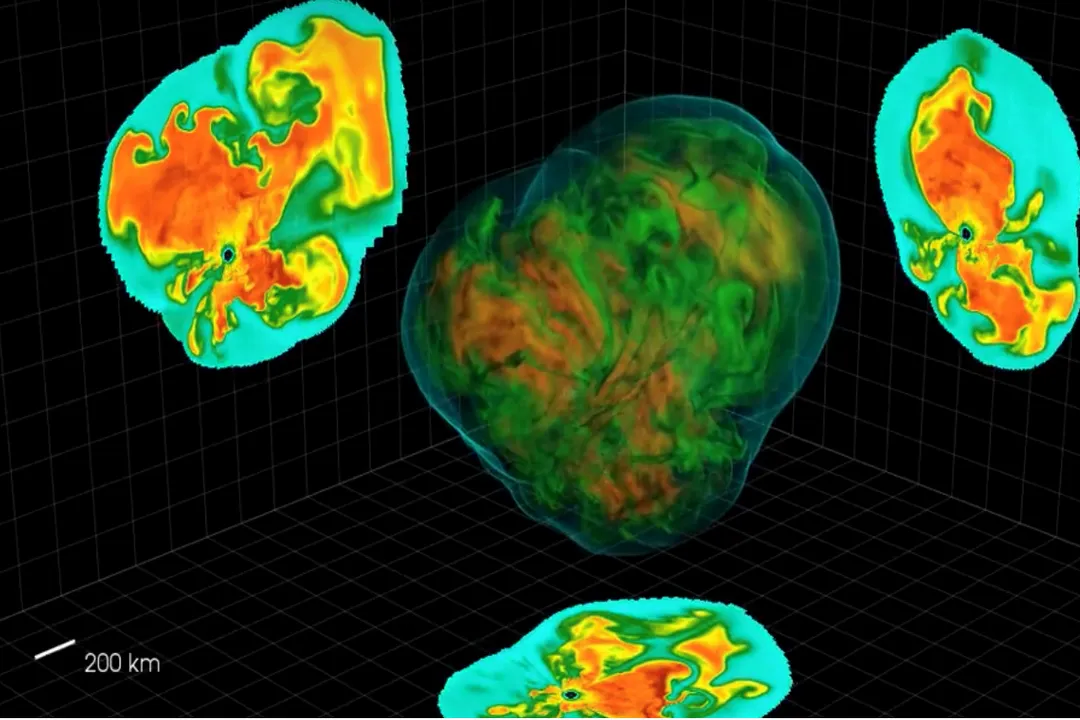
The question of what happens when a star collapses into itself relates directly to the violent, dramatic end of stellar life, a process dictated almost entirely by the star's original mass. When a star exhausts the nuclear fuel in its core—the hydrogen that burns into helium, and the subsequent fusion of heavier elements up to iron—it loses the outward pressure needed to counteract its own immense gravity. Iron cannot be fused to release energy, effectively hitting a dead end in the star's internal furnace. This loss of thermal support causes the stellar core to rapidly collapse inward, a phenomenon known as a core-collapse supernova.
# Stellar Demise
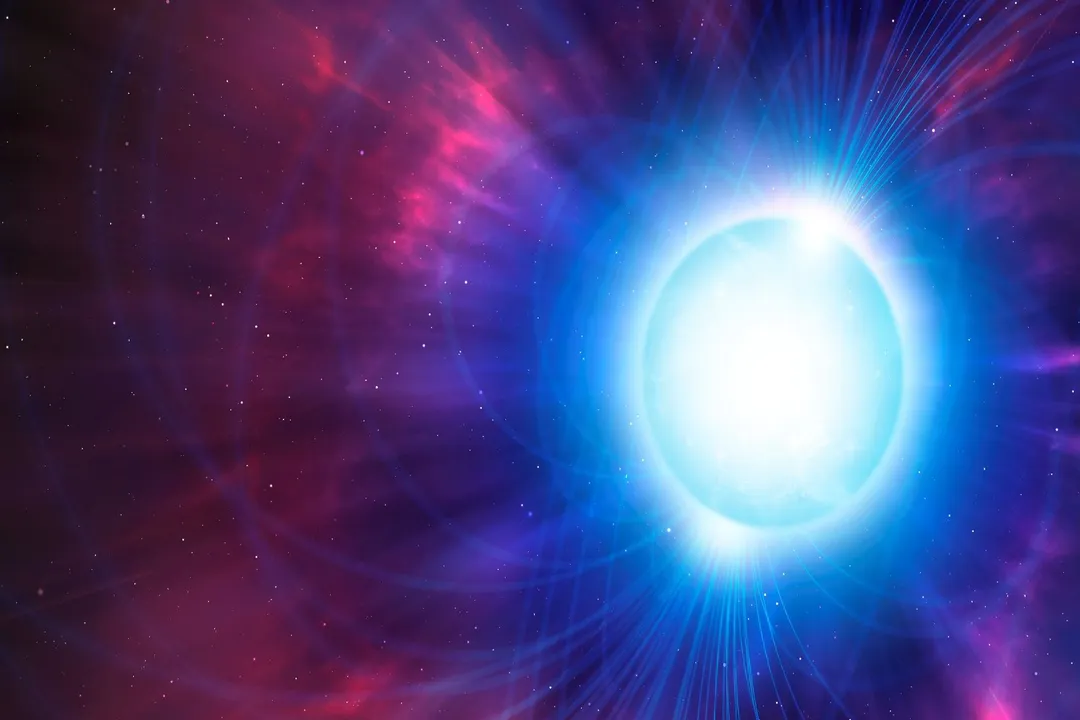
A star spends most of its life in a delicate equilibrium, where the outward pressure generated by thermonuclear fusion balances the relentless inward pull of gravity. When the fusion stops, gravity wins the battle instantly, causing the stellar material to fall inward at incredible speeds, sometimes reaching 70,000 kilometers per second. This catastrophic implosion is what we call a supernova explosion.
The collapse itself triggers a shockwave that rebounds off the ultra-dense core, blasting the star's outer layers into space at tremendous velocities, scattering newly forged heavy elements across the cosmos. What remains behind—the stellar corpse—is one of the most exotic objects known in the Universe. The specific identity of this remnant depends entirely on how much mass is left behind after the explosion jettisons the outer layers.
# Mass Thresholds
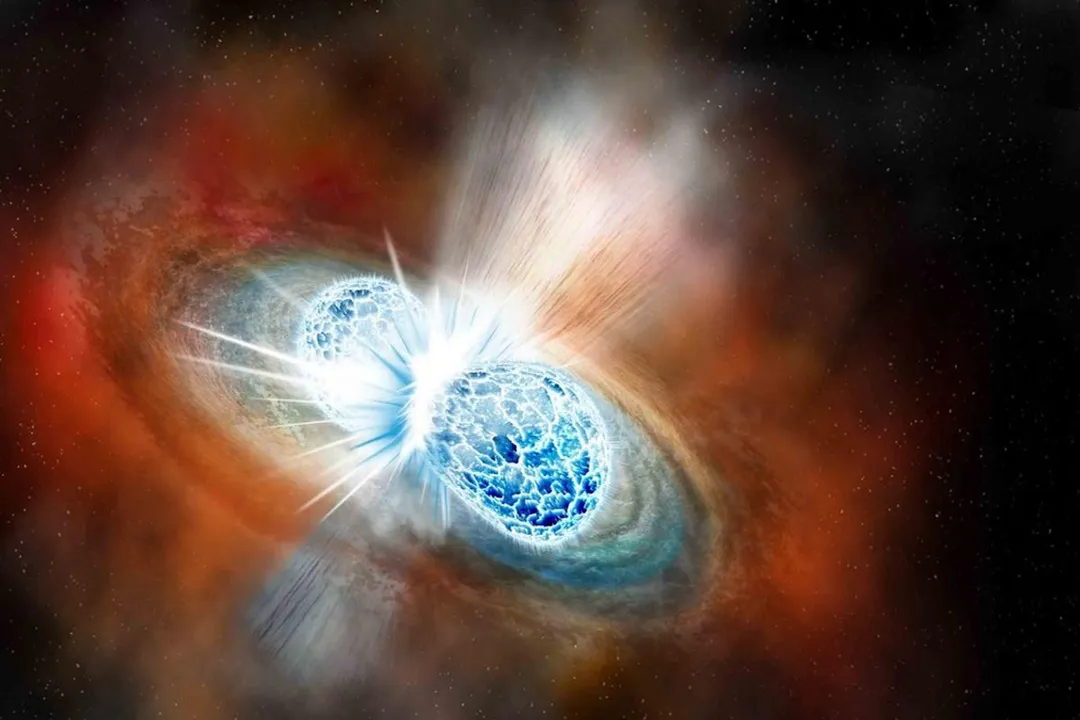
The fate of a collapsing star is written in its initial mass, long before the core runs out of fuel. Stars less massive than about eight times the mass of our Sun usually end their lives more gently, perhaps shedding their outer layers to become a planetary nebula, leaving behind a white dwarf. However, for stars significantly heavier than the Sun, the core-collapse pathway is initiated.
There are crucial mass limits that determine the next step. In general astrophysics, the Chandrasekhar limit—approximately $1.4$ times the mass of the Sun ()—is the maximum mass a degenerate electron pressure can support, a concept relevant to the remnants of smaller stars or the core of a collapsing giant.
When a massive star's core collapses, if the remnant mass is between about and a few solar masses (the precise upper bound is still debated, but often cited around $2$ to ), the collapse halts when the material is compressed so tightly that the resistance of neutrons—neutron degeneracy pressure—takes over. This forms a neutron star.
If the mass of the collapsing core exceeds this upper threshold, even the immense pressure exerted by neutrons cannot stop gravity. In this scenario, the collapse continues unchecked, crushing the matter down to an infinitely small point of infinite density, creating a black hole. Interestingly, some observations suggest that very massive stars might bypass the typical supernova mechanism entirely, collapsing directly into a black hole without a spectacular, traditional explosion.
# The Neutron Star
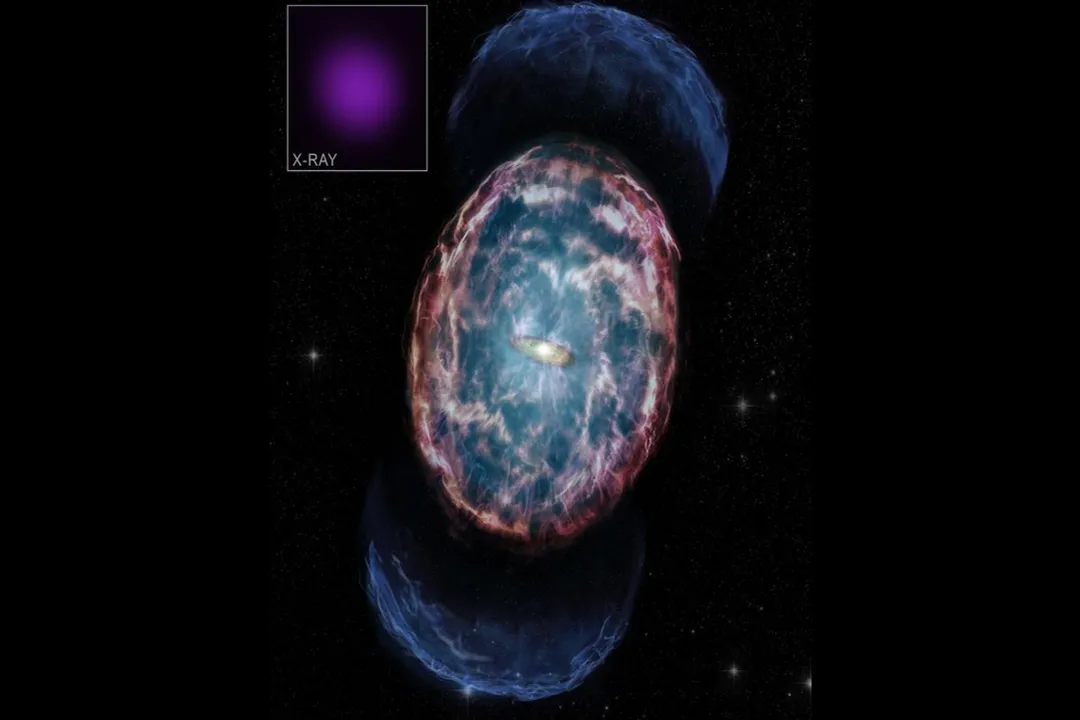
A neutron star is perhaps the most remarkable type of object formed from a star that has collapsed into itself. These remnants originate from supernovae involving stars roughly eight to twenty times the Sun's mass.
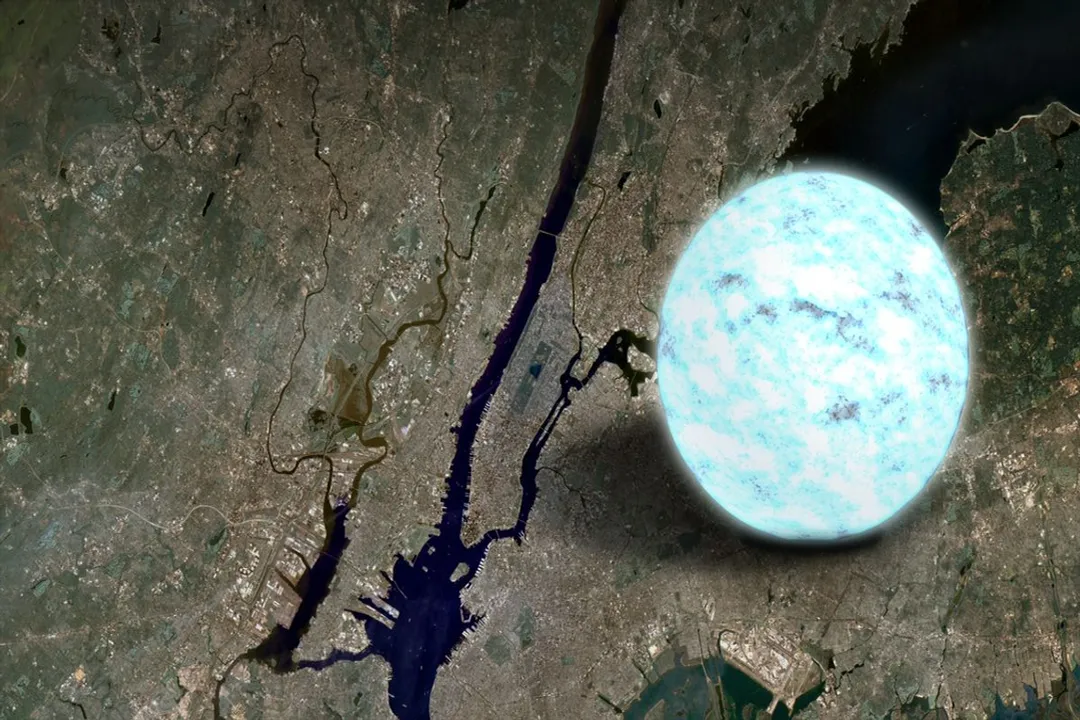
The density achieved in a neutron star is almost incomprehensible. The entire mass of a star several times that of the Sun is compressed into a sphere only about $20$ kilometers (or $12$ miles) across—roughly the size of a metropolitan city. To give a sense of this extreme compaction, a single teaspoon of neutron star material would weigh billions of tons on Earth. This is because the immense gravitational pressure has forced protons and electrons to combine, leaving the core almost entirely composed of neutrons packed tightly together.
Imagine a cosmic density chart: normal matter is like fluffy cotton candy; a white dwarf is denser, like a massive skyscraper compressed into a sugar cube; but a neutron star is far beyond that, representing matter pushed to its absolute physical limit before yielding to a black hole. Although they are tiny in astronomical terms, they are incredibly heavy. A typical neutron star might contain $1.5$ times the mass of our Sun confined to a sphere only $20$ kilometers wide.
# Black Hole Formation
When the core of the collapsing star is too heavy—surpassing the stability limit for neutron degeneracy pressure—the collapse does not stop at the neutron star stage. Gravity overwhelms all known forces, and the core shrinks to a singularity, a point of infinite density, encased by an event horizon from which nothing, not even light, can escape. This is the birth of a stellar-mass black hole.
# Heavy Element Creation
The processes resulting in these collapsed objects are not just about stellar death; they are fundamental to cosmic chemistry. Supernovae explosions are the primary factory for most elements heavier than iron on the periodic table. The immense energy released during the core collapse and subsequent explosion provides the necessary conditions for rapid nuclear reactions to forge these heavier elements.
There is an even more energetic process hinted at by recent astronomical findings: the superkilonova. While a typical supernova involves the death of a single massive star, a superkilonova might be linked to the merger of two incredibly dense objects, such as two neutron stars, or perhaps an extremely energetic collapse event. Such cataclysmic events are thought to be the main sites for the creation of the heaviest elements in the universe, including gold and platinum. The detection of a phenomenon that might be a superkilonova offers a real-world laboratory for testing these extreme physics scenarios involving collapsed stellar matter.
# Comparing Collapse Fates
The final state achieved after stellar collapse is a direct consequence of the mass remaining after the fuel runs out. We can summarize the outcomes based on the mass of the collapsing core remnant:
| Core Mass (Relative to Sun) | Remnant Object | Governing Pressure |
|---|---|---|
| White Dwarf | Electron Degeneracy Pressure | |
| to | Neutron Star | Neutron Degeneracy Pressure |
| Black Hole | None (Unstoppable Collapse) |
What is particularly fascinating from a modern physics perspective is the observational link between these events. For decades, supernova remnants and black holes were inferred from their energetic explosions or gravitational effects. Now, with gravitational wave detectors, scientists can "hear" the violence of a neutron star merger—an event closely related to the formation and fate of neutron stars—providing direct empirical evidence about the density and composition of these collapsed bodies. This ability to observe both light (electromagnetic radiation) and ripples in spacetime (gravitational waves) from these extreme events allows us to constrain the physics governing the exact point where a star's core yields to gravity, whether it settles as a neutron star or plunges into a black hole. The contrast between a star ending as a stable, albeit incredibly dense, neutron star versus disappearing entirely behind an event horizon illustrates a profound difference in the universe's final gravitational ledger.
The mechanics of collapse present an ever-present challenge to our understanding of matter. Even if a star collapses and forms a neutron star, the physics governing its stability is determined by the interplay of gravity and the strong nuclear force resisting compression. This makes the region just above the upper mass limit for a neutron star one of the most active areas of theoretical astrophysics, as it represents the razor's edge between two fundamentally different final states of collapsed stellar matter.
#Videos
How Do Supernovae Fail? When Stars Just... Implode Directly Into ...
Related Questions
#Citations
ELI5 : what does it mean when someone says that " Star collapsing ...
First-Ever Superkilonova May Have Been Spotted in Bizarre Star ...
Core Collapse Supernovae - gravitationalwaves – Syracuse University
Neutron Stars - Imagine the Universe! - NASA
Neutron stars are the collapsed cores of massive stars ... - Facebook
DOE Explains...Supernovae - Department of Energy
What are neutron stars? - Space
How Do Supernovae Fail? When Stars Just... Implode Directly Into ...
Why do medium mass stars collapse to form supernovae while more ...