How do Galileo's observations of Jupiter's moons support the heliocentric model of the universe?
The revolution in understanding our place in the cosmos did not arrive solely through abstract mathematics or philosophical debate; it required hard, observable evidence. For centuries, the accepted framework for the universe was the geocentric model, championed by Ptolemy, which placed the stationary Earth immovably at the center of all celestial motion. [5] Every known body—the Moon, the Sun, the planets, and the supposed crystal spheres—was obligated to orbit our world. [7][9] When Galileo Galilei turned his newly refined telescope skyward in early January of 1610, he captured a sight that shattered this foundational belief: four new “stars” orbiting the planet Jupiter. [1][2]
# The New Tool
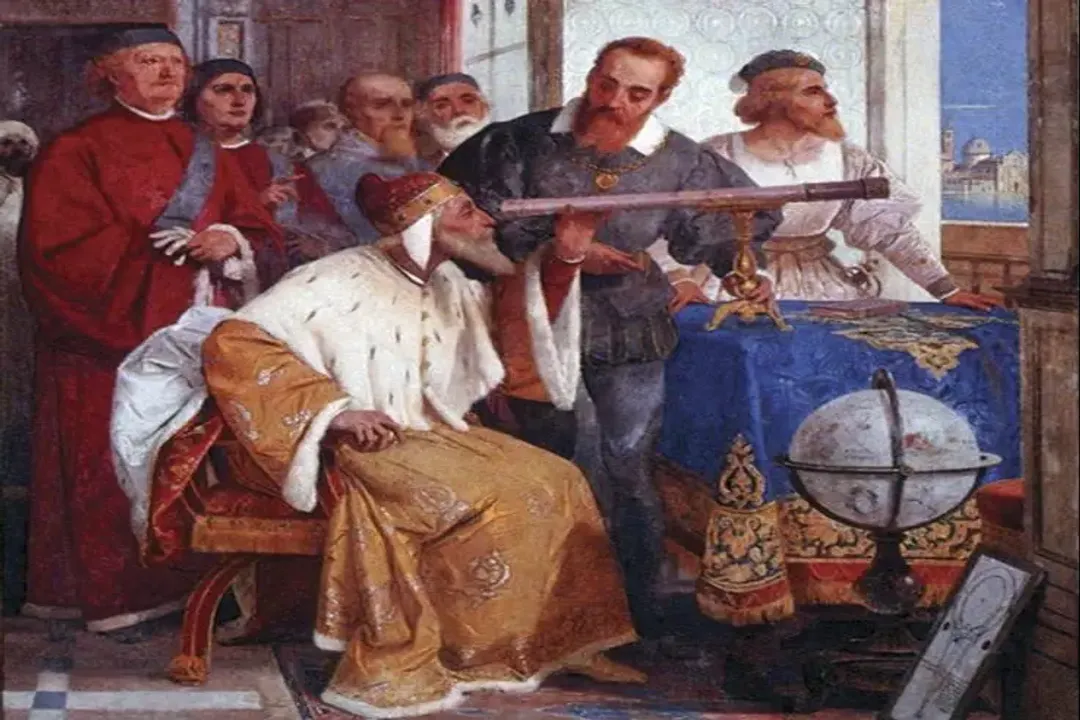
The critical enabler for this world-changing observation was not just intellectual curiosity but technological advancement. While the concept of the universe being centered on Earth was deeply ingrained, it had always rested on naked-eye observation, which showed the Sun, Moon, and stars moving across our sky. [8] Galileo’s instrument allowed him to see phenomena previously hidden. By using a telescope, he could observe objects far fainter and farther away than ever before, providing an empirical basis for astronomical claims. [8]
# Lunar Companions
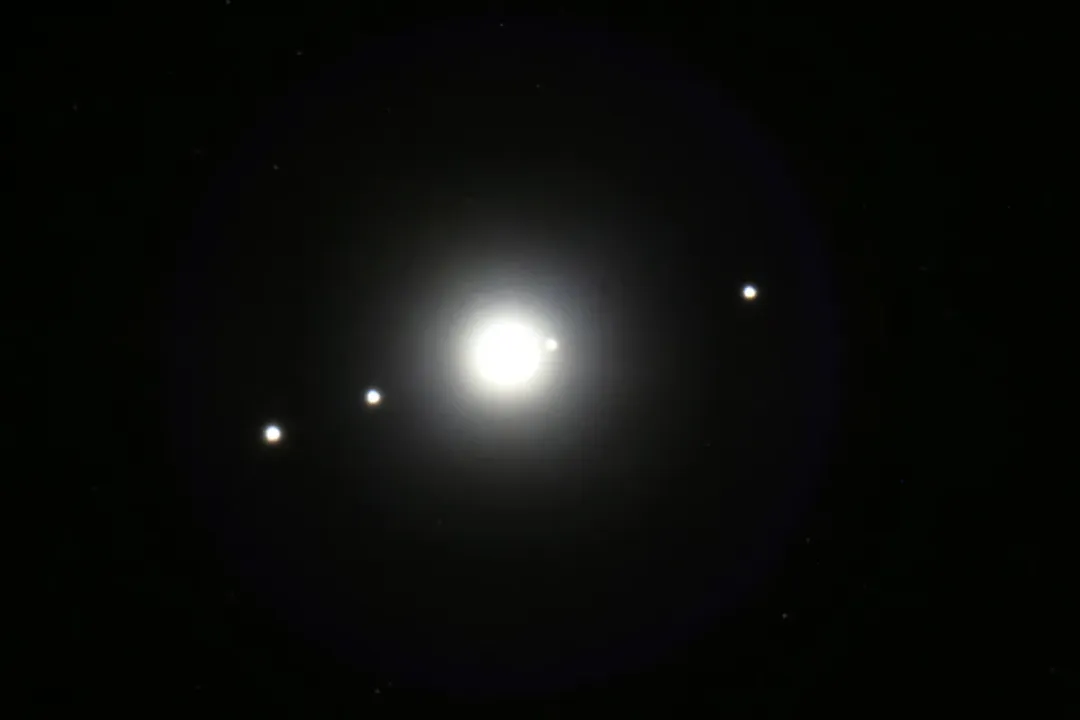
In January 1610, Galileo began meticulously observing Jupiter, charting the positions of several small, starlike objects near it. [1] Within a few nights, he realized these points of light were not fixed stars; they were moving in coordination with Jupiter itself. [4] He tracked these moving objects as they passed in front of or behind the giant planet. [1] He initially named them the Medicean Stars after his patron, Cosimo II de' Medici, Grand Duke of Tuscany. [1] These were the first moons discovered orbiting a planet other than Earth.
It is essential to recognize the immediate, tangible difference this made. If one looked at the sky through an ancient instrument or with the naked eye, everything appeared to move around the viewer. Galileo’s telescope provided a miniature, observable system right there in the heavens—Jupiter and its entourage—that operated entirely independent of Earth’s motion. [4]
# Challenging Earth Center
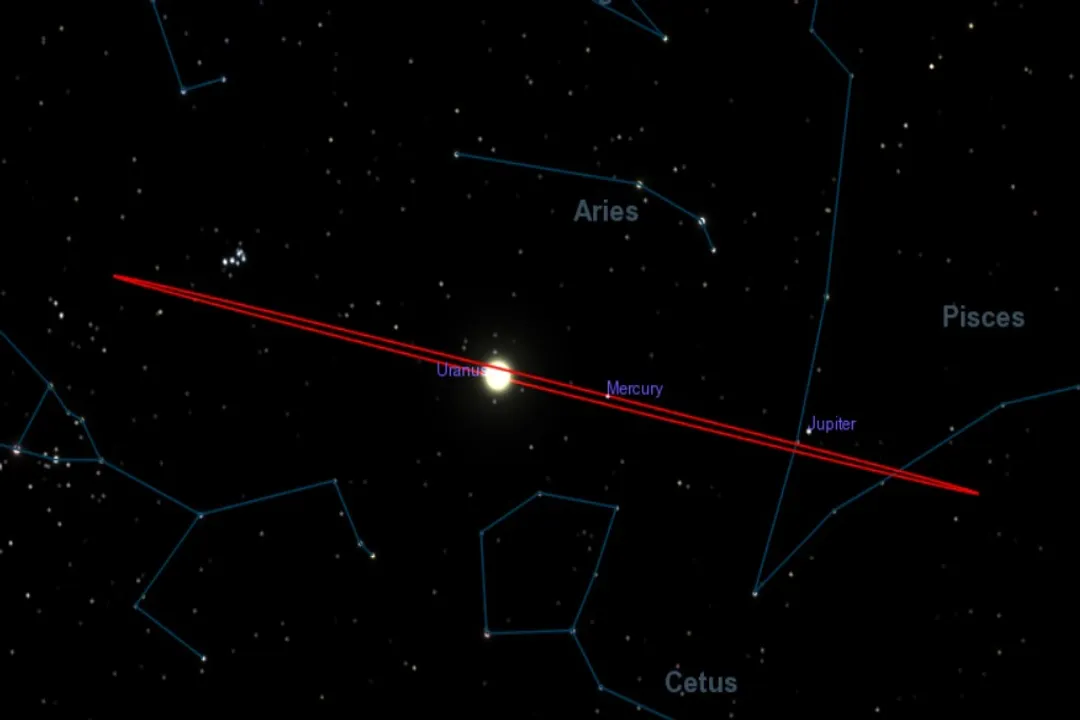
The existence of Jupiter's moons presented a direct, physical contradiction to the primary assertion of the geocentric system. [7] The Ptolemaic view mandated that all celestial motion must center on the Earth. [2][9] If the Earth was the center of everything, how could there be satellites clearly revolving around Jupiter? This observation demonstrated that the Earth was not the fixed, singular center point around which every other object in the heavens revolved. [7] The observation wasn't a theoretical argument; it was a verifiable fact that could be checked by anyone with a comparable telescope. [1][2]
Consider this practical implication: For a geocentric model to account for Jupiter’s moons, it would require an incredibly complicated, multi-layered system of epicycles and deferents just for that one planet and its four companions, effectively modeling the moons orbiting Earth while Jupiter orbits Earth. The Copernican view, by contrast, simply described the moons orbiting Jupiter, which in turn orbits the Sun, requiring far less convoluted mathematics to explain the observations. [5] The pattern Galileo saw was intrinsically non-Earth-centric. [9]
# Supporting the Sun Center
The heliocentric model, proposed by Copernicus centuries earlier, placed the Sun at the center of the solar system. [5] In this arrangement, the planets orbit the Sun, and the Moon orbits the Earth. The Earth is in motion, orbiting the Sun along with the other planets. [5]
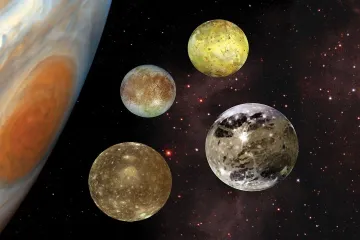
Galileo’s discovery of Jupiter’s moons fit this structure perfectly. If the Sun is the center, then it is entirely natural for other centers of motion to exist. Jupiter acts as its own small center for its satellites, just as the Earth acts as a center for its single moon. [4][7] The discovery provided strong, tangible proof supporting the general idea that celestial bodies could orbit other bodies besides Earth, making the heliocentric arrangement plausible where the geocentric one became practically impossible to maintain without extreme, unsupported complexity. [5] The orbits of the four major moons—now known as Io, Europa, Ganymede, and Callisto—could be tracked, showing a regular period of revolution around Jupiter. [1]
This immediate visual confirmation offered a crucial data point that philosophical arguments alone could not supply. While Copernicus relied on mathematical elegance and simplifying the observed retrograde motion of Mars, Galileo provided the first direct, irrefutable proof that Earth was not the universal anchor of motion. [8] The discovery acted as the first major empirical nail in the coffin for the dominant cosmological view.
# Scale and System
Looking at Jupiter and its moons through the telescope provided a stunning visual analogy. It effectively offered humanity a "Solar System in miniature". [4] While the Earth-Moon system was familiar, seeing four distinct objects held in orbit by a single, distant primary body (Jupiter) allowed observers to grasp that gravity and orbital mechanics were universal principles, not forces unique to the Earth-Moon pair.
This realization shifts the perspective significantly. It moves the focus away from who is central and toward how things orbit. If Jupiter can hold four moons, then the Sun, being vastly more massive, can certainly hold the Earth and the other planets in orbit. [6] The local motions observed around Jupiter validated the concept of a subordinate orbit, a concept required by the heliocentric model but fundamentally excluded by the geocentric one.
# From Belief to Proof
One of the most significant contributions of Galileo’s work was facilitating a shift in how scientific authority was established. Before the telescope, astronomy often relied on established tradition and authority, primarily the writings of Aristotle and Ptolemy. [7] Disproving this required extraordinary justification.
Galileo’s observations shifted the axis of scientific authority from ancient texts to verifiable observation. [8] The four Jovian moons were not theoretical constructs derived from complex mathematics intended to save appearances; they were seen moving night after night. [1] This concrete evidence created a clear demarcation: those who accepted the new evidence, regardless of tradition, were aligning with the Copernican, Sun-centered view, while those who denied the observation or tried to force it into the old system were prioritizing dogma over reality. [5] This event powerfully championed the method of direct, repeatable experimentation in the sciences. [8] It taught that seeing is not just believing, but that seeing is the basis for knowing, especially when what is seen contradicts what was previously held as self-evident truth. [9] The shadow cast by Jupiter onto its moons, or the moons passing in front of Jupiter, provided visual confirmation that orbital paths were being followed, just as the Earth followed its path around the Sun. [4]
The discovery was not the final proof of heliocentrism—that would require further work, including observations of the phases of Venus, which were also facilitated by the telescope—but it was the necessary first major crack in the edifice of the geocentric universe. It made the Sun-centered model the only mathematically and observationally economical explanation for the cosmos, suggesting a universe governed by shared, universal laws rather than one designed solely around the circumstances of the Earth. [7][9]
Related Questions
#Citations
410 Years Ago: Galileo Discovers Jupiter's Moons - NASA
Galileo Discovers Jupiter's Moons - National Geographic Education
How did Galileo's discovery of Jupiter's moons support the ... - Brainly
Galileo's observations of Jupiter changed our view of the Universe
How did Copernicus & Galileo prove the Heliocentric model? - Reddit
PHYS_1404: Solar System; CHP 2 HW Flashcards | Quizlet
Were Jupiter's Moons Evidence for a Sun-centered Universe?
Why Did Galileo Need a Telescope to Discover the Moons of Jupiter?
Why did Galileo's observations of Jupiter's moons disprove ... - Quora