When did Galileo discover the Moon has craters?
The realization that the Moon, our constant celestial companion, was not the perfectly smooth, ethereal orb that philosophers had long believed came through the lens of a newly refined optical instrument, directed by the keen eye of Galileo Galilei. This was a monumental shift in understanding the cosmos, moving observation away from ancient doctrines toward empirical evidence gathered through technology. The discovery that the Moon was blemished—marked by mountains and deep, circular depressions now recognized as craters—happened when Galileo turned his newly improved telescope skyward, likely around 1609 or 1610.
# Ancient View
For centuries, the prevailing cosmological model, heavily influenced by Aristotle, dictated that the celestial bodies were perfect, unchanging spheres made of a flawless substance called aether. The Moon, being heavenly, was expected to conform to this standard of smoothness and incorruptibility. Early naked-eye observations supported this view; the Moon appeared as a uniformly lit disc, with dark patches that were interpreted as shadows or inherent color variations, but not topographical features. Even after telescopes began to appear, early users often attributed the Moon's surface irregularities to optical illusions or atmospheric effects, not realizing the true, rugged nature of the object they were viewing.
# Optical Tool
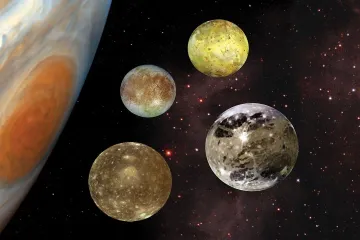
Galileo’s genius was not in inventing the telescope—that credit belongs to spectacle makers in the Netherlands—but in being among the first to systematically aim it at the heavens and document what he saw with unprecedented rigor. His instrument, which he continually refined, provided magnifications sufficient to start resolving surface details that were entirely invisible to the naked eye. This technical advancement was the key that unlocked the Moon's secrets. The period coinciding with these critical lunar observations also involved him looking at Venus, which exhibited phases similar to the Moon, and observing the four largest satellites orbiting Jupiter—the famous Galilean moons.
# Shadow Play
The breakthrough moment for discerning the Moon’s topography came not from simply seeing brighter or darker spots, but from understanding how light interacted with its surface near the line dividing day and night—the terminator. When the Moon is less than full, the sun strikes its surface at a very low angle near the terminator. If the surface were perfectly smooth, this low-angle light would produce a clean, sharp division between light and shadow.
However, Galileo observed something different: rugged, elongated shadows projected by features that rose above the surface. These shadows appeared much longer and more pronounced than they would on a flat plane. By observing how these shadows changed as the Moon progressed through its phases, Galileo could deduce the existence of mountains casting them. This method of using shadows to measure elevation provided concrete proof that the Moon was a world of peaks and valleys, much like Earth.
It is important to note the evolution of terminology here. While initial observations pointed to mountains casting these shadows, the depressions causing the dark spots were eventually identified as the craters we know today, making Galileo the first person to clearly view these lunar surface features. This observation directly contradicted the ancient belief in celestial perfection.
# Publishing Findings
Galileo compiled his revolutionary astronomical findings, including his observations of the Moon’s topography, in a short Latin treatise published in 1610 called Sidereus Nuncius (The Starry Messenger). This text served as the first public announcement of his telescopic discoveries. The book's impact was immediate and profound, challenging established physical and philosophical assumptions about the nature of the universe.
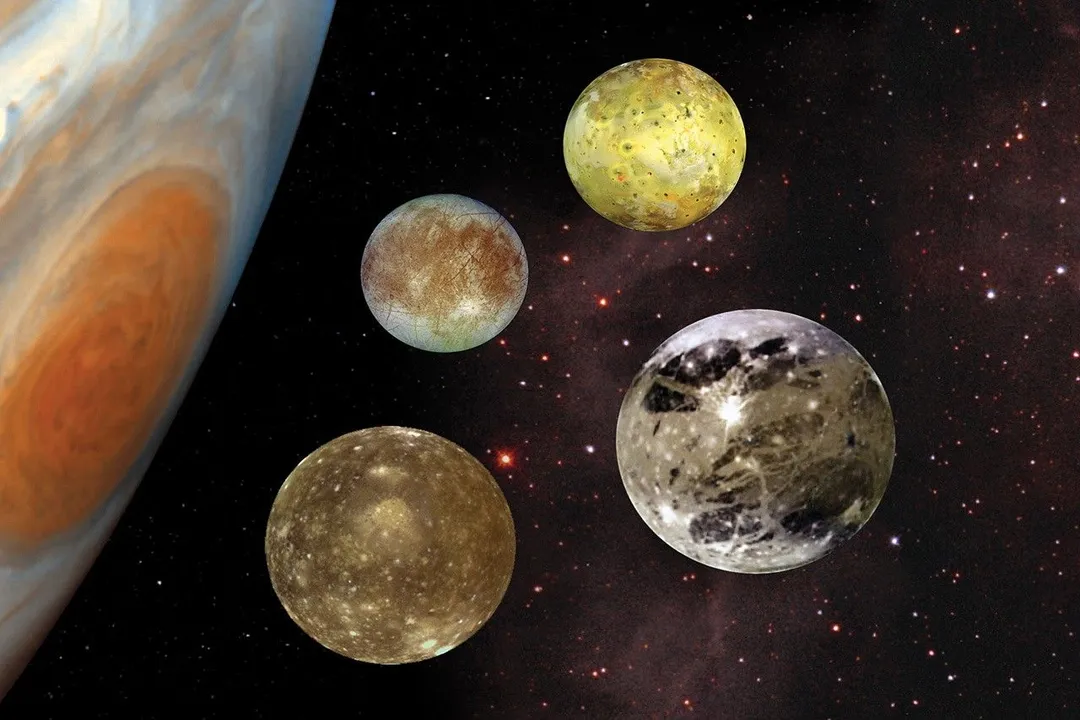
While the book is perhaps most famous for detailing the discovery of Jupiter’s four largest satellites (Io, Europa, Ganymede, and Callisto), the clear mapping of the Moon’s imperfections laid the groundwork for modern selenography—the scientific study of the Moon's surface. His drawings and descriptions provided the first scientific data set of the Moon’s true geography.
# Surface Features Detail
The features Galileo noted were not just randomly scattered bumps. His telescopic examinations revealed that the dark areas on the Moon were not smooth plains of mare (seas), as was sometimes theorized, but were actually vast, sunken regions surrounded by highlands. The bright areas, conversely, were revealed to be elevated terrain.
When comparing the visual evidence from the terminator with the Moon viewed fully illuminated, the contrast was stark. Near the center of the full moon, shadows were minimized, making the terrain look relatively uniform, which explained why ancient observers missed the irregularities. It was only by carefully observing the terminator, where the grazing light enhanced the relief, that the true ruggedness became undeniable. The presence of these features—mountains and craters—was tangible proof that the heavens were not made of a different, perfect substance, but shared physical characteristics with our own terrestrial world.
The ability to map these features based on light and shadow demonstrates an early form of remote sensing, where inference about three-dimensional structure is made from two-dimensional data—a skill essential for any astronomer working without direct physical access to the object.
# Astronomical Context
It is worth placing this lunar work into the context of Galileo’s other contemporaneous telescopic observations, as they collectively dismantled the Ptolemaic worldview. While studying the Moon, Galileo was also looking at Venus. He saw Venus go through a full cycle of phases, similar to the Moon. This observation was impossible to explain if Venus orbited the Earth, as Copernicus suggested, but it fit perfectly if Venus orbited the Sun, which in turn orbited the Earth (the heliocentric model). This provided crucial observational support for the Copernican system.
Simultaneously, observing Jupiter and its moons—the objects that now bear his name—showed that not everything in the heavens orbited the Earth. These concurrent discoveries—the Earth-like nature of the Moon, the Sun-centered orbit of Venus, and the Earth-independent orbits of the Jovian moons—created a cascade of evidence that forced a complete rethinking of humanity's place in the universe. The cratered Moon was the first visible crack in the ancient edifice of celestial perfection.
If we were to recreate Galileo’s initial experience today with modern, high-magnification amateur equipment, the sheer detail available might be overwhelming; his challenge was overcoming the optical limitations of his era to discern features that were barely perceptible, perhaps only at the very edges of his visual perception. Imagine the level of optical grinding required to resolve a shadow that could represent a mountain miles high, when the entire image is already somewhat fuzzy and distorted by the primitive lens. That initial glimpse of a shadow being cast across a lunar plain, signaling a feature rising perhaps two miles high, must have felt like peering into a new reality.
Another important perspective arises when considering the relative ease of the observations. Finding the Galilean moons was a matter of patience and charting positions over several nights, confirming motion independent of Earth’s rotation. In contrast, resolving lunar topography required a precise understanding of optics and light, making the discovery of craters a more qualitative astronomical achievement based on interpretation of shape and shadow, rather than just positional tracking.
# Legacy of Imperfection
Galileo’s work, supported by later astronomers who built better instruments, shifted the focus of lunar study from philosophical perfection to topographical mapping. He showed that the heavens were subject to the same processes of creation and decay as Earth, eroding the sharp division between the terrestrial and celestial realms. This paved the way for later scientists who would continue to map the Moon extensively before the Apollo missions revealed the true scale of its impact history. The features he first glimpsed through his telescope are now known to be impact features, formed by collisions over billions of years.
The scientific process Galileo championed—observe, measure, hypothesize, and publish—was as important as the discovery itself. His publication in 1610 did more than just state the Moon had mountains; it established a new methodology for astronomical discovery, one based on empirical evidence gathered through instrumental augmentation. The Moon, once a symbol of serene, untouchable perfection, became a tangible, geological body, forever linked to Galileo’s willingness to trust what his senses, aided by technology, revealed to him.
The precise date of the initial observation remains somewhat elusive, as early telescopic findings were often recorded in notebooks before formal publication. However, the consensus places the definitive viewing and documentation of these surface features squarely within the period immediately following his construction of the telescope, strongly anchoring the discovery to the year 1610 through the publication of Sidereus Nuncius. It was this publication that broadcast the Moon’s ruggedness to the world, forever changing the sky.
Related Questions
#Citations
How Galileo Discovered Mountains On The Moon - Forbes
Galilean moons - Wikipedia
The View from Galileo's Telescope
Galileo's Observations of the Moon, Jupiter, Venus and the Sun
Galileo Galilei - New Mexico Museum of Space History
01. Early Telescopic Observations - Linda Hall Library
Galileo Galilei discovered the Galilean satellites in 1610 - Facebook
Before Apollo: The Scientists Who Discovered the Moon
Galileo first to view moon's craters - Delaware Gazette