What did Galileo use to observe the Moon?
The first tool Galileo Galilei turned toward the heavens that truly changed astronomy was not a massive observatory instrument, but an improved version of a Dutch invention—the telescope. While the technology itself was already known, Galileo’s application and refinement of it were revolutionary, allowing him to peer at celestial bodies, including our own Moon, with unprecedented clarity. To observe the Moon, Galileo relied upon this modified perspicillum, an instrument that transformed the seemingly perfect, distant orb into a tangible world of uneven terrain.
# Improving Sight
Galileo did not invent the telescope, but he took an existing concept and made it work for astronomy. The earliest spyglasses, often used for terrestrial viewing, offered simple magnification, but they generally produced a small, perhaps distorted, image. Galileo recognized the potential for observing the heavens and dedicated time to improving the instrument’s magnification and clarity. This was a significant technical leap; simply having a telescope was one thing, but crafting one capable of resolving fine detail on a distant object like the Moon required expertise in lens grinding and assembly.
It's interesting to consider the necessary leap in optical quality required to see the subtle topographical features Galileo documented. The early Dutch spyglasses were novelty items, but to clearly discern the shadows cast by lunar mountains, Galileo needed an optical train capable of minimizing chromatic aberration and providing a relatively wide, bright field of view. He likely needed a magnification high enough to make the shadows distinct, yet low enough to prevent the image from becoming too dim or wildly distorted—a tightrope walk in early optical engineering.
When he turned this superior instrument skyward, the Moon immediately revealed itself as something other than a smooth, ethereal sphere. He was not the first human to look at the Moon, but he was arguably the first to see its true surface features through magnification.
# Lunar Topography
The most immediate and profound observation Galileo made regarding the Moon was the presence of texture: mountains, valleys, and craters. Before his work, the prevailing philosophical view, rooted in Aristotelian tradition, held that the celestial bodies were perfect, unchanging, and smooth orbs made of a divine substance called aether. Galileo’s telescope shattered this long-held doctrine.
His observations showed that the Moon was scarred, much like the Earth. He saw mountains whose peaks stood out because the sunlit portions of the Moon created shadows extending from them. These shadows provided direct, observable proof of relief—heights and depressions—on the lunar surface. By observing how these shadows shortened as the sun rose higher over a feature, he could even deduce the relative height of these lunar peaks. This ability to measure features, even crudely, marked a fundamental shift from description to quantitative science in astronomy.
He meticulously recorded what he saw, translating these visual data points into sketches and notes. For instance, his first letter describing these observations, penned on January 7, 1610, detailed what he saw, setting the stage for the publication of his findings in Sidereus Nuncius. This act of detailed recording and sketching transformed the Moon from an object of contemplation into a scientific target.
# Mapping The Surface
Galileo’s work wasn't just about declaring the Moon imperfect; it was about beginning the process of mapping that imperfection. The early telescopic observations, which included the Moon, Venus, and Jupiter’s moons, were crucial because they demonstrated that the heavens were malleable and knowable through direct observation.
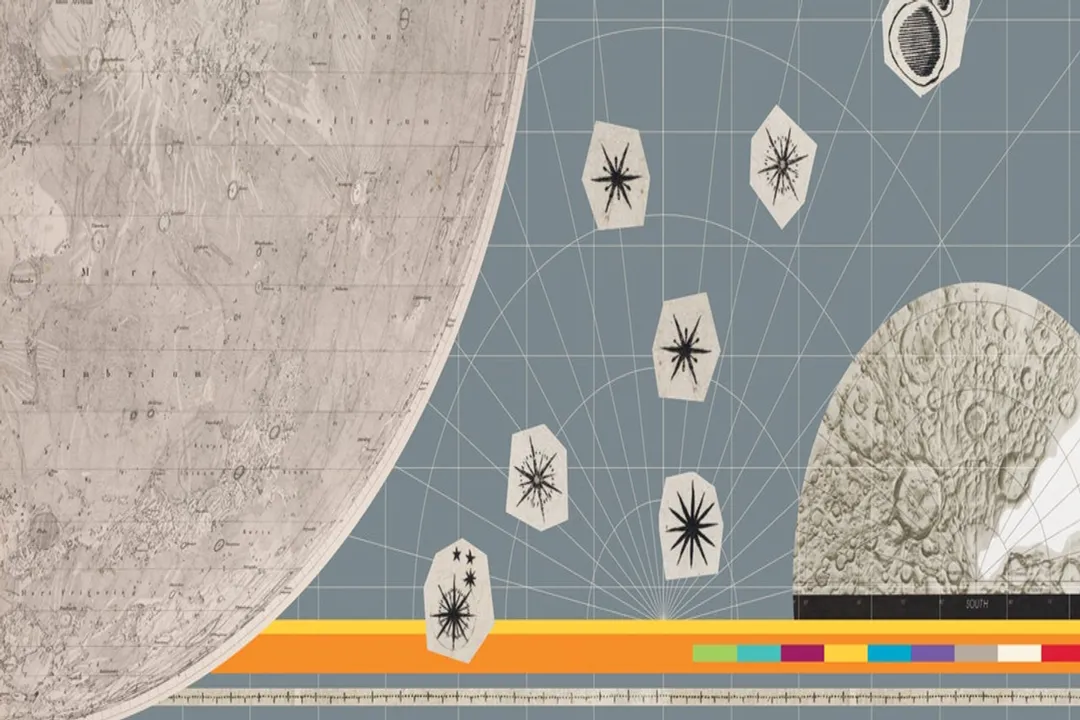
The act of mapping—even if rudimentary by modern standards—required consistent, focused observation over time. To record features like the terminator (the line dividing day and night on the Moon), an observer must repeatedly check the position and length of shadows relative to known points. Imagine an observer like Galileo, painstakingly drawing what they see, realizing that the dark patches he was observing weren't just variations in material but were vast plains or basins, which he called maria. The very concept of mapping implies an effort to create a fixed, readable representation of a dynamic or complex surface.
It is quite remarkable that with his relatively low-power instrument, Galileo provided the first true visual atlas of the lunar surface, revealing features that had been completely invisible to the naked eye and challenging centuries of established cosmological belief. The fact that modern analysis can attempt to reconstruct exactly what he perceived based on his drawings underscores the fidelity of his observations, given the limitations of his equipment.
# Measuring Distances
Beyond the qualitative description of mountains and craters, there was the question of scale, which often hinges on distance and measurement. How far away was this newly textured Moon, and how high were its mountains? Galileo's telescope was the key instrument here, but its precision in determining absolute distance is a separate, complex matter.
While the telescope certainly provided better angular resolution, allowing him to measure the apparent size of features, calculating the actual distance to the Moon using only a telescope of that era presented significant challenges. Determining true distance often relies on triangulation or parallax, methods that require comparing observations taken from widely separated points on Earth, or having a known baseline measurement of the object's size. Galileo’s constructed telescope allowed for better angular measurement, but translating that into precise linear distance required robust geometric methods which are difficult to execute perfectly with early optics.
However, his relative measurements—the height of a mountain based on its shadow length—were revolutionary because they were based on terrestrial analogues. If a shadow length corresponded to a certain terrestrial height under a given illumination angle, a similar shadow length on the Moon implied a similar mountain height. This was a tangible, empirical approach that bypassed pure philosophical argument.
For readers today, it can be difficult to grasp the power of this single shift. We are so accustomed to seeing crisp images from space probes that we forget the immense conceptual hurdle overcome when Galileo established that the Moon was physically akin to the Earth, rather than made of a different, perfect substance. His tool—the telescope—was the empirical battering ram against dogma.
# Legacy of the Lens
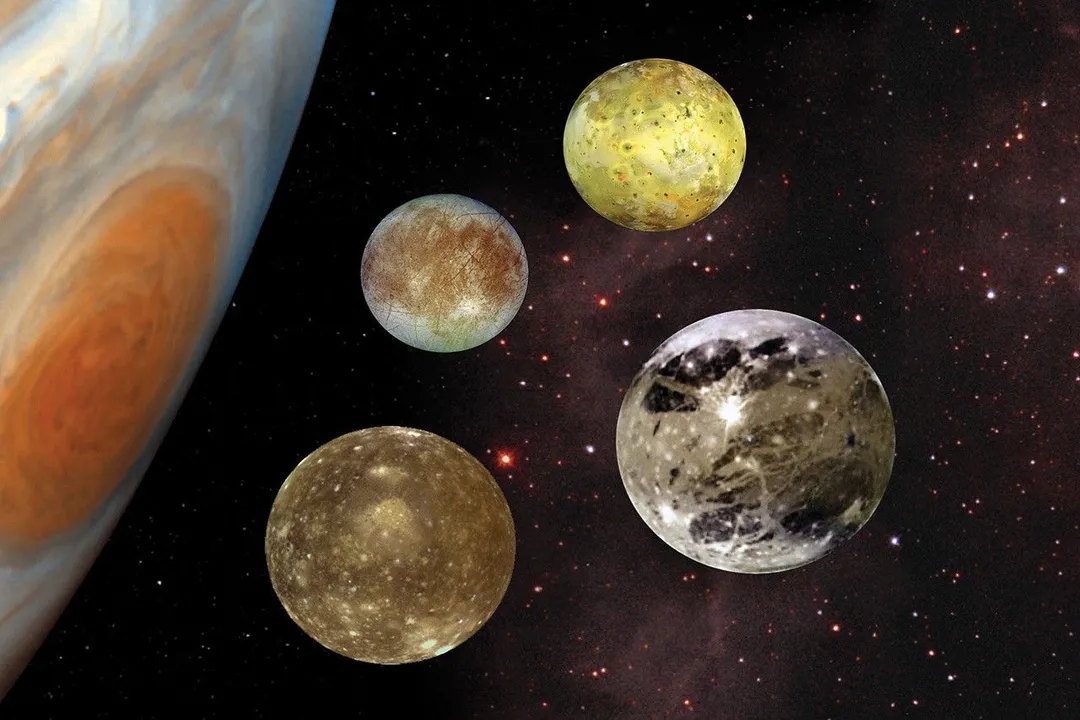
Galileo's observations of the Moon served as the primary proof-of-concept for his entire subsequent career in observational astronomy. If the Moon, the closest celestial body, was flawed and Earth-like, then perhaps the Sun, Jupiter, and the other planets were not the immutable orbs described by ancient authority. His success with the Moon validated the use of the telescope as a serious scientific instrument, enabling his later, more famous discovery of the four largest moons orbiting Jupiter.
The development and use of his telescope created an experience gap between those who saw the Moon through his instrument and those who could not. This experience forms the basis of scientific authority in the new era: the ability to see, measure, and record what others cannot. The initial observations of the Moon established the template for astronomical discovery that would be followed for centuries: Observe, Record, Measure, Publish. The humble telescope, improved by Galileo’s hand, was the object that initiated this transformation.
Related Questions
#Citations
Galileo's Observations of the Moon, Jupiter, Venus and the Sun
TIL Galileo was the first to confirm the Moon's rough and ... - Reddit
01. Early Telescopic Observations - Linda Hall Library
Also on this day: 7 January 1610, Galileo Galilei wrote his first letter ...
The Galileo Project | Science | Moon
History | The Galileo Project
Why Did Galileo Need a Telescope to Discover the Moons of Jupiter?
How precise was Galileo's measurement of the distance to the Moon ...