What did Galileo's observations of the Moon reveal?
The view of the heavens held by scholars for centuries before Galileo Galilei turned his newly improved telescope toward the sky was one of crystalline perfection. The Moon, in particular, was regarded as a celestial body made of a pure, smooth, ethereal substance—a flawless orb quite unlike the rugged, blemished Earth. However, starting in late 1609 and continuing into 1610, Galileo’s persistent observations shattered this ancient consensus, revealing a world hanging above that was surprisingly familiar, messy, and Earth-like. [2][3][4] He did not just see the Moon; he saw topography, proving it was not a perfect sphere.
# Imperfect Sphere
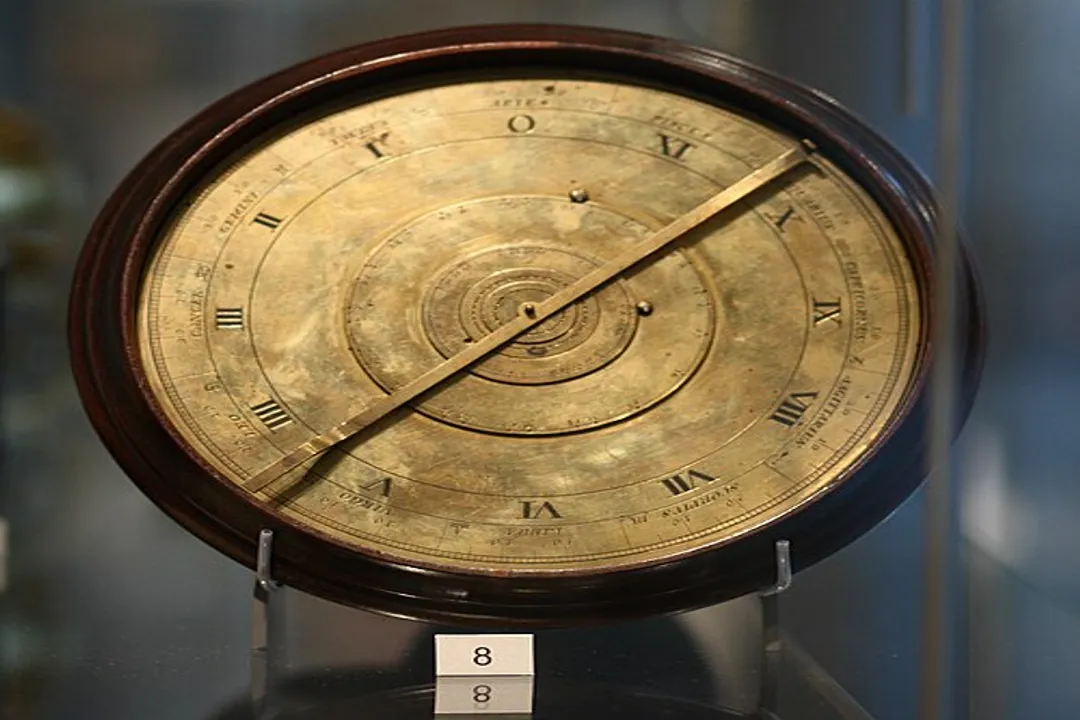
Galileo began systematically studying the Moon shortly after hearing about the newly invented telescope, quickly making significant improvements to the Italian spyglass he acquired. [2] What he saw through his instrument defied the established Aristotelian and Ptolemaic cosmology that dominated scientific and theological thought. Instead of a perfectly smooth surface, his observations revealed that the Moon was uneven, bearing markings that strongly suggested mountains and deep depressions. [3][9]
This discovery was a direct affront to the established Greek view of the cosmos, which posited that the celestial realm—everything beyond the Earth's atmosphere—was composed of unchanging, perfect aether, while the sublunary world (Earth and its surroundings) was characterized by change and imperfection. [4] By showing the Moon possessed physical characteristics mirroring Earth’s own rugged geography, Galileo linked the heavens and the terrestrial realm in a way that made the Earth less cosmologically special. If the Moon was imperfect, the logical next step for many thinkers was to question the assumed perfection of the other heavenly bodies as well. [3]
# Shadow Measurement
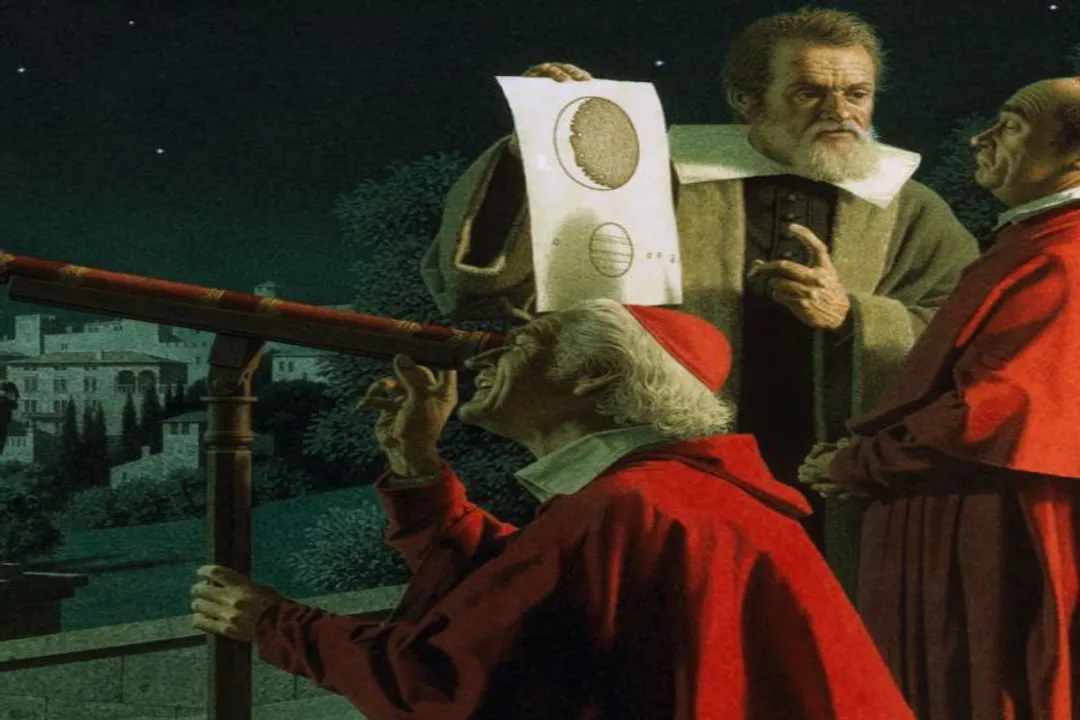
Galileo’s real genius lay not just in seeing the irregularities but in proving their nature through careful geometric analysis. He realized that the markings he observed were not inherent spots or inherent blemishes but were caused by the interaction of sunlight and topography, much like shadows cast on Earth during sunrise or sunset. [9]
He focused intensely on the terminator—the dividing line between the sunlit and dark portions of the Moon. As the Sun's light crept across the lunar surface, the peaks of mountains near the terminator would catch the light first, appearing as bright points, while the valleys remained shrouded in darkness. [9] Conversely, as the Sun appeared to set on the Moon, the shadows cast by the mountains would stretch long across the plains.
By carefully measuring the length of these shadows at different points in the lunar cycle, Galileo was able to calculate the approximate height of these lunar features. [9] This process transformed the Moon from a mere light in the sky into a measurable, physical world. The shadows provided tangible, reproducible data supporting his visual claims, which he detailed in his writings, including a letter describing these observations around January 1610. [5]
If we consider the instruments of the time, Galileo’s ability to derive quantifiable data—heights of mountains—from slightly enhanced visual perception is astounding. Modern amateurs with readily available telescopes can see far finer detail, yet Galileo’s observational technique, relying on simple trigonometry applied to shadows, provided the conceptual breakthrough that the Moon possessed terrestrial geology, forever changing the physical geography of the universe in the public mind. [9]
# Lunar Surface
The features Galileo identified were categorized as mountains and vast, dark plains, which he called maria, Latin for "seas". [4] Although we now know these dark areas are solidified lava flows and not bodies of water, the terminology he established stuck, showing the level of detail he was discerning. [4] The presence of these "seas" alongside the mountains painted a picture of a varied, complex body, not the simple, uniform sphere previously assumed.
His early telescopic views were so compelling that they were quickly incorporated into his work, Sidereus Nuncius (Starry Messenger), published in 1610, which announced his astronomical findings to the world. [5] This publication was key because it didn't just offer a private observation; it provided a widely distributed, systematic argument against the prevailing natural philosophy. [6] The contrast between the old model and the new visual evidence was stark:
- Old Model: Moon made of perfect, unchanging aether.
- Galileo's View: Moon has mountains, valleys, and plains, similar to Earth.
# Challenging Ancients
The implication of Galileo's lunar observations extended far beyond mapping a single celestial body; it undermined the entire two-world system that separated the heavens from Earth. By demonstrating the Moon’s imperfections, Galileo provided tangible, observational evidence supporting the emerging, mathematically simpler model proposed by Copernicus, which placed the Sun, not the Earth, at the center of the known system. [3][10]
When the Moon was shown to be flawed, the argument that other planets must also be imperfect—perhaps like Earth—gained serious traction. This directly supported the idea that the Earth was just another planet orbiting the Sun, rather than the unique, fixed center of creation. [4] This direct challenge to established doctrine is why his observations were treated with such suspicion by some scholars, despite the clarity of the view offered by his telescope. [6]
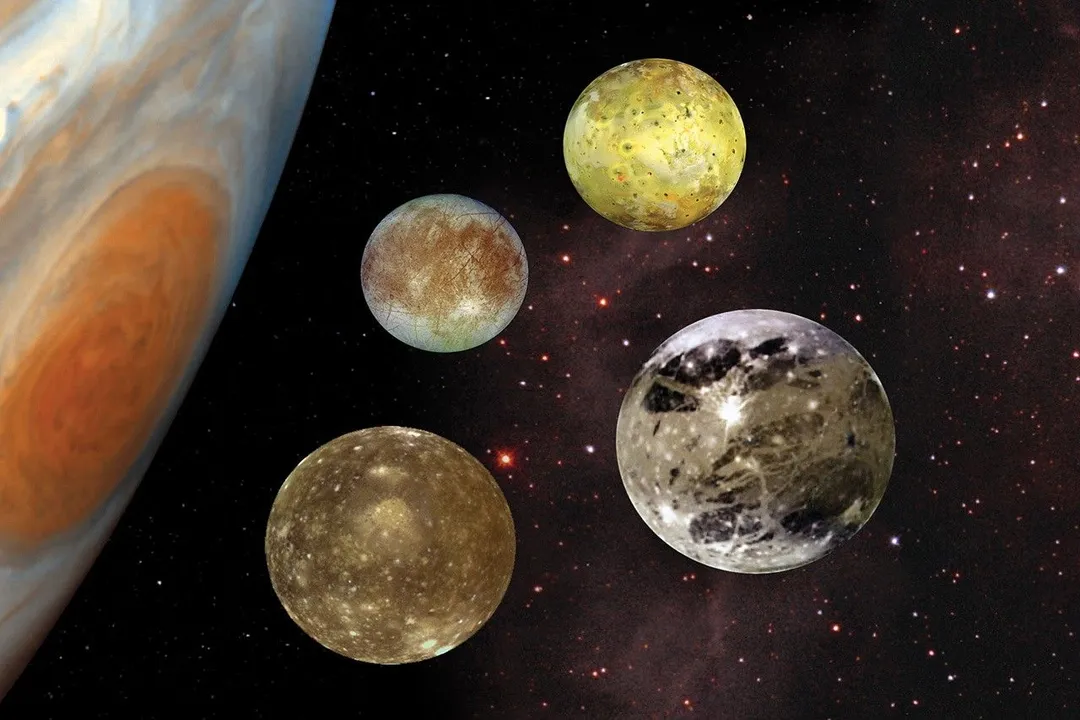
One of the most significant, yet often understated, revelations was the immediate democratization of astronomy. Prior to Galileo, high-level astronomical understanding required mathematical prowess and access to specialized, often secretive, knowledge. Galileo’s observations of the Moon, however, were visual and relatable: everyone understood what a mountain and a shadow looked like. This visual confirmation, published alongside his findings on Jupiter's moons, made complex cosmology accessible and undeniable to anyone who could look through a telescope, creating an unprecedented level of public engagement with scientific discovery. [10]

# Publication Details
Galileo’s initial findings about the Moon were documented meticulously. While his later discoveries regarding the moons of Jupiter garnered more immediate fame, his lunar observations provided the philosophical groundwork for accepting all his subsequent findings. [1] The publication of Sidereus Nuncius in 1610 disseminated these shocking images and descriptions across Europe, creating a scientific crisis among those committed to the ancient worldview. [5] The detailed renderings of mountains and plains forced a reckoning: either the ancient texts were fundamentally wrong about the nature of the cosmos, or the telescope was fundamentally misleading—a claim Galileo worked hard to disprove by showing his instrument was merely an enhancement of natural sight. [6] His ability to map and measure these features established a new standard for astronomical work, moving it from purely theoretical geometry toward observational physics.[1][3]
#Videos
Galileo's Revolutionary Observation - YouTube
Related Questions
#Citations
Galileo's Observations of the Moon, Jupiter, Venus and the Sun
Galileo begins observing the moon | November 30, 1609 - History.com
The View from Galileo's Telescope
The Galileo Project | Science | Moon
Also on this day: 7 January 1610, Galileo Galilei wrote his first letter ...
01. Early Telescopic Observations - Linda Hall Library
Galileo's Revolutionary Observation - YouTube
Galilean moons - Wikipedia
How Galileo Discovered Mountains On The Moon - Forbes
Galileo Discovers Jupiter's Moons - National Geographic Education