How did Galileo discover moons around Jupiter?
The night sky, for centuries, was understood through a comforting, Earth-centered lens. The planets, the wandering stars, were believed to trace paths around our stationary world, a view reinforced by both ancient philosophy and ecclesiastical doctrine. Into this established cosmos stepped Galileo Galilei, not with a radical new theory at first, but with a significantly improved piece of glass and metal: the telescope. It was this instrument, turned toward Jupiter in the early winter of 1610, that shattered the perceived perfection of the heavens and revealed a miniature solar system operating outside our Earthly domain. [2][6]
# Required Optics
The discovery was fundamentally dependent on the technology Galileo had refined. While others may have pointed rudimentary telescopes toward the heavens before him, Galileo was the first to systematically observe, sketch, and interpret what he saw. [4] The sheer distance and relative faintness of Jupiter meant that its potential companions were entirely invisible to the unaided human eye. [7] Even with a slightly superior telescope, the four newly found objects would have appeared as mere smudges or a cluster of faint stars very close to the bright disc of the planet. [7] To resolve them as distinct points of light required not just magnification, but clarity and stability that Galileo’s instruments, improved through his own experimentation, could provide. [4]
It is important to recognize that resolving the visual data was only the first hurdle. Seeing three distinct points clustered near Jupiter on a single night would not, by itself, constitute a discovery; they might have been mistaken for background stars coincidentally aligned with the planet. [1] The true genius lay not in the invention of the telescope itself—which was likely Dutch in origin—but in the application of scientific methodology to the resulting view. Galileo recognized that to prove these were new celestial bodies associated with Jupiter, he had to track their motion across multiple evenings. [4]
# Tracking Jupiter
Galileo’s initial observations began in January 1610. [2] He was not searching for moons; he was examining the Moon itself and charting the positions of known planets. When he turned his gaze upon Jupiter, he noted what he initially perceived as three fixed stars situated very near the planet. [1] The critical step, the one that separates casual viewing from groundbreaking science, involved returning to Jupiter night after night to check their alignment. [4]
The data he collected was a puzzle that slowly resolved itself. On the first night, January 7, he recorded the positions of two accompanying "stars". [5] The following evening, January 8, a startling change occurred: only one of the objects remained visible on one side of Jupiter. [5] This suggested one of two things: either one star had vanished entirely, or, more likely, one had been obscured by Jupiter itself as the planet moved across the sky relative to the distant background stars. [1][5]
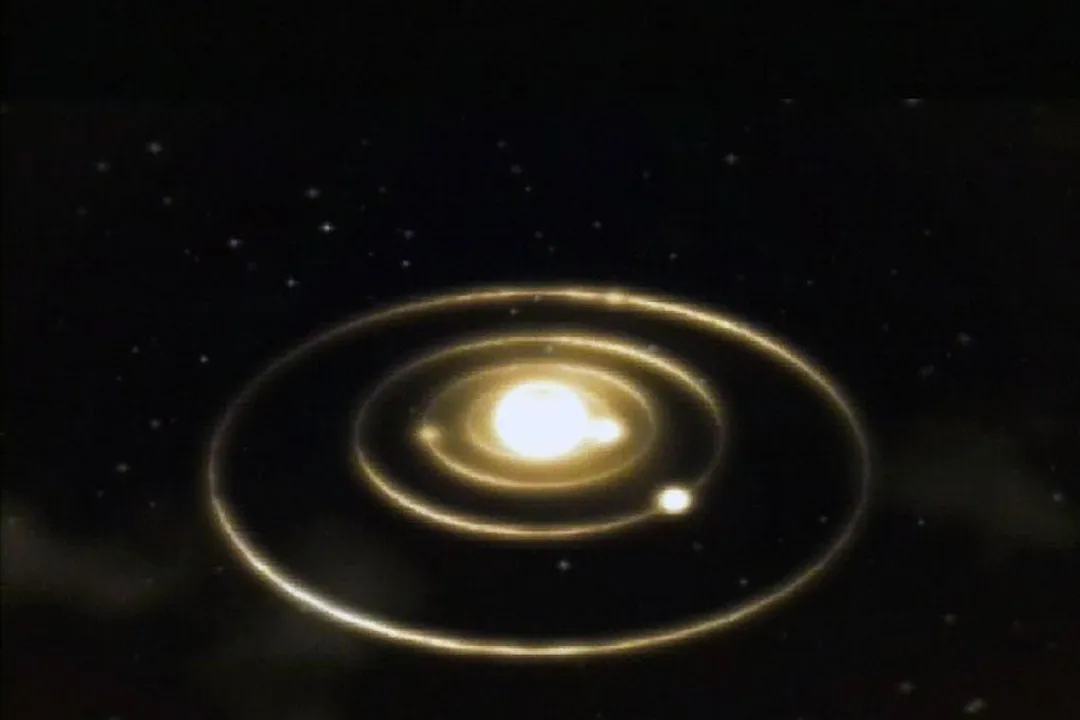
The true breakthrough came through continued observation. On January 10, Galileo noted three "stars" again, their configuration different from the 7th. [5] By January 13, the count had shifted to four distinct objects, positioned around Jupiter in a way that could not be random chance. [3][5] The objects moved with Jupiter, not independently against the stellar background. [1] This demonstrated a predictable orbital pattern centered on Jupiter, not Earth.
To visualize the relentless nature of this methodical work, consider the differing observations over just a few nights:
| Date (1610) | Moons Observed | Configuration Note |
|---|---|---|
| January 7 | 2 | First recorded observation [5] |
| January 8 | 1 | Significant positional change or disappearance [5] |
| January 10 | 3 | A new pattern emerges [5] |
| January 13 | 4 | The full system becomes visible [3][5] |
This table shows the scientific process in miniature: hypothesis (they are stars), test (observe the next night), result (they move relative to each other and the planet), and confirmation (the pattern repeats over time). [4] The inability of the naked eye to see this system is not just a matter of light gathering; it is a matter of time resolution. The human eye cannot hold the faint image across the necessary temporal gap to detect the subtle shift that Galileo documented in his journals. [7]

# Cosmic Shift
The implication of these observations was immediate and profound, launching a scientific revolution. [6] If Jupiter had satellites orbiting it, then not everything in the heavens orbited the Earth. This directly contradicted the long-held Aristotelian and Ptolemaic models which were foundational to the accepted cosmology of the time. [6] Galileo's findings provided tangible, observable proof that the geocentric universe was incomplete, or entirely wrong. [2] It was a direct demonstration that Earth was not the unique center of all celestial motion.
Galileo named the four newly discovered satellites the Medicean Stars, dedicating them to his patron, Cosimo II de' Medici, the Grand Duke of Tuscany. [3][9] This was a shrewd political move, ensuring the protection and funding necessary to publish such a controversial scientific finding. [9] While the name stuck temporarily in certain circles, history has cemented their proper designation as the Galilean moons: Io, Europa, Ganymede, and Callisto. [3]
The impact of this announcement was seismic, far exceeding mere astronomy. It established the authority of observational evidence over centuries of established philosophical texts. Imagine the intellectual risk taken by Galileo; he wasn't just challenging a mathematical model; he was challenging a fundamental worldview supported by powerful institutions. [6] His published findings essentially stated: look through my device, and you will see a reality that contradicts what you have been taught is absolute truth. [4] This act cemented his reputation as an expert observer whose work provided empirical experience in place of pure theory. [2]
# Public Declaration
The culmination of Galileo’s work appeared in a short but explosive booklet published in March 1610, titled Sidereus Nuncius (The Starry Messenger). [1][8] This publication contained his detailed observations, charts, and reasoning about the moons of Jupiter. [8] It was disseminated quickly, allowing astronomers across Europe to turn their own telescopes—as they became available—toward Jupiter and verify his claims. [1] The book’s success was immediate, securing Galileo’s fame and placing him at the center of the ongoing debate regarding the structure of the universe. [8]
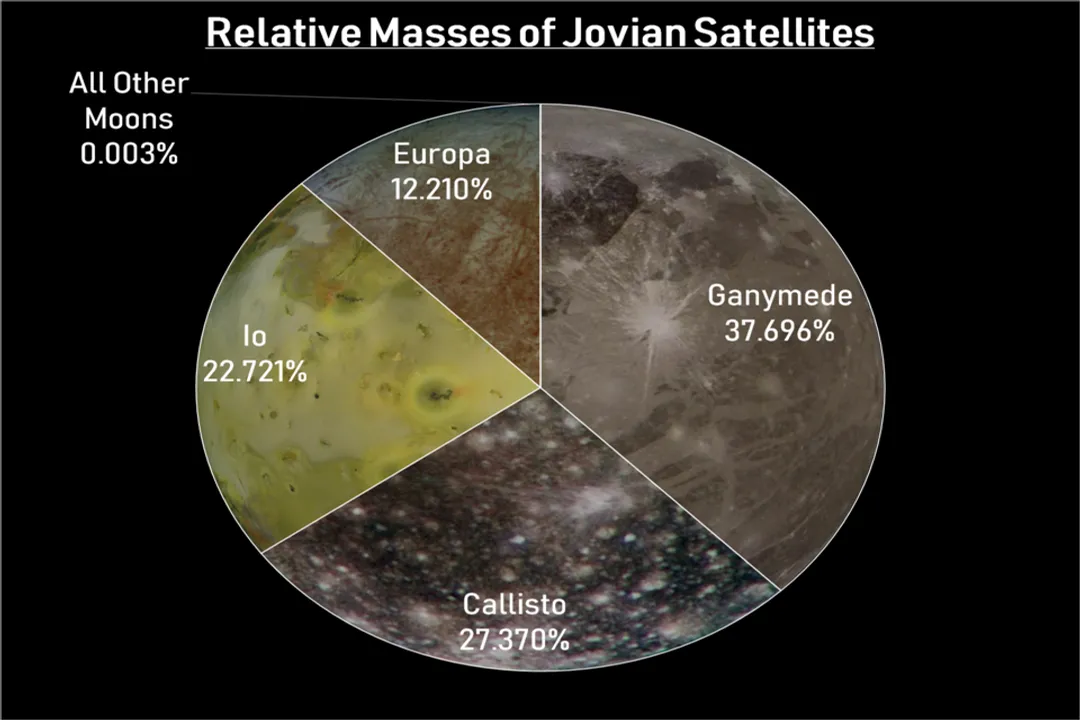
While the discovery of the moons was an event of singular importance, the subsequent decades of telescopic astronomy—which Galileo continued—revealed the immense diversity of these new worlds. For instance, the sheer scale of Ganymede, the largest of the four, is an insight that only deeper study confirmed; Ganymede is actually larger than the planet Mercury. [8] Galileo, at the time of discovery, simply established that they were orbiting bodies; the characterization of those bodies took further refinement of optics and mathematics. [8]
The story of Galileo's discovery is therefore a powerful testament to the intersection of technological advancement and scientific curiosity. It wasn't about a sudden vision granted by divine inspiration; it was about the methodical assembly of data points collected under the light of a new invention. The fact that he was able to secure patronage for such a radical idea shows a necessary understanding of the political landscape of Renaissance Italy, ensuring that his observational expertise could be communicated openly to the world, despite the potential theological headwinds. [9] The enduring lesson is that sometimes the greatest discoveries are made not by asking an entirely new question, but by possessing the right instrument to examine an old one—Jupiter—in a completely new way. [7]
Related Questions
#Citations
Galileo Discovers Jupiter's Moons - National Geographic Education
410 Years Ago: Galileo Discovers Jupiter's Moons - NASA
Galilean moons - Wikipedia
Galileo: Discovering Jupiter's Moons | PBS LearningMedia
We figured out exactly what Galileo saw when he discovered the ...
Why Did Galileo Need a Telescope to Discover the Moons of Jupiter?
The View from Galileo's Telescope - What does your image show
Galileo's Discovery of Jupiter's Moons - Facebook