How did Galileo discover the Galilean moon?
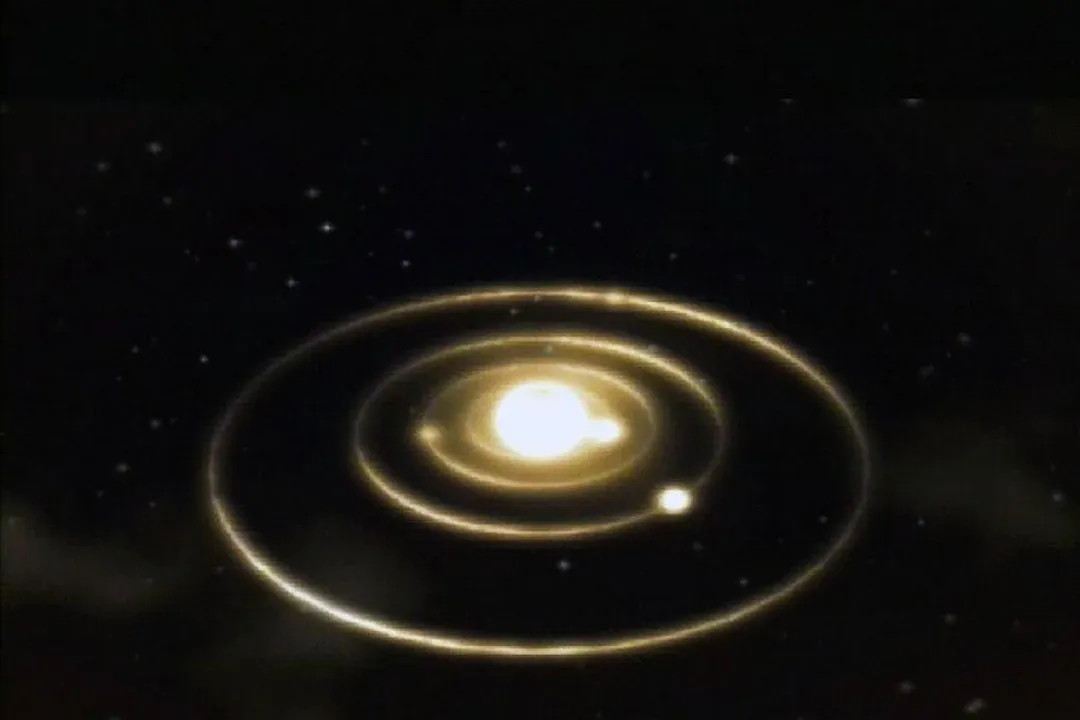
The period leading up to the great revelation was one of intense astronomical scrutiny, though the tools available to observers were primitive by today's standards. [3] Before Galileo Galilei turned his modified spyglass toward the heavens, the reigning cosmological model, inherited from Ptolemy and supported by the Church, placed Earth immobile at the center of all celestial motion. [1][5] Everything, including the five known planets, was believed to orbit our world. [5] Jupiter, being the brightest "wandering star" beyond Mars, was an object of significant interest, but its potential companions remained completely hidden. [1]
# The Instrument
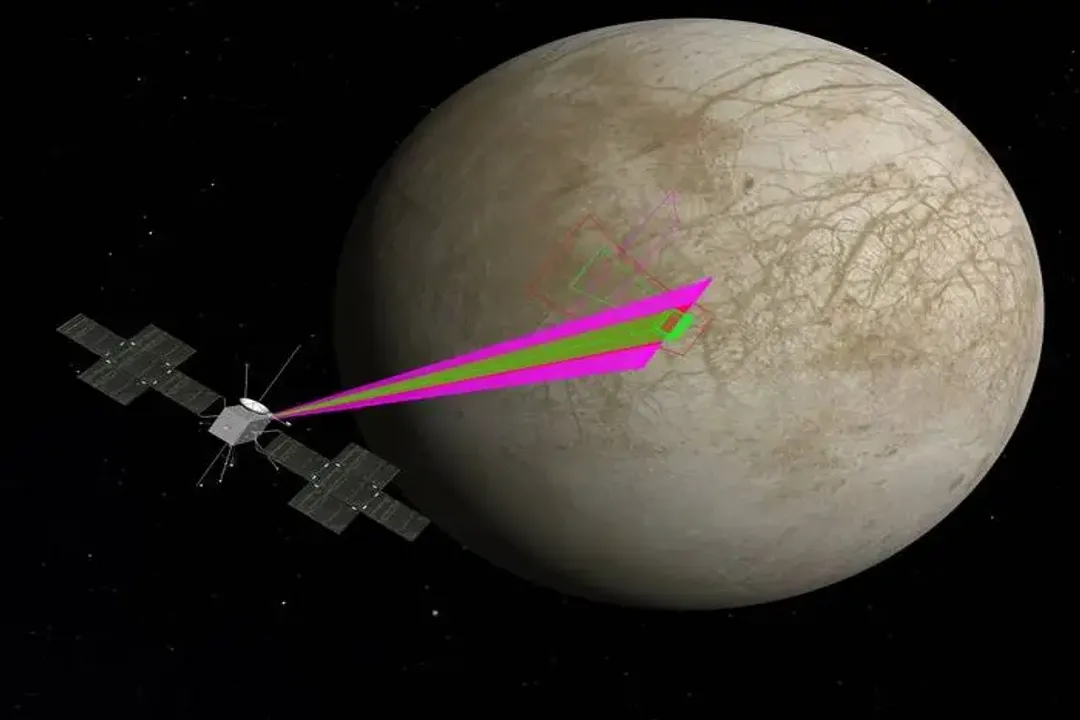
Galileo’s path to discovery did not begin with a grand telescope designed for astronomical research; rather, it stemmed from a practical interest in optical magnification. [3] He heard reports of a Dutch invention—a device that made distant objects appear close—and quickly set about improving upon it. [3] He was not the first to construct a telescope, but his key contribution was grinding better lenses, resulting in an instrument with significantly higher magnification than anything previously available. [3][5]
This instrument, which he called a perspicillum or telescope, was revolutionary for its time. [3] Sources suggest that Galileo achieved magnifications around or . [3][5] To put that into perspective, the very first telescopes Galileo presented to the Venetian Senate in August 1609 had a magnification of about eight times, and later iterations reached about twenty times. [3] Observing something as faint as Jupiter’s moons required steady hands, a dark sky, and immense patience, especially when using an instrument that produced a very small, inverted image. [1] The ability to resolve these small points of light against the glare of Jupiter itself speaks volumes about the quality of his craftsmanship and his persistent observation. [1] It is crucial to appreciate that spotting these satellites was not a matter of pointing a modern reflector at the sky; it was a feat of early optical engineering meeting determined observation. [1][3]
# First Sightings
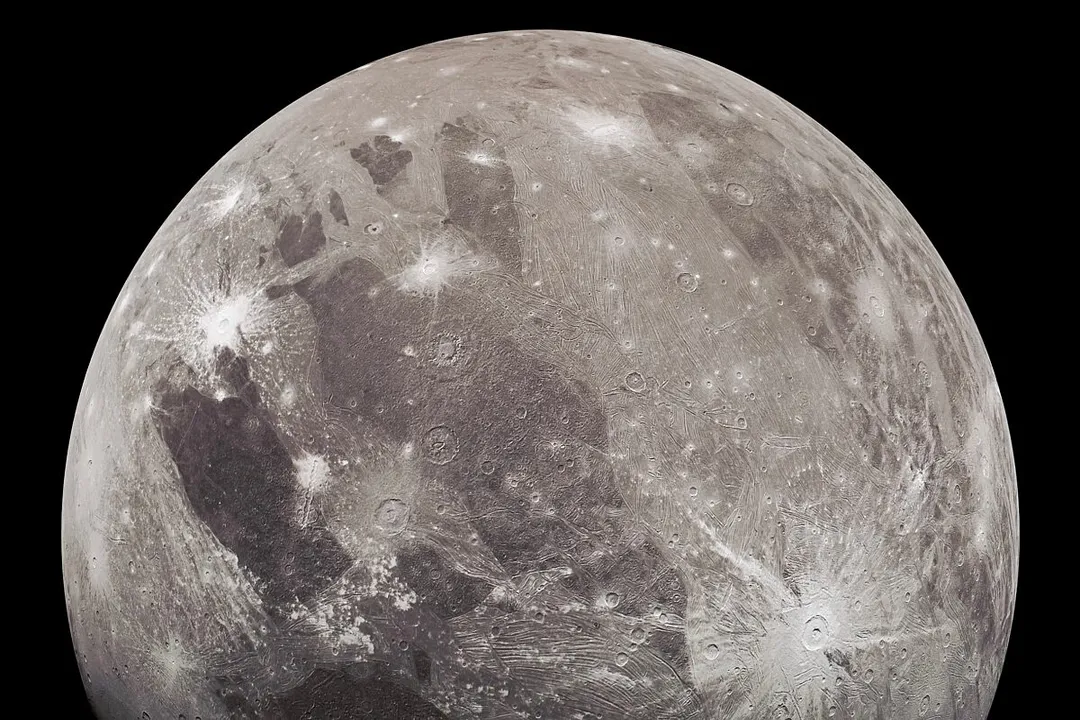
The actual moment of discovery occurred in early January 1610. [1][5][9] Galileo began observing Jupiter around January 7th. [5] On that night, he noticed three small, bright stars aligned perfectly in a straight line near the planet. [1][3] These were not cataloged stars, and they were too faint to be seen with the unaided eye. [1]
He meticulously recorded what he saw, noting the positions of these three stellar companions relative to Jupiter. [5] His initial records show the three points of light aligned on one side of the planet. [1][3] It is worth noting that Galileo was observing a system where the bodies’ visibility changes constantly due to their orbital paths around Jupiter, which means they can appear on one side, both sides, or be hidden entirely behind the planet. [4]
# Tracking Motion
The initial sighting of three "stars" near Jupiter was intriguing, but it was not yet a discovery of moons. [1] Many fixed stars are occasionally seen near brighter celestial objects. [5] What separated Galileo's observation from mere cataloging was the follow-up work—the methodical, week-long tracking of their positions. [1][5]
He returned to his observations in the subsequent nights. [5] On January 8th, he noted that the pattern had changed; one of the points was missing, or their configuration had shifted. [3] This change was the first clue that these were not distant stars, which would remain fixed relative to each other. [5] He continued to chart their positions night after night. [9]
By January 10th, one of the companions had vanished completely, presumably having passed behind Jupiter. [3] On January 11th, he documented only two companions visible. [3] After a few days of continued observation, he spotted a fourth object. [1][5] This confirmed that he was dealing with multiple bodies in motion around Jupiter. [1][9]
The crucial evidence was this orbital motion—the way these four points of light moved in lockstep with Jupiter, appearing and disappearing relative to it over a short period, entirely inconsistent with the Ptolemaic prediction that everything orbited Earth. [1][5] Galileo realized he was looking at a miniature solar system playing out in real-time. [5]
# The Celestial Realization
This was the true breakthrough, transforming simple observation into a world-altering scientific conclusion. [5] If these four objects were circling Jupiter, it provided irrefutable, empirical proof that not everything in the cosmos orbited the Earth. [1][5] This directly contradicted the foundational principle of the established, ancient cosmology. [1]
Galileo’s observations provided a tangible counter-model to the geocentric view. [5] It demonstrated that orbiting bodies could exist around centers other than the Earth. [1] While Copernicus had proposed the Sun as the center (heliocentrism), Galileo provided the first direct visual evidence of any celestial body having satellites other than Earth. [5] This confirmation of non-Earth-centered orbits lent immense weight to the broader concept of a heliocentric universe, even if Jupiter was not the Sun. [1][5]
An interesting analytic observation arises when considering the orbital periods. The objects Galileo saw—Io, Europa, Ganymede, and Callisto—have vastly different orbital periods ranging from about 1.77 days (for Io) to about 16.7 days (for Callisto). [8] For Galileo to confirm this movement, he needed to see enough of their paths to establish a pattern, meaning his observations across those few critical nights in January (and the subsequent ones in February) had to capture significant portions of the inner orbits. The inner two moons, Io and Europa, move so quickly that missing even one night of observation could mean missing them entirely or confusing their positions relative to each other. [4] His successful confirmation required a degree of dedication over a short, dense time span that modern observers often overlook when viewing these systems casually.

# Naming System
Naturally, a discovery of this magnitude required naming the celestial travelers. [5] When Galileo first published his findings, he sought patronage and flattered his sponsors by naming the moons the Sidera Medicea, or the Medicean Stars, in honor of his patron, Cosimo II de' Medici, the Grand Duke of Tuscany. [3][5] This move secured his position and funding, but the name did not stick in the wider scientific community. [3]
Other names were proposed, including Officinalis and Herschelia, but ultimately, the moons became known by the names proposed by astronomer Simon Marius, who was observing at the same time. [3] These names derive from classical mythology, specifically relating to the mythological lover of Zeus (Jupiter). [3][8]
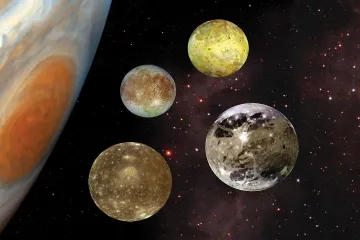
The four primary satellites that Galileo observed are now universally known as the Galilean Moons. [3][5][8] They are, in order from closest to farthest from Jupiter: Io, Europa, Ganymede, and Callisto. [8]
| Moon Name | Discovery Date (Approx.) | Key Feature |
|---|---|---|
| Io | January 1610 | Most volcanically active world in the Solar System [8] |
| Europa | January 1610 | Strong evidence suggests a subsurface ocean [8] |
| Ganymede | January 1610 | Largest moon in the Solar System [8] |
| Callisto | January 1610 | Heavily cratered ancient surface [8] |
The enduring legacy is in the common designation, Galilean Moons, which secures his place as the discoverer despite the alternative names that were briefly in circulation. [3][5]
# Modern Moons
While Galileo confirmed the existence of four orbiting bodies, Jupiter's entourage is far larger today. [7] As of current knowledge, Jupiter boasts dozens of confirmed satellites. [8] However, the four that Galileo identified remain the largest and most significant of the Jovian system. [8]
The four Galilean moons are worlds unto themselves: [8]
- Io is recognized for its extreme tidal heating, resulting in constant, dramatic volcanic activity. [8]
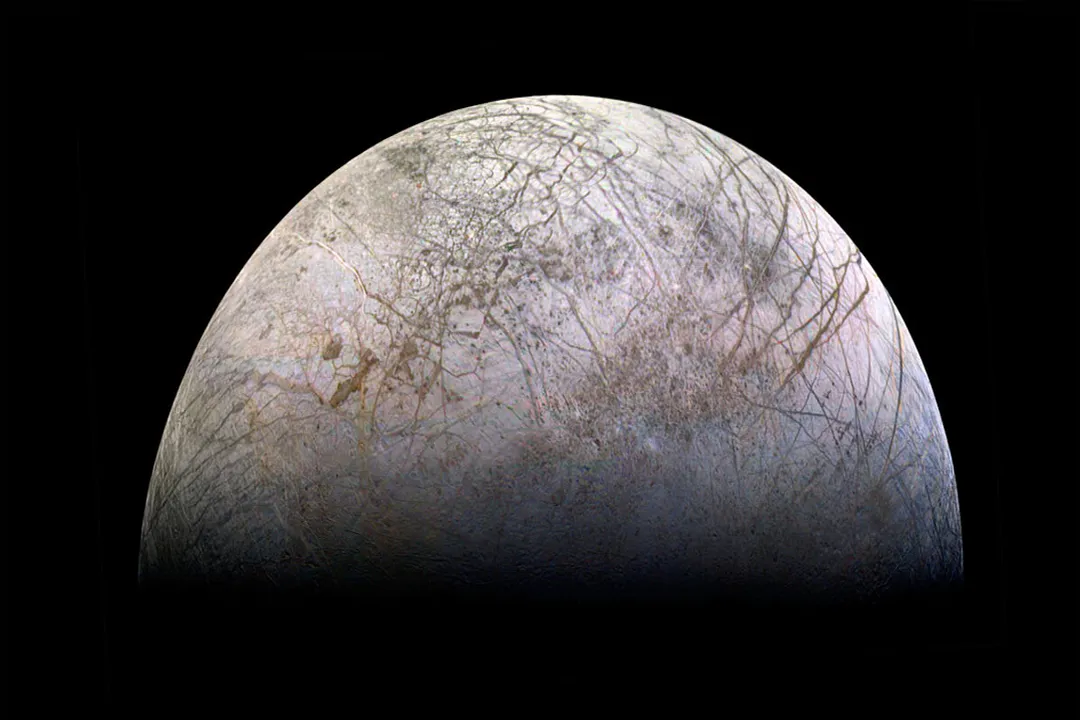
- Europa draws immense scientific attention because evidence points to a vast, salty ocean hidden beneath its icy crust, making it a prime target in the search for extraterrestrial life. [8]
- Ganymede is famous for being the largest moon in the entire Solar System—it is actually larger than the planet Mercury. [8] It is also unique in being the only moon known to possess its own magnetic field. [8]
- Callisto presents a very different face, appearing ancient and heavily scarred with impact craters, suggesting very little geological activity over billions of years. [8]
The fact that Galileo saw these four distinct worlds revolving around a planet other than Earth provides a deep historical marker, separating the ancient understanding of the cosmos from the modern scientific era. [5][9]
# Implications Shaking
The scientific and philosophical ramifications of Galileo’s discovery were immediate and profound. [5] His book detailing the observations, Sidereus Nuncius (Starry Messenger), published in March 1610, spread the news quickly across Europe. [5] The book contained his detailed drawings of the moon's surface features and the orbital paths of Jupiter's satellites. [5]
The observations served as a powerful, visible argument against the accepted status quo of Aristotelian physics and the Ptolemaic system. [1][5] If Jupiter could carry its own court of satellites, the Earth was demonstrably not the unique, solitary center of all celestial motion. [1][5] This discovery was a major step in building the observational case for the heliocentric model, even though Jupiter orbits the Sun, not the Earth. [5] It broke the rigid structure that dictated that perfect, unblemished spheres must move in circles around the Earth. [1]
In one sense, the discovery was incredibly trustworthy because it was verifiable through simple replication. [5] Any astronomer who had access to a telescope and enough patience to track the movements over several nights could confirm Galileo's findings. [5][9] This reliance on direct, repeatable observation is a hallmark of the emerging scientific method, contrasting sharply with reliance on ancient authority. [5] The sheer difficulty of the initial observation using relatively primitive optics, coupled with the unambiguous nature of the resulting orbital data, lends this episode unparalleled historical weight in the history of astronomy. [1][3]
Related Questions
#Citations
Galileo Discovers Jupiter's Moons - National Geographic Education
410 Years Ago: Galileo Discovers Jupiter's Moons - NASA
Galilean moons - Wikipedia
We figured out exactly what Galileo saw when he discovered the ...
Galileo: Discovering Jupiter's Moons | PBS LearningMedia
Galileo's Discovery of Jupiter's Moons - Facebook
What are Jupiter's Galilean moons? | The Planetary Society