Did Galileo observe the Milky Way?
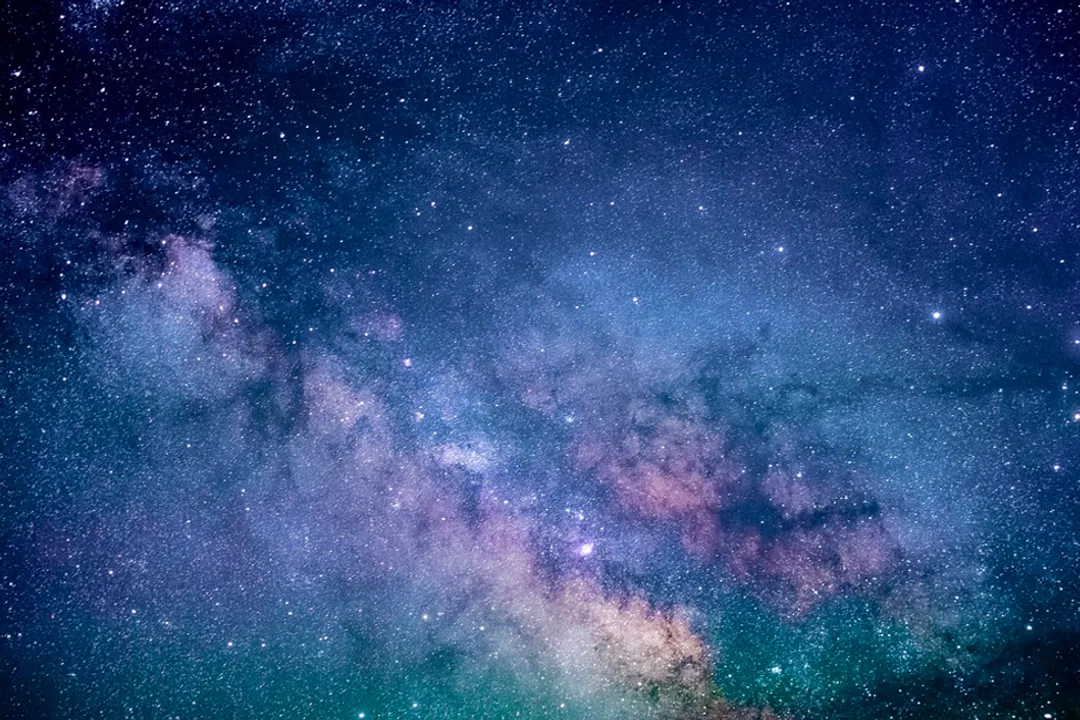
The observations made by Galileo Galilei through his improved telescope irrevocably altered humanity's understanding of the night sky, and his telescopic scrutiny of the Milky Way provided one of the most profound surprises of that era. What had long appeared to the unaided eye as a faint, milky, continuous band stretching across the celestial sphere was revealed to be something entirely different under magnification. Galileo was not the first person to look at the Milky Way, of course, but he was likely the first to see its true nature revealed by optics.
# Cloud Belief
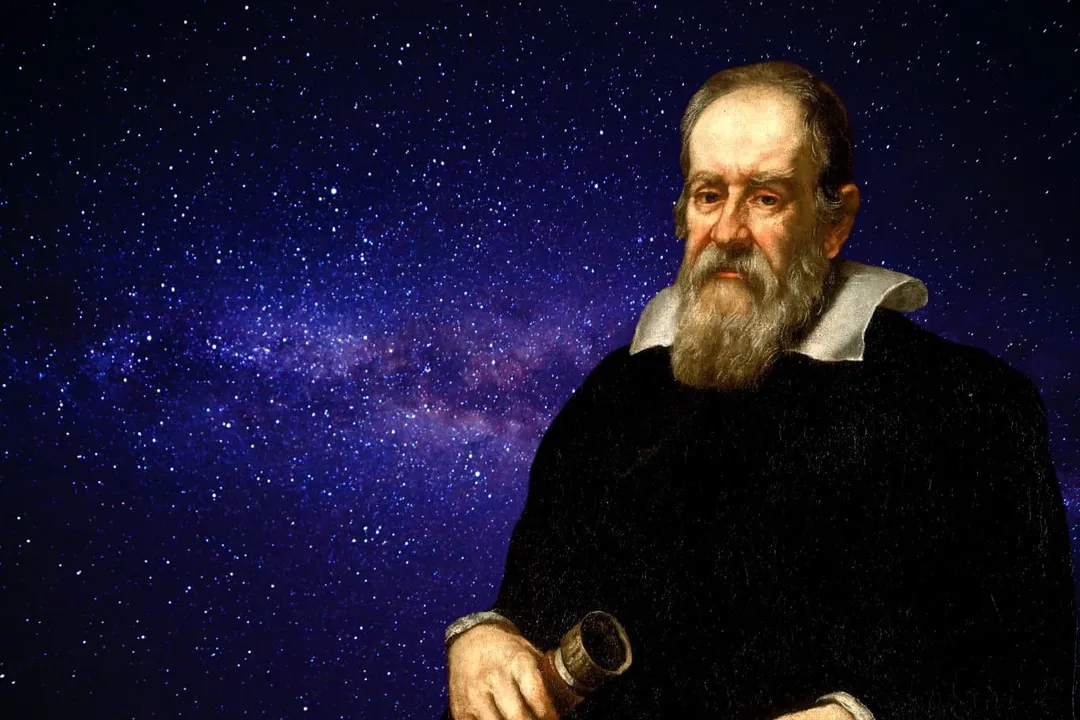
For centuries leading up to the early seventeenth century, the prevailing cosmological models, heavily influenced by classical thought, struggled to categorize the luminous streak we now know as the Milky Way. To the naked eye, it presents a diffuse, hazy quality, leading many thinkers to conclude it was a specific type of celestial phenomenon distinct from individual stars. Aristotle, whose views held considerable sway, often described it as a concentration of stars too distant to be individually resolved, or perhaps even as a vapor or fiery exhalation within the sphere of the Moon. Even among those who suspected a stellar origin, the resolution was impossible without aid; the light simply seemed blended together, a soft glow rather than pinpricks of light. This established view treated the Milky Way as a unique feature of the upper heavens, a uniform structure existing within the existing philosophical framework of the cosmos.
# New Lens
The turning point arrived with the development and refinement of the refracting telescope. While the initial invention of the spyglass in the Netherlands around was a matter of practical optics, Galileo quickly recognized its immense potential for looking upward, not just across distances. By and , Galileo had dramatically improved the magnification of his instruments. It was this technological leap—moving from eyesight that could resolve perhaps a few thousand stars across the entire sky to one that could multiply that view exponentially—that opened the door to the Milky Way's true structure. This new instrument served as the critical tool, transforming what was a philosophical problem into an observable, physical one.

# Starlight Resolved
Galileo’s groundbreaking observations were meticulously recorded and published in his short but revolutionary text, Sidereus Nuncius (The Starry Messenger), in . When he pointed his instrument at the hazy band of the Milky Way, the result was astonishing. Instead of seeing an unbroken nebulosity, he observed that the faint glow was composed of a multitude of stars packed so closely together that their light blended in normal vision. He confirmed that the Milky Way was not a cloud, vapor, or a single luminous substance, but rather a dense congregation of individual, distant suns.
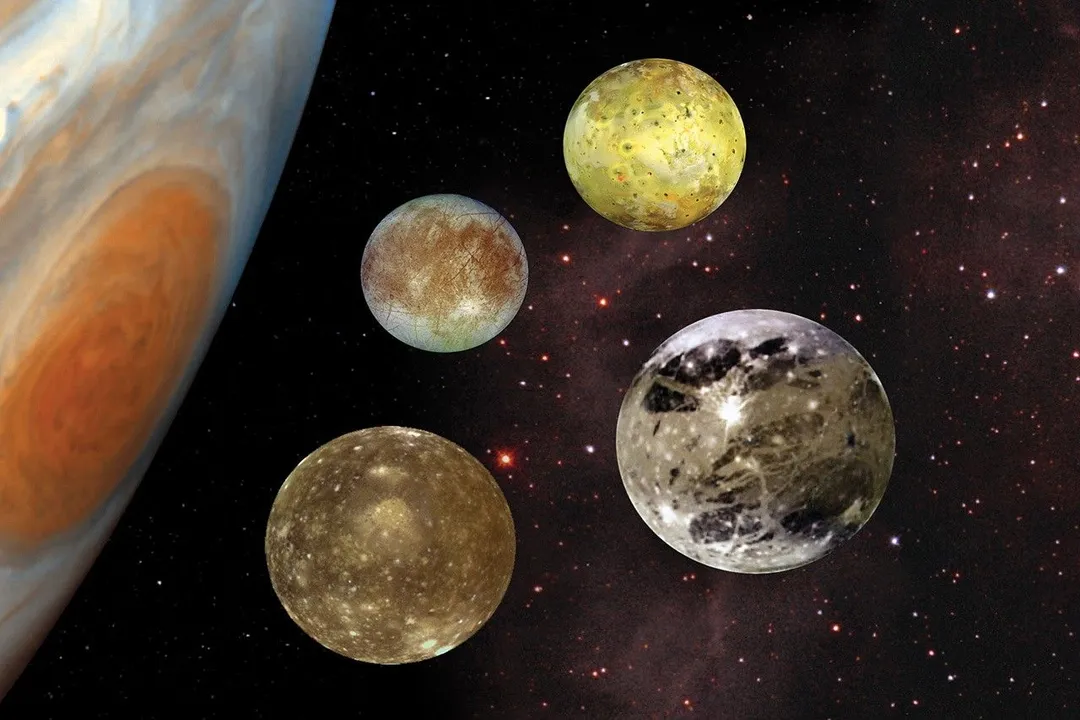
He described this observation by noting that the Sidereus Nuncius revealed the Milky Way to be "nothing else than a congeries of innumerable stars distributed in indefinite number in marvelous galaxy". This was a stark contrast to the preceding consensus. While some earlier scholars had hinted at a stellar nature, Galileo provided the direct, observable evidence that validated the idea of an unimaginably vast stellar population residing within that band. This discovery stood alongside his other spectacular telescopic revelations—the mountains and craters on the Moon, the phases of Venus, and the moons orbiting Jupiter—all shaking the foundations of the ancient, static cosmos.
# Cosmic Shift
The implication of resolving the Milky Way was immediate and massive for cosmology. If a faint swath of light visible to the naked eye contained an uncountable number of stars—far exceeding the few thousand stars visible across the entire night sky—it suggested that the universe was far larger and more densely populated with stars than anyone had previously conceived. This observation directly challenged the neat, finite, and hierarchically ordered universe championed by Ptolemy and Aristotle.
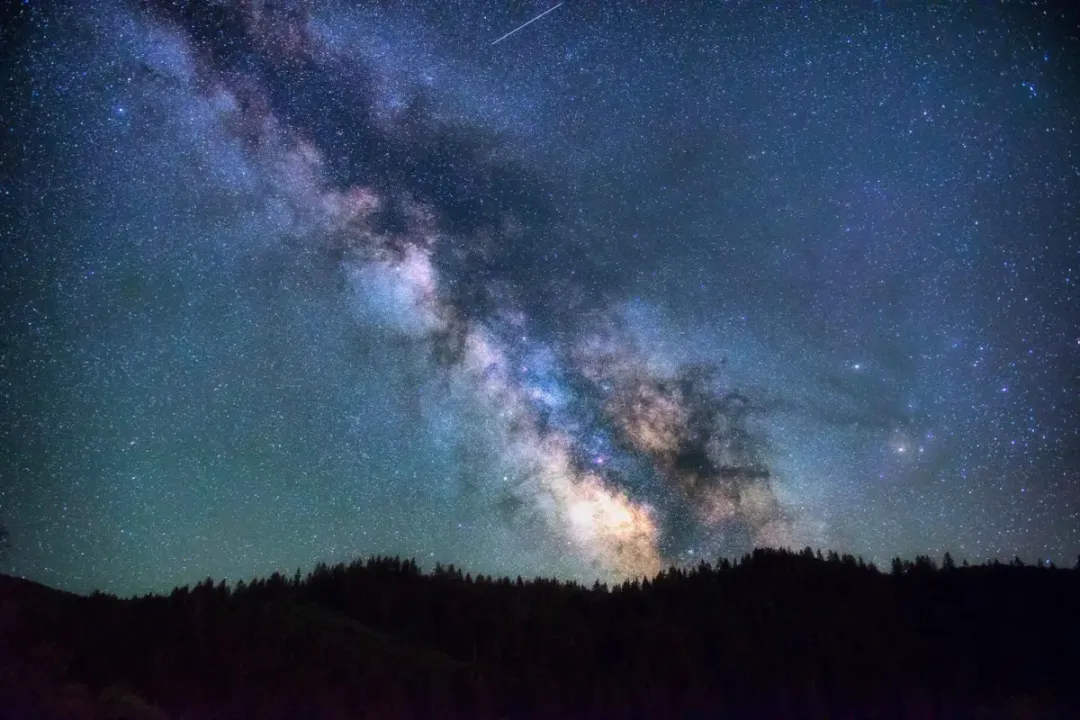
It is easy to forget, when viewing the Milky Way tonight through light pollution or even a pair of binoculars, just how revolutionary this evidence was. For the -century European mind, where the heavens were thought to be composed of perfect, unchanging spheres, discovering that one of the most prominent features was actually an optical illusion—a densely packed field of individual, distant lights—forced a complete rethinking of celestial distances and scale. Galileo’s telescope acted as a physical demonstration that the observable universe extended far past the boundaries set by classical philosophers.
We can place this observation in context by considering the sheer density revealed. Imagine a photograph of a modern city skyline taken from miles away where all the individual lights blur into a single wash of yellow. Galileo's telescope was the equivalent of flying right over that city and suddenly seeing every window lit up. His work on Jupiter’s moons demonstrated that not everything orbited the Earth; his work on the Milky Way demonstrated that the "heavens" were far more numerous and extensive than previously modeled.
This realization laid essential groundwork for later thinkers, such as Immanuel Kant, who would eventually propose that the Milky Way itself was an island universe, one of many such groupings existing across the cosmos. Galileo provided the evidence of density; the interpretation that it was an entire galaxy among many would take centuries more, relying on subsequent technological advances and theoretical refinement.

# Scale Implied
The true measure of Galileo’s achievement here lies not just in seeing stars, but in counting them conceptually. When an observer looks at the stars visible to the naked eye, they are seeing perhaps to objects across the entire celestial sphere, assuming perfect, dark skies. The Milky Way, even on a dark night, occupies a significant portion of that visible sky area. Galileo’s telescopic view showed that within the perceived thin band, the number of individual objects exploded exponentially.
This sudden introduction of what felt like an infinite number of celestial bodies into a small section of the sky had a profound psychological effect on astronomy, marking a significant departure from previous cosmological descriptions. Consider a rough modern estimate: if we assume the naked eye could resolve perhaps one star per square degree in the darkest parts of the sky, but Galileo’s telescope immediately showed hundreds or thousands per square degree within the core of the Milky Way band, the sheer magnitude of the difference is staggering. This visual data point—the dramatic increase in visible objects—forced the concept of immensity into the forefront of astronomical thought.
It is interesting to compare this discovery with modern understanding of the Milky Way today. We now know that the hazy band is the disk of our own spiral galaxy, containing hundreds of billions of stars, viewed edge-on from within. What Galileo was seeing in was the integrated light of perhaps hundreds of thousands of stars within his telescope's field of view that were previously merged into a single smudge. He didn't see the galaxy's spiral arms or its true extent, but he provided the crucial first piece of evidence that the structure was granular, not gaseous.
# View Comparison
To appreciate the shift, we can create a simple comparative table summarizing the perspective before and after Galileo's key telescopic observation of this band of light:
| Feature | Pre-Galilean Consensus (Aristotelian/Ptolemaic) | Galileo's Telescopic Observation () |
|---|---|---|
| Appearance | Continuous, uniform, milky haze or cloud | Countless, discrete points of light |
| Composition | Celestial vapor, fire, or unresolved distant stars | Individual stars packed densely together |
| Implication | A specific, localized celestial feature | Evidence of immense stellar population density |
| Source Publication | Classical texts (e.g., Aristotle) | Sidereus Nuncius |
The contrast highlights the nature of scientific progress enabled by instrumentation. While earlier astronomers wrestled with the meaning of the cloud based on philosophical premises, Galileo provided empirical data that forced a redefinition of the object itself. His immediate success in resolving this feature solidified the telescope's role not just as a navigational aid or military tool, but as the supreme instrument of astronomical investigation, setting the stage for Kepler, Newton, and all who followed in mapping the deeper universe.
Related Questions
#Citations
Milky Way
177. Galileo Galilei, First to See the Milky Way Galaxy
Galileo Galilei
The Milky Way: One of the Many Galaxies
galileo's examination of orion and the pleiades
14.5: Galileo Galilei, First to See the Milky Way Galaxy
Galileo's Observations of the Moon, Jupiter, Venus and ...
Discovery of the Milky Way
The backbone of the night
Astronomy 162: Lecture 22