How did astronomers discover that mass was missing from the Milky Way galaxy?
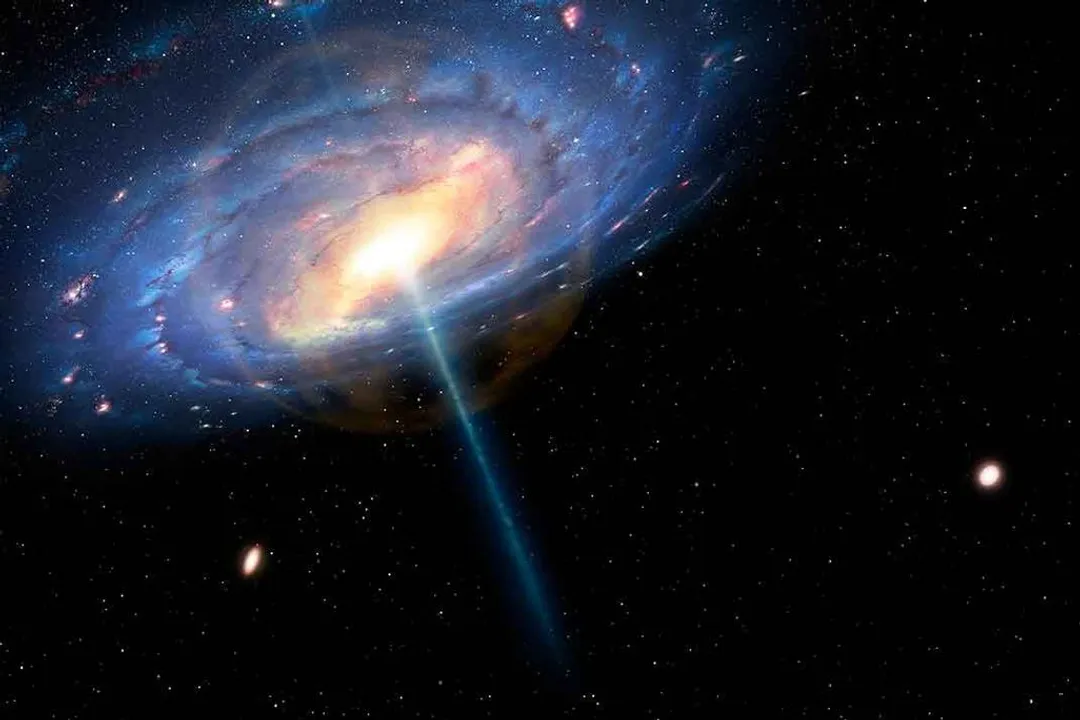
The puzzle of the Milky Way’s missing mass has long confounded astronomers, but the mystery is less about invisible stuff like dark matter and more about ordinary matter—the protons and neutrons that make up stars, planets, and us—that simply couldn't be accounted for in the galaxy's visible census. [7] Cosmological models, built on the physics of the Big Bang, predict a certain ratio of normal matter, or baryons, in a galaxy like ours. When astronomers added up all the visible stars and the cold, easily detectable gas clouds, the total mass fell short of theoretical expectations. [7] This discrepancy suggested that a significant fraction of the expected baryonic matter was hiding in plain sight, existing in a state too diffuse, too hot, or too far away to be easily cataloged by traditional methods.
# Galactic Accounting

When scientists first took inventory of the Milky Way, the deficit was substantial. The discrepancy wasn't small; it represented a large percentage of the expected baryonic budget that simply wasn't showing up where it was supposed to be—namely, within the main disk or the immediate cold gas reservoir. [7] While the vast majority of the galaxy's mass—about 90%—is indeed attributed to dark matter, which exerts its influence gravitationally but emits no light, the focus of this particular mystery was on the missing normal matter. [7] If the Big Bang theory was correct about how much hydrogen and helium was created in the early universe, then the Milky Way should contain a correspondingly large amount of these elements today, even if they weren't currently shining as stars or residing in cold molecular clouds. [7]
# Observational Clues

Finding this "missing" ordinary matter required astronomers to look beyond the familiar structures of the galactic disk and into the tenuous, vast space surrounding our galaxy—the circumgalactic medium (CGM). [1][6] This gaseous halo, stretching potentially hundreds of thousands of light-years from the center, was theorized to be the cosmic attic where this elusive baryonic matter had settled. [1] Detecting this material is incredibly difficult because it is extremely hot and thin—a form of plasma that does not radiate strongly in visible light. [6]
The search has involved multiple observational techniques. X-ray telescopes, such as NASA's Chandra X-ray Observatory, are sensitive to the high temperatures expected in this halo gas, looking for the telltale signature of hot plasma. [6] Simultaneously, radio astronomy has provided crucial insights. For instance, observations using the ASKAP radio telescope array by researchers, including a student astronomer, directly targeted the spectral lines indicative of this missing baryonic material, helping to map out its distribution just outside the main galactic body. [4]
# The Blowout Event
One leading explanation for why the matter ended up so far out in the CGM involves catastrophic galactic events. A major "blowout" or "bash" event, possibly caused by intense star formation activity or a supermassive black hole feeding episode, is thought to have violently ejected vast quantities of gas from the galaxy's disk. [3][5]
This expulsion acts like a massive galactic burp, propelling ordinary matter far into the surrounding space. [5] Some models suggest this turbulent process happened relatively recently in cosmic terms, perhaps around 6 million years ago. [5] The ejected material, instead of escaping entirely, was captured by the Milky Way's own gravity well but now exists as a vast, hot, diffuse cloud, temporarily inflating the galaxy's true material footprint. [3]
This ejected, hot gas, though made of normal atoms, effectively mimics some of the gravitational behavior of dark matter if it's spread thinly enough, but it is ultimately detectable through electromagnetic radiation, unlike true dark matter. [7]
This difficulty in detection stems from the plasma's state. The missing baryons are likely in a plasma phase, too hot to emit standard visible light or typical, low-energy radio waves, yet not hot enough to create the intense X-ray signatures that would make them obvious targets for Chandra alone. [6] This necessitates instruments capable of observing very specific, faint spectral windows across the electromagnetic spectrum, which is why multi-wavelength surveys like ASKAP become indispensable for closing this specific accounting gap, distinguishing this baryonic material from the gravitational effects of unseen dark matter. [4]
# Dwarf Galaxy Role
While the hot, diffuse gas in the CGM is considered the primary hiding spot for the bulk of the missing baryons, another component contributing to the overall census comes from smaller, orbiting structures. [9] Astronomers have also looked toward recycled dwarf galaxies orbiting the Milky Way. [9] These small satellite galaxies have undergone multiple cycles of star birth and death, incorporating older, processed matter. By cataloging the mass contained within these companion systems, scientists can account for some of the material that might otherwise seem unaccounted for in the immediate galactic vicinity. [9]
# Mass Beyond Clusters
The struggle to balance the books for the Milky Way mirrors a larger problem in astrophysics concerning the distribution of matter in the universe. When looking at structures much larger than a single galaxy—specifically, the voids and filaments between galaxy clusters—scientists have also identified a significant amount of missing baryonic mass. [8] This suggests a systemic issue where normal matter exists in vast, low-density clouds spanning intergalactic space, rather than being concentrated where standard models might have predicted. [8] The discovery on this grand scale confirms that the environment surrounding galaxies, not just the galaxies themselves, holds the key to understanding the universe’s total material content. [8]
The challenge of quantifying the hot gas in the CGM carries significant measurement sensitivity. Estimating the total mass of this diffuse halo relies heavily on assumptions about its exact temperature profile and how its density falls off as you move further away from the galactic center. [1] If a researcher slightly overestimates the distance to a known gas feature or underestimates the temperature gradient within the plasma, the calculated contribution of missing baryonic matter within that volume of space will be skewed. [6] This means that while the general location of the missing mass is now understood to be the hot halo, pinpointing the exact quantity remains contingent on refining these complex astrophysical models and improving the precision of temperature and density measurements across those immense distances. [1] The gradual confirmation that this ordinary matter exists, albeit in a dispersed, energetic state, marks a significant step in validating our models of galactic evolution and the formation history following the Big Bang.
Related Questions
#Citations
The Milky Way's Missing Mass: Partially Found | Scientific American
Solving the Mystery of the Milky Way's Missing Mass
Milky Way's 'Blowout Bash' May Explain Galaxy's Missing Mass
Student astronomer finds galactic missing matter
The Milky Way's blowout bash 6 million years ago!
Where is the Universe Hiding its Missing Mass? :: 14 February 19
8.6: Possible Explanations for the Missing Mass in Galaxies and ...
Scientists discover significant 'missing matter' in the gas between ...
Missing Mass Found in Recycled Dwarf Galaxies