What method did Herschel use to discover the new planet?

The discovery of a new major celestial body in the solar system is a rare event in human history, and when it happened in March of $1781$, it fundamentally redrew the known map of our cosmic neighborhood. [2][7] The astronomer responsible, William Herschel, did not stumble upon this object by chance during a casual glance through his instrument; rather, the breakthrough was the direct result of a rigorous, systematic method involving self-built, high-quality optics and relentless observation. [1][3][7] He was not looking for a planet; he was diligently mapping the depths of space, a task that required immense dedication and a unique perspective on what constituted a "fixed" star. [1][8]
# Systematic Survey

Herschel’s primary work at the time of the discovery was focused on cataloging double stars. [5] This was not a sporadic hobby but a painstaking, planned campaign to survey the heavens with unprecedented thoroughness. [1][8] He was methodically examining sections of the sky, often revisiting previously scanned areas to ensure completeness and to check for changes. [1] This dedication to a comprehensive star catalogue is what set his work apart from many of his contemporaries. [3] While many astronomers of the era might have performed broad surveys, Herschel possessed the singular advantage of building his own instruments, allowing him to tailor his equipment precisely to the needs of this intense observational program. [7] This focus on systematic checking meant that when he encountered something anomalous, he had the baseline data—the expectation of absolute immobility—to compare it against. [1]
It is worth noting the historical context: before Herschel, the solar system was thought to consist only of the five naked-eye planets—Mercury, Venus, Mars, Jupiter, and Saturn—plus Earth. [2] Discovering a new planet was an astronomical event that hadn't occurred in recorded history, as all previous planets had been known since antiquity or identified through less direct, often debated observations, unlike Herschel's definitive sighting. [2][6] His method was therefore designed to confirm what was known (the fixed star field), which ultimately allowed him to reveal what was unknown. [1]
# Telescope Power
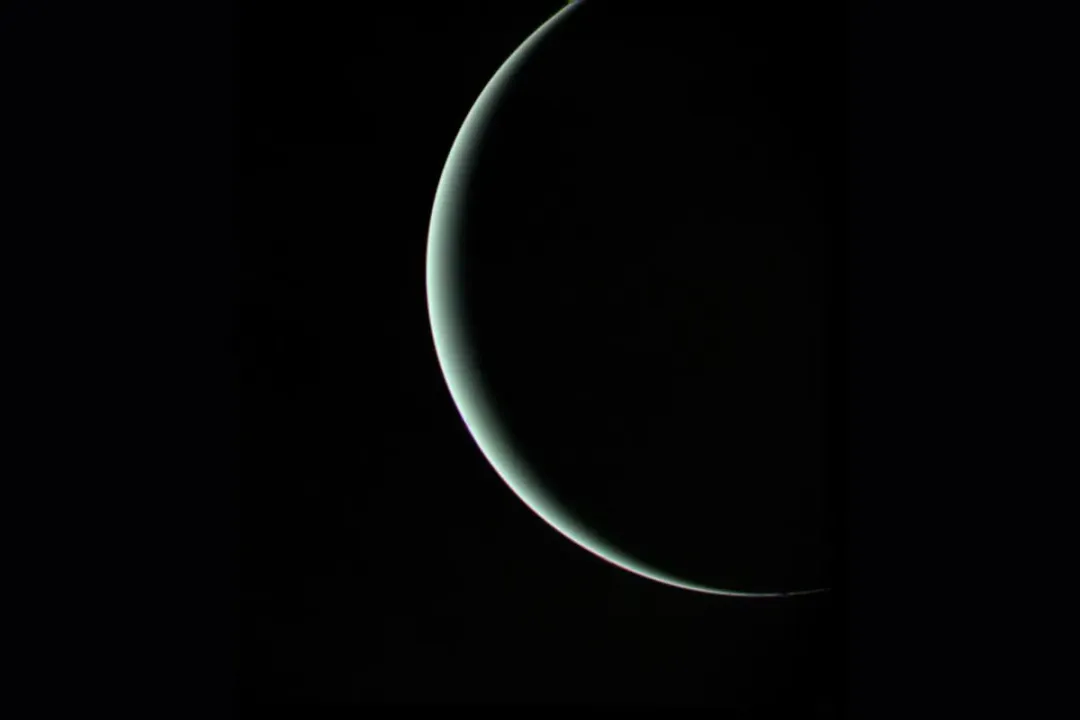
The tool itself was perhaps the most crucial component of Herschel’s successful method. [1][5] Herschel was renowned as much for his skill as a telescope builder as he was for his astronomical observations. [7] He constructed hundreds of reflecting telescopes, which used mirrors instead of lenses to gather light, thereby avoiding the color distortions inherent in early refracting telescopes. [7] The instrument he used to spot the object on March $13$, $1781$, was his $7$-foot reflecting telescope. [1][7]
This telescope provided a level of magnification and light-gathering power that surpassed almost anything else available to private individuals or even many observatories at the time. [1][5] The ability to see minute details was the hinge upon which the discovery swung. When observing faint objects, resolution—the power to distinguish fine details—is paramount. [6] Had he used a lesser instrument, the object might have appeared as just another faint, unremarkable star, blending into the background noise of the night sky. [6] His expertise in grinding and polishing the mirrors meant that his instruments offered exceptionally clear views, which is an essential part of the expertise needed for such a discovery. [7]
To give a sense of scale: a typical good amateur telescope of the period might resolve only the brightest double stars, whereas Herschel’s large reflectors allowed him to push the boundaries of what was optically possible, bringing faint nebulae and star clusters into sharper focus. [1][5] This technical mastery over his equipment was not ancillary to his work; it was the method of investigation. [7]

# Visual Clues
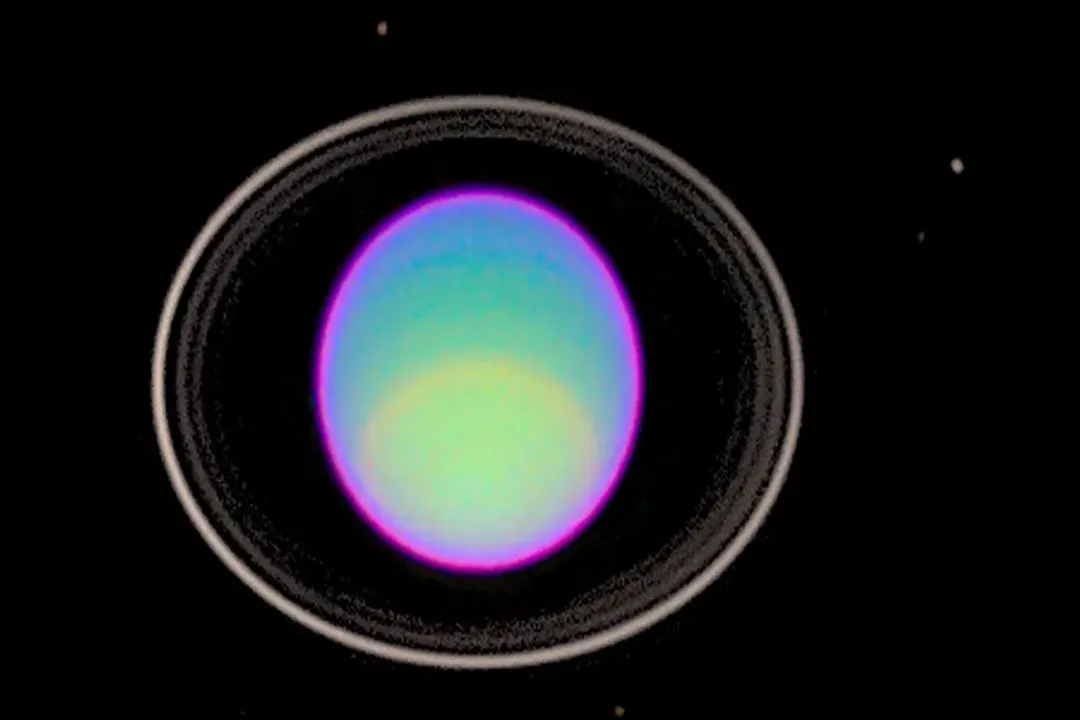
When Herschel first observed the object in the constellation of Taurus, his initial analysis hinged on two critical visual discrepancies that separated it from a normal star. [1][6]
The first clue was the apparent size of the object. [1][6] Stars, no matter how powerful the telescope, generally appear as perfect, unresolved points of light, even when viewed under magnification. [6] However, when Herschel examined this particular object, he noted that it possessed a measurable disc—it was visibly larger than a point source. [1][5] This suggested that the object was something other than a distant sun; it had to be a nearer body reflecting sunlight, such as a planet or a large nebula. [6]
The second, and ultimately decisive, clue was motion. [1][6] Herschel meticulously recorded its position relative to fixed background stars over several nights. [1] He used a technique involving measuring the angular separation between the object and nearby reference stars, essentially creating a rudimentary astrometric survey for this one object. [1] He observed that this disc-shaped object had clearly shifted its position against the seemingly unmoving background stars. [1][8] A fixed star remains fixed; a nebula, while extended, does not typically exhibit detectable orbital movement over a few nights. Only a body orbiting the Sun would show this characteristic displacement. [1]
Initially, his hypothesis leaned toward it being a comet. [1][5] Comets were known to exhibit a disc and, importantly, they moved across the sky relative to the stars. However, comets were also expected to display nebulosity or a tail, which he did not immediately see. [6] He noted a faint, greenish tint to the object, which, while perhaps subtle, may have contributed to his initial uncertainty. [5]
For the sake of perspective, imagine a modern search for faint objects: we rely on digital imaging, stacking exposures, and precise tracking software to detect subtle shifts. Herschel relied on his eye, the stability of his instrument mounting, and the precision of his handwritten logbook. [1] To achieve confirmation through mere visual tracking on a piece of machined metal and glass speaks volumes about the quality of his observational experience. [7]
# Confirmation Process
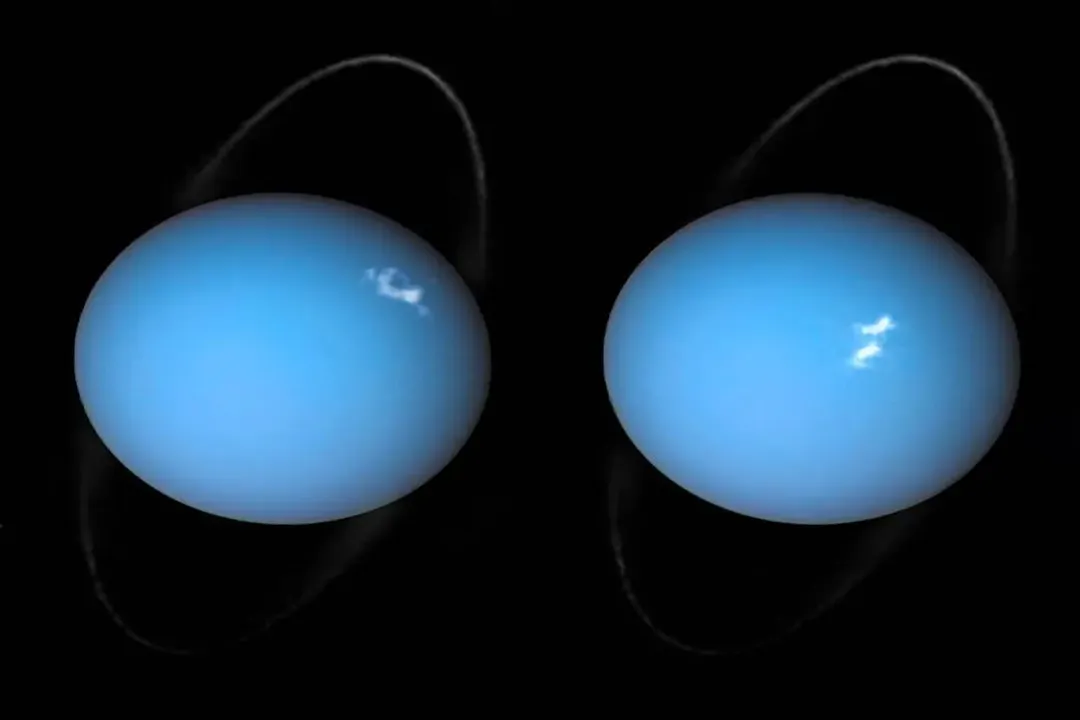
Discovery is one thing; convincing the scientific community that you have found a new planet is another entirely. [2] Herschel initially shared his findings with Dr. William Watson, who then communicated the results to the Astronomer Royal, Nevil Maskelyne. [1] Maskelyne's early observations were skeptical, leaning toward the comet theory. [1]
The turning point in validating Herschel’s method involved extended observation and mathematical analysis performed by other leading astronomers, such as Anders Johan Lexell in St. Petersburg and Johann Elert Bode in Berlin. [1] Their calculations, based on Herschel’s positional data, demonstrated that the object followed a path that was nearly circular, which is characteristic of a planet, not the highly elongated, elliptical path typical of a comet. [1][2] This rigorous mathematical confirmation, proving an orbit far beyond Saturn, solidified its status as the seventh planet, which he initially proposed naming Georgium Sidus after King George III. [2][7]
The final acceptance of Uranus as a true planet, rather than an unusual comet, rested on the consistency of its observed disc (indicating proximity) combined with the orbital mechanics derived from the systematic positional measurements. [1][2]
# Beyond the Method
What is often overlooked when discussing the method is the sheer courage of the claim. To state you have found a new planet in the solar system in the late century required not just good data but extraordinary confidence in one’s optics and observational skill. [7] Had the object been much fainter, or had his telescope possessed even slightly worse spherical aberration, the disc might have been invisible, and the object would have simply been logged as another faint, slightly erratic star. [6]
This incident provides a quiet lesson in scientific progress. The systematic survey of known phenomena (stars) was the vehicle, but the unique instrument was the engine that allowed him to perceive the previously imperceptible difference (the disc). [1][5] It illustrates that sometimes, the greatest discoveries are not made by inventing entirely new fields of inquiry, but by applying superior technology to existing, disciplined observation routines. [3] The meticulous nature of his work, extending over many nights, underscores that the 'method' was as much about patience and repeatability as it was about the initial sighting. [1] The fact that he was also an accomplished musician suggests a mind attuned to pattern and harmony, which may have made the discordant note in the celestial music—the moving, disc-shaped object—instantly recognizable to his trained senses. [7]
# Observation Data Log (Hypothetical Summary of Key Criteria)
To further clarify the difference between what Herschel saw and what he should have seen for a star, we can summarize the essential observational criteria he used:
| Characteristic | Expected for a Star | Observed by Herschel | Conclusion |
|---|---|---|---|
| Appearance | Point source of light, regardless of magnification | Measurable disc shape [1][6] | Not a star |
| Motion (Short Term) | Stationary relative to other stars [1] | Clear positional shift over several nights [1][8] | Moving body (Comet or Planet) |
| Color | Generally white/color dependent on spectral class | Faintly greenish tinge observed [5] | Consistent with a distant, large world |
| Orbit (Long Term) | Not applicable (fixed) | Calculated to be nearly circular [1][2] | Confirmed Planet |
This comparison highlights that the initial identification relied on immediate visual input (Disc + Movement), while the final scientific acceptance required the subsequent, more involved mathematical validation of its orbit. [1][2] Herschel’s method was a two-stage process: instantaneous visual recognition of anomaly, followed by disciplined data logging to permit later mathematical classification. [1]
# Further Celestial Exploration
Herschel’s discovery immediately broadened the scope of planetary science. While the immediate method focused on visual confirmation of angular change, the legacy of the finding spurred deeper investigation into the nature of this new world. [5] For instance, though he found it first, the faint greenish color he noted became a significant characteristic used later in telescopic confirmation, an observation that would be far more apparent with the advancements he himself spurred in telescope technology. [5] Furthermore, the sheer size and unexpected location of Uranus suggested that there might be other, even more distant bodies waiting to be found, setting the stage for future searches that would eventually lead to Neptune. [2][5] His success validated the painstaking, systematic approach over mere chance observation, embedding a new standard for astronomical discovery that prioritized rigorous, high-powered optical investigation. [3][7]
Related Questions
#Citations
Uranus: the first planet discovered with a telescope | Science Museum
Astronomer William Herschel Identifies Uranus as the Seventh Planet
This Month in Physics History | American Physical Society
A Cyberphysics Page
Herschel and the Uranian moons - Max-Planck-Institut für Astronomie
How Uranus was discovered | BBC Sky at Night Magazine
William Herschel - Wikipedia
On this day: 13 March 1781, a new planet, #Uranus, is discovered ...
Herschel's Experiment | Cool Cosmos - Caltech