Did scientists discover a hidden ocean?
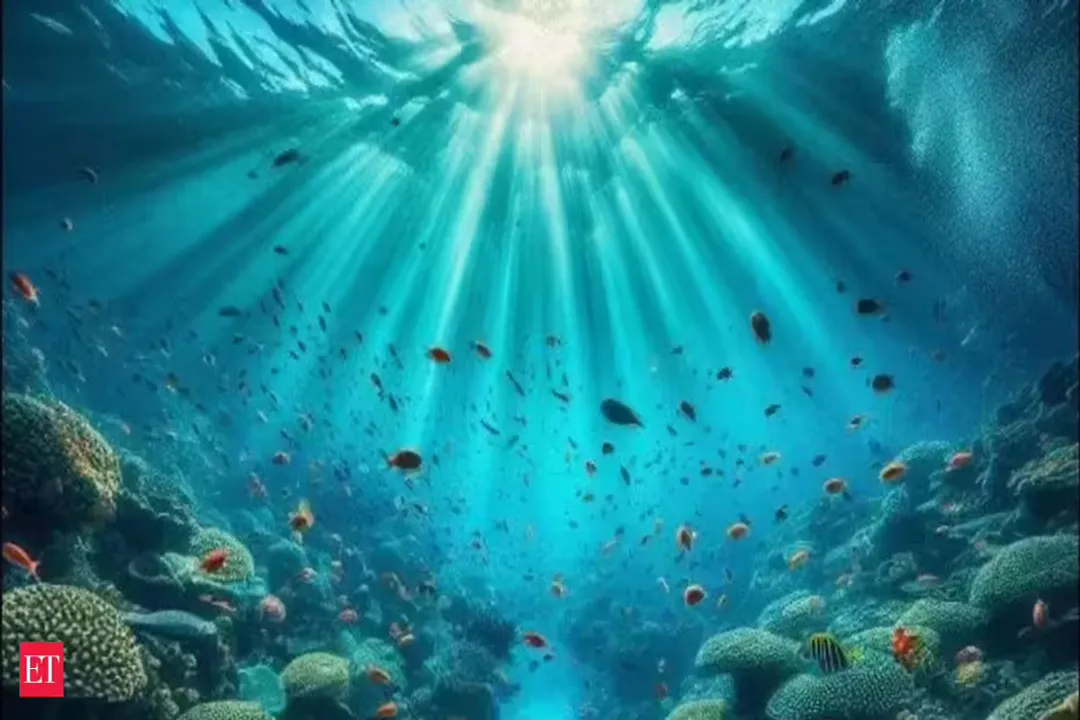
The idea of a vast, hidden ocean residing deep within our planet sounds like something pulled straight from a science fiction novel, yet recent scientific findings point to a body of water so immense it could dwarf everything we see on the surface. This isn't a subterranean sea you could sail a submarine through, nor is it liquid water sloshing around in giant caverns. Instead, this "ocean" is fundamentally different: it is water chemically bound within the very rock that forms the Earth's interior layer, the mantle.
This massive reservoir is situated in the Earth's transition zone, a region located roughly 700 kilometers (about 435 miles) beneath our feet. To put that depth into perspective, it is far deeper than the deepest point in the Marianas Trench, and it lies squarely within the region separating the upper mantle from the lower mantle. The sheer scale of the water involved suggests that the Earth’s total water content might be several times greater than the volume contained in all the surface oceans combined. This concept forces a radical re-evaluation of the planet's hydrological cycle, suggesting that the water cycle extends far deeper into the planet’s structure than traditionally assumed.
# The Mineral Cage
The key to understanding this deep water lies in a specific mineral: ringwoodite. Ringwoodite is not typically found near the surface because it requires immense pressure to form; it is a high-pressure polymorph of olivine, the most common mineral in the upper mantle.
The water in this deep zone is not in its familiar liquid state. Instead, it is held within the crystal lattice structure of the ringwoodite. Think of it like a sponge, but instead of absorbing liquid water, the mineral's molecular structure traps hydrogen and oxygen atoms—the components of water—within its composition. This makes the rock hydrous. Researchers estimate that ringwoodite in this transition zone can hold a significant percentage of water, perhaps as much as $1.5%$ by weight. While that percentage sounds small, when multiplied across the vast volume of the transition zone, the total quantity of is staggering.
The discovery hinges on examining how seismic waves travel through the Earth. Scientists monitor these waves, which are generated by earthquakes, as they pass through different layers. The speed and behavior of these waves change when they encounter changes in temperature, density, or the presence of dissolved materials like water. Anomalies in seismic wave behavior provided the initial hints that something unusual—a substantial amount of water—was present at that depth. Further supporting evidence often comes from identifying the mineral itself, such as a specimen found in the deep past that exhibited the right composition for this high-pressure environment.
# Deep Water Dynamics
The difference between this deep, hidden reservoir and the oceans we swim in is profound. Surface water is that flows freely, driven by gravity and thermal convection. Our understanding of Earth's water has historically focused on the hydrosphere (oceans, ice caps) and the shallow crust. The water at 700 km, conversely, is an intrinsic, structural component of a solid, high-temperature mineral. It is not a body of water but rather water locked in rock.
One crucial point to consider is the mobility of this deep water over geological timescales. While it is chemically bound today, the conditions in the transition zone are not static. As mantle material cycles due to convection—the slow churning of the planet's interior—minerals like ringwoodite can be pushed to different depths, subjected to higher or lower pressures, or experience slight temperature fluctuations. This movement could cause the water to be released from the lattice structure, potentially ascending or descending over millions of years, thereby acting as a giant, slow-motion geological pump for Earth’s internal water budget.
It is interesting to compare this storage mechanism to a battery. The surface ocean is like a full, easily accessible tank. The deep reservoir, however, is more like water stored chemically in a material that must be processed—heated, squeezed, or otherwise altered—before the water can migrate elsewhere. This suggests that the recycling time for deep-Earth water is vastly longer than the time it takes for surface water to cycle through the atmosphere and ground.

# Scientific Confirmation
The work validating this large subsurface water reservoir often involves complex laboratory simulations and analyses of seismic data. For instance, research spearheaded by geophysicists using data from seismic networks provides the authoritative evidence for the presence and location of this material. Scientists working in facilities like Brookhaven National Laboratory (BNL) have used advanced techniques to study high-pressure minerals, which helps confirm the theoretical capacity of ringwoodite to hold water.
One study focused on the seismological signatures, finding that the change in seismic wave velocity suggested a significant amount of water was present in the transition zone, supporting the ringwoodite storage model. This isn't a one-off finding but rather a consensus emerging from varied geophysical observations confirming the physical properties required to hold such a volume of hydrogen and oxygen at that depth and pressure.
The sheer volume estimated is what captures the public imagination. If the transition zone contains water equal to even one or two times the volume of the surface oceans, it implies that the total water inventory of the planet is dominated by this hidden, deep material. While the exact calculations vary depending on the specific model used for the transition zone’s volume and the estimated water content of the ringwoodite, the consensus is that the amount is enormous.
# Reimagining the Water Cycle
For everyday geology, we usually talk about three main reservoirs: the oceans/ice, the atmosphere, and groundwater/soil moisture. This discovery effectively adds a fourth, colossal reservoir deep within the solid Earth. Understanding this deep storage has implications beyond mere inventory counting; it affects our models of mantle convection and volcanism.
If water is being pulled down into the mantle during subduction—where one tectonic plate slides beneath another—and then held there within ringwoodite until it can migrate back up, this process must influence the viscosity and temperature gradients of the mantle itself. A 'wetter' mantle would behave differently from a 'drier' one under the same pressure and heat. Therefore, the presence of this deep water could subtly affect the long-term movement of tectonic plates, which shapes continents and drives volcanoes over hundreds of millions of years.
To begin tracking how this deep water interacts with the crust, one could look at the chemistry of deep-sourced volcanic rocks brought to the surface. Certain isotopic signatures within these rocks might provide a fingerprint linking them back to the transition zone material, even after it has cycled through the upper mantle. Although the direct evidence is seismic, linking it to geochemical markers in surface geology is the next logical step for confirming the continuous circulation pathways.
# Public Perception versus Scientific Reality
It is easy for news headlines to create confusion, especially when the word "ocean" is used. People naturally envision vast, dark bodies of liquid water, perhaps similar to the Mariana Trench but underground. The reality, as scientists clarify, is that the water molecules are simply incorporated into the crystal structure of the rock.
If you were somehow transported to the region 700 km down, you wouldn't find yourself swimming; you would find yourself surrounded by incredibly hot, dense rock—albeit rock that is structurally hydrated. The material would be rigid under the immense pressure, making the term "ocean" a conceptual description of quantity rather than state.
A useful way to visualize the concentration might be to consider very wet clay versus pure sand. Surface water behaves like the water in the clay—it flows readily when squeezed. The deep water is more like the hydrogen atoms chemically bonded within the clay mineral itself; they are part of the material until a chemical reaction (or geological stress) breaks the bond. Because the energy required to break these bonds and release the water is very high, this reservoir acts as a long-term buffer for Earth’s water supply. It’s a massive, slow-release mechanism regulating planetary geology across eons.
The scientific community generally views this discovery as a significant step in planetary science, confirming a long-held hypothesis about water cycling deep within the planet. It underscores the need for geoscientists to move past two-dimensional models of Earth's interior and account for the chemical complexity hidden in the mantle transition zone.
Related Questions
#Citations
Is there An Ocean Below Your Feet?
New Evidence for Oceans of Water Deep in the Earth
A Gigantic Ocean Discovered 700km Beneath The Earth's ...
Scientists found a massive underground ocean hidden ...
There's an Ocean Beneath Your Feet!
Scientists discover massive ocean inside earth
Massive ocean discovered beneath the Earth's crust