Why do scientists refer to Earth as a differentiated planet?
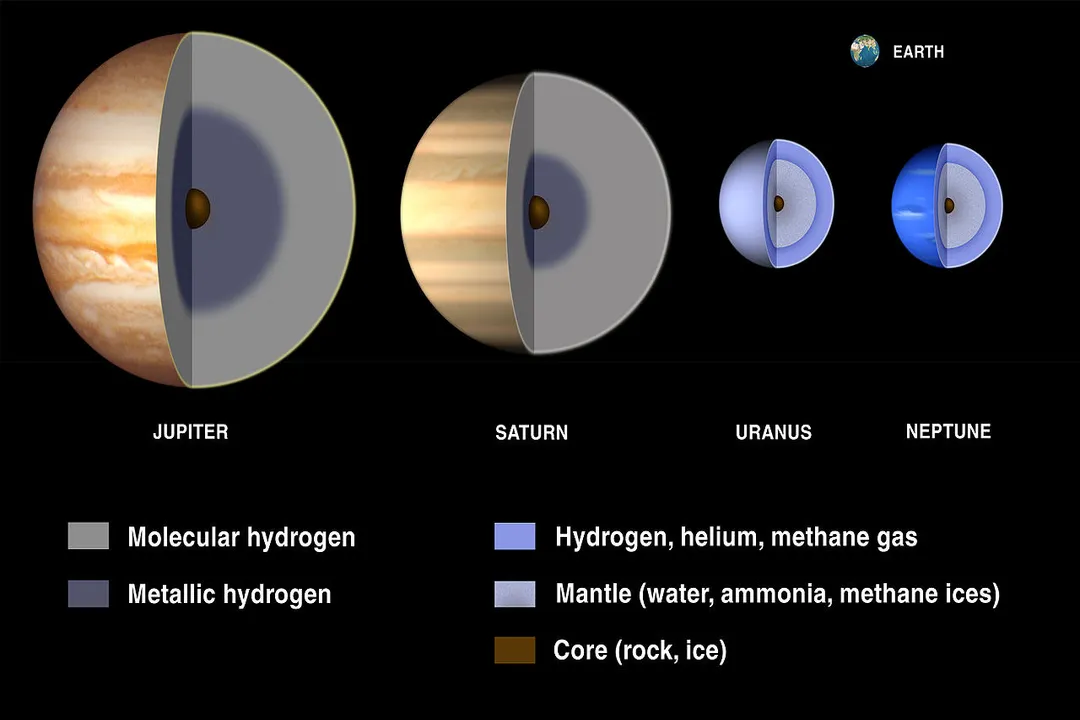
The designation of Earth as a differentiated planet is more than just academic jargon; it describes the most fundamental feature of our world's internal architecture—a structure built by millions of years of intense physical and chemical sorting. Put simply, differentiation is the process where the various chemical elements within a planetary body separate themselves into distinct, concentric layers based on their inherent properties, chiefly their density and chemical characteristics. This process, which began shortly after Earth accreted from the solar nebula around 4.6 billion years ago, transformed a once-homogeneous mass into the layered cake we know today: a dense metallic core, a massive silicate mantle, and a thin outer crust.
# Layered Structure
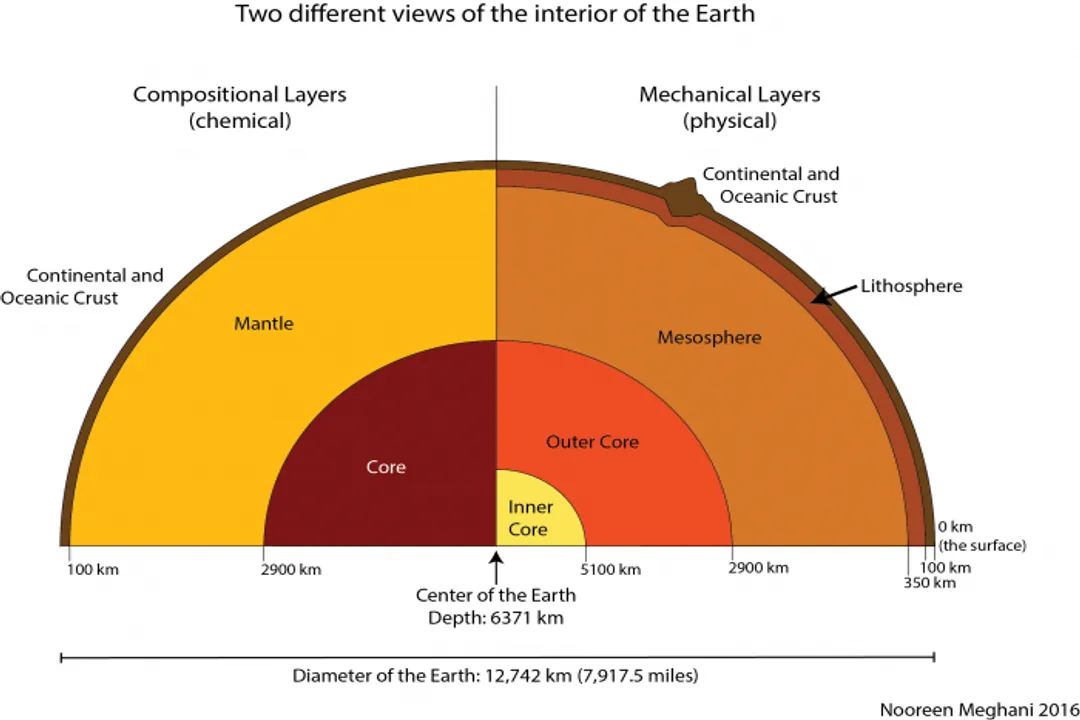
If one could slice our planet in half, the resulting cross-section would reveal layers much like those found in other terrestrial worlds, yet uniquely proportioned. Earth is divided into three primary compositional layers: the core, the mantle, and the crust. The core is the deepest, densest part, composed primarily of iron mixed with nickel. It is so hot—approaching the surface temperature of the Sun—that it is subdivided into a solid inner core and a molten, liquid outer core. This liquid outer core is a critical component, as its motion, influenced by Earth’s rotation via the Coriolis effect, generates the magnetic field that protects our atmosphere from the solar wind.
Above the core sits the mantle, which constitutes the vast majority of Earth's bulk. The mantle is rich in silicates, magnesium, and some iron that did not sink completely into the core. While considered solid rock, the upper portion of the mantle flows extremely slowly over geological timescales. In terms of volume, the mantle is the dominant feature; it makes up about 82.5% of Earth’s total volume, providing the moving platform upon which the surface tectonic plates ride. In stark contrast, the crust, the familiar rocky surface layer, accounts for a mere 1.4% of the planet’s volume.
The crust itself is chemically heterogeneous, split into thicker, less dense continental crust (rich in silica, like granite) and thinner, denser oceanic crust (rich in minerals like basalt). This layering—dense metal sinking inward, lighter rock floating outward—is the direct consequence of differentiation. The contrast in relative volume is striking: while the core accounts for nearly half the radius, the mantle dictates the overwhelming volume of our planet.
# The Melting Engine
Differentiation cannot occur unless the materials within the planet are mobile, meaning they must be at least partially molten. Therefore, the first prerequisite for a body to become differentiated is a significant internal heat source capable of raising temperatures past the melting points of its constituent minerals, including iron (approximately 1,538 °C or 2,800 °F).
The initial heating and subsequent melting that kicked off core formation are attributed to three main factors acting on the young Earth. The first, and likely the most significant contributor to sustained heat, was the radioactive decay of unstable isotopes such as uranium, thorium, and potassium-40, which were present in the accreting material. This radioactive heating continues today, helping to drive convection in the liquid outer core.
The second source of heat came from gravitational compression, a process where the growing mass of the planet forces its interior to shrink and become denser, releasing pressure as heat—a mechanism described mathematically as the Kelvin-Helmholtz mechanism. This compressive heating continues until the outward pressure gradient balances the inward gravitational force. The third factor was external: the constant, energetic bombardment by meteorites and other protoplanets during the early, violent accretion phase. These impacts generated intense local heat via shock waves and the creation of impact melts.
Once the interior reached this critical, molten state, the forces driving separation could take over, marking the beginning of the process often termed the iron catastrophe.
# Density Sorting
The most straightforward principle governing differentiation is gravitational separation, often described using a "rain-out model". In a fluid medium, high-density materials will sink through lighter materials until they reach a stable layer or the center of gravity.
In early Earth, the molten mixture of silicates, nickel, and iron allowed the heavy nickel-iron (NiFe) mixture to "rain out" or percolate downward toward the planet’s center, accumulating to form the core. Simultaneously, the lighter silicate materials floated upward, eventually forming the mantle and crust. Materials like low-density molten rock, such as granite, can rise in the form of diapirs (dome-shaped masses) toward the surface. The physical manifestation of this density sorting is clear: the average density of the entire planet is estimated at 5,515 kg/m³, with the crust only about 2,700 kg/m³, contrasting sharply with the mantle's density of about 3,400 kg/m³ just beneath it.
While density drives the bulk movement of major components, it is important to recognize that the process is not purely physical; chemical interactions also dictate where certain trace elements end up.
# Chemical Influence
Planetary differentiation is a combination of both physical sorting (density) and chemical sorting (affinity). Elements that are chemically bound to other materials often get "carried along" by the more abundant partner during the sinking or rising process, even if their pure elemental density would suggest a different destination. This phenomenon is known as chemical stratification.
A prime example of this is the heavy element uranium. In its pure state, uranium is quite dense, suggesting it should sink with iron to the core. However, uranium has a high chemical affinity for silicates. Because the early Earth’s silicates were rising toward the surface, uranium attached itself to these lighter compounds and was effectively swept upward, becoming concentrated in the crust and upper mantle rather than the core. Conversely, other heavy elements known as siderophile elements (those that readily alloy with iron) did travel downward with the iron into the core.
This chemical fractionation leads to layers that are not just sorted by weight but also by specific elemental ratios. The study of trace elements in igneous rocks provides clues about which source melted, to what degree, and which elements were left behind in the source material during magma formation. This chemical refinement process is what separates the composition of the crust—enriched in elements like aluminum and silicon—from the composition of the mantle over time.
# Ongoing Process
The differentiation of Earth did not stop 4 billion years ago with the formation of the core. The planet remains a dynamic, evolving body, which is another key reason scientists classify it as differentiated. This ongoing chemical and thermal evolution is most apparent in the processes of plate tectonics.
At divergent plate boundaries, like mid-ocean ridges, new crust material is constantly created as magma rises from the convecting mantle. This newly formed material is then cycled back down into the mantle at subduction zones, where it undergoes further chemical processing as it is heated and recycled. This slow but continuous destruction and creation of surface material means the internal layering is constantly being refined through mantle convection.
The study of these deep interior processes is not purely theoretical speculation; we can infer much about the early, inaccessible parts of the Earth by studying fragments of other differentiated bodies. For instance, iron-rich meteorites (iron achondrites) are thought to represent broken-off pieces of ancient planetary cores, while stony-iron achondrites may represent the historical core-mantle boundary of an ancient, differentiated world. By examining the composition of these space rocks, scientists gain an analogue for understanding the evolution of Earth’s own inaccessible layers.
# Universal Patterns
Earth’s differentiation is not a unique event in the cosmos; it is a common outcome for any body that accumulates sufficient mass and heat. This universality is demonstrated by other celestial objects in our solar system which also exhibit layered structures based on density separation.
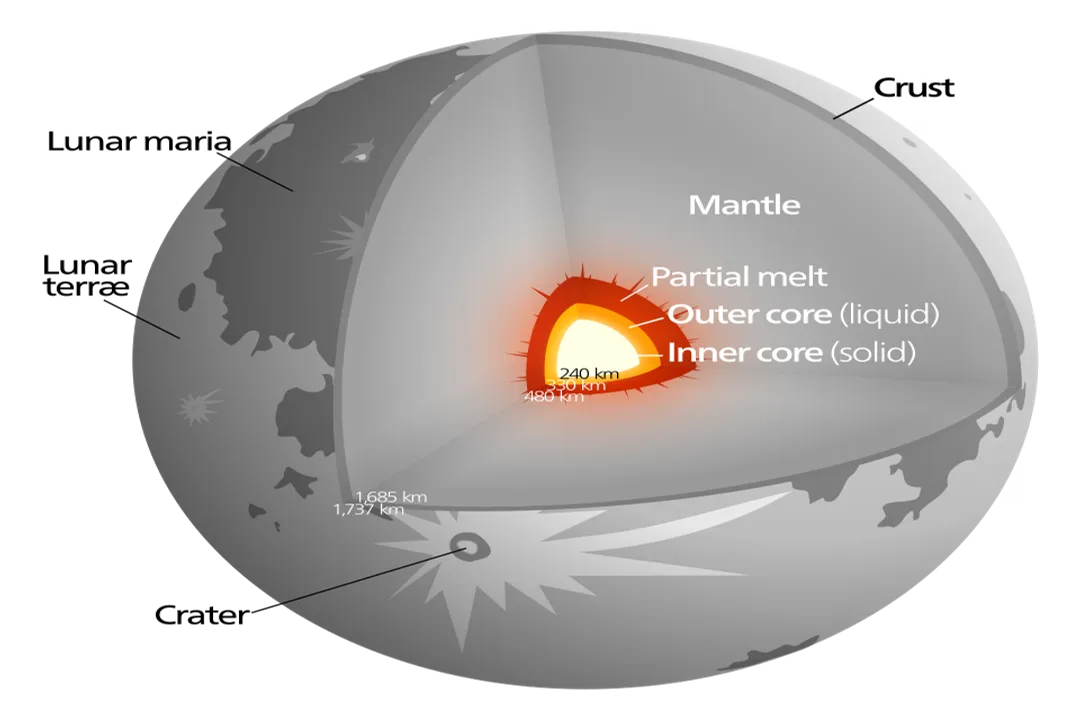
The Moon, for example, is a classic case. Formed likely from material ejected during a massive impact with the early Earth, the Moon has a much lower overall density than Earth because it lacks a large metallic core. However, it is still differentiated, possessing a core (albeit proportionally smaller), a mantle, and a crust. Its differentiation is thought to have involved the precipitation of minerals from a vast, early magma ocean via fractional crystallization—a process where minerals crystallize from a melt at specific temperatures and pressures, removing certain elements from the remaining liquid.
Asteroid 4 Vesta also shows evidence of this sorting. Analysis of meteorites originating from Vesta suggests it melted early on, likely heated by the decay of the now-extinct radioactive isotope aluminum-26. This melting led to the formation of a heavy metal core and a convecting mantle, with the residual molten material cooling on the surface to form a crust. This comparison—Earth, the Moon, and Vesta—highlights that the tendency to separate by density is a fundamental process that occurs across rocky bodies of different sizes and origins.
Ultimately, scientists refer to Earth as a differentiated planet because its current structure—the rigid crust, the immense, flowing mantle, and the dense, layered core—is a direct, preserved record of the planet’s violent, heat-driven process of internal sorting that began nearly five billion years ago and continues in subtle ways today through the motion of tectonic plates.
Related Questions
#Citations
Planetary differentiation - Wikipedia
Earth's differentiation | Research Starters - EBSCO
Earth - Differentiation, Formation, Structure | Britannica
3.3 Differentiation and Internal Structure - CUNY Pressbooks Network