What is Earth moving called?
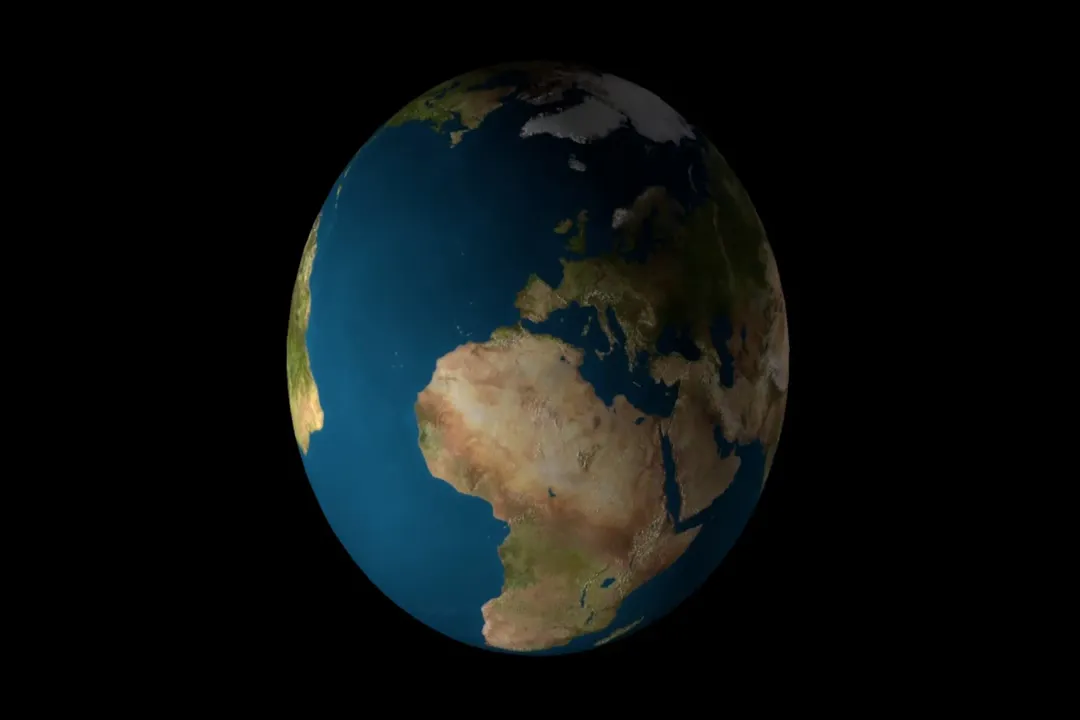
The question of what Earth's movement is called isn't resolved by a single term; rather, it describes a complex choreography involving at least two primary motions that dictate our experience of time, light, and climate. When we talk about the motion of the Earth, we are generally referring to its rotation—the spinning on its internal axis—and its revolution—the yearly orbit around the Sun. [1][6] These two fundamental movements are the basis for nearly every cyclical phenomenon we observe, from the rising and setting of the Sun to the annual shift in seasonal weather patterns. [7]
# Scientific Study
The scientific discipline dedicated to precisely measuring and predicting the movements of celestial bodies like Earth falls under the umbrella of celestial mechanics, a specialized area within astronomy and physics. [5] While geophysics studies the physical state of the Earth, including its structure and forces, the actual motion through space—how fast it travels, its path, and its relationship to other bodies—is the domain where concepts like orbital dynamics and rotational physics take precedence. [5] Understanding this motion requires a deep dive into Newton's laws of motion and gravitation, which provide the mathematical language to describe why the Earth maintains its path rather than spiraling into the Sun or flying off into deep space. [1]
# Spin Rate
The Earth's spinning on its axis is what we commonly associate with the concept of rotation. [3][6] This rotation is counter-clockwise when viewed from above the North Pole. [4] This motion is incredibly consistent, taking approximately 24 hours to complete one full turn, which defines our standard day. [6] This constant turning is responsible for the cycle of daylight and darkness we experience daily. [6]
One intriguing aspect related to this constant velocity is the feeling—or lack thereof—of movement. If a person were to jump straight up, they would land in nearly the same spot, despite the ground beneath them traveling at hundreds of miles per hour at the equator. [9] This is because the jumper, the air, and everything on the surface are already traveling forward at the same speed as the Earth beneath them; the horizontal motion is conserved during the brief vertical leap. [9] Thinking about the relative speed highlights the sheer inertia involved; the entire atmosphere moves along with the planet, making the massive rotational speed imperceptible in our daily lives. [9]
# Axial Tilt
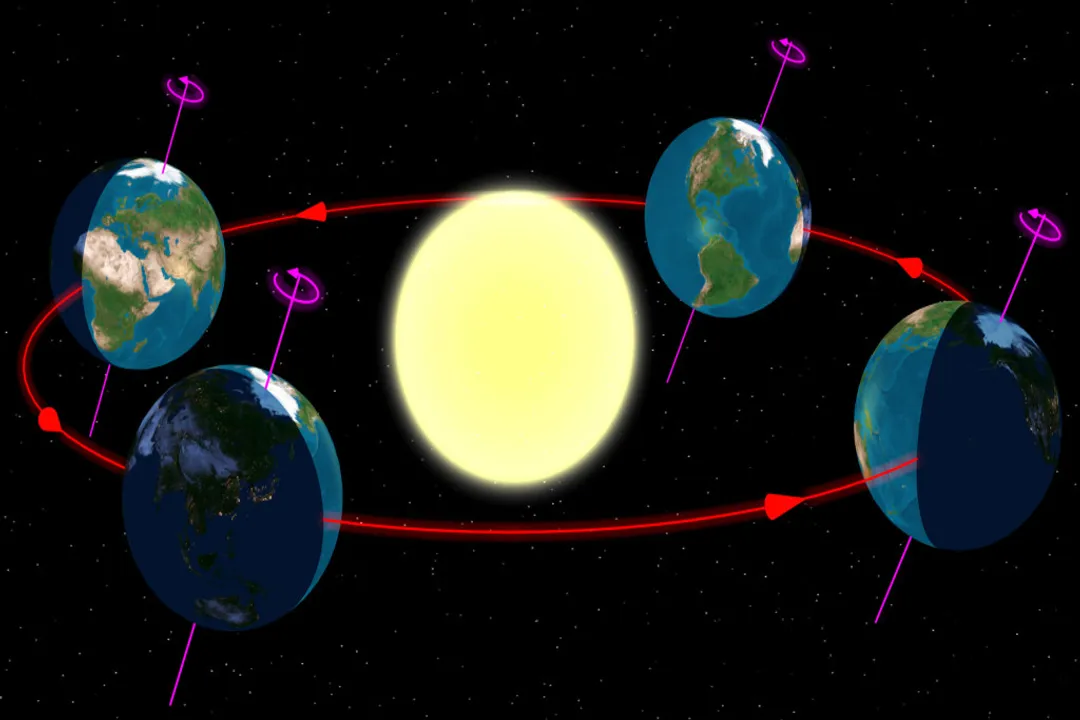
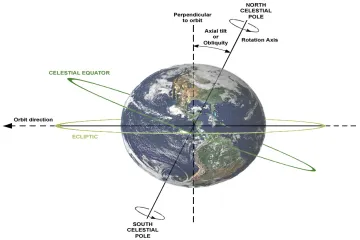
While rotation defines the day, the angle of the axis around which this rotation occurs profoundly influences our climate. [7] The Earth does not stand perfectly straight relative to its orbital plane; instead, its axis is tilted at an angle of about 23.5 degrees from the perpendicular. [7] This tilt remains relatively constant in its orientation in space as the planet moves around the Sun. [7]
# Orbital Dance
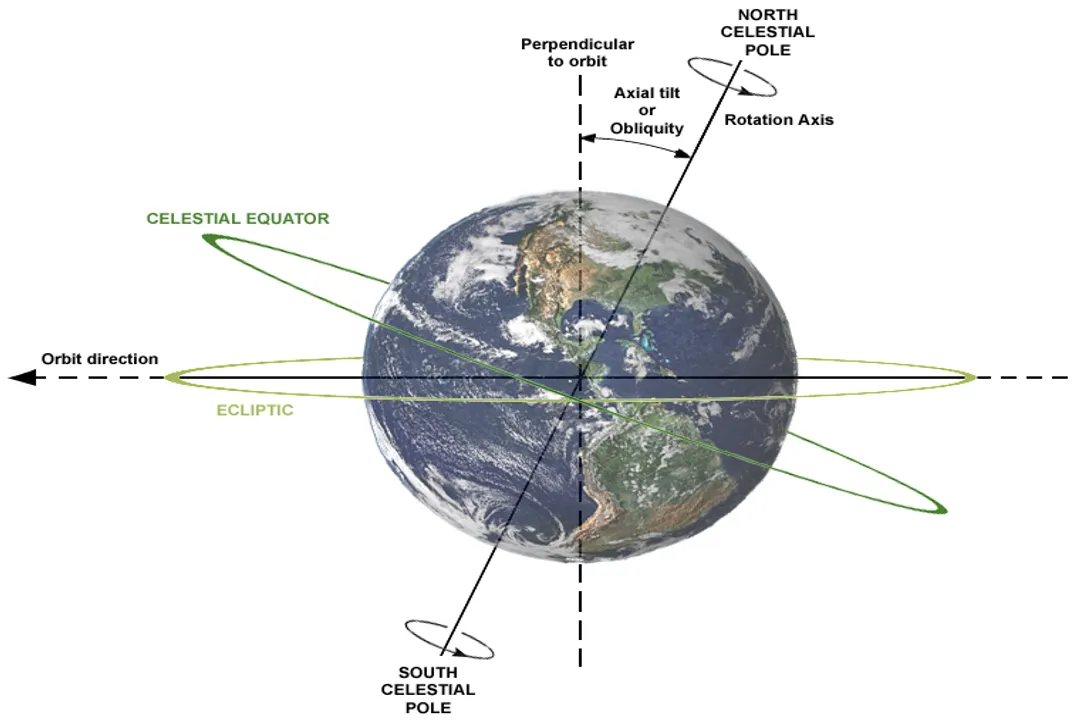
The second major component of Earth's movement is its revolution around the Sun. [1][3] This is the planet's orbit, an elliptical path that takes roughly 365.25 days to complete, defining our year. [1][6] The Earth moves at an average speed of about 67,000 miles per hour along this path. [1] The gravitational attraction between the massive Sun and the relatively smaller Earth dictates this path, keeping the planet bound in its orbit. [1]
The variation in distance from the Sun throughout the year is an inherent feature of this orbital motion, as the path is not a perfect circle but an ellipse. [4] At its closest point, called perihelion, the Earth is about 91.4 million miles away, and at its farthest, aphelion, it is about 94.5 million miles away. [6] It is a common misconception that distance from the Sun causes the seasons; rather, it is the tilt combined with the revolution that is the driving force. [7]
When the Northern Hemisphere is tilted toward the Sun during its revolution, it receives more direct sunlight and experiences summer, while the Southern Hemisphere is tilted away, experiencing winter. [7] Six months later, as the Earth continues its journey around the Sun, the situation is reversed. [7] This predictable shift in the angle of incoming solar radiation, directly traceable to the planet's tilt during its annual orbit, is the mechanism behind our changing seasons. [7]
# Understanding the Cycle
To truly appreciate the complexity, one must visualize the combination of these motions. Imagine a spinning top (rotation) that is also being carried around a central light source (revolution). [4] The speed of the spin dictates how quickly one side faces the light; the speed of the orbital travel dictates how long it takes to make one full circuit around the light source.
If we were to map out the Earth's motion over the course of one year, we could create a Motion Timeline Table to clarify the periods involved:
| Motion Type | Axis Reference | Approximate Period | Primary Effect |
|---|---|---|---|
| Rotation | Spinning on its axis | hours | Day and Night Cycles [6] |
| Revolution | Orbiting the Sun | days | The Year and Seasons [1][7] |
| Precession/Nutation | Wobble of the axis | Tens of Thousands of Years | Slow shift in the North Star [3] |
This table illustrates that while rotation and revolution are the motions that immediately define our human experience, other subtle movements, like the slight wobble known as precession, also occur over vast timescales, gradually altering the position of the celestial pole over millennia. [3]

# Earth's Motion and Measurement
The sheer regularity of these movements is what allows us to structure our civilization around timekeeping. The definition of a second, minute, hour, and year is entirely dependent on the measured period of these motions. [6] However, the rotation is not perfectly steady. Minor irregularities exist due to factors like tidal friction caused by the Moon and the distribution of mass within the Earth itself, which slightly changes as oceans shift and the planet’s interior moves. [3]
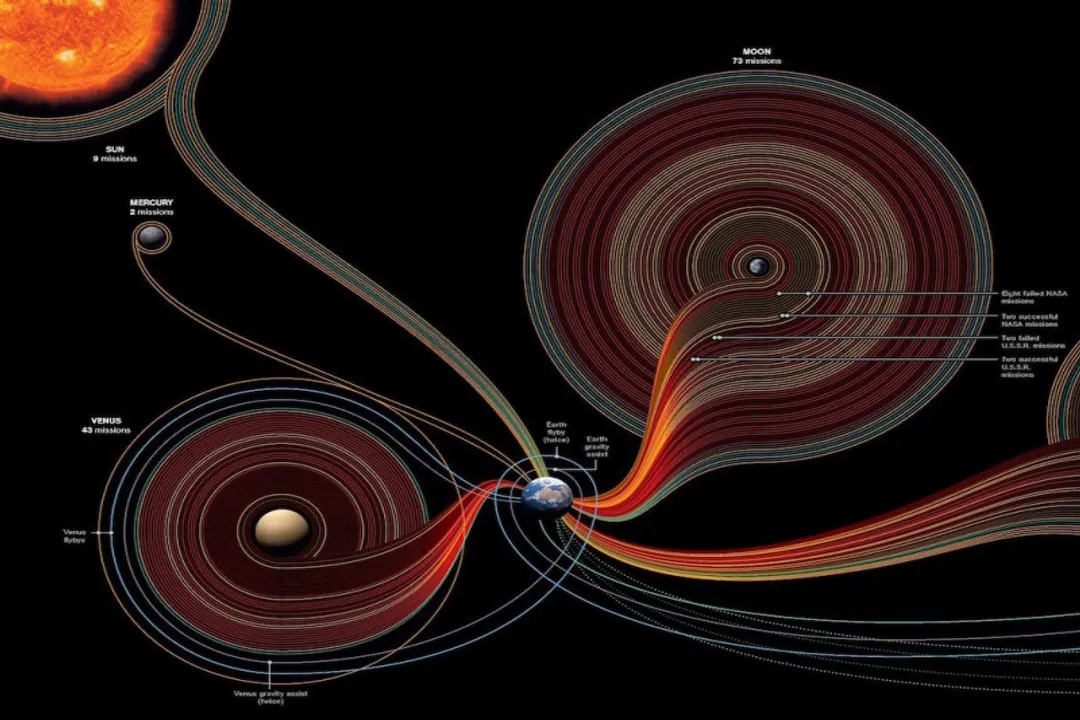
Considering the scale of the movement, it is fascinating to think about how we pinpoint the Earth's location in space at any given moment. Since the Earth is traveling so quickly in its orbit, defining its exact position requires precise astronomical measurements relative to distant stars or, more recently, artificial satellites. [1] This effort to track the planet's geocentric position—its location relative to the Sun—is a practical application of celestial mechanics that underpins modern navigation and space flight planning. [1]
An interesting exercise in conceptualizing this motion involves considering how an observer's perspective changes the measurement of time. While the mean solar day is about 24 hours, the sidereal day—the time it takes for the Earth to rotate exactly 360 degrees relative to the distant stars—is slightly shorter, about 23 hours and 56 minutes. [6] This difference arises because, during that extra four minutes, the Earth has moved slightly along its orbit, requiring it to rotate an extra fraction of a turn to bring the Sun back to the same apparent position in the sky. [6] This small discrepancy is a direct readout of the planet's constant forward speed in its revolution.
# Dynamics on the Surface
The planet's spin has consequences that extend far beyond simply creating light and darkness; it fundamentally shapes atmospheric and oceanic circulation patterns across the globe. [3] The Coriolis Effect, a direct result of the Earth's rotation, dictates the large-scale movement of air masses and ocean currents. [3] Because different latitudes move at different tangential speeds (fastest at the equator, zero at the poles), any object moving over long distances across the surface appears to curve relative to the ground beneath it. [3] This deflection causes storms to spin and determines the general direction of prevailing winds. For example, this effect is why hurricanes spin counter-clockwise in the Northern Hemisphere and clockwise in the Southern Hemisphere—a direct, large-scale manifestation of the planet’s spin. [3]
When thinking about building large-scale infrastructure or planning long-range ballistic trajectories, this rotational effect must be calculated with precision. Engineers and military planners do not simply account for gravity and distance; they must also incorporate the Coriolis force imparted by the planet's spin. A projectile fired north from the equator will appear to drift to the east relative to the ground because the target location is moving eastward faster than the launch point was initially. [3] This is an area where the difference between the Earth's rotational speed and the constant speed of objects in free fall becomes critically important for accurate targeting.
# Observing the Movement
Historically, humans recognized rotation long before they grasped the concept of revolution around the Sun. The most ancient observation is the daily cycle of light and dark. [3] The apparent motion of the Sun and stars provided the initial evidence for a spinning world, a concept formalized by astronomers like Copernicus, who proposed a Sun-centered system that explained the celestial movements much more elegantly than the previous Earth-centered models. [4]
Confirming the revolution, however, required centuries more effort. Early attempts to detect Earth’s orbital movement failed because the motion is constant and relative. It was not until the precise measurement of stellar parallax—the apparent shift of nearby stars against distant background stars as the Earth moves from one side of its orbit to the other—that the revolution was empirically proven. [1] This parallax effect is minute, requiring exceptionally sensitive instruments, but it serves as direct, verifiable proof that our planet is indeed hurtling through space in an annual circuit around the Sun. [1]
Ultimately, what Earth's movement is called is less about a single name and more about appreciating a dual, interconnected dance: a constant, steady spin that gives us our hours, and a massive, rapid orbit that gives us our years and seasons. [6][7] Every moment spent under the sun or under the stars is a testament to the precise physics governing these two profound motions. [1]
#Videos
Movements of the Earth - Earth's Revolution & Rotation - YouTube
Earth's Rotation & Revolution: Crash Course Kids 8.1 - YouTube
Related Questions
#Citations
Chapter 2: Reference Systems - NASA Science
Movements of the Earth - Earth's Revolution & Rotation - YouTube
EIGHT MOTIONS OF THE EARTH - Earth Science Australia
Earth's Rotation & Revolution Around the Sun Explained | Britannica
What is the branch of science that studies the motion of earth called?
Earth's Motions | Physical Geography - Lumen Learning
The Earth Moves Two Ways - Tree House Weather Kids
The Earth is spinning, so why don't we jump and land on a different ...