What is the oldest material ever found on Earth?
The quest to uncover the absolute oldest substance on our planet leads not to terrestrial bedrock or the deepest ocean crust, but rather to tiny specks of cosmic dust trapped within a fallen meteorite. These microscopic remnants offer a direct line to a time long before our Sun even began to shine, preceding the formation of the entire solar system itself. We are talking about material that is not just ancient by geological standards, but ancient by cosmic standards, pushing the timeline back billions of years before the Earth solidified.
# Cosmic Relics
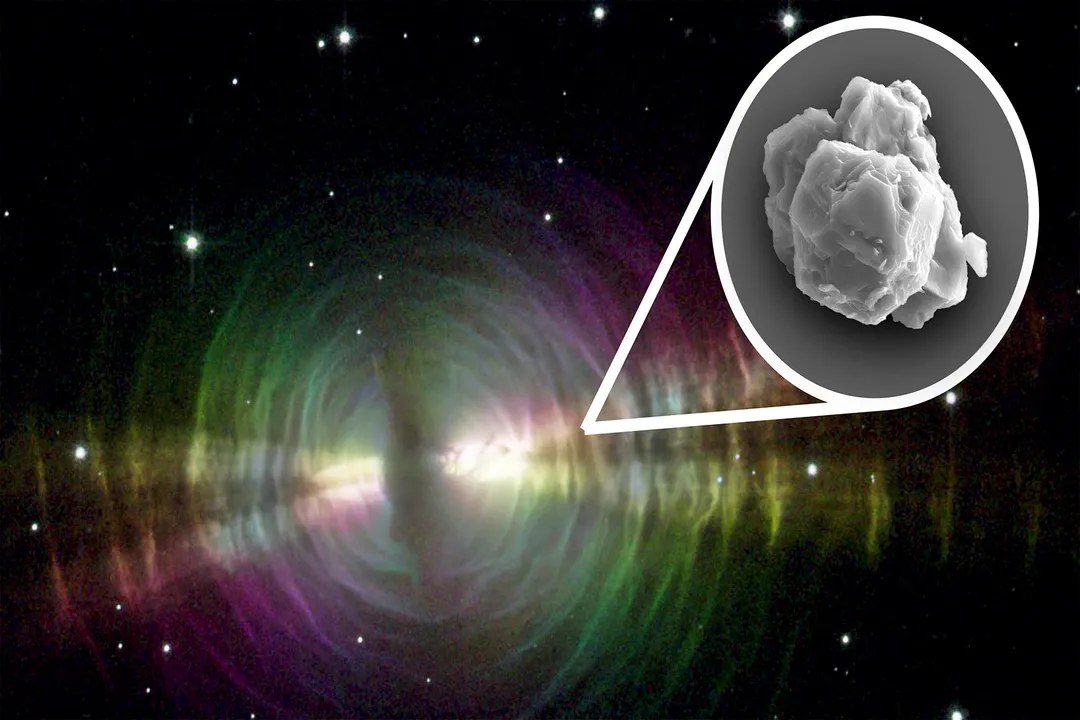
The undisputed titleholder for the oldest material ever recovered on Earth belongs to presolar grains found embedded within the Murchison meteorite. [1][2][8] These are not rocks; they are incredibly fine dust particles that condensed in space around long-dead stars, surviving interstellar travel before becoming incorporated into the larger asteroid that eventually crashed here. [1][2][8]
The reported age of these specific grains is staggering: they are estimated to be between 7.5 and 8 billion years old. [1][2] To put that immense timeframe into perspective, our Sun is only about 4.6 billion years old, and the Earth formed shortly thereafter. [1][2][5] This means the material we hold in our hands is roughly twice as old as the celestial neighborhood we call home. [1] The identification of these grains essentially means scientists have found physical artifacts from the universe's preceding generation of stars. [2][8]
# Presolar Grains Defined
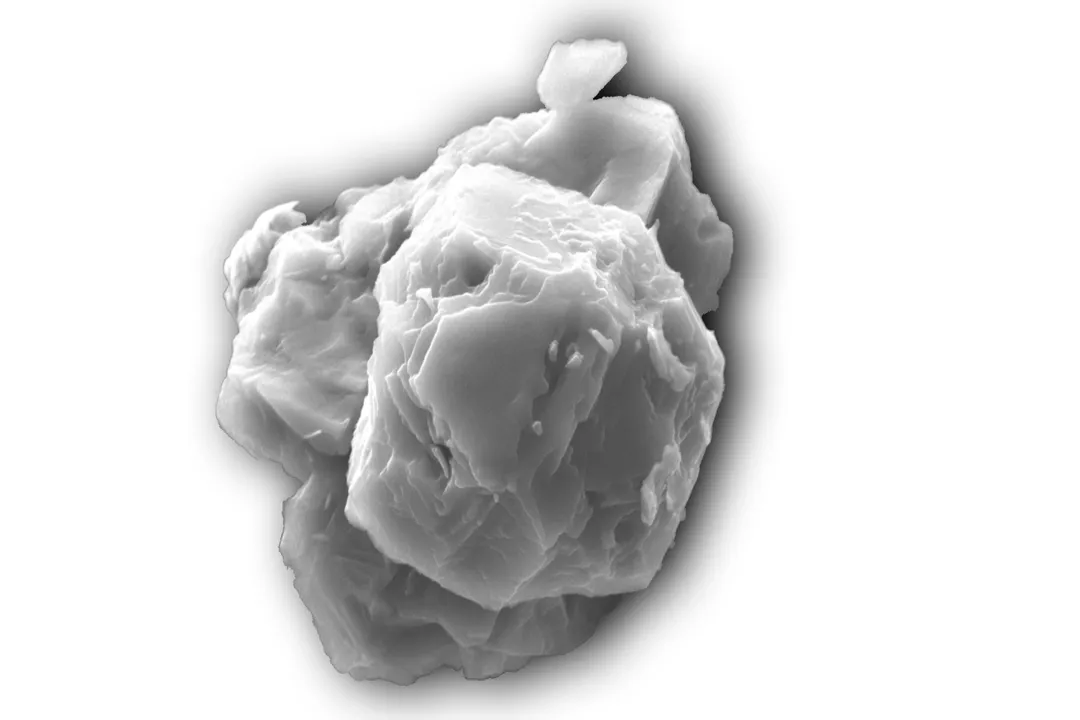
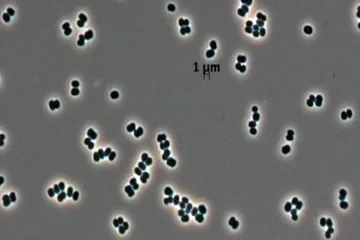
These ancient particles are sometimes referred to simply as stardust. [1][7] They are generally made of materials that form readily in the atmospheres of aging, dying stars, such as silicon carbide () and graphite. [8] When a massive star nears the end of its life, it ejects its outer layers into space through events like stellar winds or even supernovae. It is within these expelled envelopes of gas and dust that these incredibly tough, heat-resistant solids condense. [1]
The science of dating these materials is complex, relying on isotopic analysis to determine when they formed relative to the Big Bang and the subsequent formation of the galaxy's current structure. [8] The analysis often involves painstaking separation from the bulk meteorite material, sometimes dissolving the surrounding rock matrix in strong acids to isolate the resistant presolar grains. [2] Researchers at institutions like the Field Museum and the University of Chicago have been central to confirming and refining the ages of these specimens. [1][2] One study focused on isolating the most primitive, ultra-refractory components, which tend to be the oldest surviving grains. [1]
# The Murchison Meteorite
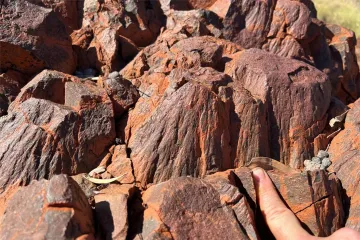
The source of this extraordinary material is critical to its story. The Murchison meteorite holds a special place in planetary science because of its sheer size and relatively uncontaminated composition. [4][9] It fell in Murchison, Victoria, Australia, in September 1969. [4][9] Upon impact, it was quickly recovered, which preserved its pristine state. [4] Because it fell onto land and was collected quickly, it avoided significant terrestrial contamination, making it an unparalleled sample of the early solar nebula. [4]
The meteorite itself, which weighed over 100 kilograms, has provided scientists with a time capsule of the raw ingredients that assembled into the Sun, Earth, and everything else in our system. [9] While the meteorite is the container, the grains inside are the actual prize. The discovery and subsequent analysis of the Murchison material have been foundational for understanding presolar matter. [4]
# Earth's Own Ancient Record
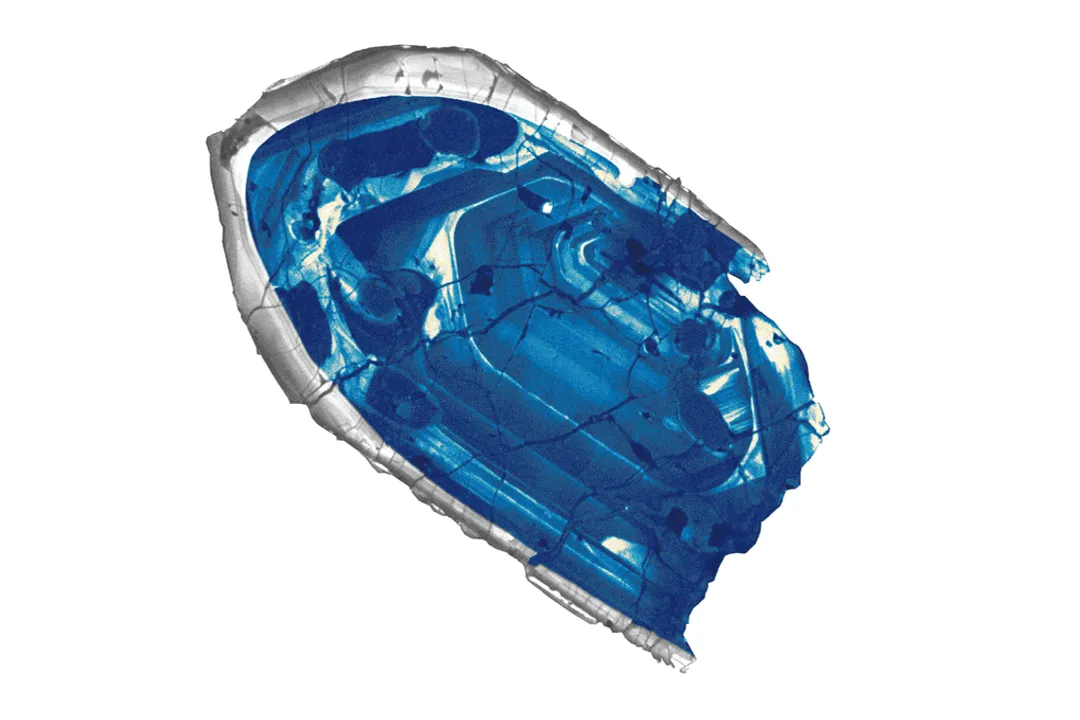
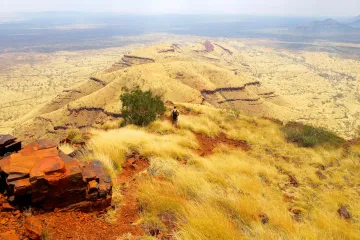
It is interesting to compare the age of this interstellar dust with the oldest materials formed right here on our planet. The Earth is estimated to be approximately 4.54 billion years old. [5] The oldest known terrestrial mineral grains, typically zircons found in Western Australia, date back to around 4.4 billion years ago. [7] This material offers a direct look at the earliest crust formation, a time when the planet was still undergoing intense bombardment and differentiation. [7]
However, these terrestrial records—the $4.4$ billion-year-old zircons—are nearly four billion years younger than the $7.5$ to $8$ billion-year-old stardust found inside the meteorite. [1][2][7] This comparison clearly demarcates two vastly different timescales: the age of the matter that built our solar system, and the age of the first stable crust material that formed on our world. [5]
Here is a quick look at the hierarchy of deep time represented by these materials:
| Material Category | Approximate Age (Billions of Years) | Origin |
|---|---|---|
| Presolar Grains | $7.5$ – $8.0$ | Other, older stars |
| Oldest Terrestrial Zircon | Early Earth crust | |
| Sun and Solar System Formation | Collapse of the solar nebula |
This juxtaposition highlights that the Earth's history, while incredibly long by human standards, only began after the galaxy had already hosted multiple generations of massive stars that enriched the interstellar medium with the heavy elements required to make rocky planets. [1]
# Surviving Cosmic Violence
When considering the sheer age of these grains, a profound thought arises about their survival mechanism. They existed for billions of years, traveling across the galaxy, before our Sun even ignited. The formation of the Solar System was a violent event involving the collapse of a massive cloud of gas and dust, subjected to immense gravitational forces, heat, and radiation. [2]
For these delicate, microscopic particles to have survived the accretion disk that formed the planets, the initial bombardment phase of the early Earth, and the subsequent geological churning, only to be preserved inside a piece of space rock that eventually landed where humans could find it, is a statistical near-impossibility. [4] It speaks to the incredible durability of the materials like silicon carbide, which can withstand conditions that would vaporize most other known substances. [8]
# Dating Challenges
The process of verifying these dates often involves collaboration between different scientific specialties. While the Murchison meteorite's atmospheric entry date is precisely known (1969), dating the internal components requires specialized techniques. When scientists discuss the dating of presolar grains, they are often relying on techniques like measuring the anomalous isotopic ratios of noble gases trapped within the crystals. [1][8] The pattern of these isotopes acts as a fingerprint, linking the grain back to the specific type of star it formed around. [2]
In contrast, dating the oldest terrestrial rocks, like the $4.4$ billion-year-old zircons, relies on measuring the decay of uranium into lead within the crystal lattice, a technique called U-Pb dating. [7] While both methods rely on radioactive decay, the context is different: one analyzes remnants of stellar nucleosynthesis, and the other analyzes crustal solidification on Earth. [7] The consistency across multiple samples, confirmed by different labs over decades, provides the Authority needed to state these ages confidently, reinforcing the scientific trust in the findings. [1][2]
# Scientific Implications
The existence and age of these $7.5$ to $8$ billion-year-old grains significantly inform models of galactic chemical evolution. [2] They confirm that the molecular clouds that collapsed to form our Sun were already enriched with heavy elements produced by older, larger stars that had already lived and died. [1] This process of cosmic recycling—where elements forged in one star seed the formation of the next generation of stars and planets—is fundamental to astrophysics.
Finding this material allows scientists to sample the interstellar medium as it was before the formation of our specific stellar neighborhood. It offers a real-world composition standard against which theoretical models of stellar death and nucleosynthesis can be tested. [2][8] If these grains were significantly younger, they would imply that the Sun formed much earlier in the galactic history than current models suggest, or that the rate of element production in earlier generations of stars was much slower. [1]
One practical takeaway for anyone following this type of discovery is how interconnected our science is. The work done by geologists studying ancient Earth minerals (like the zircons) informs cosmologists studying meteorites, and vice versa, as they all strive to build a continuous timeline from the Big Bang to today. The microscopic specks in the Murchison meteorite are, therefore, not just the oldest things we have found, but they are the anchors that help calibrate the entire timeline of our universe's development. [5]
#Videos
The Oldest Material Found on Earth ☄️ - YouTube
Related Questions
#Citations
Scientists discover oldest material on Earth: 7-billion-year-old stardust
Meteorite contains the oldest material on Earth: 7-billion-year-old ...
Oldest material on Earth discovered - BBC
Murchison meteorite, this is the oldest material found on earth till ...
Oldest dated rocks - Wikipedia
7 Billion-Year-Old Stardust Is Oldest Material Found on Earth
4.4-Billion-Year-Old Piece Of Earth Is One Of The Oldest Things We ...
Meteorite contains the oldest material on Earth | ETH Zurich
Oldest material ever found on Earth predates the entire solar system
The Oldest Material Found on Earth ☄️ - YouTube