What is the coldest ice ever?
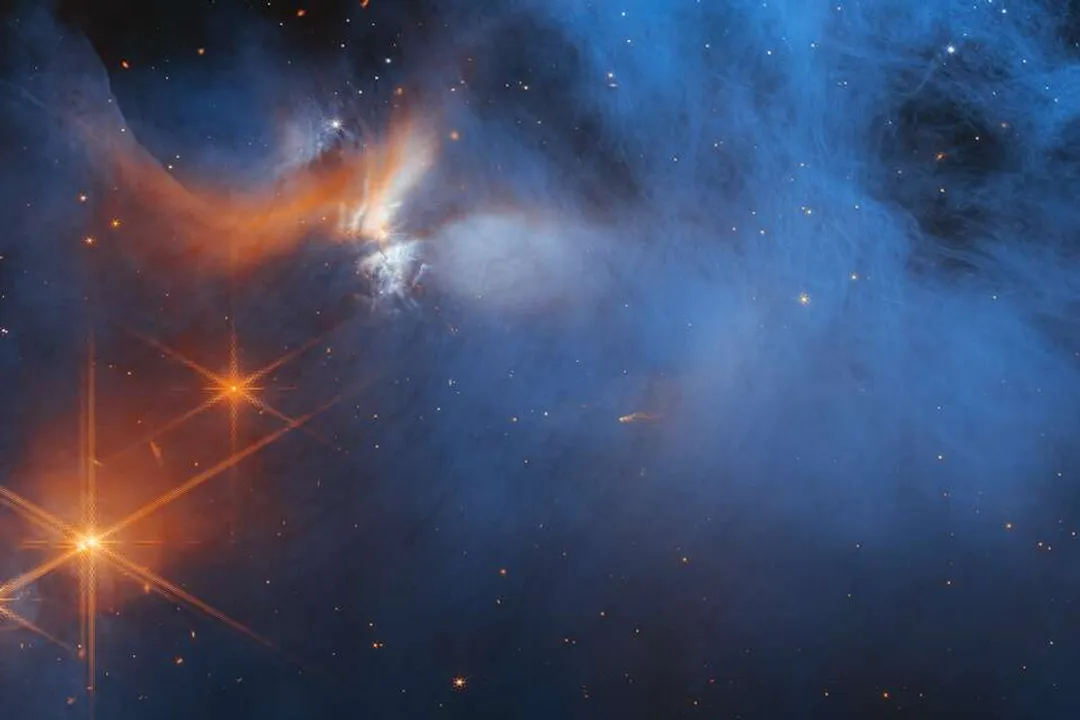
The definition of the "coldest ice ever" is surprisingly complex, hinging entirely on whether you are measuring the surface of our own planet, the atmosphere above it, or the vacuum of deep space observed through our most advanced instruments. On Earth, we think of solid, macroscopic ice—the stuff that forms puddles and glaciers—but when we move to the interstellar medium, the term "ice" refers to frozen molecules, often mere tens of degrees above absolute zero. Understanding the absolute coldest spots requires looking across astronomical scales, from the Antarctic interior to the dusty nurseries where stars are born.
# Terrestrial Temperature Limits
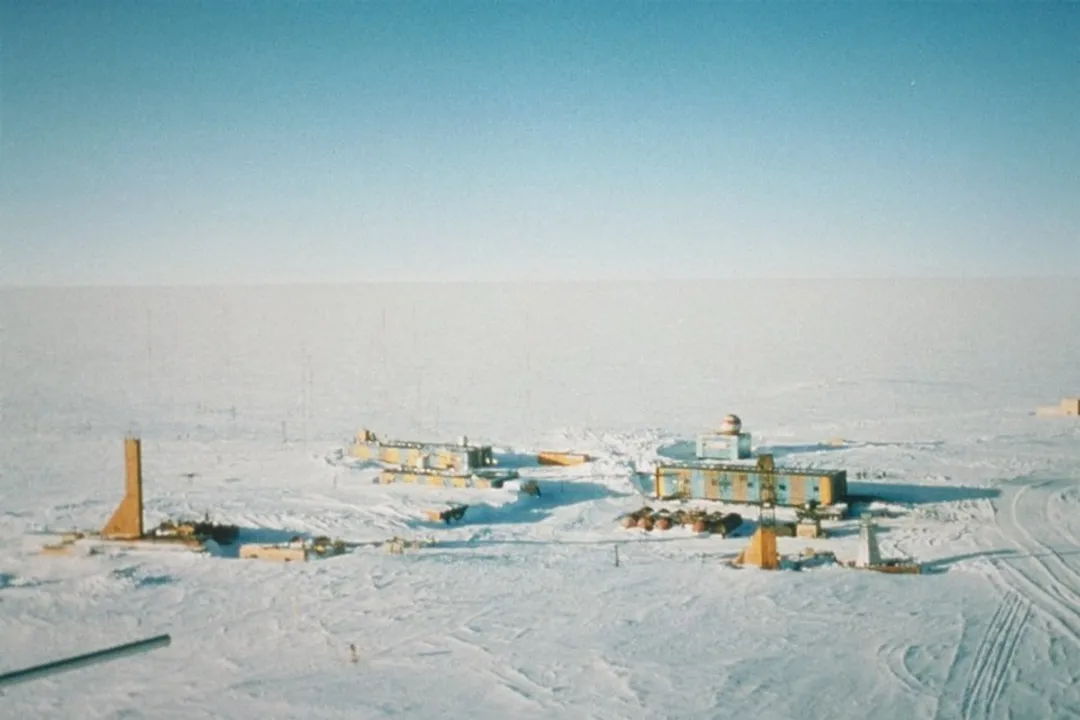
When seeking the coldest temperature ever documented on the Earth’s surface, the discussion quickly centers on Antarctica. The world’s officially recognized coldest temperature, measured by a ground-based thermometer and certified by the World Meteorological Organization (WMO), stands at (). [1] This extreme was recorded at the American-operated Vostok Station on July 21, 1983. [1] This measurement is a high-fidelity, human-monitored reading from a specific location. [2]
However, modern science, utilizing remote sensing and satellite technology, has revealed even more profound cold lurking on the frozen continent. Researchers analyzing satellite data have identified regions on the East Antarctic Plateau that experience temperatures far lower than the Vostok reading. [8] The National Snow and Ice Data Center (NSIDC) scientists pinpointed temperatures dipping to () during cloudless nights in August 2010. [8] This occurred in shallow depressions across the plateau, where extremely cold, dense air pools and sinks, sometimes aided by katabatic winds creating an inversion layer. [1][8] These satellite-derived records are often accepted as the coldest natural occurrences, even if they haven't officially replaced the WMO's ground-based standard yet. [2]
Imagine the difference: is bone-chilling cold, but the difference between that and is a staggering —that's nearly as cold as a typical home freezer on its coldest setting, just to gain a few extra degrees of natural chill on the ice sheet. [1][8]
# Permanent Inhabitation
While the highest Antarctic plateau holds the surface record, the coldest permanently inhabited place on Earth offers a slightly less brutal, but still staggering, level of cold. That title belongs to Oymyakon, a village in the Sakha Republic of Russia. [5] In Oymyakon, the temperature plunges so low that water pipes burst, and car engines must run constantly to prevent freezing. [5] The lowest recorded temperature there was (). [5] In these conditions, the air is so cold it creates an "ice fog" where breath freezes instantly, and frostbite can occur in minutes. [5]
At these extreme terrestrial temperatures, the nature of water ice is straightforward—it is simply water in its solid state. However, if we were to consider the natural formation of dry ice (frozen carbon dioxide), the necessary temperature is even lower than the official Vostok record. At standard atmospheric pressure, carbon dioxide transitions directly from gas to solid (sublimes) at (). [9] This means that while Oymyakon is too "warm" for dry ice to form naturally on the ground, the deeper Antarctic cold spots certainly get close to, or exceed, the threshold for phase change, provided the local atmospheric pressure drops sufficiently. [9]
# Interstellar Cold Observations
To find truly mind-boggling cold—the kind that defines the "coldest ice ever"—we must leave Earth and turn our gaze toward the universe, specifically using the data captured by the James Webb Space Telescope (JWST). [3][10] The JWST is designed to observe the universe in infrared light, which requires its instruments to be shielded from the heat generated by the telescope itself and the Sun.
The JWST has allowed scientists to identify some of the coldest molecular structures yet observed in the cosmos. [3] These structures are not the hard, familiar ice of Earth, but rather molecular ice—thin coatings of frozen gases like water, carbon monoxide, and methane clinging to microscopic dust grains in space. [4]
# The Coldest Cloud
One of the most significant discoveries related to cosmic cold is the identification of the coldest cloud observed by the JWST, situated within the Serpens Nebula, a region actively forming new stars. [4][10] This cloud contains water vapor that is shockingly frigid, measured at approximately . [4][10] To translate that into more familiar Celsius, is about . [4] This temperature is nearly colder than the warmest spots in the Antarctic Plateau satellite data. [8] The ice here is composed of water molecules that have frozen onto dust particles due to the profound lack of external heat sources in the nebula. [3]
# Deepest Molecular Freeze
Even colder than the water vapor in that cloud are other forms of frozen gas detected in similar star-forming environments. Scientists using JWST data have found interstellar ice, likely mixtures of various common cosmic molecules, that registers at roughly , which translates to about . [3] This is the current benchmark for the coldest ice detected—frozen molecules existing far from any nearby star's warmth. [3]
This is the true answer to what is the "coldest ice ever" detected: molecular films reaching about . [3]

# The Coldest Machine
If we shift the focus from observed cold to the coldest environment actively maintained by human technology to facilitate observation, the record drops even further, directly relating to the JWST itself. [6] The scientific instruments aboard the telescope must be kept incredibly cold to prevent their own infrared radiation from overwhelming the faint signals coming from distant galaxies. [3][10]
The Mid-Infrared Instrument (MIRI) is one of the coldest components. [3] While the telescope's Sunshield keeps the primary structure warm (around for some components), the MIRI detector requires an extreme level of cooling. [3] To achieve the sensitivity needed for mid-infrared observations, the MIRI instrument is actively cooled to below . [6] This means the detector chip registers a temperature around (). [6]
This operating temperature of is just slightly above absolute zero, which is theoretically the coldest possible temperature in the universe: (). [6] At , most common elements, including nitrogen and oxygen, would be frozen solid, and the environment is nearly devoid of thermal energy. [6] This machine-made cold is significantly colder than any naturally occurring ice we have observed in the universe so far. [3][8]
# Contextualizing the Extremes
The sheer magnitude of the temperature differences between these records is striking and helps illustrate the vastness of physics across environments. [1][3] We can establish a clear hierarchy of cold based on the evidence gathered:
| Location / Object | Temperature () | Temperature () | State of Matter Context | Citation Basis |
|---|---|---|---|---|
| JWST MIRI Instrument | Maintained cryogenic cold for operation | [6] | ||
| Cosmic Molecular Ice | Interstellar/pre-stellar dust coating | [3] | ||
| Coldest Cloud (Water Vapor) | Frozen on dust grains | [4][10] | ||
| Antarctic Plateau (Satellite Max) | Surface water ice maximum low | [8] | ||
| Vostok Station (Official WMO) | Official ground station record | [1] | ||
| Oymyakon (Inhabited Low) | Coldest permanently inhabited spot | [5] |
Analyzing this table immediately highlights an essential point: the coldest ice is not the cold we experience daily, but rather the molecular residue found in the absolute void between stars, which is only accessible to us because we have built technology capable of operating just shy of absolute zero. [3][6] The Earth's coldest surface ice, while incredibly cold by human standards, is almost "warm" in comparison, still possessing significant residual thermal energy (about at the minimum). [8]
This disparity brings up a point about the nature of the cold itself. On Earth, cooling is governed by heat transfer through conduction, convection, and radiation in an atmosphere. The extreme cold in space, however, is primarily achieved through radiative cooling in regions where the background temperature of space is already near (the Cosmic Microwave Background). [3] The molecular ices observed are the result of molecules sticking to cold dust particles that have shielded themselves from the minimal heat radiating from nearby stars. [4]
# The Science of Molecular Binding
The difference between a liquid/solid phase change for water (which happens at or ) and the required for cosmic ice illustrates how molecular forces change under extreme duress. On Earth, water molecules are held together by strong hydrogen bonds, requiring substantial energy (heat) to break them apart into a liquid or gas. In the near-vacuum of a star-forming cloud, the primary interaction holding the molecular ice together is simple Van der Waals forces, which are much weaker and require significantly less thermal energy to overcome. [3]
Consider a scenario in the Serpens Nebula: if you could somehow transport the Antarctic ice from Dome A to the vicinity of the cosmic ice, the terrestrial ice would instantly and violently vaporize into gas. [8][3] This comparison underscores that the physical state of "ice" depends critically on the substance being frozen. The cosmic ice is stable because its constituent molecules—, , , etc.—have extremely low vapor pressures at that temperature, meaning they require almost no energy input to remain structurally bound to the dust grain. [3]
# Extreme Cooling Techniques
To achieve the required for the MIRI instrument on JWST, engineers had to devise cooling systems that go far beyond standard refrigeration. [6] The first stage of cooling is passive: the massive, five-layer sunshield reduces the temperature from the spacecraft's operational side (around ) down to about for the coldest instruments. [6] For the MIRI instrument, an additional, active cooling mechanism is required. This involves a sophisticated cryocooler, which is essentially a high-tech refrigerator that uses closed-cycle helium gas to actively pump heat away from the detector. [6] This active removal is the only way to force the system down into the single-digit Kelvin range, making it colder than the naturally occurring molecular ices it is designed to study. [3][6]
This operational necessity—needing colder instruments than the target—is a core principle in ultra-low-temperature physics. Any measurement device must be colder than the coldest thing it is trying to measure accurately, otherwise, the device itself contaminates the signal with its own heat. [10] In a way, the coldest working ice is the ice within the telescope's electronics, which serves as the baseline reference against which the interstellar ice is quantified. [3]
The pursuit of the coldest temperatures, whether through observing the universe or engineering technology, reveals a fundamental truth about matter: the closer you get to the theoretical floor, the more tenuous the molecular bonds become, and the more energy is required, proportionally, to remove the last vestiges of thermal movement. [6] While the Antarctic plateau shows us the limits of Earth's natural energy sinks, the JWST shows us that the coldest "ice" is a manufactured condition, engineered precisely to reveal the secrets of the naturally frozen cosmos.
Related Questions
#Citations
Lowest temperature recorded on Earth - Wikipedia
What was the lowest temperature on Earth during the last ice age?
James Webb Space Telescope discovers coldest interstellar ice ...
The James Webb Telescope detected the coldest ice in the known ...
Frostbite, -64°C winters and brutal 'ice fog': The world's coldest city
What is the coldest ice detected by the James Webb Space ...
Ice apocalypse in Siberia as Yakutia hit −56°C, the coldest ...
NSIDC scientists identify coldest place on Earth
Does dry ice form naturally at the coldest place on Earth? If ... - Quora
NASA's Webb telescope discovers deepest coldest ice ever seen