What is made of ice, dust, and metal?

That celestial traveler, famously traversing the darkness with a luminous veil trailing behind it, is defined by a unique mixture of frozen elements, dust, and rocky fragments. [2] This object, comprised of ice, dust, and metal, is a comet. [4] Unlike the seemingly inert space rocks, these icy wanderers are essentially frozen remnants from the birth of our solar system, providing a pristine look back at the conditions billions of years ago. [7][2] Understanding what they are made of explains why they look so spectacular when they swing near the Sun, contrasting sharply with their more stony neighbors, the asteroids. [6]
# Icy Nucleus
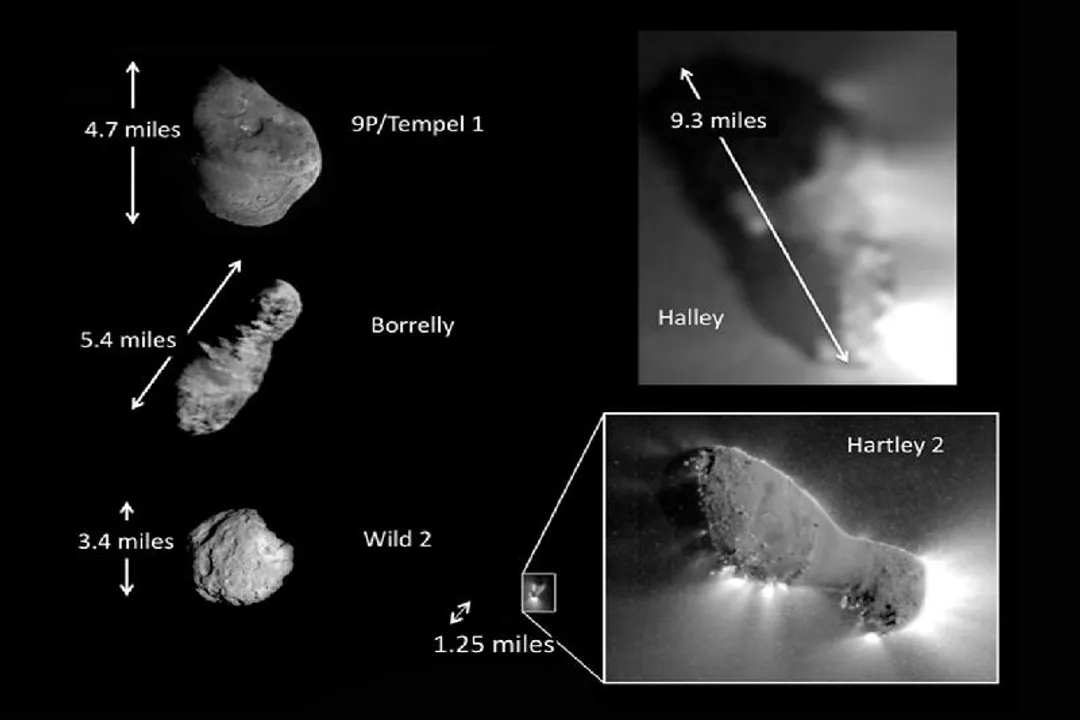
The heart of a comet is its nucleus, often characterized by the evocative, if slightly simplistic, description of a "dirty snowball". [4] This nucleus is not uniform; it is a conglomeration of frozen ices mixed with dust and solid, rocky, or metallic grains. [2] The "ice" component is far more varied than just frozen water, H₂O. It includes frozen gases, sometimes referred to as volatiles, such as carbon dioxide (dry ice), methane, and ammonia, all trapped within the dusty matrix. [7][1]
When a comet is far from the Sun, perhaps lurking in the far reaches of the solar system, it remains a cold, relatively inert ball of this mixture. [7] The ice and dust are tightly packed. However, the presence of rock and metal mixed in is crucial; these heavier materials provide the structural integrity for the nucleus to remain solid, even as it heats up. [2]
Considering the materials, one might imagine a comet as a cosmic blend where the dust acts as a binder for the ice. If we were to assign relative composition based on general descriptions, a comet might be estimated to contain perhaps 50% to 80% volatiles (ices) by mass, with the remainder being silicates and refractory materials like iron or nickel in microscopic grains. [2] This high ice content is the key differentiator from asteroids. [4]
# Dust and Rock Contrast
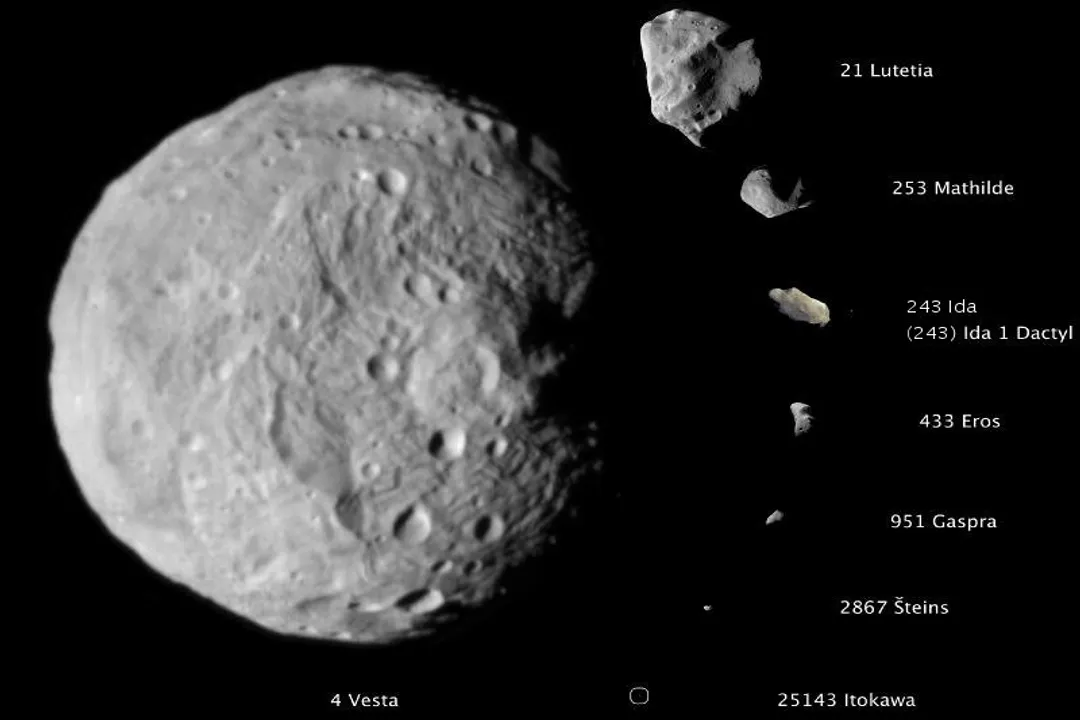
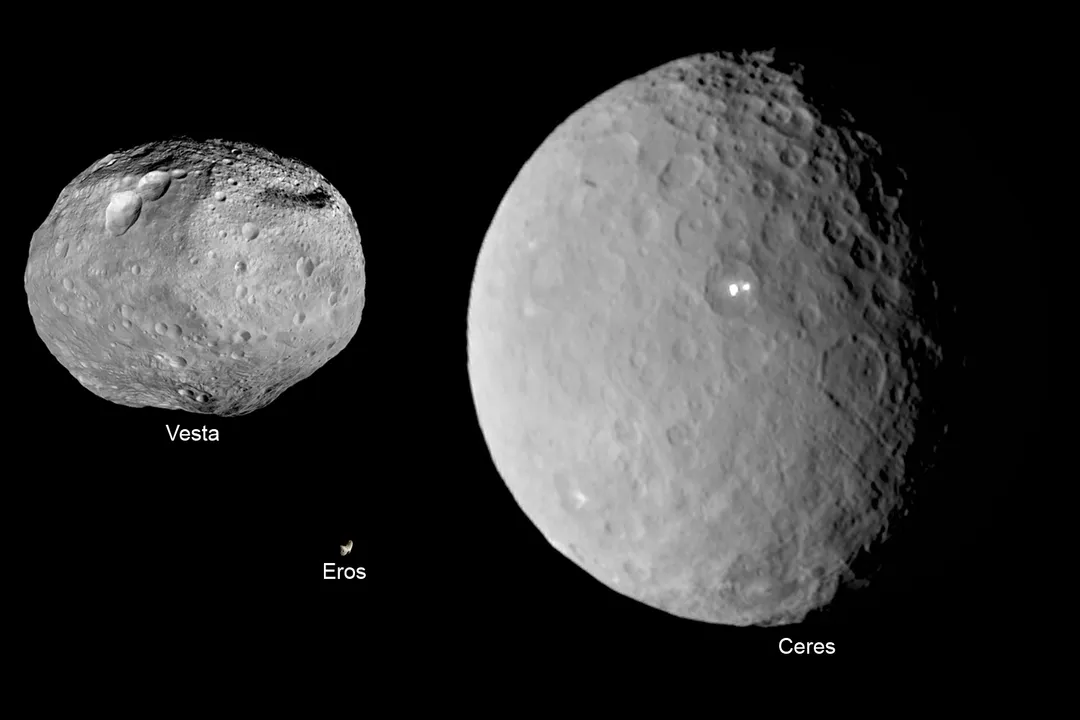
To appreciate the comet's makeup, it helps to contrast it with an asteroid. [6] Asteroids are generally considered to be composed primarily of rock and metal. [3][4] They formed closer to the Sun, where temperatures were too high for ices to condense and remain stable. [6] Therefore, while an asteroid is fundamentally a world of silicates and metallic iron/nickel, a comet is a world of frozen compounds and dust. [4]
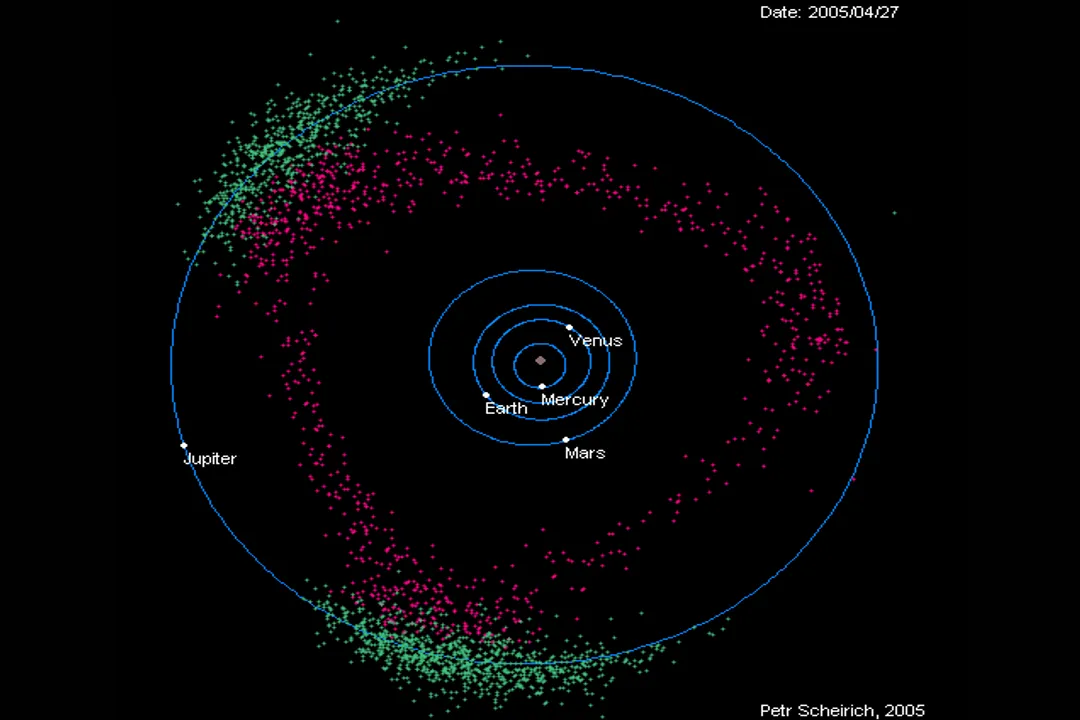
The distinction is so fundamental that it dictates their orbital behavior and appearance. [6] Asteroids often reside in the main asteroid belt between Mars and Jupiter. [1] Comets, conversely, typically originate much farther out, in regions like the Kuiper Belt or the distant Oort Cloud. [2][1]
When comparing the two classes, it’s helpful to think about density. Because comets are full of voids and frozen gases that sublimate easily, they are generally less dense than the rocky-metallic asteroids. [7] A comet nucleus can be quite porous, whereas an asteroid, being a denser, aggregated body of rock, will hold its shape more rigidly under mild heating or stress. This difference in internal structure—icy porosity versus rocky rigidity—is one of the most significant characteristics separating these two types of small solar system bodies. [6]

# Solar Interaction
The presence of that substantial ice content is what transforms a dim, distant comet into the bright spectacle seen from Earth. [2] As a comet's highly elliptical orbit brings it closer to the Sun, the solar radiation begins to heat the nucleus. [1]
When the temperature rises sufficiently, the ices do not simply melt into liquid water; they transition directly from solid to gas—a process called sublimation. [7] This gas, along with fine dust particles lifted off the surface by the escaping gas, forms the comet's atmosphere, known as the coma. [2] The coma can swell to be larger than a planet, though it remains extremely tenuous. [2]
It is the interaction of the solar wind (a stream of charged particles emanating from the Sun) and sunlight with the coma that creates the magnificent tails for which comets are famous. [1]
# Tail formation
Comets usually develop two distinct tails, though they aren't always perfectly visible:
- The Dust Tail: This tail is composed of the fine dust particles blasted off the nucleus during sublimation. [2] Because these particles are heavier than the gas molecules, they tend to lag slightly behind the comet along its orbital path, creating a curved tail. [1] This tail is usually yellowish or whitish because it reflects sunlight. [2]
- The Ion Tail (or Gas Tail): This tail consists of ionized gas molecules, which are lightweight and strongly affected by the solar wind. [2] The solar wind pushes these ions directly away from the Sun, making the ion tail appear straight and blue-tinged due to the light emission characteristics of the ionized gases. [1]
A helpful way to visualize this is by noting that regardless of the comet’s direction of travel, both tails always point generally away from the Sun—the dust tail curves slightly backward along the orbit, while the ion tail points directly anti-solar. [2] This dramatic transformation from an icy rock to a gaseous spectacle is entirely dependent on that initial composition of ice, dust, and metal. [7]
# Origin and Implications
The very composition of comets—their abundant ice—tells astronomers where they must have formed: the cold, outer reaches of the solar system. [6] They are generally viewed as originating from two main reservoirs: the Kuiper Belt, a region beyond Neptune, or the much more distant Oort Cloud. [1]
Bodies from the Kuiper Belt often have shorter orbital periods, sometimes taking less than 200 years to circle the Sun, and are thought to be the source of short-period comets. [1] In contrast, Oort Cloud comets are incredibly distant and can take thousands or even millions of years to complete one orbit, leading to their classification as long-period comets. [2][1]
The icy nature of these primordial bodies carries significant scientific weight. When scientists study these materials, they are essentially analyzing samples of the original material that formed the planets. [7] The discovery of complex organic molecules within comet dust and ice has even fueled theories that comets might have delivered essential building blocks for life to the early Earth through impacts, effectively acting as cosmic delivery vehicles for chemical complexity. [2]
This links back to the metal content. The rocky and metallic components within the ices provide the refractory anchor for the volatile materials. A comet that was pure ice would likely vaporize completely or fragment easily upon heating; the embedded dust and metal act as a skeletal structure that allows the coma to form slowly and gives the object enough resilience to survive multiple trips past the Sun. [2] This protective layer of dust and debris that is left behind after the ices sublime is sometimes referred to as a "dust crust," which can temporarily insulate the remaining interior, leading to dormant or "extinct" comets that resemble faint asteroids. [7]
# Distinguishing Characteristics
To ensure a clear understanding of what distinguishes these objects, organizing the primary composition differences in a table proves helpful, as the subtle differences between small solar system bodies are often confused by casual observers. [6]
| Feature | Comet | Asteroid |
|---|---|---|
| Primary Composition | Ice (water, , ), Dust, Rock/Metal | Rock, Metal (Silicates, Iron-Nickel) |
| Typical Origin | Kuiper Belt or Oort Cloud (Outer Solar System) | Asteroid Belt (Inner Solar System) |
| Appearance Near Sun | Develops a Coma and Tail | Remains rocky, no tail development |
| Density | Generally low/porous due to high ice content | Generally higher due to rock/metal density |
| Surface Activity | Highly active when heated (sublimation) | Mostly inert |
| [2][4][6] |
The presence of metal, while minor in volume compared to the ice, is an interesting structural element. Scientists often find traces of iron and nickel incorporated into the silicate dust grains. [2] In a sense, the comet is a true composite object, containing materials that survived both the hot, inner disk (the metal/rock) and the cold, outer disk (the ices) during the solar system's formation. [7]
In professional astronomical observation, distinguishing between a truly dead comet (which now resembles an asteroid) and a true asteroid can be difficult, as both are fundamentally rocky-metallic in their core structure. [6] The key operational difference remains activity: if it shows any sign of outgassing—even minor jets of vapor or dust—it is classified as a comet, regardless of its orbital location. [1]
It is worth noting that although the sources primarily focus on the ice, dust, and rock/metal components, the binding mechanism itself—the forces holding the nucleus together—is critical. For small, cold bodies, van der Waals forces and even weak chemical bonding between dust grains can play a role, but the primary structure relies on the bulk strength derived from the compacting of the icy material around the rocky inclusions. [7] When the Sun's heat breaks these bonds, the object rapidly loses mass. A comet loses mass with every pass near the Sun, meaning they are inherently transient objects on a cosmic timescale, destined to either break apart or eventually become inert, asteroid-like bodies once all the easily vaporized ices are gone. [2]
The scientific experience in studying these objects confirms that their composition dictates their fate. We can measure the rate of mass loss by observing the brightness change of the coma, which directly relates to the rate of ice sublimation. [1] Analyzing the dust ejected gives clues about the original planetesimal formation temperature, while the ices confirm the temperatures of the outer solar system billions of years ago. Thus, the simple composition—ice, dust, and metal—is the very fingerprint of our solar system's history. [7]
# Final Appearance
The visual effect of the ice, dust, and metal is spectacular. That streak of light we associate with a comet is not the nucleus itself shining, but the cloud of gas and dust surrounding it, or the tails stretching millions of miles into space. [2] If the comet has very little dust or large, cohesive metallic/rocky fragments, the resulting coma might be faint or messy, but the gas will still stream out. [1] Conversely, if a comet is very dusty, the dust tail can dominate the visual profile. Ultimately, the combination of these three primary material groups—the frozen volatiles, the fine silicates, and the heavier metallic inclusions—is what allows a comet to be both a pristine time capsule and a dynamic celestial light show. [7]
#Videos
What are Comets & Asteroids? Science For Kids - YouTube
Related Questions
#Citations
What's the Difference Between Asteroids, Comets and Meteors? We ...
Comet - Wikipedia
Meteoroid - National Geographic Education
Flexi answers - Asteroids are made of rock, whereas comets ... - CK-12
Comets and asteroids are similar space rocks - Facebook
What is the difference between an asteroid and a comet?
Meteoroids, Asteroids & Comets
Are asteroids and comets made of ice? - Quora
What are Comets & Asteroids? Science For Kids - YouTube