What elements are made in a high mass star?
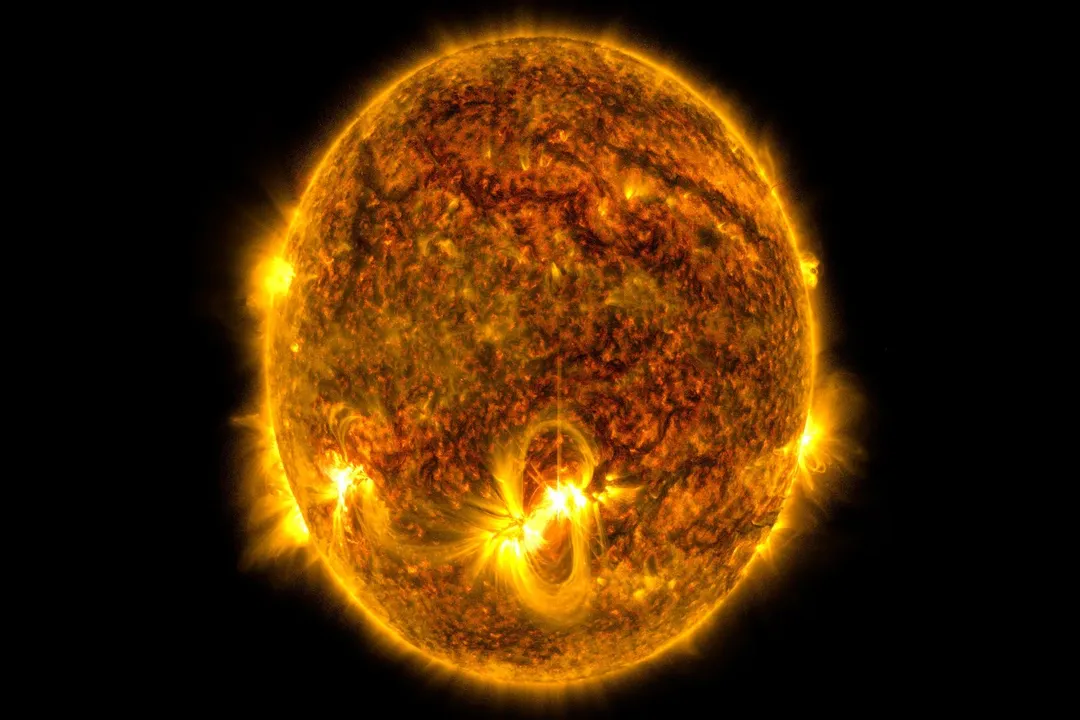
The immense power driving the brightest and shortest-lived stars in the cosmos is the engine for creating nearly every element you see around you, from the carbon in your body to the gold in your jewelry. Stars much more massive than our Sun, often classified as having masses exceeding eight times that of the Sun () or even higher, are the universe’s premier element factories. [1][7] These stellar behemoths live fast and die young, because their sheer gravitational pressure forces them to fuse lighter elements into heavier ones at a furious, unsustainable pace. [1][7]
# Stellar Giants
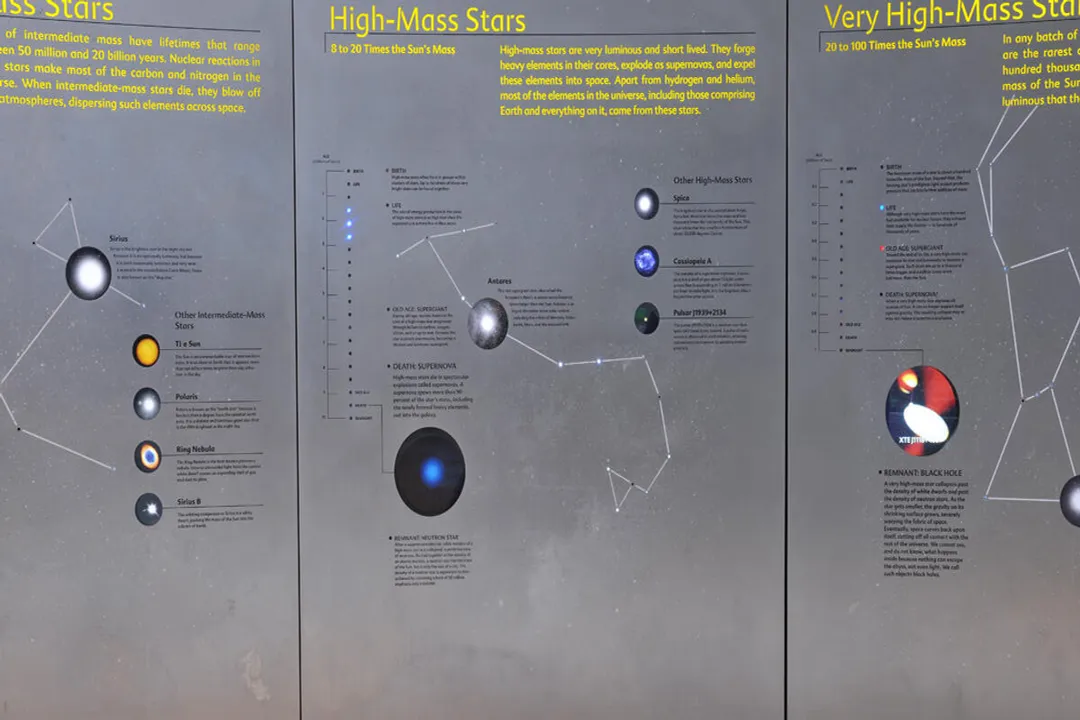
A key characteristic that sets high-mass stars apart is their rapid evolution. While our own Sun is expected to take billions of years to exhaust its core hydrogen, a star starting with twenty times the Sun's mass might exhaust its fuel in only a few million years. [1][7] This high rate of energy production is a direct consequence of the extreme temperatures and pressures deep within their cores, which dictate the speed and variety of nuclear reactions that can occur. [1] The tremendous gravity requires a vastly greater outward pressure from fusion to maintain hydrostatic equilibrium, leading to these cascading fusion reactions that simply cannot happen in lower-mass stars like the Sun. [9]
# Core Reactions
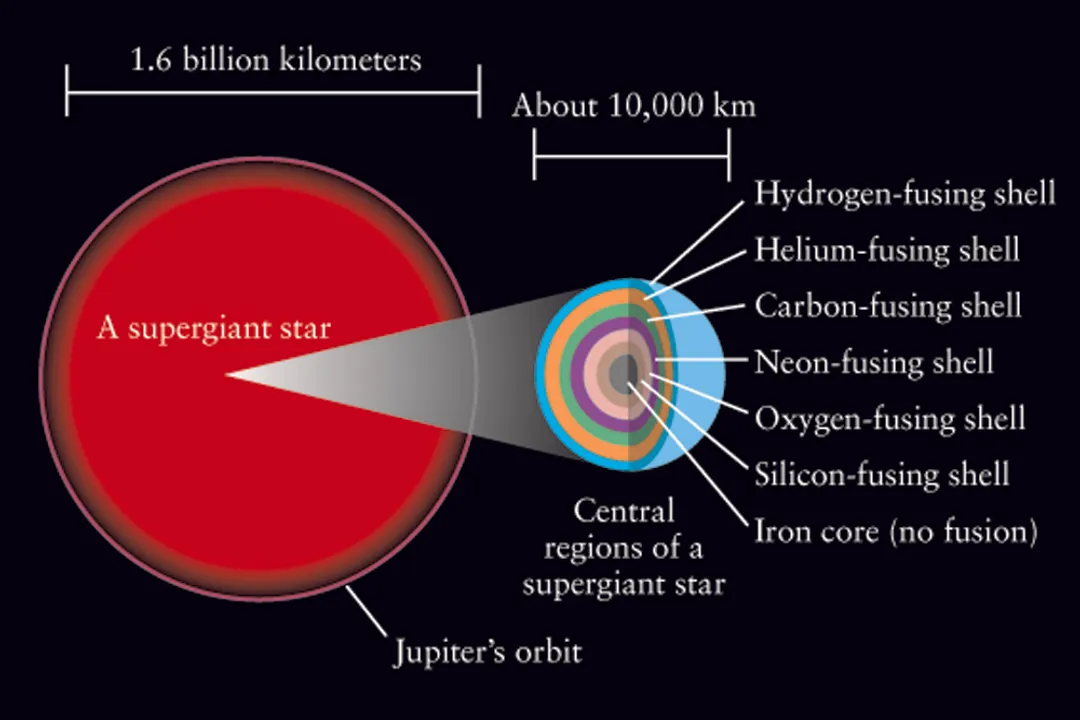
The birth of heavier elements begins exactly as it does in smaller stars: with the fusion of hydrogen into helium in the core. [3][9] However, due to the higher core temperature, this process is often dominated by the CNO cycle (Carbon-Nitrogen-Oxygen cycle) in massive stars, which is a much more efficient mechanism for turning hydrogen into helium than the proton-proton chain favored by stars like the Sun. [8] Once the hydrogen fuel in the very center is depleted, the story for high-mass stars diverges completely from low-mass stars.
When hydrogen fusion ceases in the core, gravity compresses the helium ash. This compression raises the temperature sufficiently to ignite helium fusion, which burns rapidly, creating heavier elements like carbon and oxygen. [3][9] This stage is temporary, sometimes lasting only a few hundred thousand years, compared to the billions of years of hydrogen burning. [1] The resulting core is now primarily composed of carbon and oxygen nuclei mixed with unspent helium in surrounding shells.
It is fascinating to consider that the speed at which this transition occurs makes the entire life cycle of a high-mass star a mere cosmic flash in the pan. [7] What takes the Sun nearly its entire existence to accomplish, a massive star resolves in a fraction of the time, leading to a much more dramatic and elementally diverse final act. [1]
# Onion Layers
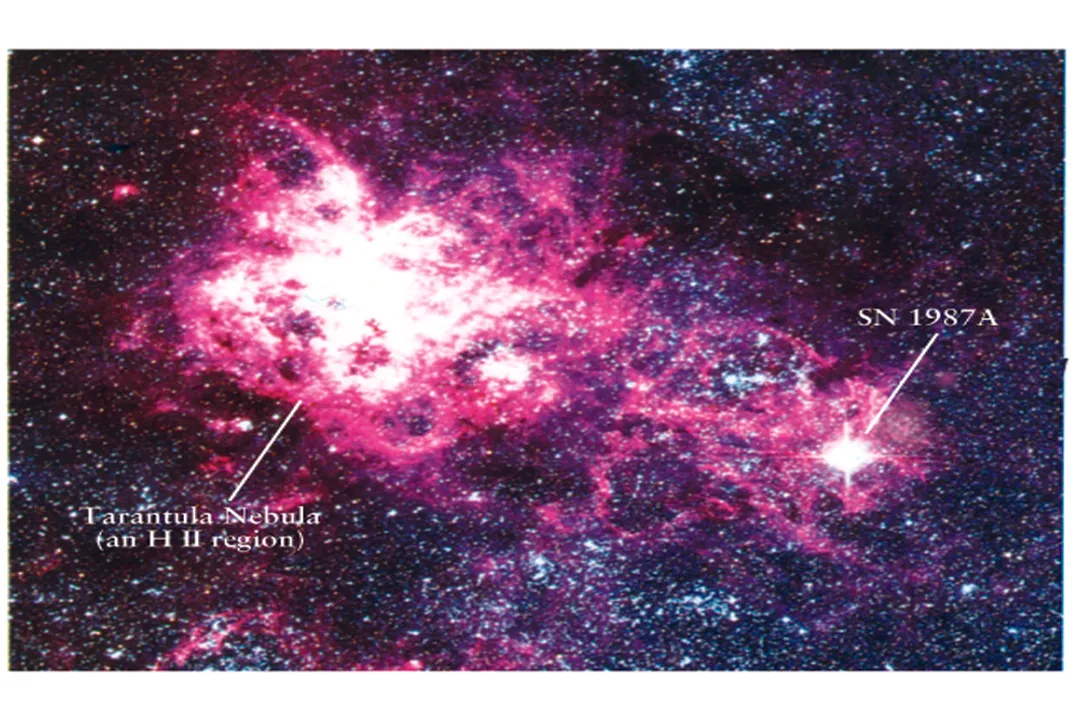
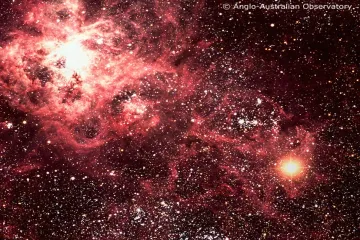
The truly unique elemental output of these giants begins once the helium is exhausted in the core. Because the core temperature and pressure continue to rise, the star can sequentially ignite the fusion of the elements it has just created. This leads to the famous "onion-skin" structure characteristic of highly evolved, massive stars. [9][10]
Once carbon is depleted, the core contracts again until it reaches temperatures high enough to fuse carbon into neon and magnesium. [3][9] This new fuel burns even faster than the last stage. Following neon burning, the core shrinks until it ignites oxygen, fusing it into silicon and sulfur. [3][9]
This process continues down the periodic table in a series of shells, with each subsequent fusion stage being shorter and hotter than the last. [9]
| Fusion Stage | Reactants | Primary Product | Relative Time Scale |
|---|---|---|---|
| Hydrogen Burning | Hydrogen | Helium | Millions of years |
| Helium Burning | Helium | Carbon, Oxygen | Thousands of years |
| Carbon Burning | Carbon | Neon, Magnesium | Hundreds of years |
| Neon Burning | Neon | Oxygen, Magnesium | Less than a year |
| Oxygen Burning | Oxygen | Silicon, Sulfur | Days to weeks |
| Silicon Burning | Silicon | Iron, Nickel | About one day |
The high gravitational pressure allows the star to achieve the necessary thresholds for fusing increasingly heavier nuclei, something physically impossible for a star of solar mass to ever accomplish in its core. [1][9] The core essentially becomes a layered structure, where the outermost layer is fusing one element, and the layer beneath it is fusing the product of the outer layer, all the way down to the innermost core. [9][10]
# Iron Limit
The relentless march toward heavier elements halts abruptly at iron (), specifically the isotope iron-56 (), which has the most stable nucleus in the universe. [3][6][10] When the high-mass star’s core finally becomes pure iron, the process of energy generation through fusion ends. [6][10] This is because fusing iron nuclei consumes energy rather than releasing the energy required to fight gravity. [3][6][10]
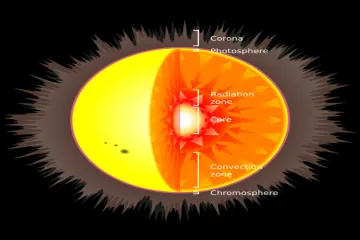
Once fusion stops providing the necessary outward thermal pressure, the core collapses catastrophically under the star's own immense weight. [6] This collapse happens incredibly fast—in a matter of milliseconds—creating conditions that generate a shockwave leading to a Type II supernova explosion. [6] It is within this final, violent event that the vast majority of the elements heavier than iron are forged, scattering them across the galaxy. [2][5]
# Explosive Creation
The supernova explosion itself is the universe's primary forge for elements beyond iron, a process generally known as explosive nucleosynthesis. [5] The extreme conditions—unimaginably high temperatures and densities, coupled with an overwhelming flood of neutrons—allow for processes that are impossible during the star’s stable life.
The primary mechanism for creating the heaviest elements is the rapid neutron-capture process, or r-process. [2][5] In the heart of the collapsing core and the subsequent shockwave, nuclei are bombarded with neutrons so quickly that they capture multiple neutrons before they have time to radioactively decay. [5] This rapid buildup of neutrons transforms lighter, stable nuclei into extremely heavy, unstable isotopes, which then decay into the stable, heavy elements we observe.
This means that when we talk about the elements made in a high-mass star, we must distinguish between the stable progression during its life and the instantaneous creation during its death. [2] The stable stages create elements up to iron, while the supernova phase creates nearly everything else that is heavier. [5] For example, elements like gold, platinum, and uranium are signature products of these explosive events, being seeded into the interstellar medium when the massive star finally explodes. [2][5]
If we consider the composition of a planet like Earth, the iron in its core was forged deep inside a massive star before it died, but the gold in the Earth's crust likely came from the dramatic neutron-rich environment of that star's final moments. [10] Without the violent demise of these stellar giants, the abundance of heavy elements in the universe would be drastically lower, leaving our world a much less chemically interesting place.
# Cosmic Legacy
The cumulative effect of a single high-mass star’s life and death is the enrichment of the galaxy with a wide spectrum of atomic material. [9] The elements created through the stable, successive fusion stages (Carbon through Iron) are present in the star's outer layers and are ejected when the star sheds its material or explodes. [9] The explosion then adds the products of the r-process.
In effect, these massive stars serve as the cosmic recyclers and primary element creators, synthesizing roughly half of the elements heavier than hydrogen and helium that exist today. [5] Their spectacular end ensures that the raw materials for future generations of stars, planets, and life are dispersed far and wide, allowing for the chemical complexity we see in the present epoch of the universe. [6] This cycling mechanism, where one generation of stars provides the building blocks for the next, is fundamental to astrophysics and explains why we are all, quite literally, made of stardust. [5]
#Videos
High Mass Stars: Crash Course Astronomy #31 - YouTube
Related Questions
#Citations
High mass star - Las Cumbres Observatory
High-Mass Stars | Research Starters - EBSCO
Stellar nucleosynthesis - Wikipedia
High Mass Stars: Crash Course Astronomy #31 - YouTube
Honest question: if Iron is the heaviest element created in stars, how ...
The Elements: Forged in Stars | PBS LearningMedia
Star Basics - NASA Science
High-Mass Stars | AMNH
Lecture 18: Evolution of High Mass Stars
Formation of the High Mass Elements